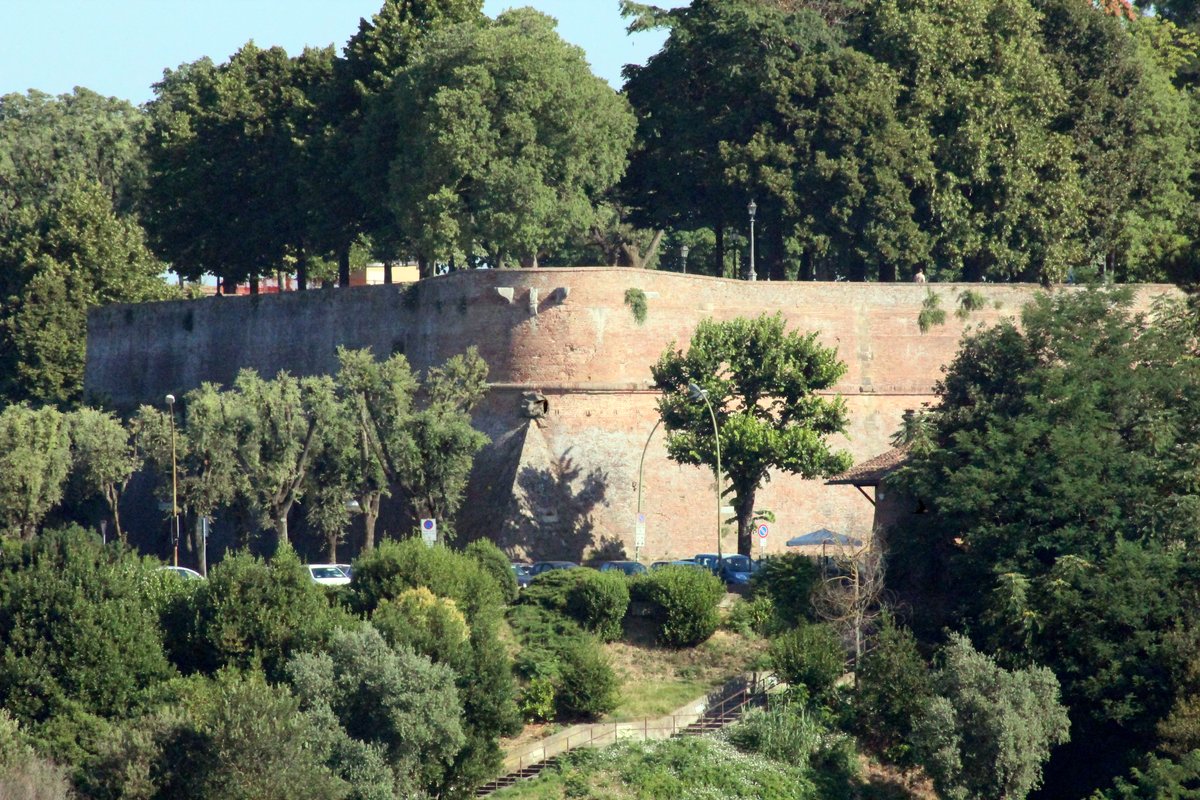
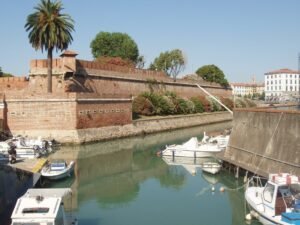
The Medici Fortress of Siena, built in 1563, features a public park with lawns, tree-lined paths, and flower beds within its red brick walls. Climbing the ramparts offers a panoramic view encompassing the Duomo, Torre del Mangia, and the Tuscan hills. Access is free, and the atmosphere is peaceful, perfect for a relaxing break.
- Panoramic view of the Duomo, Torre del Mangia, and Tuscan hills from the ramparts
- Public park with lawns, tree-lined paths, and flower beds within the walls
- Italian Wine Cellar inside the fortress for wine enthusiasts
- Free access and relaxed atmosphere away from the crowds of the historic center
Introduction
The Medici Fortress of Siena is not just a historical monument; it’s a panoramic balcony overlooking the heart of Tuscany. Approaching from Via di San Prospero, that mass of red brick immediately strikes you: it almost seems like a sleeping giant watching over the city. But the real surprise comes when you climb up: from up there, the Sienese hills unfold like a living painting, with cypress trees dotting the gentle curves of the countryside. I’ve returned several times, and each time I pause to gaze at that seemingly endless panorama. It’s not just a fortress; it’s a public park where Sienese people come to sunbathe, read a book, or have a chat. The atmosphere is relaxed, almost homely, despite the grandeur of the walls. If you’re looking for a place to escape the hustle and bustle of the historic center, this is your perfect spot.
Historical Overview
This fortress has a somewhat controversial history that reflects the relationship between Siena and Florence. It was built
by order of Cosimo I de’ Medici in 1563, after Florence had conquered Siena. The purpose? To keep the rebellious city under control. Ironically, today it’s one of the most beloved spots by Sienese people. It was never used for battles but served as a barracks and prison. Walking along the ramparts, you can still see the marks of cannons and loopholes. I like to think that those walls, born to dominate, now offer one of the most liberating views over Siena. A brief timeline to understand the key milestones:
- 1563: Construction begins at the behest of Cosimo I de’ Medici
- Late 1500s: Used as a Florentine military garrison
- Subsequent centuries: Repurposed as barracks and prison
- Today: Public park and venue for cultural events
The Secret Park Within the Ramparts
What many don’t expect is that the Medici Fortress hides a lush, well-kept park right inside its walls. It’s not just a lawn: there are tree-lined paths, stone benches, and flower beds that change with the seasons. In spring, the cherry blossoms are a sight not to be missed. I had an impromptu picnic there with products from the Piazza del Mercato market, and it was a memorable experience. The atmosphere is peaceful, away from the crowds of Piazza del Campo. You often see students studying, mothers with strollers, and tourists resting. It’s a corner of Siena that breathes at a different, slower pace. If you visit the fortress, don’t just walk around the ramparts: take some time to sit on the grass and watch life flow slowly within the ancient walls.
Views That Steal Your Heart
The main reason to come up here? The views. But they’re not all the same. From the south side, your gaze takes in the Duomo and the Torre del Mangia all at once, with the red roof tiles of the houses looking like waves frozen in time. Turning north, the countryside opens up: rows of vines, olive groves, and those soft hills that seem to have come straight out of a Lorenzetti painting. I always recommend walking the entire circuit of the bastions, because every corner offers a different perspective. Pay attention at sunset: when the sun dips behind the hills, the golden light wraps Siena in a magical atmosphere. It’s not uncommon to see photographers with tripods waiting for the perfect moment. Personally, I prefer the morning hours, when the air is clearer and you can better distinguish the city’s details. But whatever time you choose, bring your camera.
Why Visit It
Three concrete reasons not to skip the Medici Fortress. First: it’s free. In a city full of paid museums, finding such a beautiful and accessible place is a rarity. Second: it offers a unique perspective on Siena. From the historic center you see monuments up close, but from here you truly understand how the city is structured, how it nestles into the hills. Third: it’s an oasis of tranquility. After dealing with the crowds in Piazza del Campo or the lines at the Duomo, coming up here is like taking a breath of fresh air. You can sit, relax, and enjoy the view without rushing. And there’s a fourth reason, more personal: here you feel the everyday Siena, not just the tourist one. You’ll see locals jogging, elderly people playing cards, university students. It’s a living and authentic piece of the city.
When to Go
The best time? Early afternoon, when the sun begins to set. The light grows warmer, shadows stretch across the bricks, and the atmosphere becomes truly special. In summer, avoid the midday hours: it’s hot and there aren’t many shaded areas on the ramparts. In spring and autumn, however, you can go practically any time. I’ve even been there on a November day, with a light mist enveloping the hills, and it was equally enchanting. A heartfelt tip: check the weather before you go. If the sky is overcast, the view loses some of its charm. But if the sun is out… well, be prepared to stay longer than planned. Sometimes I’ve found myself spending an extra hour just watching the light change on the Duomo’s roof tiles.
In the Surroundings
Leaving the Medici Fortress, you have two interesting options. The first is the Orto de’ Pecci, a little-known public garden located right behind the fortress. It’s another quiet green corner, with a small pond and benches hidden among the trees. Perfect for continuing your relaxing stroll. The second option is more cultural: just a few minutes’ walk away is the Basilica dell’Osservanza, a Renaissance gem off the beaten tourist track. The architecture is splendid, and the atmosphere is one of absolute peace. If you have time, it’s definitely worth the detour. Both places maintain that slow, contemplative pace you can feel at the fortress, without having to face queues or crowds.