Introduction: A Dive into Ancient Akragas
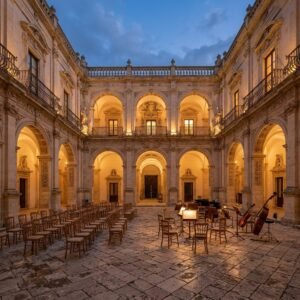
As soon as you enter, you realize this is no ordinary museum. The Museo Archeologico Regionale Pietro Griffo is the perfect place to truly understand the Valley of the Temples. It stands on the ancient agora of Akragas, with a breathtaking view. The building, a mix between the medieval cloister of San Nicola and the modern architecture of Franco Minissi, was inaugurated in 1967. But the collection? It’s jaw-dropping: over 5,000 artifacts spread across 18 rooms, telling the story of this area from prehistory to Roman times. This is not a dusty museum: the explanatory panels are in Italian and English, and the layout is designed to make you live the experience. If you want to prepare for your visit to the Valley, or simply delve deeper, this is the ideal starting point.
Historical Overview: From Origins to the Present-Day Museum
The history of the Museo Pietro Griffo begins in 1864, when it was founded as a civic museum. For decades it moved locations: first in the former convent of San Francesco, then in the Palazzo Comunale, and finally in the 1960s the current building was designed by architect Franco Minissi, blending the medieval structures of the convent of San Nicola with a modern addition. The museum opened in 1967 and was named after archaeologist Pietro Griffo, who extensively studied the city’s archaeological heritage. The exhibits come from the old civic museum, from excavations by the Superintendence (since the 1940s), and from loans from the museums of Palermo and Syracuse. Today it is one of the most important archaeological museums in Sicily. Here are the key moments:
- 1864 – Foundation of the Civic Museum of Agrigento
- 1960-1962 – Design of the new building by Franco Minissi
- 1967 – Inauguration of the Regional Archaeological Museum at its current site
- 1940s–present – Archaeological excavations by the Superintendence enriching the collections
The Telamon and the Ephebe: The Museum’s Jewels
You can’t miss two pieces that alone are worth the ticket. The first is the Telamon, a sandstone statue about 7.5 meters tall from the Temple of Olympian Zeus. It’s a colossus that was part of the architectural decoration: in the double-height hall (Hall VI), you come face to face with this powerful figure, reassembled as early as the 19th century. The other masterpiece is the Ephebe of Agrigento, a marble statue from the 5th century BC probably depicting Apollo. It’s a perfect example of the local severe style, with a harmony that leaves you speechless. Then there are the Attic kraters, like the one with Perseus and Andromeda (430 BC) and the Gela Krater with an Amazonomachy. In short, stuff you don’t see every day.
The exhibition route: 18 rooms from prehistory to Roman times
The museum is divided into two sections. The first (rooms 1-11) tells the story of ancient Akragas and its territory: starting with topography, then moving to prehistory with the famous Dinos with triskeles (7th century BC), which is one of the first symbols of Sicily. Following are the vase collections, votive materials from sanctuaries, and architectural sculptures. Room VII shows the Hellenistic-Roman settlement with a stratigraphic sample. The second section (rooms 12-18) broadens the view to sites in the provinces of Agrigento and Caltanissetta, from prehistory to Hellenization. Each room has bilingual panels and lighting is designed to enhance the artifacts. There are also multimedia supports and an audioguide (€5) that accompanies you for about an hour.
Why Visit: Three Good Reasons
First: understand the Valley of the Temples. The museum is the key to interpreting the temples and the Greek city. Second: unique pieces like the Telamon and the Ephebe, which you won’t find anywhere else. Third: convenient combined ticket: for €13.50 you visit both the museum and the Valley of the Temples, saving compared to separate purchases. Plus, the museum is accessible, with stairlifts and ramps, and has a well-stocked bookshop. If you’re with family, children under 18 enter for free.
When to Go: The Best Time to Enjoy It
The museum is open every day, but in my opinion the best time is early in the morning, right when it opens at 9. That way you avoid the crowds and have plenty of time to explore all 18 rooms at your leisure. If you visit in spring or autumn, the light is perfect and from the windows you can see the Valley of the Temples in all its beauty. In summer, on the other hand, the museum is a cool oasis during the hottest hours. Last entry is at 7 PM, but don’t wait until late afternoon because an hour and a half might not be enough to see everything carefully. I recommend dedicating at least two hours.
Nearby: What to See Next
The museum is located right on the edge of the Valley of the Temples, so the next step is obvious: visit the archaeological area with the Doric temples, the Kolymbetra Garden, and the Temple of Concordia. But if you want something different, I suggest the Historic Center of Agrigento, with the Cathedral of San Gerlando and the medieval quarter. Alternatively, just a few minutes away, Pirandello’s House, dedicated to the famous writer, offers a spectacular view of the countryside. Both are easily reachable and enrich the day.