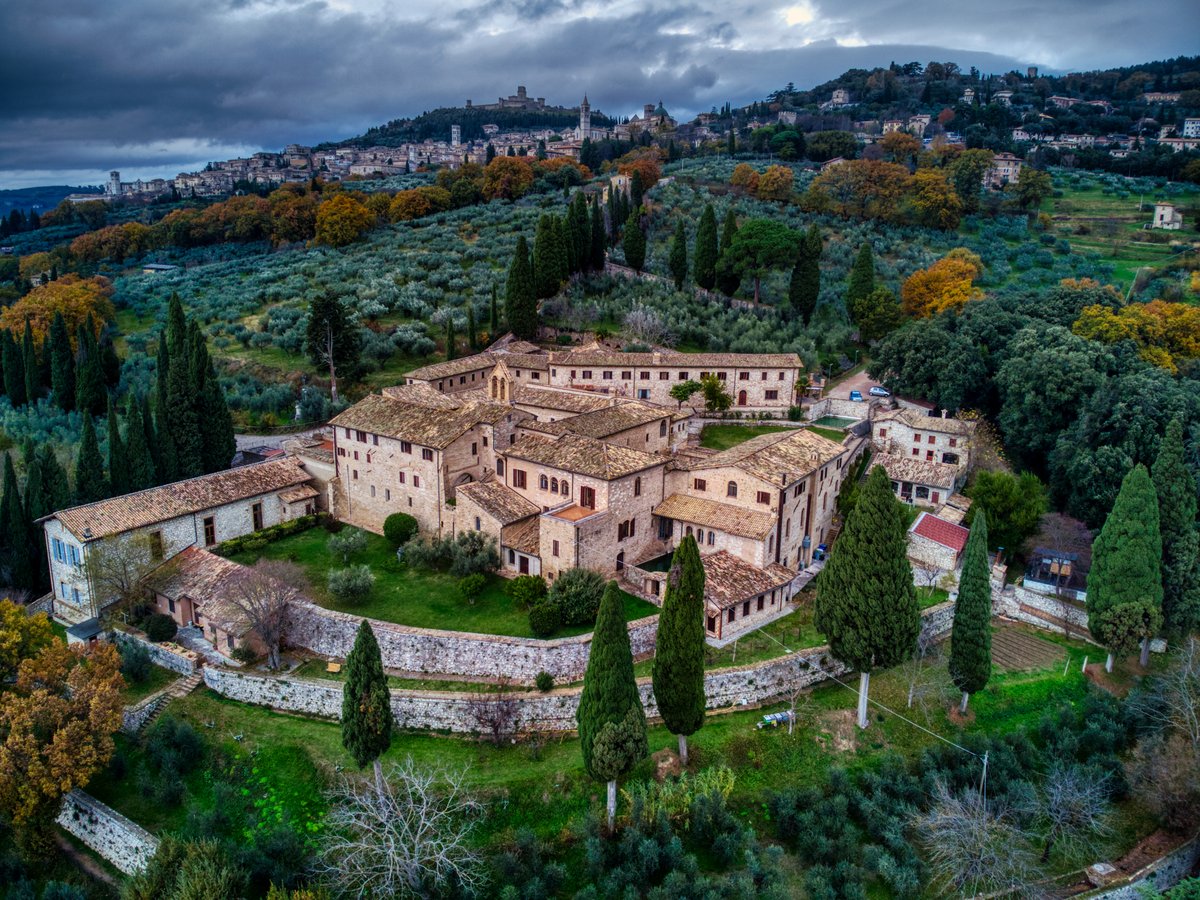
San Damiano Church in Assisi: Where Saint Francis Heard the Call in 1205

San Damiano Church, just outside the walls of Assisi, is the place where Saint Francis received his divine call in 1205 before the Romanesque crucifix. This Franciscan complex nestled among olive trees also hosts the first monastery of the Poor Clares founded by Saint Clare in 1212. The 15-minute walk from Porta Nuova offers picturesque views of the Umbrian countryside.

  • San Damiano Crucifix – A replica of the Romanesque crucifix that spoke to Saint Francis in 1205
  • First Monastery of the Poor Clares – Founded by Saint Clare in 1212, where she lived for over 40 years
  • Cloister and Secret Garden – With a central well, cultivated herb garden, and panoramic valley views
  • Fourteenth-Century Frescoes – Scenes from the life of Christ and saints in the simple, intimate interior

Copertina itinerario San Damiano Church in Assisi: Where Saint Francis Heard the Call in 1205
San Damiano Church in Assisi houses the crucifix that spoke to Saint Francis and the first monastery of the Poor Clares founded by Saint Clare. Visit the Romanesque church, the cloister with a well, and the garden with panoramic views over the valley.

Good to know


Introduction

Just outside the walls of Assisi, the Church of San Damiano welcomes you with a silence that almost contrasts with the nearby tourist city. It’s a place you don’t expect: simple, almost humble, yet charged with a presence you can feel. The first thing that strikes you is the atmosphere. It’s not just a monument; it’s a living place where time seems to have stood still. The small cloister, the garden with olive trees, the view over the valley: everything contributes to creating an immediate sense of peace. You come here not to admire spectacular frescoes (there are some, but they’re small and intimate), but to breathe in the essence of a moment that changed history. It’s the place where, according to tradition, Saint Francis heard the Crucifix speak and began his journey. You can feel it, this quiet and powerful energy. For me, it was a refreshing pause after the crowds at the Basilica of Saint Francis.

Historical Overview

The history of San Damiano is closely intertwined with that of Francis and Clare. The original building was a small, ruined 12th-century country church. The turning point came in 1205, when Francis, praying before the Crucifix, heard a voice saying: ‘Go, Francis, repair my house which, as you see, is falling into ruin.’ He took the invitation literally and began physically restoring the little church. A few years later, around 1212, it became the first monastery of the Poor Clares, founded by Saint Clare, who lived there for over 40 years until her death. Here she wrote her Rule. The complex we see today is the result of centuries of monastic life, with the addition of the convent and cloister. The church has maintained its simple, solid Umbrian Romanesque structure.

  • 12th century: Construction of the original small church.
  • 1205: The episode of Saint Francis’s calling.
  • Around 1212: Saint Clare founds the first Poor Clares monastery there.
  • 1253: Saint Clare dies at San Damiano.
  • Subsequent centuries: The monastery remains active, preserving its original atmosphere.

The Cloister and the Secret Garden

Beyond the church, there is a small cloister that is a jewel of tranquility. It is not grand, quite the opposite. It is intimate, with a well at its center and stone columns. Here, the cloistered nuns (yes, the monastery is still active!) would walk in prayer. But the real surprise is the garden that opens up behind it. It is a kitchen garden cultivated with care, full of aromatic herbs, flowers, and ancient olive trees. The view stretches over the valley below, reaching as far as Perugia in the distance on clear days. It is perhaps in this corner that one better understands the spirit of the place: a perfect union between prayer, manual work, and contemplation of nature. You feel like sitting on a bench and staying, listening only to the wind through the olive trees and the buzzing of bees. A detail I liked? The hand-painted ceramic tiles with floral and religious motifs that decorate some corners. Small works of artisanal craftsmanship.

The Interior: Simplicity That Speaks

Entering the church is a collected experience. The environment is small, dark, illuminated only by a few candles and the light filtering through the small windows. The altar is simple, dominated by a copy of the famous San Damiano Crucifix (the original, as mentioned, is elsewhere). The atmosphere is one of deep intimacy. The frescoes on the walls, from the 14th and 15th centuries, are not absolute masterpieces, but they have a genuine charm. They depict scenes from the life of Christ and the saints. What strikes you is the absence of opulence. Everything speaks of chosen poverty, of essentiality. In the side chapel, you’ll find the small choir of the Poor Clares, with the wooden stalls where they prayed. Try sitting there for a moment, in silence. It’s easy to imagine Clare and her companions in this same space, centuries ago. The feeling is of being guests in a home, not tourists in a museum.

Why Visit

For three concrete reasons. First: it’s an authentic place, away from the hustle and bustle of Assisi’s historic center. There are no souvenir shops at the gates here; you breathe a different air. Second: it offers an intimate perspective on Franciscan history. While the Basilica celebrates the Saint’s greatness, San Damiano lets you touch the humble beginnings of his journey firsthand. Third: the garden with a view is a corner of regenerative peace, perfect for a contemplative break. It’s the right place for those seeking a spiritual experience or simply a moment of deep quiet, without rhetoric.

When to Visit

Avoid the midday hours during peak season, when tourist buses may also arrive here. The best time? Early morning, when the light is still low and golden, and the air is fresh. Or in the late afternoon, just before closing. During these time slots, you’re more likely to have it almost to yourself. The shoulder seasons – late spring or early autumn – are also ideal: the garden is lush or takes on the warm colors of Umbria, and the weather is perfect for the walk from Assisi (about 15-20 minutes on foot). In winter, with a bit of luck and perhaps a light mist, the atmosphere becomes even more evocative and intimate.

In the Surroundings

The visit to San Damiano perfectly complements other Franciscan sites. A short walk uphill (towards Assisi) leads to the Hermitage of the Carceri, nestled in the woods of Mount Subasio. This is where Francis and the first friars retreated for prayer and contemplation, offering an even wilder and more silent atmosphere. For a complementary experience, heading downhill towards the valley, you can visit the Basilica of Santa Maria degli Angeli, which houses the Porziuncola, the heart of the Franciscan order. It presents a striking architectural contrast (a massive basilica protecting the small chapel) that completes the picture.

💡 Did You Know…?

According to the stories passed down, it was in this very church that the young Francis, troubled and searching for answers, heard from the crucifix the words, ‘Francis, go and repair my house which, as you see, is falling into ruin.’ That crucifix, known as the San Damiano Crucifix, is now located in the Basilica of Saint Clare, but a faithful copy is visible in the niche above the altar. Another little-known detail: in the small convent garden, protected by a wall, the thornless rose bush still grows where, according to legend, Francis rolled to overcome a temptation, and the thorns turned into petals.