Introduction
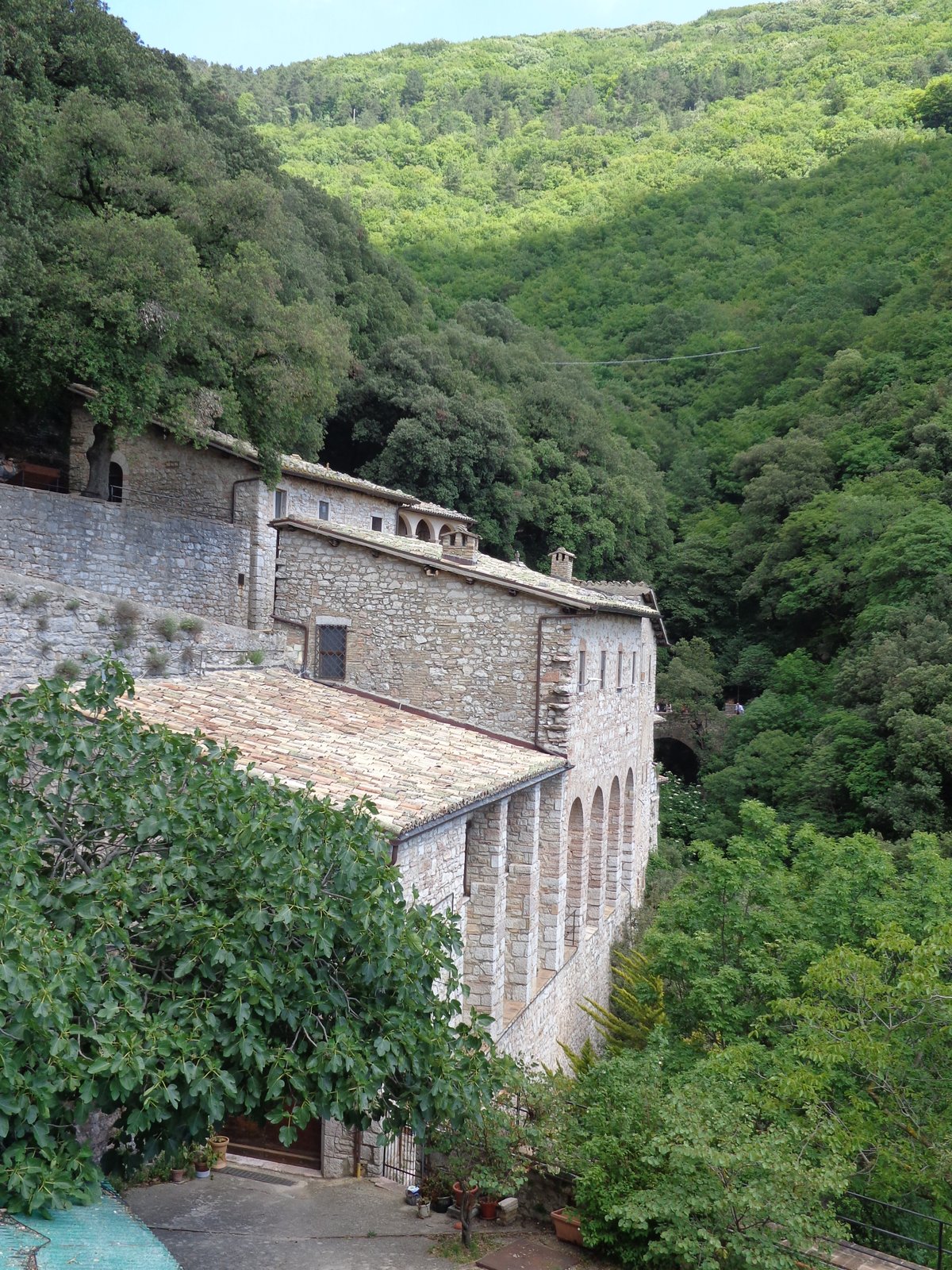
Just 4 km from Assisi, in the silence of Monte Subasio, the Eremo delle Carceri welcomes you with an atmosphere steeped in antiquity and sanctity. Nestled in an ancient holm oak forest, this Franciscan sanctuary is a place where time seems to stand still. The natural caves, bare stone, and rustling leaves create a perfect harmony between nature and spirituality. This is not a place to rush through: you come here to breathe, to listen to the silence, and perhaps find a bit of inner peace.
Historical Background
The history of the Hermitage begins well before Saint Francis: already in the early Christian era, Syrian hermits frequented these caves. In 1215, the Benedictines of Monte Subasio donated the site to Francis, who here “imprisoned himself” (from Latin carcer, solitary place) to pray. In the 15th century, Saint Bernardine of Siena expanded the complex by building the church of Santa Maria delle Carceri and a small convent. Today, a Franciscan community cares for this corner of peace.
St. Francis’s Cave
Descending from the church, you enter the heart of the hermitage: the cave where Francis slept on bare stone. A stark, rock-hewn space, where his presence still lingers. Beside it, a fresco depicts the Sermon to the Birds, though historians locate that episode at Piandarca. But here, that hardly matters: the silence and humility of the place speak for themselves.
The Holm Oak Grove and the Companions’ Caves
Leaving the cave, a path leads into the centuries-old holm oak grove. Among the trees, you’ll find the caves where Friar Leo, Friar Masseo, Friar Sylvester, and others used to retreat. The holm oak known as the ‘Tree of the Birds’ is the most famous: according to legend, birds would perch to listen to Francis. A little further on, the crevice of the ‘Devil’s Hole’ recalls an episode in which the saint drove away a demon.
Why Visit It
1) An authentic experience of silence: far from mass tourism, the hermitage commands respect and contemplation. 2) The unique blend of nature and faith: the ancient holm oak forest and caves carved into the rock tell a thousand-year story. 3) A timeless atmosphere: stepping into the cloister and refectory feels like traveling back eight centuries.
When to Go
The most magical time? At dawn or dusk, when light filters through the holm oaks and the silence becomes almost tangible. In autumn, the woods are painted in warm hues; in spring, the air is crisper. Avoid the midday hours on holidays, when the parking lot fills up. Tip: arrive early in the morning, before 9 am, to enjoy the hermitage almost in solitude.
Nearby
After your visit, head down to Assisi and stop at the Basilica of St. Francis (UNESCO World Heritage Site) to admire Giotto’s frescoes. If you have time, make your way to the Hermitage of San Damiano, south of the city: this is where Francis composed the Canticle of the Creatures and received the stigmata? No, the stigmata were at La Verna, but at San Damiano you’ll find the crucifix that spoke to him. Anyway, another deeply spiritual place.