
The Santa Maria della Foresta Sanctuary, a few kilometers from Rieti, is the place where Saint Francis received the stigmata in 1224. Nestled in an oak forest, it preserves the authentic Franciscan spiritual atmosphere with simple medieval architecture. The visit offers views of the Holy Valley and is ideal for quiet reflection away from crowds.
- Chapel with the stone where Saint Francis prayed in 1224
- Renaissance cloister and garden with the saint’s spring
- 15th-century frescoes and relic of Francis’s tunic
- Secluded location among olive groves and woods, perfect at sunset
Events nearby


Medieval Franciscan sanctuary in Rieti featuring the stone where Saint Francis prayed, a Renaissance cloister, and a garden with the saint’s spring. Free admission in the Holy Valley.
Good to know
Introduction
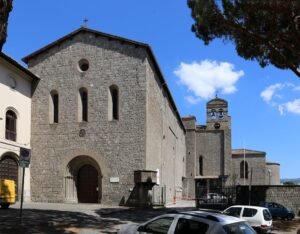
Just outside Rieti, the Sanctuary of Santa Maria della Foresta welcomes you with an atmosphere of absolute peace. You reach it by traveling along a country road that winds through olive groves and centuries-old oak trees. The complex, simple and intimate, stands where Saint Francis received the stigmata in 1224, during his stay in the Holy Valley. It’s not just a place of worship, but a spiritual refuge immersed in greenery. The façade made of local stone and the bell gable strike you with their essentiality. Upon entering, you breathe an air of authentic devotion, far from the chaos. It’s the perfect place for those seeking a moment of recollection, surrounded by the pristine nature of Sabina.
Historical Overview
The history of the sanctuary is inextricably linked to Saint Francis. Here, in September 1224, the saint retreated in prayer after preaching in the area. According to tradition, it was in this very place that he received the stigmata, the marks of Christ’s Passion. The original complex was a small hermitage, expanded over the following centuries by the Franciscan friars. Today it preserves medieval architectural traces, such as the primitive chapel, and 15th-century frescoes depicting episodes from the saint’s life. The current church, consecrated in 1600, maintains the austerity typical of Franciscan sites.
- 1224: Saint Francis stays at the hermitage and receives the stigmata
- 13th century: Construction of the first chapel
- 15th century: Creation of the interior frescoes
- 1600: Consecration of the current church
The Cloister and the Garden
Passing through the side portal, you enter the 16th-century cloister. It’s a perfect square, with stone arches and a well at its center. Here, the friars would walk in prayer, and you can do the same, enjoying the silence broken only by birdsong. From the cloister opens the garden, tended with aromatic herbs and wildflowers. A grassy path leads to the spring where Francis would quench his thirst, still active today. It’s a peaceful corner to pause for meditation or simply admire the hilly landscape. The garden is small but intense, with wooden benches inviting you to linger. In spring, daisies and flowering rosemary create splashes of color against the gray stone.
The Interior and the Relics
The church’s single nave is bare, as Francis intended. The white walls accentuate the light filtering through the small windows. You immediately notice the **carved wooden main altar** and, to the right, the Chapel of the Stigmata. Here, a relic is kept: a fragment of the saint’s habit, displayed in a glass case. The frescoes depict the life of Francis, with vibrant scenes despite the centuries. The ancient terracotta floor creaks underfoot, adding charm. At the far end, a door leads to the sacristy, where eighteenth-century sacred vestments are preserved. The atmosphere is intimate, ideal for silent prayer. The faithful often leave ex-votos along the walls, testimonies of received graces.
Why Visit It
Visit this sanctuary for three concrete reasons. First: it’s one of the most authentic Franciscan sites, away from mass tourism. Second: the isolated location offers breathtaking views of the Holy Valley, with green hills and perched villages. Third: admission is free and no reservation is needed, you can arrive whenever you prefer. It’s perfect for a rejuvenating break during a trip to Sabina. The friars are available for brief explanations if you meet them. Bring your camera: the sunset light on the facade is spectacular.
When to Go
The best time to visit is the first afternoon of autumn, when the low sun illuminates the sanctuary’s stone and the tree leaves turn red. In summer, avoid the midday hours: the heat can be intense. In spring, however, the garden is in full bloom and the air is scented with wild herbs. If you prefer solitude, go early in the morning on weekdays. The sanctuary is open year-round, but check the hours during religious holidays.
In the Surroundings
Complete your Franciscan experience with two nearby stops. Just a short drive away is the Sanctuary of Fonte Colombo, where Francis wrote the order’s rule. It’s another hidden gem nestled in the woods, with a hermitage carved into the rock. Then, head to Greccio to visit the Sanctuary of the Nativity, where the saint created the first living nativity scene in 1223. Both sites are immersed in the same pristine nature and offer walking trails along the Franciscan paths.
Itineraries nearby

💡 Did You Know…?
According to tradition, it was in this very place that Saint Francis composed the Canticle of the Creatures during his stay in the Holy Valley. The sanctuary still preserves the original well from which the Saint drew water, considered miraculous by the faithful. During restoration work, 14th-century frescoes hidden for centuries were uncovered, including a rare depiction of the Nursing Madonna.