Introduction: between pink stone and silence
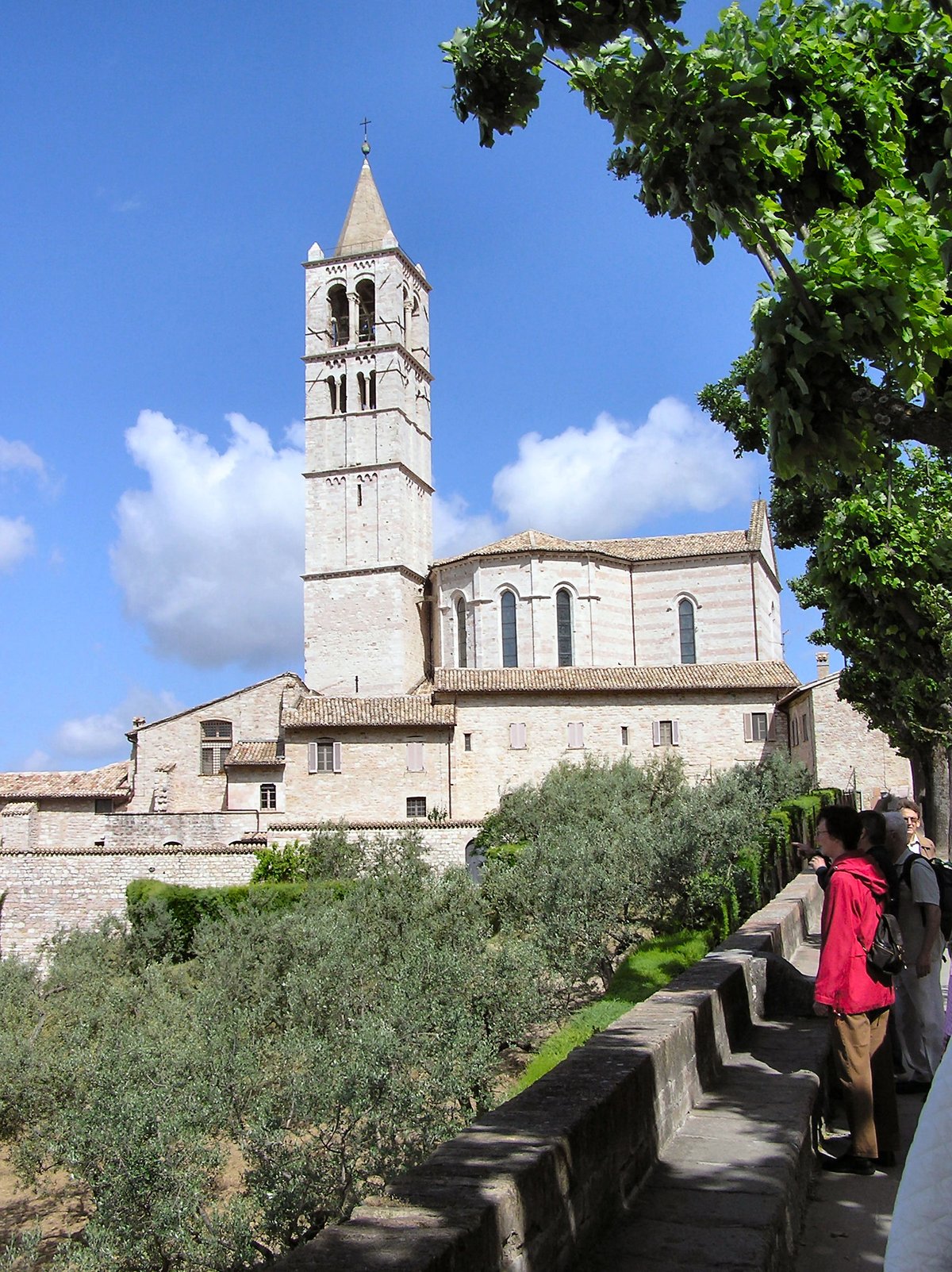
The Basilica of Santa Chiara is one of those churches that strike you immediately. The facade with stripes of white and pink stone from Subasio is unique, and when you arrive in the square, with the view stretching over the Umbrian valley, you understand why Assisi is special. The atmosphere here is intimate, quiet, different from nearby San Francesco. You enter and silence envelops you. Then you discover that under the main altar rests Santa Chiara, and in a side chapel there is the crucifix that spoke to San Francesco. Spine-tingling stuff. It’s not a museum, it’s a living place, where the Poor Clares still pray. Be prepared to be left breathless.
Historical Notes: From the Church of San Giorgio to the Basilica
The basilica was built between 1257 and 1265, immediately after the canonization of Saint Clare, on the site of the ancient church of San Giorgio. The remains of Saint Francis had been buried here until 1230, and here Clare had taken her vows. The architect was Filippo da Campello. The consecration took place in 1265 in the presence of Pope Clement IV. The crypt that now holds the saint’s body was added in 1850. The complex has been a UNESCO World Heritage site since 2000. Here are the key moments:
- 1253: death of Saint Clare
- 1255: canonization
- 1257-1265: construction of the basilica
- 1265: consecration
- 1850: construction of the crypt
- 2000: UNESCO listing
The San Damiano Crucifix: The Voice That Changed Everything
In the Chapel of the Sacrament, which was the ancient church of San Giorgio, lies the Oratory of the Crucifix. Here, the original San Damiano Crucifix is preserved, a 12th-century Romanesque work depicting a Christus triumphans – alive, with open eyes. According to tradition, in 1205 Francis was praying before this cross in the small church of San Damiano when he heard a voice saying: “Go, repair my house.” That was the moment of his conversion. The crucifix is a tempera on panel by an anonymous Umbrian artist, and its presence here is immensely powerful. Gazing at it sends chills down your spine, even if you are not a believer.
The Crypt and the Relics: The Body of Saint Clare
Descending the stairs to the right of the nave, you reach the neo-Gothic crypt built between 1851 and 1872. Here, in a glass urn, rest the remains of Saint Clare, discovered in 1850. The atmosphere is intimate, with soft lighting. Next to the sarcophagus are displayed precious relics: Clare’s tunic, cloak, and hood, the deacon’s alb of Saint Francis embroidered by her own hands, a reliquary with her hair, and the Rule of the Poor Clares dictated by her. This is not just a place of devotion: it is a plunge into the history of Franciscanism. The Poor Clares still live in the adjoining convent, and their discreet presence is felt.
Why Visit It
Three practical reasons not to miss the Basilica of Saint Clare. First: the San Damiano Crucifix – it’s the original, the one that spoke to Saint Francis. You won’t find it anywhere else. Second: the tomb of Saint Clare – seeing her body in the crypt is a moving experience, even for non-believers. Third: the two-tone Gothic architecture – the pink and white stone façade is highly photographed, and from the square you get a spectacular view of the Umbrian valley. Plus, admission is free and the basilica is open daily. No reservation needed, but come respectfully: it’s an active place of worship.
When to Go
The most magical time? Early morning, just as it opens. Light streams in through the rose window and stained glass, and silence reigns. If you arrive around 7 a.m., you’ll have the place almost to yourself. Alternatively, late afternoon, when the sun tints the facade pink. Avoid the midday hours in summer, when the heat is intense and tour groups arrive. The best season is spring or autumn, with mild temperatures and fewer crowds. But even in winter, with fog rising from the valley, there’s a mysterious charm. The key is not to rush. Take a good half hour to explore the basilica and crypt, then maybe sit in the square and take in the view.
Nearby
Two unmissable stops just a stone’s throw away. The first is the Basilica of St. Francis, on the other side of Assisi. The contrast is striking: there everything is grand, here it’s intimate. Worth comparing. The second is the Protomonastery of St. Clare, the convent of the Poor Clares attached to the basilica. It’s not open to visitors, but you can admire the cloister and the crypt of the ancient Church of St. George. If you have time, climb up to the Rocca Maggiore for a breathtaking view of Assisi and the valley. Or stroll through the historic center among medieval alleys and artisan shops. Everything is within walking distance, everything is enchanting.