
The Gianni Caproni Museum in Trento offers an immersive experience in Italian flight history with restored original aircraft and interactive activities. Founded in 1927 by pioneer Gianni Caproni, the museum is located near Trento-Mattarello Airport and is perfect for families and enthusiasts.
Events nearby


08/04/2026 - 23/09/2026

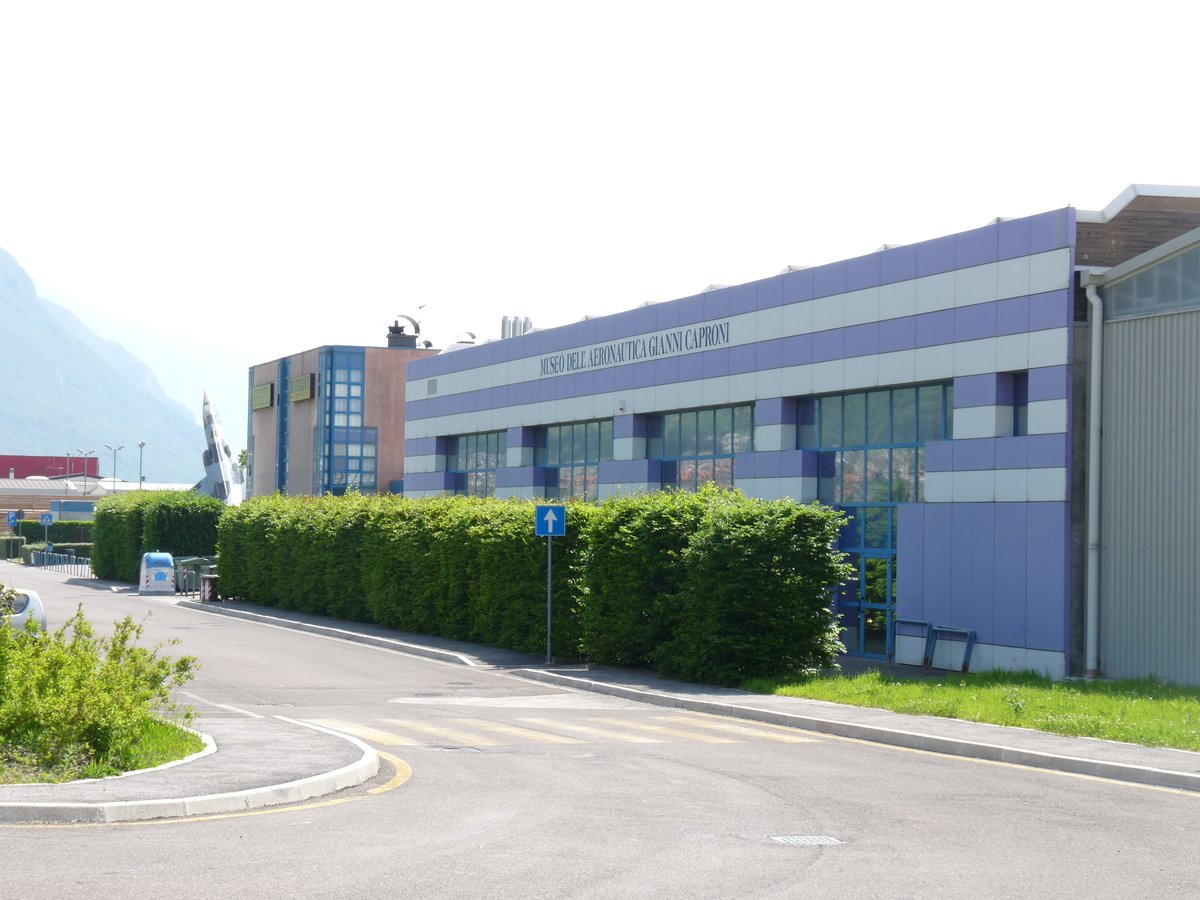
The Gianni Caproni Museum in Trento houses over twenty original historic aircraft, including the 1911 Caproni Ca.6 and war biplanes. Founded in 1927, it is Italy’s oldest aeronautical museum with interactive exhibits and historic engines.
- Via Lidorno 3, Trento (TN)
- Open in Google Maps
- View on Google Images Museo Gianni Caproni a Trento
Good to know
Introduction
Entering the Gianni Caproni Museum in Trento is like taking a leap back in time, yet with your feet firmly planted on the ground. Don’t expect a dusty museum: here, original historic aircraft surround you, suspended or resting, and they seem ready to take off again. The feeling is strange, almost magical. The museum is located in the area of Trento-Mattarello Airport, and this alone gives it a unique atmosphere. It’s not just a collection of objects, but a true narrative of Italian flight, starting from the insights of Gianni Caproni, a pioneer of aviation. The space is spacious, bright, and the aircraft—some truly imposing—capture the gaze of both adults and children from the very first moment. For me, the beauty is that you don’t need to be an expert: just let yourself be intrigued by those shapes, those materials from another era, and the story comes to you on its own.
Historical Overview
It all began with Gianni Caproni, a Trentino engineer who, at the dawn of the twentieth century, bet on the future of flight. His story intertwines with that of Italy, from the first experiments to aircraft production during the Great War. Founded in 1927, the museum is one of the world’s oldest dedicated to flight. Today, it houses over twenty original aircraft, many of them unique, restored with meticulous care. These are not replicas: they are the real pieces, the ones that once soared through the skies. The collection ranges from early-century biplanes to World War II fighters and more modern aircraft. It’s a journey through technological evolution, but also through the stories of the pilots and the achievements that made Italian aviation famous.
- 1886: Gianni Caproni is born in Arco, Trentino.
- 1910: Caproni builds his first aircraft, the Ca.1.
- 1927: The museum is founded, initially in Milan.
- 1992: The collection is permanently transferred to Trento, its current location.
- Today: The museum is managed by MUSE – Museo delle Scienze di Trento, which ensures its vitality and ongoing development.
Touching History with Your Own Hands
One of the things that struck me most was the opportunity to get really close to the aircraft. They’re not locked away in inaccessible cases: you can walk around them, observe the details of the fuselages, the wooden propellers, the cockpits. For children (and not only) it’s a powerful sensory experience. Then there are the interactive stations, simple but effective, which explain the principles of flight without too much theory. You find yourself trying a rudimentary flight simulator, or lifting an aileron to understand how it works. The museum has managed to balance historical preservation with a modern and engaging approach. It’s not uncommon to see visitors taking photos from creative angles, trying to capture the majesty of a Caproni Ca.3 or the elegance of a Fiat G.46. The carefully designed lighting accentuates the shapes, creating plays of shadow that make each visit a little different.
Beyond the Aircraft: Stories and Curiosities
The museum goes beyond just aircraft. It features historic engines, navigation instruments, uniforms, and period documents that tell the story of daily life for those who flew. One section is dedicated to Caproni’s achievements, such as altitude record attempts or transatlantic flights. Discover, for example, that some of his aircraft were used for polar explorations. Then there are personal stories: photos of pilots, letters, personal items that give a human face to the technology. I enjoyed finding references to the Trentino region, like the local woods used in constructions or collaborations with area artisans. It’s a museum that speaks of innovation, but also of community. If you pay attention, you’ll notice details like logos painted on fuselages or mechanics’ handwritten notes – small touches that make each piece unique.
Why Visit It
First: it’s a living museum, not a static display. The aircraft are well-maintained, some are still operational, and the atmosphere is one of continuous discovery. Second: it’s perfect for families. Children are awestruck by the suspended planes, and interactive activities keep them engaged without boredom. Third: it offers an authentic glimpse into Italian history, away from clichés. Here, you understand how Trentino, a land of mountains, gave birth to a pioneer of the skies. It’s a fascinating contrast. Additionally, the scientific management by MUSE ensures reliable content and constantly updated exhibits. It’s not the usual niche museum for enthusiasts: it’s a place that speaks to everyone, with simplicity and respect for history.
When to go
The museum is indoors, so it’s suitable for any season. But if you want a personal recommendation, try visiting on a grey or rainy day. Outside, the uncertain weather; inside, the warm light illuminating the aircraft creates an even more intimate and evocative atmosphere. In winter, when snow covers the surrounding mountains, the contrast with the world of flight is poetic. In summer, early morning or late afternoon are ideal: you avoid the hottest hours and encounter fewer groups. I visited on an autumn afternoon, with a slanting light coming through the large windows, and the planes seemed almost suspended in a golden aura. It was beautiful, perhaps partly due to luck, but that’s what makes each visit special.
In the Surroundings
If your visit to the museum sparked your interest in flight, make a quick trip to the nearby MUSE – Science Museum of Trento, in the Le Albere district. It’s not just a natural science museum: it features sections dedicated to technology and innovation, with a similarly modern and interactive approach. It’s a perfect complement, especially if you’re traveling with curious kids. Alternatively, if you prefer a complete change of scenery, head to Trento’s historic center, with its Cathedral and Buonconsiglio Castle. It’s a dive into medieval art and history, just a few minutes’ drive from the museum. Two different worlds, yet both tell the story of this region’s identity: on one side, the future looking upward; on the other, roots firmly planted in the ground.
Itineraries nearby

💡 Did You Know…?
Not everyone knows that some displayed aircraft, like the Caproni Ca.161, set world altitude records in the 1930s. Additionally, the museum preserves the original engine of Italy’s first jet aircraft, the Campini-Caproni CC.2, a rare piece that tells the story of the country’s technological innovation. If you visit on weekends, you might encounter passionate volunteers sharing anecdotes about restorations, making the experience even more vivid.