Galileo Museum Florence: Galileo’s Original Instruments and Italy’s Unique Collection

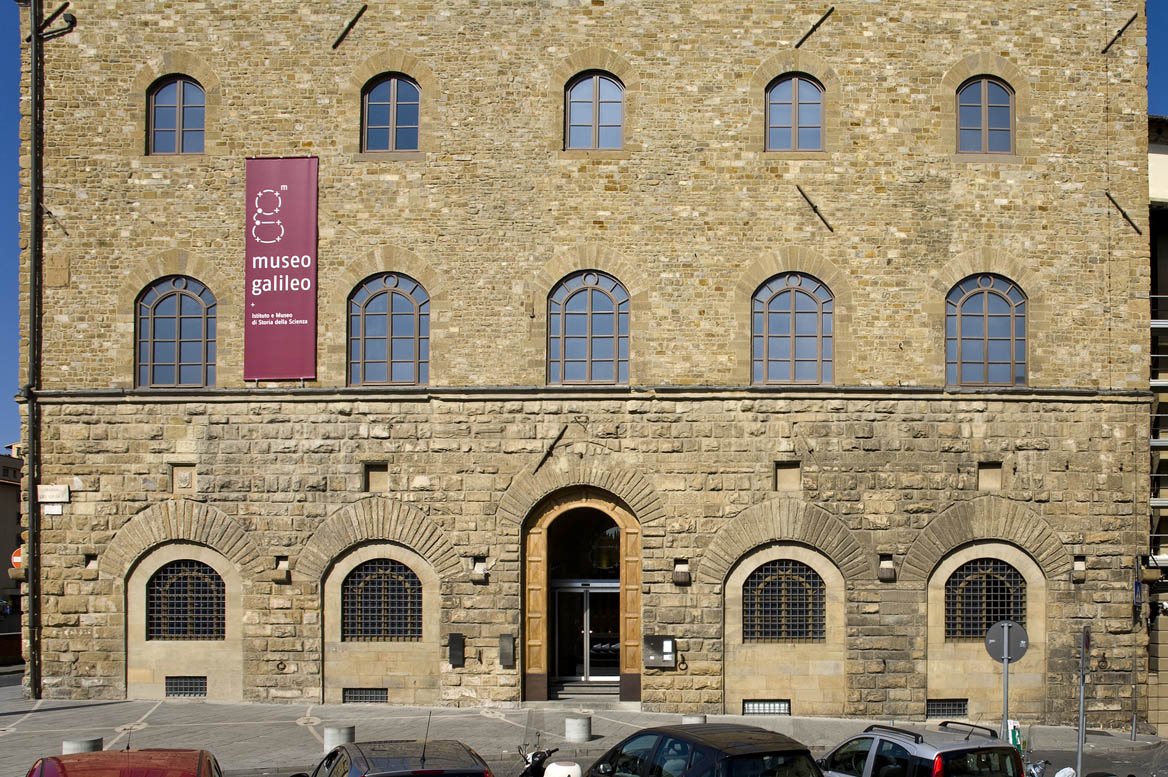
The Galileo Museum in Florence, in Piazza dei Giudici, preserves original scientific instruments by Galileo Galilei and other scientists, offering a unique perspective on the history of science. The collection includes pieces unique in the world, such as Galileo’s telescopes and Antonio Santucci’s armillary sphere, in a journey spanning from the Renaissance to the 19th century. Ideal for a cultural visit different from Renaissance art, the museum is family-friendly with clear explanations and interactive stations.

  • Galileo’s Original Instruments: see up close his telescopes and the lens used to observe Jupiter’s moons.
  • Italy’s Unique Collection: many pieces are the only ones existing in the world, such as Santucci’s armillary sphere.
  • Chronological Journey: rooms dedicated to Galileo, mathematics, and medicine with explanatory panels in Italian and English.
  • Historical Curiosities: discover Galileo’s middle finger and instruments like nocturnal clocks and wax anatomical models.


Events nearby

Copertina itinerario Galileo Museum Florence: Galileo's Original Instruments and Italy's Unique Collection
In Florence, the Galileo Museum displays original scientific instruments by Galileo Galilei, such as his telescopes and the lens used to observe Jupiter’s moons. Located in Piazza dei Giudici, near the Uffizi, it offers a journey through the history of science with rooms dedicated to Galileo, mathematics, and medicine, perfect for families and enthusiasts.

Good to know


Introduction

Stepping into the Museo Galileo in Florence is like taking a leap back in time, right into the heart of the scientific revolution. This is no ordinary dusty museum: here, you can feel the ingenuity of Galileo Galilei and the great Tuscan scientists, with original instruments that changed the world. Located in Piazza dei Giudici, just a stone’s throw from the Uffizi, the museum immediately impresses with its atmosphere: the historic halls of the Palazzo Castellani, a renovated medieval building, house a collection unique in the world. Seeing up close the telescope with which Galileo observed Jupiter’s moons, or the armillary spheres that mapped the sky, sends a shiver down your spine. It’s a place that fascinates both history enthusiasts, who will find plenty to sink their teeth into, and families, thanks to interactive paths and clear explanations. Perfect for a cultural break during a tour of Florence, it offers a different perspective on the city—not just art, but also science.

Historical Overview

The Galileo Museum was born from the passion for science of the Medici and Lorraine families, who for centuries collected precious instruments. The collection was officially founded in 1927, but its roots go back to the 17th century, when the Grand Dukes of Tuscany began preserving scientific equipment. After several relocations, in 2010 it found its permanent home in the Palazzo Castellani, renovated to best display its treasures. Here you’ll find not only Galileo’s relics but also instruments by Leonardo da Vinci, ancient maps, and medical devices, testifying to how Florence was a crossroads of knowledge. The museum’s history is closely tied to that of the city, with pieces saved from floods and wars, now carefully restored.

  • 17th century: Beginning of the Medici collection of scientific instruments.
  • 1927: Official founding of the museum.
  • 2010: Relocation and reopening in Palazzo Castellani with modern exhibition design.

The Must-See Rooms

The museum spans two floors, following a chronological journey from the Renaissance to the 19th century. On the first floor, don’t miss the Galileo Room, which features his original telescopes and planetary models: it’s thrilling to see the objects that challenged the beliefs of the time. Shortly after, the Mathematics Room impresses with finely decorated celestial globes and astrolabes, used for navigation and studying the stars. On the second floor, the section dedicated to medicine displays ancient surgical instruments and anatomical wax models, somewhat macabre but fascinating. Each room has explanatory panels in Italian and English, and for the more curious, there are interactive stations: you can try to replicate experiments or watch videos explaining how the instruments work. The layout is airy, with well-lit display cases that allow you to appreciate the details of each piece.

Curiosities and anecdotes

Beyond the famous instruments, the Museo Galileo hides small treasures that tell curious stories. For example, look for Galileo’s middle finger, preserved in a reliquary: it was removed from his body during an exhumation and became a sort of macabre keepsake. Or, observe the lenses he used for his experiments, still shiny despite the centuries. Another interesting point is the collection of nocturnal clocks, ingenious devices for telling time in the dark, used by nobles and scientists. The museum also organizes themed guided tours, such as those on alchemy or time measurement, which reveal lesser-known aspects of Florentine science. If you’re traveling with children, ask about the game kit available at the entrance: it makes the visit more engaging with riddles and hands-on activities. In short, it’s a place where every corner holds a surprise, away from the more beaten tourist paths.

Why Visit It

Visiting the Galileo Museum is worthwhile for at least three concrete reasons. First, it is one of the few museums in the world with Galileo’s original instruments: seeing his telescopes or geometric compass up close is a unique experience that school textbooks cannot convey. Second, it is easily accessible and family-friendly: with affordable tickets (often discounted for children and students), flexible hours, and clear explanations, it suits everyone, even those who are not science experts. Third, it offers a pleasant contrast with Florence’s Renaissance art: after admiring paintings and sculptures, here you discover the city’s rational and innovative side, completing the picture of its historical greatness. Additionally, its central location makes it a convenient stop to include in any itinerary, without long detours.

When to go

The best time to visit the Museo Galileo is early in the morning, right when it opens, when the rooms are still quiet and you can admire the instruments without crowds. Alternatively, during the autumn or winter months, when Florence is less crowded with tourists, the visit becomes more relaxed and you can linger on the details. Avoid summer afternoons in July and August, as it’s often full of groups and the heat can make the experience less pleasant. If you prefer a suggestive atmosphere, try going on a Saturday, when they sometimes organize special events or evening openings with soft lighting that enhances the exhibits. In general, plan your visit on weekdays to enjoy it at a leisurely pace, perhaps combining it with a stroll along the Arno.

In the Surroundings

After the Galileo Museum, continue your scientific exploration with a visit to the Archimedes’ Garden, an interactive mathematics museum just a few minutes’ walk away, perfect for families with curious children. Alternatively, if you prefer a more artistic yet thematic experience, head to the Specola, the zoology section of the Museum of Natural History, famous for its spectacular anatomical wax models. Both locations are within walking distance from the city center and complement Florence’s science theme, showcasing how the city has been an open-air laboratory for centuries.

Itineraries nearby


💡 Did You Know…?

One of the most touching objects is Galileo’s middle finger, preserved in a glass reliquary. It was removed from his body during exhumation in 1737, when his remains were transferred to Santa Croce. Seeing it today, alongside his instruments, gives an extraordinary sense of closeness to the genius who changed our view of the universe. Additionally, the museum houses the armillary sphere by Antonio Santucci, a 1593 cosmological model over two meters tall, considered one of the largest and most complex ever built.