A Hidden Gem Among the Hills
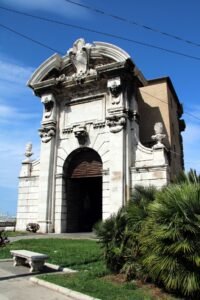
The Villa Imperiale in Pesaro is not just a Renaissance residence; it’s a peaceful experience that surprises you as soon as you pass through the gate. Arriving from the main road, you hardly expect it: it hides among the green hills, with that understated facade that gives no hint of the splendor inside. Then you enter, and the courtyard welcomes you with a silence broken only by the rustle of leaves. I was struck by how this place, though just a stone’s throw from Pesaro’s center, maintains such a secluded and intimate atmosphere. You won’t find crowds of tourists here, but people walking slowly, observing the details, breathing in the air of other centuries. The Italian gardens are meticulously kept, with geometric hedges that seem drawn with a ruler, and that scent of boxwood that follows you everywhere. The real magic lies in the contrast: outside, the city’s noise; inside, a suspended world where time seems to have stood still. For me, it felt like discovering a well-kept secret, one of those places that make you feel privileged to know them.
History in a Nutshell
The villa was built in the 16th century at the behest of
Alessandro Sforza, Lord of Pesaro, who wanted a residence worthy of his power. It was not just a country house, but a symbol of prestige, designed to host important figures and showcase the refinement of the court. In the 17th century, it passed to the Della Rovere family, who modified some rooms, but the Renaissance imprint remained dominant. What fascinates me is how, despite the centuries, it has been preserved so well, almost intact in its essence. It is not a cold museum, but a place that has truly lived, with stories of celebrations, political meetings, and daily life. The walls tell more than any guide: in the frescoes, you can recognize the tastes of the era; in the mosaic floors, the skill of local artisans. A curiosity? It is said that
Lucrezia Borgia also stayed here during her brief period in Pesaro. Essential timeline:
- 1460-1470: Construction commissioned by Alessandro Sforza
- 16th century: Expansions and decorations under the Della Rovere
- Today: Municipal property, open to the public for visits
The Garden That Speaks of Geometry and Scents
If the villa is majestic, the garden is its most delicate soul. It is not just a green space, but a true example of an Italian garden where every element has a precise meaning. Walking along the paths, you will immediately notice the perfect symmetry: the flowerbeds are arranged as in a painting, with boxwood hedges forming intricate patterns. In spring, the colors of antique roses explode, those fragrant varieties that are now rarely found. I paused to observe the central fountain, not grandiose but elegant, with its gentle spray accompanying the birdsong. What strikes you is the meticulous care: every plant is pruned with precision, every corner seems designed to create different perspectives. In summer, under the ancient trees, you find cool shade that invites you to sit and gaze at the city panorama. It is a place that inspires calm, where even the noises seem to fade. Personally, I spent more time here than inside the villa, letting myself be lulled by this ordered peace.
The Interiors: A Journey into the Renaissance
Crossing the threshold, you are immersed in another era. The rooms are not many, but each tells a story through frescoes, coffered ceilings, and original floors. What struck me is the atmosphere: there are no barriers, you can approach the walls, observe the details of the paintings up close. In the main hall, the frescoes depict mythological and allegorical scenes, with colors that after centuries retain a surprising vibrancy. You will notice the monumental fireplaces, not only decorative but functional, which must have heated these spaces in winter. The terracotta and majolica floors are a masterpiece of craftsmanship, with geometric patterns repeating harmoniously. A smaller room, perhaps a study, has shelves embedded in the walls: I imagine rare books and precious objects displayed here. Light enters from the high windows, creating chiaroscuro effects that change with the time of day. It is not a museum crowded with objects, but an essential space where the architecture itself is the work of art. I wondered what it must have been like to live here, with those high ceilings and the echo of footsteps on the floors.
Why It’s Worth Visiting
First: it’s an authentic alternative to the most popular sites. While other Renaissance sites suffer from overcrowding, here you can enjoy art at your own pace, almost in solitude. Second: the perfect balance between nature and culture. You don’t just visit a villa, but experience the complete immersion of its gardens, which alone are worth the trip. Third: the location is extremely convenient. It’s easily accessible from the center of Pesaro, so you can combine the visit with exploring the city stress-free. For me, the true value lies in those moments of tranquility: sitting on a bench in the garden, listening to the silence, observing architectural details without being jostled. It’s a place that gives you time, not just beauty. Moreover, being lesser-known, it has maintained an authenticity that has been lost elsewhere. I recommend taking an hour without plans, letting curiosity guide you, perhaps returning multiple times to appreciate different nuances.
The Right Moment
I would avoid the midday hours during summer days, when the sun beats down strongly and the garden loses a bit of its magic. My advice? Late spring or early autumn, in the late afternoon hours. The light is warmer, more oblique, and enhances the colors of the frescoes and the greenery. In summer, early morning is perfect: the air is fresh, the garden awakens with intense scents, and you have all the tranquility to explore. In autumn, the falling leaves create a melancholic and suggestive atmosphere, with those golden tones that blend with the villa’s stone. I also visited on a cloudy winter day, and I must say the interiors gain a particular charm, with that soft light that seems to come from a painting. In short, every season has its character, but for the first time I would choose a moment when you can be outdoors without hurry, perhaps with a book in hand to fully enjoy the peace of the place.
What to Pair in the Surrounding Area
After the villa, head down to the historic center of Pesaro for a perfect contrast. Stroll along the cobblestone streets, admire the facades of noble palaces, and stop at one of the historic pastry shops to taste ‘pane nobile,’ a typical sweet that they make here like no one else. If you’re interested in art, just a few steps away is Casa Rossini, where the famous composer was born: a small but rich museum of memorabilia that tells his life story. Alternatively, if you want to stay in the theme of greenery, head to Parco San Bartolo, the nature reserve overlooking the sea. Here, you can take a walk along the trails that skirt the cliffs, with breathtaking views of the Adriatic. It’s a completely different but complementary experience: from the orderly geometry of the gardens to the wild nature of the coast. Personally, I did it this way: villa in the morning, lunch in the center, and then an hour at the park to digest. It works perfectly.