Pesaro Civic Museums: Bellini’s Altarpiece and Renaissance Ceramics in Palazzo Mosca

The Pesaro Civic Museums, set up in Palazzo Mosca in the historic center, offer a journey through local art and history. The collection includes Renaissance masterpieces such as Giovanni Bellini’s Pesaro Altarpiece, traditional ceramics, and Roman archaeological finds, in an intimate and accessible setting.

  • Giovanni Bellini’s Pesaro Altarpiece, a fundamental work of the Italian Renaissance from 1475
  • Collection of Renaissance ceramics with typical Pesaro decorations in cobalt blue and ochre yellow
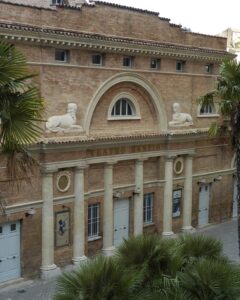
  • Palazzo Mosca, a historic noble building housing the museum in the center of Pesaro
  • Archaeological finds that tell the story of the city’s Roman origins

Copertina itinerario Pesaro Civic Museums: Bellini's Altarpiece and Renaissance Ceramics in Palazzo Mosca
The Pesaro Civic Museums house Giovanni Bellini’s Pesaro Altarpiece and a collection of Renaissance ceramics in Palazzo Mosca, along with Roman archaeological finds and works by Guido Reni.

Good to know


A Palace That Tells a Story

Entering the Civic Museums of Pesaro is like opening a living art history book. Don’t expect a cold, detached museum: everything here is housed in Palazzo Mosca, a stately building that’s worth a visit in itself. The feeling is that of being a guest in a Renaissance residence, where each room welcomes you with works that speak of Pesaro and its glorious past. The light filtering through the windows onto Giovanni Bellini’s paintings creates an almost intimate atmosphere, far from the chaos of large museums. Personally, I was struck by how the collections are organized to guide you through a narrative thread: from local ceramics, with those vibrant colors typical of Pesaro maiolica, to Renaissance masterpieces. It’s not just an art gallery, but a journey into the identity of this city.

History in a Nutshell

The Civic Museums were officially established in 1936, but their roots trace back to the collecting practices of Pesaro’s noble families in the 19th century. The turning point came with the donation of artworks from the Mosca family, which allowed for the creation of this museum nucleus in their palace. A fascinating detail I love: the highlight, the Pala di Pesaro by Giovanni Bellini, comes from the Church of San Francesco and represents an unbreakable bond between art and the city’s devotion. Over time, the museum has been enriched with local archaeological finds and a section dedicated to ceramics, showcasing an art in which Pesaro excelled since the Middle Ages.

  • 1936: official opening of the Civic Museums
  • 19th century: formation of noble collections
  • Renaissance: golden age of the exhibited works
  • Middle Ages: Pesaro’s ceramic tradition

The Renaissance Looking You in the Eyes

The room dedicated to Giovanni Bellini is the beating heart of the museum. It’s not just about admiring the technique: here you feel observed by the characters of the Pala di Pesaro, with that emotional depth that only great masters can convey. The colors, exceptionally preserved, still seem vibrant after centuries. Nearby, works by other Renaissance artists like Lorenzo Lotto and the local school create a silent dialogue between Venetian and Marche influences. I like to linger on the details: the expressions of the saints, the drapery of the garments, that sense of spirituality emanating from the canvases. This section requires time, but it’s worth it because it fully immerses you in an era of artistic splendor.

Ceramics: The Colorful Soul of Pesaro

Perhaps less known but equally fascinating is the collection of ceramics. Pesaro has an ancient tradition in this field, and here you can see examples ranging from the Middle Ages to the nineteenth century. These are not just plates and vases: they are stories of local craftsmanship, with decorations that depict symbols, family crests, and geometric patterns typical of the area. I was surprised by the variety of colors, especially the cobalt blue and ochre yellow, which seem to reflect the light of the nearby Adriatic Sea. This section helps you understand how art in Pesaro was not just for the elite, but also part of everyday life. It’s a piece of local identity that visitors often overlook, yet it adds an important piece to understanding the region.

Why to put it on your agenda

First: the concentration of Renaissance masterpieces in a compact space allows you to enjoy them without the crowds of large museums. Second: it’s an excellent introduction to Pesaro’s history, as it combines art, archaeology, and craftsmanship in a single itinerary. Third: the location in Palazzo Mosca adds charm, with those frescoed rooms framing the artworks. For families, there’s also a practical side: the museum isn’t too large, so children don’t get tired, and the colorful ceramics often capture their attention. In short, it’s a visit that’s satisfying without requiring hours of walking.

The Right Moment

In my opinion, the best time is autumn, when mass tourism decreases and you can enjoy the rooms more peacefully. The days are still long, and the light streaming through the palace windows creates warm atmospheres, perfect for admiring the paintings. I would avoid summer weekends because there’s sometimes more crowding. As for the time of day, late afternoon is magical: the low sun illuminates the works in a suggestive way, and after the visit, you can go out and get lost in the streets of Pesaro’s historic center, which comes alive in the evening with venues and strolls. In winter, the museum is a cozy refuge from cold days.

After the Museum

After leaving the Civic Museums, I recommend taking a short walk to Piazza del Popolo, the heart of Pesaro, with its fountain and Renaissance porticoes. It’s just a few minutes away on foot, where you can soak up the city’s lively atmosphere. If art has captured your interest, another must-see is Casa Rossini, the birthplace of the famous composer: it’s included in the same combined ticket, so there’s no extra cost. For a themed experience, look for some ceramic workshops in the historic center, where local artisans still produce pieces inspired by the traditions you saw at the museum. Pesaro is small, so everything is within walking distance.

Itineraries nearby


💡 Did You Know…?

An ultra-realistic curiosity: the museum houses Giovanni Bellini’s Pala di Pesaro, a fundamental work of the Italian Renaissance. The panel, created in 1475, depicts the Coronation of the Virgin and is known for its luminosity and harmonious composition. It was commissioned for the Church of San Francesco in Pesaro and represents a deep connection between the city and the art of the period. Observing it up close, you can see meticulous details, such as the folds of the drapery and the expressions of the figures, which testify to Bellini’s mastery. This masterpiece makes the visit a unique experience, allowing you to admire in person a work usually studied only in art books.