
🧭 What to Expect
- Ideal for art and history enthusiasts, with a perfectly preserved medieval center.
- Highlights: Piazza Grande with its trapezoidal shape, the Basilica of San Francesco and Piero della Francesca's frescoes, the Medici Fortress with panoramic views.
- Includes archaeological museums with the Etruscan Chimera and Romanesque churches like the Pieve di Santa Maria.
- Offers an authentic experience away from mass tourism, with medieval atmospheres and living traditions.
Events nearby


Arezzo welcomes you with its perfectly preserved medieval historic center, where every stone tells centuries of history. Piazza Grande is the beating heart of the city, with its characteristic slope and surrounding Renaissance palaces. Here takes place the famous Giostra del Saracino, one of Italy's most spectacular historical reenactments. The Basilica of San Francesco houses Piero della Francesca's fresco cycle of the Legend of the True Cross, an absolute masterpiece of Renaissance art. Climbing up to the Medici Fortress offers a breathtaking panoramic view of the city and Tuscan hills. The National Archaeological Museum in the former monastery of San Bernardo and the Vasari House Museum complete the cultural offerings of this city that perfectly blends art, history, and tradition.
Overview
- Piazza Grande
- Basilica of San Francesco
- National Archaeological Museum Gaio Cilnio Mecenate
- Medici Fortress
- Vasari House Museum
- National Museum of Medieval and Modern Art
- Roman Amphitheatre
- Church of San Domenico
- Pieve di Santa Maria
- Santa Maria delle Grazie
- The Chimera of Arezzo
- Palazzo della Fraternita dei Laici
- Ivan Bruschi House Museum
- Church of the Santissima Annunziata
- Petrarca Theatre
Itineraries nearby

Piazza Grande
- Piazza Grande, Arezzo (AR)
- Open in Google Maps
- View on Google Images
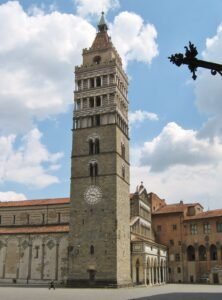
 Piazza Grande is the true beating heart of Arezzo, a medieval gem that transports you back in time the moment you set foot there. The square has a unique characteristic: its trapezoidal shape and natural slope create a scenic effect you won't find in any other Tuscan square. Here, every building tells a story: the Palazzo della Fraternita dei Laici with its facade blending Gothic and Renaissance styles, the Palazzo delle Logge designed by Giorgio Vasari, and the Pieve di Santa Maria dominating with its bell tower. But Piazza Grande isn't just about architecture. This is where the Antiques Fair takes place, one of Italy's most important antique markets, on the first weekend of every month. The shops under the arcades still sell local products like Chianti wine from the Aretine Hills and extra virgin olive oil. The square is perfect for a break: sit on one of the stone steps and watch life flow slowly, just as it did centuries ago. In the evening, the lighting makes everything even more magical, with lights accentuating the textures of the ancient palaces.
Basilica of San Francesco
- Via San Francesco, Arezzo (AR)
- https://www.discoverarezzo.com/en/ticket-office/
- Open in Google Maps
- View on Google Images
 The Basilica of San Francesco is a Gothic jewel in the heart of Arezzo, housing one of the most important fresco cycles of the Italian Renaissance. Upon entering, your eye is immediately drawn to the Bacci Chapel, home to the renowned fresco cycle The Legend of the True Cross by Piero della Francesca. Created between 1452 and 1466, this masterpiece recounts the story of the wood from Christ's cross through scenes of rare beauty and complex perspective. The basilica itself, built between the 13th and 14th centuries, features an unfinished stone facade that conceals a simple yet treasure-filled interior. Beyond Piero's frescoes, the wooden crucifix by the Master of San Francesco and the 15th-century stained glass windows deserve attention. The visit typically takes about 30-45 minutes, but art enthusiasts may want to linger much longer. We recommend booking tickets online to skip the queues, especially on weekends. The basilica is open year-round with varying morning and afternoon hours, but always check the updated schedule before your visit. The entrance ticket includes access to the main chapel and other visitable areas. Please remember that silence is required inside, and flash photography is prohibited to preserve the delicate frescoes.
National Archaeological Museum Gaio Cilnio Mecenate
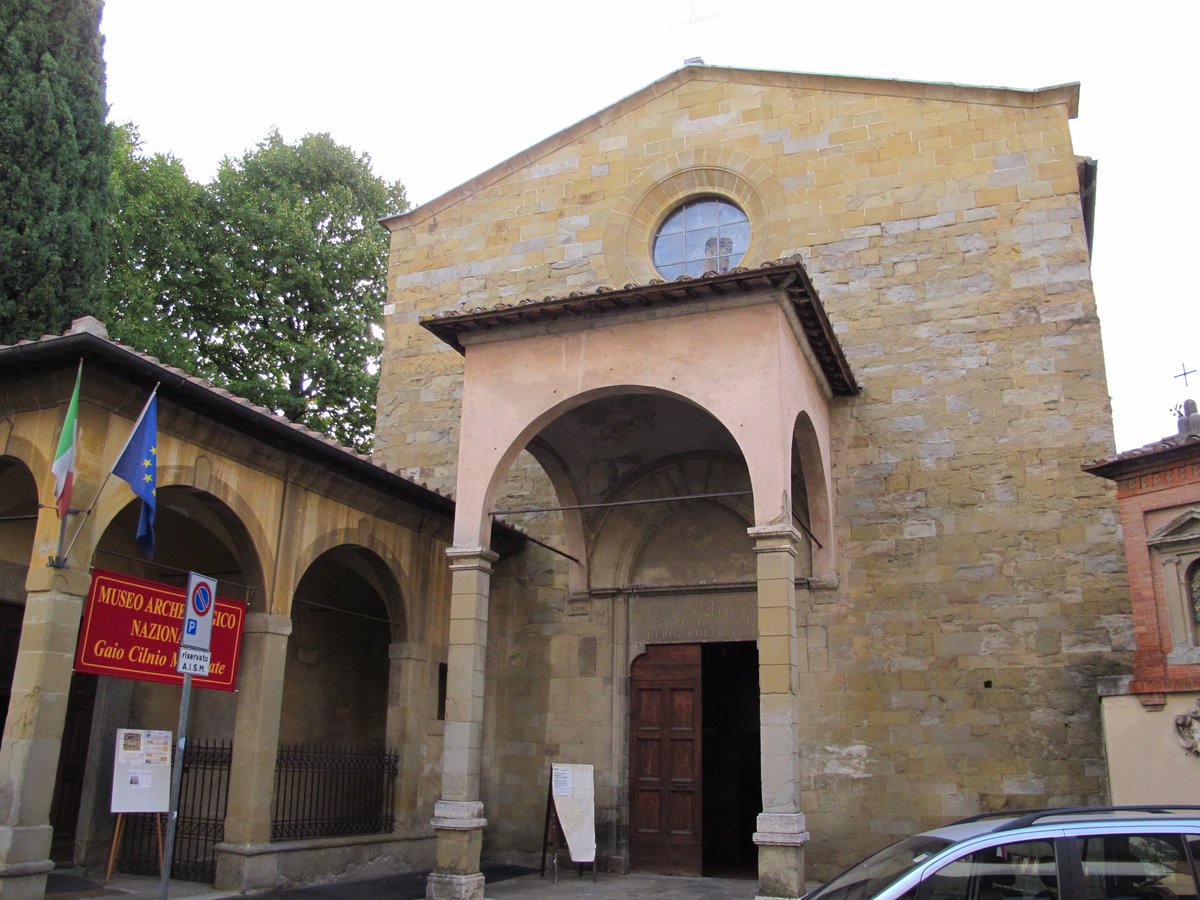 If you love archaeology, the National Archaeological Museum Gaio Cilnio Mecenate is a must-see stop in Arezzo. Located in the former monastery of San Bernardo, right next to the Roman amphitheatre, this museum takes you straight to the heart of ancient Arretium. The collection is clearly organized: on the ground floor you'll find Etruscan artifacts, on the first floor Roman ones. Don't miss the famous Baratti Amphora, a silver masterpiece from the 4th century AD discovered in the Tuscan sea, and the extraordinary collection of coral-red ceramics, typical Arezzo pottery with that characteristic red patina that looks like coral. Then there are the Etruscan bronze statuettes, votive figurines that tell of rituals and deities of the era. The museum is well-signposted, with explanatory panels in Italian and English. Admission costs just a few euros and there are often temporary exhibitions. If you're traveling with children, ask at reception about educational activities: sometimes they organize workshops on how clay was worked in ancient times. The museum is accessible and can be visited in about an hour, two at most if you want to read everything. In summer, take advantage of the inner garden for a shady break. In short, a place where Tuscan history comes to life without needing too much explanation.
Medici Fortress
- Viale Bruno Buozzi, Arezzo (AR)
- Open in Google Maps
- View on Google Images
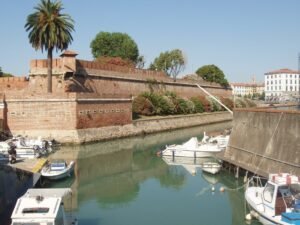
 The Medici Fortress dominates Arezzo from the summit of San Donato Hill, offering a spectacular panorama of the historic center and the gentle Tuscan hills. Built between 1538 and 1560 at the behest of Cosimo I de' Medici, this fortress is an example of Renaissance military architecture, designed to control the city after the Aretine rebellion. Today, its imposing walls and angular bastions tell centuries of history, from the Medici garrisons to its use as a prison in the 19th century. Walking along the patrol paths provides unique views of Piazza Grande, the Cathedral, and the surrounding countryside, especially at sunset when golden light envelops everything. Access is free, and the area is perfect for a quiet break away from the crowds. Note that the fortress is primarily an outdoor area: don't expect internal museums, but enjoy the authentic atmosphere and details like the sally ports (secondary gates) and cannon loopholes. It's an ideal spot for those seeking a moment of peace with a view that alone is worth the trip.
Vasari House Museum
- Via Venti Settembre 55, Arezzo (AR)
- https://www.polomusealetoscana.beniculturali.it/index.php?it/192/museo-di-casa-vasari-arezzo
- Open in Google Maps
- View on Google Images
- pm-tos@beniculturali.it
- +39 0575 409040
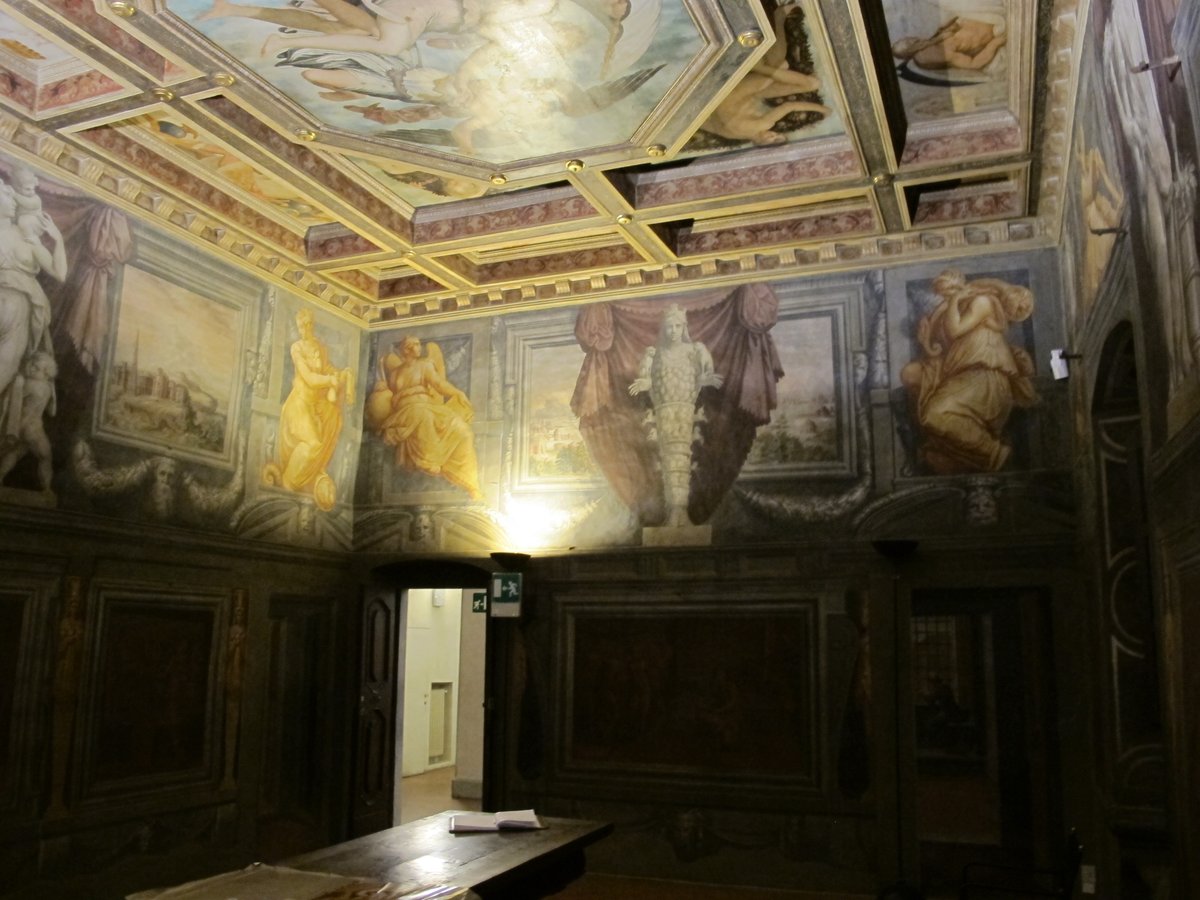 Visiting the Vasari House Museum means literally stepping into the private life of one of the most important artists of the Italian Renaissance. Giorgio Vasari, known not only as a painter but also as an architect and art historian, purchased this house in 1540 and transformed it into his Arezzo residence, personally decorating it with frescoes that today form the heart of the museum. The rooms on the main floor are a true spectacle: the Fireplace Room, the Chamber of Apollo and the Muses, and the Room of Fame display pictorial cycles where Vasari portrayed mythological deities and allegories, creating an environment that blends art and daily life. The frescoes are rich with symbols that tell of his vision of art and the world, such as the figures of Apollo and the Muses in the main chamber, symbolizing creative inspiration. Beyond the decorated spaces, the museum preserves period furniture, personal objects, and a collection of paintings and drawings by Vasari and other contemporary artists, offering an intimate glimpse into 16th-century culture. The house is located on Via XX Settembre, in the historic center of Arezzo, and is easily reachable on foot from Piazza Grande. Admission is charged, with reduced rates for students and seniors over 65, and it is open year-round, though it's advisable to check the hours in advance to avoid temporary closures. For art enthusiasts, it's a unique experience that goes beyond a simple museum visit: it's a dive into the mind of a Renaissance genius.
National Museum of Medieval and Modern Art
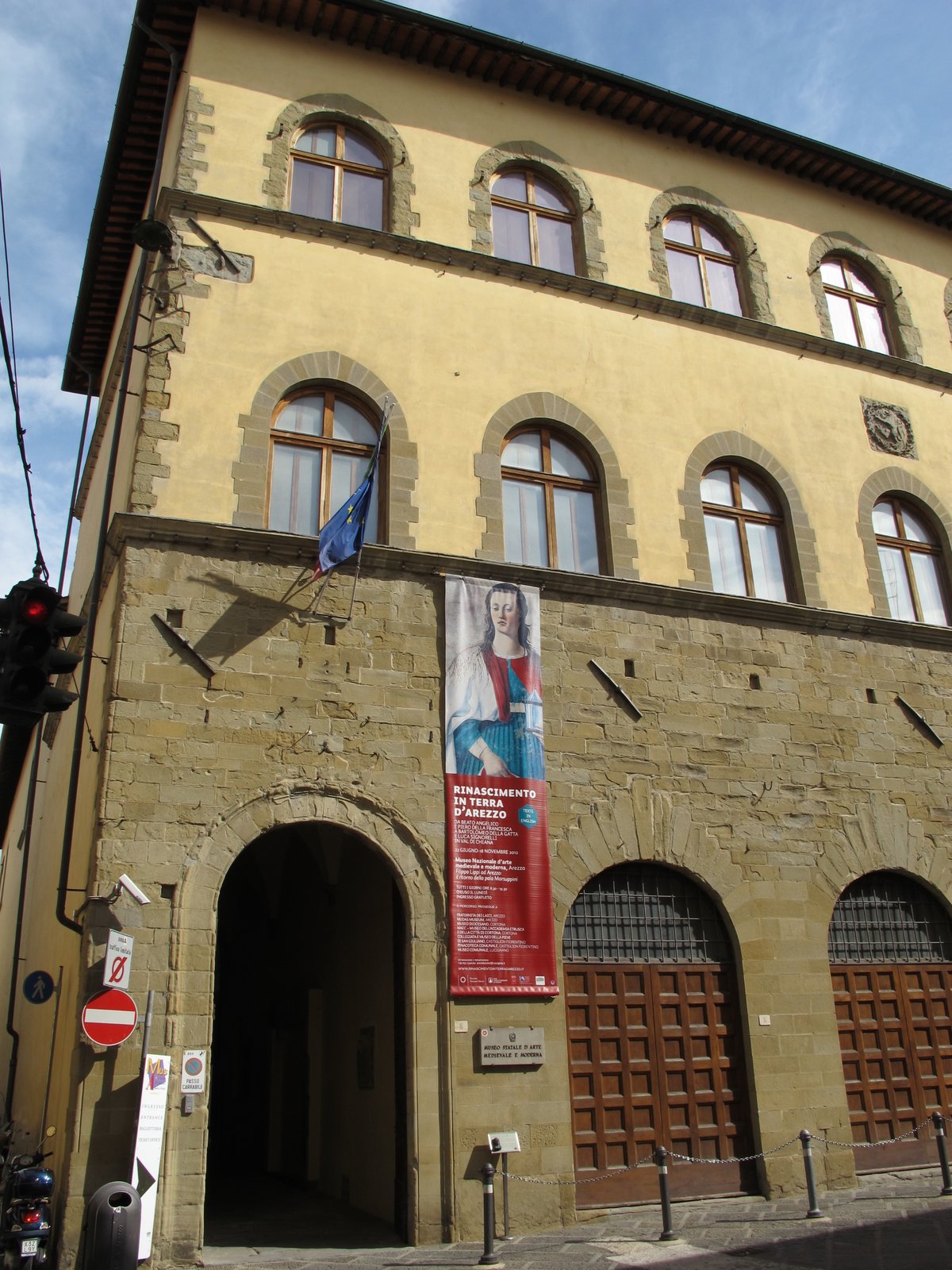 If you love art and history, the National Museum of Medieval and Modern Art in Arezzo is an essential stop. Housed in the Palazzo Bruni Ciocchi, a Renaissance building that's worth a visit in its own right, this museum takes you on a fascinating journey from the Middle Ages to the 19th century. The permanent collection is rich with works that tell the artistic story of the city and surrounding region: here you can admire polychrome wooden sculptures from the Tuscan school, panel paintings, and canvases by artists like Giorgio Vasari, Bartolomeo della Gatta, and Luca Signorelli. One of the most interesting sections is dedicated to medieval and Renaissance ceramics, with pieces from local excavations that show the evolution of this art form over time. Don't miss the majolica room, where standout examples include prized pieces from Deruta and Montelupo. The museum is well-organized, with clear explanatory panels that help you contextualize the works without weighing down your visit. The atmosphere is intimate and allows you to enjoy every detail at your leisure. If you're an art enthusiast, spending a couple of hours in this museum will give you a deeper perspective on Aretine culture.
Roman Amphitheatre
- Via Francesco Crispi, Arezzo (AR)
- http://www.archeotoscana.beniculturali.it/
- Open in Google Maps
- View on Google Images
 The Roman Amphitheatre of Arezzo is one of the most fascinating testimonies of the imperial era in Tuscany. Built between the 1st and 2nd centuries AD, it could accommodate up to 8,000 spectators for gladiator shows and hunts with exotic animals. Today, what remains are the imposing brick structures of the perimeter walls and part of the seating tiers, immersed in a suggestive atmosphere that transports you back in time. The location is strategic: it's located right behind the National Archaeological Museum Gaio Cilnio Mecenate, which houses artifacts discovered during the amphitheatre excavations, including mosaics, statues, and inscriptions that tell the story of daily life in ancient Arretium. Admission is free and the area is always open, making it an ideal stop for a leisurely stroll. The remains are clearly visible from the road, but it's worth approaching to appreciate the architectural details, such as the brick arches that once supported the stands. During summer, the amphitheatre becomes a stage for cultural events and concerts, a unique way to experience history in a contemporary context. If you love archaeology, don't miss the nearby museum, where you'll discover how Arezzo was an important commercial and artistic center in Roman times, famous for its production of ceramics and bronzes.
Church of San Domenico
- Via Padre Caprara, Arezzo (AR)
- Open in Google Maps
- View on Google Images
 The Church of San Domenico is one of the oldest places of worship in Arezzo, founded in the 13th century and completed in the 14th. Its raw stone facade and bell gable welcome you with an authentic medieval atmosphere. Upon entering, you'll be struck by the simplicity of the single-nave interior, typical of mendicant order architecture, with exposed trusses and bare walls that enhance the sense of spirituality. The true treasure here is the Wooden Crucifix by Cimabue, dated between 1268 and 1271, considered one of the master's early works. Observe it up close: you'll notice the details of Christ's suffering face and the anatomical rendering, elements that foreshadow the Renaissance. In the Dragomanni Chapel, dedicated to Saint Peter Martyr, admire the 14th-century frescoes by Spinello Aretino, which tell stories of saints with vibrant colors and dynamic compositions. The church also houses an organ from 1521, one of the oldest still functioning in Tuscany. Its location on Via Cavour makes it easily accessible during a stroll through the historic center. Admission is free, but check the opening hours as they may vary. If you visit Arezzo, don't miss this artistic treasure trove: it's a plunge into Tuscan art history, away from the crowds of more famous sites.
Pieve di Santa Maria
- Corso Italia, Arezzo (AR)
- Open in Google Maps
- View on Google Images
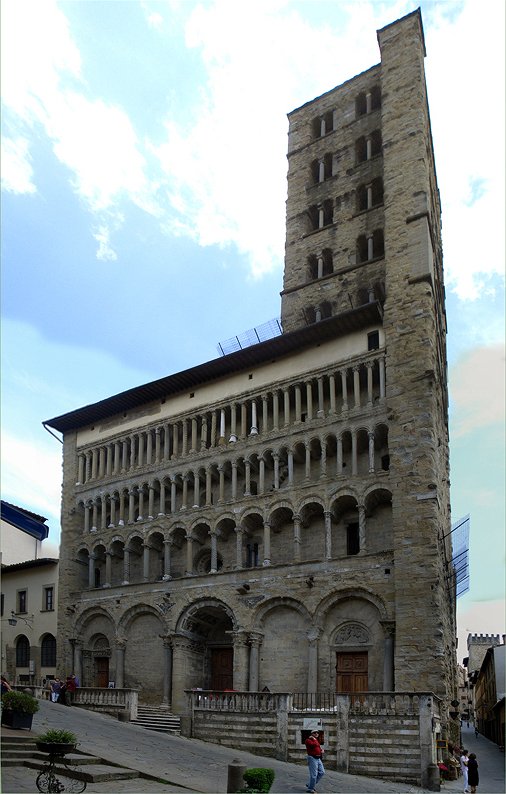 The Pieve di Santa Maria is one of Arezzo's oldest and most evocative monuments, a true gem of Romanesque architecture that dominates the historic center with its imposing facade. Built between the 12th and 13th centuries, it immediately captivates with its loggia facade, a masterpiece of balance and harmony, with its small columns and arches creating a unique visual rhythm. Upon entering, you're enveloped in an atmosphere of contemplation, enhanced by the basilica plan with three naves divided by pietra serena columns. The interior houses treasures such as the polyptych by Pietro Lorenzetti, a 14th-century work depicting the Madonna and Child with saints, and the Romanesque ciborium, one of the few surviving examples in Tuscany. Climbing the bell tower, known as 'delle cento buche' for its bifora and trifora windows, you'll enjoy a panoramic view over Arezzo and the surrounding hills, a moment that alone makes the visit worthwhile. The Pieve is also an active place of worship, so check mass times if you wish to attend a service. Perfect for those who love medieval art, it offers an intense experience without the need for reservations, but check opening hours to avoid surprises.
Santa Maria delle Grazie
- Via Santa Maria delle Grazie, Arezzo (AR)
- Open in Google Maps
- View on Google Images
 Just outside the historic center of Arezzo, along the road leading to Siena, stands Santa Maria delle Grazie, a sanctuary that captivates with its Renaissance elegance and intimate atmosphere. Built between 1435 and 1444 based on a design by Michelozzo Michelozzi, the structure represents one of the earliest examples of Renaissance architecture in Tuscany. The pietra serena facade stands out against the sky, while the front portico, with its slender columns, invites contemplative pauses. Inside, the single nave is dominated by the high altar housing the Madonna delle Grazie, a 14th-century fresco traditionally attributed to Pietro della Francesca, an object of particular devotion. The right side chapel contains a 15th-century wooden crucifix, while the left one preserves traces of votive frescoes. Behind the church extends a Renaissance cloister with a central well, perfect for a quiet break. The complex also includes the rooms of the former convent, now used for cultural events. Its slightly secluded location away from city traffic makes Santa Maria delle Grazie an ideal destination for those seeking a moment of tranquility without straying too far from the city. Admission is free and access is permitted during the opening hours indicated at the entrance.
The Chimera of Arezzo
- Go to the page: Chimera of Arezzo: 4th Century BC Etruscan Bronze at the Archaeological Museum
- Via San Lorentino, Arezzo (AR)
- Open in Google Maps
- View on Google Images
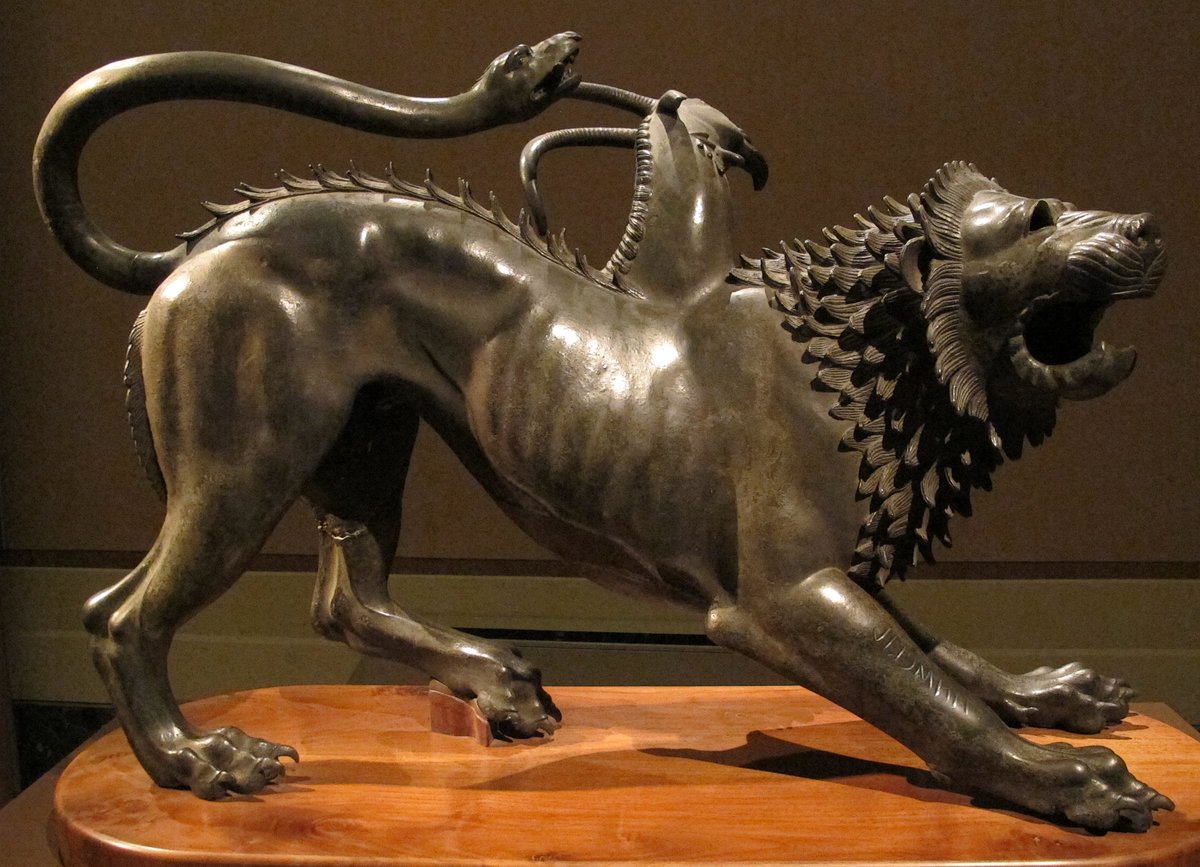 When visiting Arezzo, you cannot miss The Chimera, one of the absolute masterpieces of Etruscan art preserved at the National Archaeological Museum Gaio Cilnio Mecenate. This extraordinary bronze sculpture, standing about 80 centimeters tall, depicts the mythical creature with a lion's head, goat's body, and serpent's tail, captured in the moment it turns to bite the serpent emerging from its back. Discovered in 1553 during the construction of the Medici walls, the Chimera dates back to the 5th century BC and represents an exceptional example of Etruscan artisans' mastery in bronze work. Observe it up close to appreciate the perfect anatomical details and the fierce yet suffering expression. The museum provides an ideal context for understanding the importance of this artifact, with explanatory panels that tell its story and significance in ancient mythology. Visiting the Chimera is an immersion into Etruscan civilization that will leave you in awe.
Palazzo della Fraternita dei Laici
- Via Giorgio Vasari, Arezzo (AR)
- Open in Google Maps
- View on Google Images
 Overlooking Piazza Grande, the Palazzo della Fraternita dei Laici is one of Arezzo's most iconic buildings. Its facade presents a fascinating blend of styles: the lower section in pietra serena dates back to the 14th century, while the upper floor in white and green marble is a Renaissance masterpiece from the 15th century. Ascending the entrance staircase leads to rooms preserving original furnishings and valuable artworks. Don't miss the astronomical clock on the tower, still functioning after centuries: complex mechanisms display lunar phases and zodiac signs. Inside, the Council Hall features frescoes and period furniture, testifying to the power of the lay confraternity that administered charitable works and justice here. The visit often includes access to the tower, offering a panoramic view over the square and the historic center's rooftops. The palace also hosts temporary exhibitions, enriching the experience with contemporary art or historical artifacts. A curious detail: observe the allegorical symbols carved on the facade, such as the scales of justice, which narrate the Fraternita's civic mission. Convenient to visit, it's located in the heart of Arezzo, just steps from the Basilica of San Francesco and the Duomo. Admission is charged, but the combined ticket with other city museums offers excellent value for money.
Ivan Bruschi House Museum
- Corso Italia 14, Arezzo (AR)
- https://www.fondazioneivanbruschi.it/fondazione/la-vita-ivan-bruschi/
- Open in Google Maps
- View on Google Images
 In the heart of Arezzo's historic center, just steps from Piazza Grande, lies the Ivan Bruschi House Museum, a gem that tells the story of the renowned Arezzo antiquarian's collecting passion. The house, located on Corso Italia, offers an authentic journey through time with period furnishings, rare objects, and a specialized library. Ivan Bruschi, founder of the Arezzo Antiques Fair, assembled here a diverse collection ranging from archaeology to decorative arts, featuring unique pieces such as ancient coins, ceramics, and scientific instruments. The rooms, furnished with original pieces, preserve the intimate atmosphere of a lived-in home, where every object has a story to reveal. The visit allows you to discover not only the treasures accumulated by Bruschi but also his personality and connection to the city. Particularly evocative are the room dedicated to Roman artifacts and the spaces hosting temporary exhibitions, often related to antiques and local art. An ideal place for those seeking an experience off the beaten path, capable of combining culture and curiosity in a domestic and welcoming context.
Church of the Santissima Annunziata
- Via Giuseppe Garibaldi, Arezzo (AR)
- Open in Google Maps
- View on Google Images
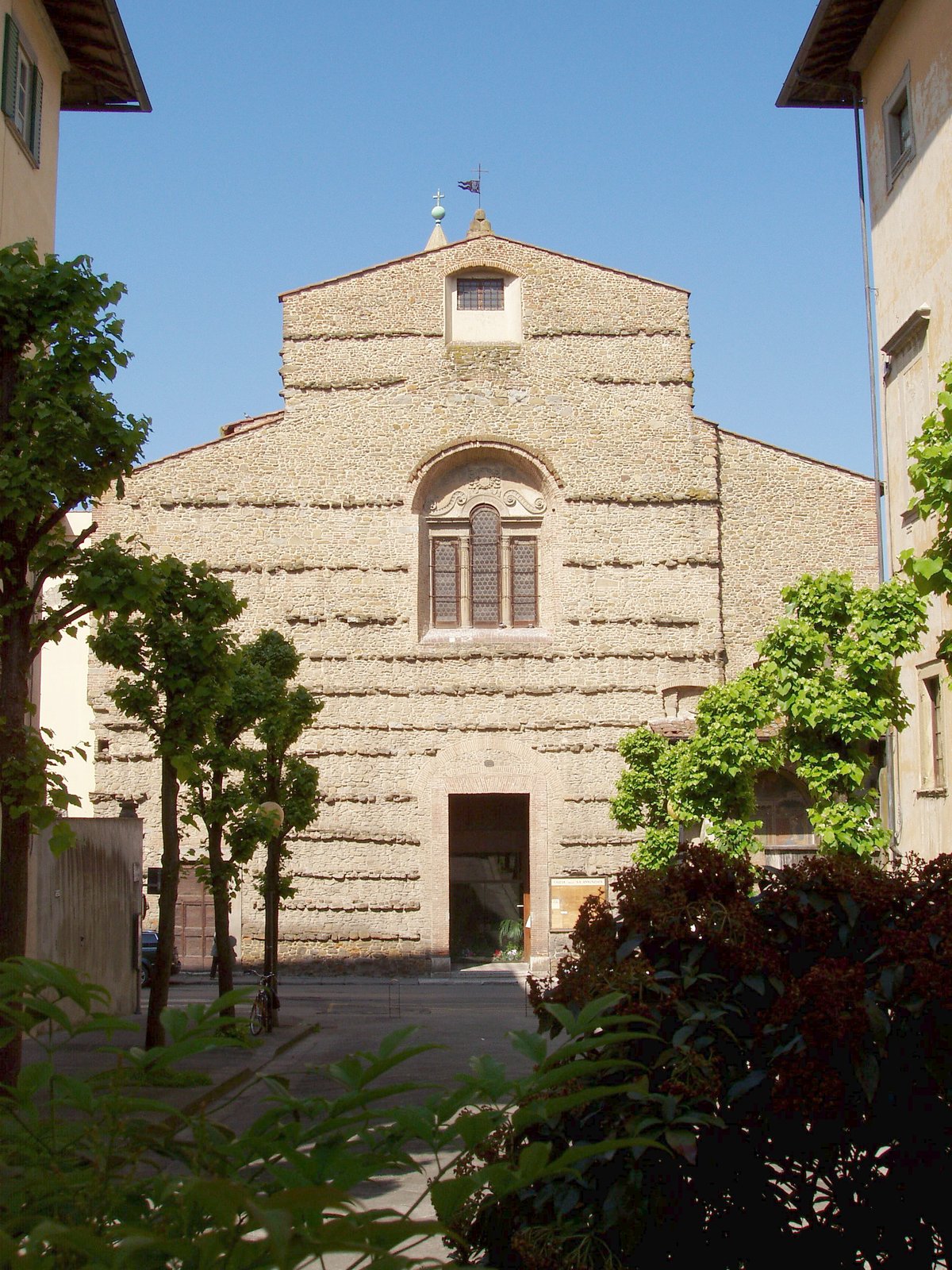 The Church of the Santissima Annunziata is located on Via Garibaldi, just a short walk from Arezzo's historic center. Built in the 16th century, it stands as a significant example of Tuscan Renaissance architecture, with its pietra serena facade immediately capturing attention. Upon entering, visitors are enveloped in an atmosphere of contemplation, enhanced by the single nave and side chapels housing precious artworks. Among these stands out the painting of the Madonna and Child with Saints, attributed to the school of Giorgio Vasari, which dominates the high altar with its vibrant colors and harmonious composition. The church is also renowned for its coffered wooden ceiling, a detail many visitors appreciate for its elegance and the craftsmanship it represents. Another point of interest is the Chapel of the Crucifix, where an ancient wooden crucifix is an object of local devotion. Admission is free, and a visit takes about 20-30 minutes, making it ideal for a peaceful stop during a tour of Arezzo. The site is less crowded than other city attractions, offering a moment of tranquility away from the crowds. I recommend checking the opening hours, as they may vary due to religious celebrations. For those who appreciate sacred art, this church is an unmissable stop, blending history and spirituality in an authentic setting.
Petrarca Theatre
- Via Guido Monaco 12, Arezzo (AR)
- Open in Google Maps
- View on Google Images
- +39 0575 377469;+39 0575 377503;+39 0575 377504;+39 0575 377505;+39 0575 377506
 The Petrarca Theatre is located on Via Guido Monaco in the historic centre of Arezzo and stands as one of the city's most significant cultural landmarks. Inaugurated in 1833, this neoclassical theatre takes its name from the renowned poet Francesco Petrarca, who was born in Arezzo, and serves as a cornerstone of the local artistic scene. The understated, elegant facade conceals an interior rich in detail: the foyer with its stucco work and the decorated lounge offer just a glimpse of the splendour that unfolds in the main hall. Here, the stage has hosted drama, opera, and concerts over the years, keeping Arezzo's theatrical tradition alive. The theatre is managed by the Guido d'Arezzo Foundation, which organises a diverse season of events, from classical drama to poetry recitals, often linked to Petrarca's legacy. With a capacity of around 500 seats, distributed between the stalls and two tiers of boxes, it offers excellent acoustics and privileged views. During guided tours, visitors can admire the frescoed ceiling with musical allegories and the historic curtain, as well as discover anecdotes about the city's cultural life. The Petrarca Theatre is not just a performance venue but a symbol of identity for Arezzo, where art and community converge. For those visiting the city, attending a show or joining a tour is an experience that enriches the journey, offering authentic emotions.