
🧭 What to Expect
- Ideal for an authentic journey away from mass tourism, blending art, history, and nature.
- Highlights: the 18th-century Teatro dell'Aquila, Roman sites at Falerio Picenus, and hilltop villages like Monte Urano.
- Includes an interactive map with all stops for easy route planning.
- Offers a mix of culture (museums, theaters) and archaeology in the Marche's hilly landscape.
Events nearby

The Province of Fermo is a corner of Marche that surprises with its authenticity. Don't expect crowds of tourists, but rather a territory where time seems to have stood still. Here you'll find hilltop villages that preserve artistic treasures and ancient traditions. Fermo, the capital, welcomes you with its medieval historic center and the majestic Teatro dell'Aquila. But it's in the smaller towns that you discover the true character of this land: from Monte Urano with its Clock Tower to Petritoli with the Teatro comunale dell'Iride. The area is also rich in Roman remains, such as the amphitheater and theater of Falerio Picenus in Piane, which tell a thousand-year-old story. For those seeking a journey away from the beaten track, the Province of Fermo offers genuine experiences among art, archaeology, and hill landscapes that stretch as far as the eye can see.
Overview
- Teatro dell'Aquila
- Fermo Civic Art Gallery
- Diocesan Museum of Fermo
- Roman Theatre
- Matteucci Tower
- Tommaso Salvadori Ornithological Museum
- Roman Theatre of Falerio Picenus
- Roman Amphitheatre of Falerio Picenus
- Monte Rinaldo Civic Archaeological Museum
- La Cuma Archaeological Area
- Teatro Comunale dell'Iride
- Monte Urano Clock Tower
- Monte Urano Fallen Soldiers Monument
Itineraries nearby
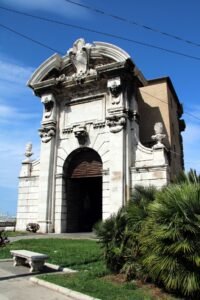

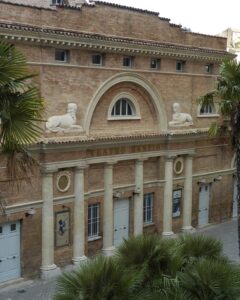
Teatro dell'Aquila
- Go to the page: Fermo's Aquila Theatre: Perfect Acoustics and One of the Largest Stages in the Marche Region
- Via Giuseppe Mazzini, Fermo (FM)
- Open in Google Maps
- View on Google Images
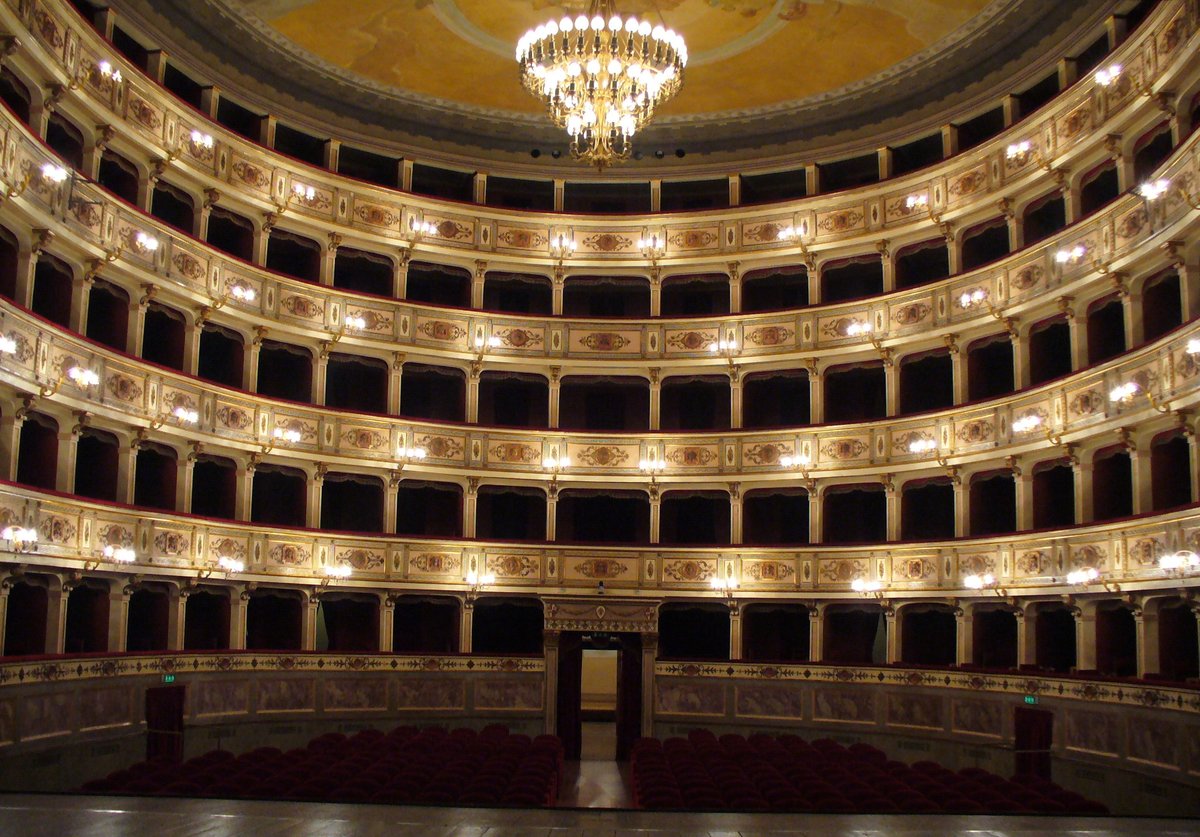 The Teatro dell'Aquila in Fermo is one of those places that surprises you with its elegance and grandeur, a true architectural gem that dominates the historic center. Built between 1780 and 1790 based on a design by Cosimo Morelli, this theatre is considered one of the most important in the Marche region for both capacity and artistic value. As soon as you cross the entrance, you're struck by the horseshoe-shaped hall with four tiers of boxes and a gallery, all decorated with golden stuccoes and red velvets that create a warm and refined atmosphere. The ceiling, painted by Luigi Cochetti, depicts Apollo and the Muses, while the historic curtain is a work by Luigi Fontana representing the Roman commander Publius Decius Mus. What makes this theatre special isn't just its beauty, but also the perfect acoustics, designed to enhance every note and every word. Even today, it remains a vibrant cultural hub, with a season of drama, concerts, and events that bring its evenings to life. Visiting it means immersing yourself in two centuries of performance history, breathing in the atmosphere of an era when the theatre was the beating heart of social life. Don't miss the opportunity to also admire the foyer, a more intimate but equally elegant space often used for exhibitions and meetings.
Fermo Civic Art Gallery
- Go to the page: Fermo Civic Art Gallery: Masterpieces from the 14th to the 18th Century in the Palazzo dei Priori
- Piazza del Popolo, Fermo (FM)
- Open in Google Maps
- View on Google Images
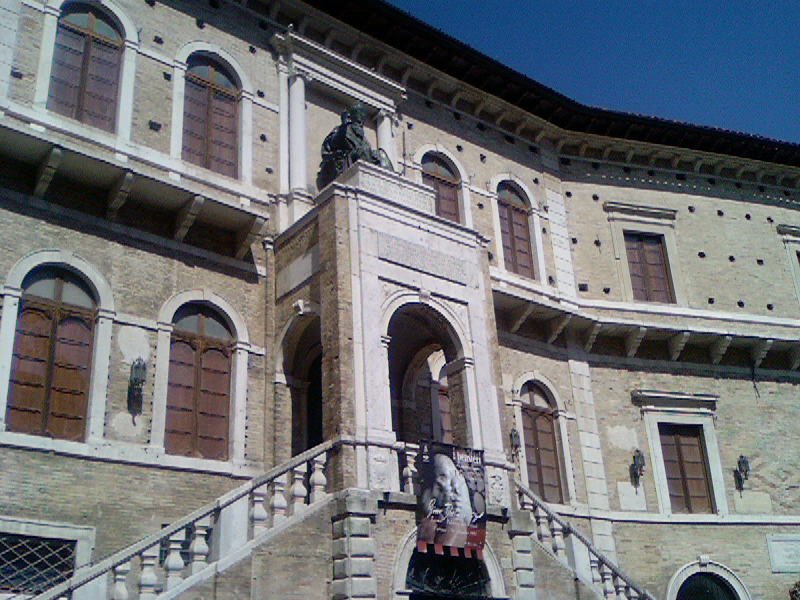 The Fermo Civic Art Gallery is a true hidden gem located within the Palazzo dei Priori, a historic building that alone is worth a visit. The permanent collection spans three floors and offers a journey through Marche art from the Middle Ages to the 18th century. Among the most significant works stands the Assumption Altarpiece by Vittore Crivelli, brother of the more famous Carlo, showcasing the refinement of the Venetian school in the Marche region. Don't miss the section dedicated to Jacobello del Fiore, with his triptych that blends Gothic elements with lively storytelling. The gallery also houses a collection of local sacred art that narrates the devotion and patronage of the Fermo territory across centuries. The rooms are well-organized, and explanatory panels help contextualize each work without overwhelming the visit. The combined ticket with the Laurentian Library and Roman Cisterns is convenient if you wish to delve deeper into the city's history. The atmosphere is intimate and allows you to enjoy the artworks without crowds, even on weekends. Its location in the historic center makes it perfect to include in a walking itinerary that also encompasses the Cathedral and Piazza del Popolo.
Diocesan Museum of Fermo
- Via del Teatro Antico, Fermo (FM)
- http://www.museodiocesanofermo.it/
- Open in Google Maps
- View on Google Images
 The Diocesan Museum of Fermo is one of those places that surprises you with the richness and variety of its collections. Located within the Archbishop's Palace, right next to the Cathedral, this museum tells centuries of religious and artistic history of the Fermo area. The visit begins with the section dedicated to sacred vestments, where you can admire precious fabrics embroidered in gold and silk, some dating back to the 15th century. Then you move on to the collection of liturgical silverware, with chalices, monstrances, and reliquaries of extraordinary craftsmanship. But the true jewel of the museum is the Cope of Nicholas IV, a 13th-century pontifical vestment considered one of the most important Italian medieval textiles. The altarpieces and paintings from local churches complete the journey, offering a glimpse of the artistic evolution in the Marche region from the Middle Ages to the Baroque period. The exhibition is modern and well-curated, with clear explanatory panels that help contextualize each work. The museum can be visited in about an hour and a half, enough time to appreciate the masterpieces without rushing. I recommend combining the visit with the Cathedral to get a complete picture of Fermo's religious artistic heritage.
Roman Theatre
- Via del Teatro Antico, Fermo (FM)
- Open in Google Maps
- View on Google Images
 Descending into the heart of Fermo, right beneath Piazza del Popolo, you'll discover a hidden treasure that tells centuries of history: the Roman Theatre, an archaeological gem dating back to the 1st century BC. This site, perfectly preserved despite the millennia, offers a direct immersion into the Augustan era, when Fermo was an important Picene center. The structure, built in opus reticulatum and brickwork, could accommodate up to 2,000 spectators, with a semicircular cavea developed over three tiers of seating. What immediately strikes you is its location: nestled among modern buildings, it creates a fascinating contrast between ancient and contemporary. During the visit, you can admire the remains of the orchestra, proscenium, and stage, along with fragments of marble decorations that testify to its original elegance. The theatre was an integral part of the city's social life, hosting not only theatrical performances but also public assemblies. Today, thanks to careful restoration work, it's possible to walk among the same stones that the Romans trod, imagining the voices of actors and the murmur of the audience. For those visiting Fermo, the Roman Theatre is a must-see stop: access is through a side entrance on Via degli Aceti, and the experience is made even more vivid by informative panels that explain the site's history. A place where history comes alive, without the need for lengthy explanations.
Matteucci Tower
- Corso Cavour, Fermo (FM)
- Open in Google Maps
- View on Google Images
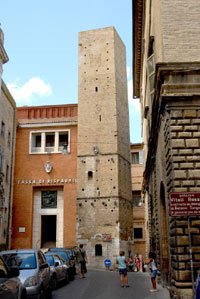 The Matteucci Tower stands in the heart of Fermo as one of the city's most ancient symbols, a medieval monument that tells centuries of history through its architecture. Built in the 13th century, this tower was part of the city's defensive system and today represents a privileged observation point over the historic center and the Marche hills. Climbing its stone steps, you immediately sense the atmosphere of the past, with walls preserving traces of ancient fortifications. The tower takes its name from the Matteucci family, who owned it for generations, and its strategic position allowed visual control over the entire surrounding area. Today, visiting Matteucci Tower means immersing yourself in a journey through time, where each floor reveals unique architectural details, such as the arrow slits and bifora windows that characterize the Romanesque-Gothic style of the Marche region. From the summit, the panorama spans across Fermo's rooftops, reaching the Adriatic Sea on the clearest days, offering a breathtaking view that unites history and nature. The tower is easily accessible from the city's main street and integrates perfectly with other monuments in Fermo, such as the Duomo and the Roman Cisterns, creating a coherent itinerary for those wishing to discover the roots of this province. Its preservation is excellent, thanks to careful restorations that have maintained its authenticity, making it an unmissable stop for history and architecture enthusiasts.
Tommaso Salvadori Ornithological Museum
- Viale Trento 29, Fermo (FM)
- Open in Google Maps
- View on Google Images
 If you love nature and science, the Tommaso Salvadori Ornithological Museum in Fermo is an unmissable stop. Located in the historic center, this museum houses one of Italy's most important ornithological collections, with over 3,000 specimens from around the world. The collection was donated by the renowned ornithologist Tommaso Salvadori to the city of Fermo in 1929, creating a unique heritage that attracts enthusiasts and the curious alike. The display cases preserve rare and local species, such as the peregrine falcon and the grey heron, perfectly conserved and cataloged. The exhibition route winds through thematic rooms illustrating the evolution, behavior, and habitat of birds, with clear and detailed information panels. Particularly fascinating is the section dedicated to the birds of Le Marche, which allows you to discover the region's rich avifauna. The museum is small but well-organized, ideal for a one-hour visit, and is just a few steps from Piazza del Popolo, making it easy to include in a city itinerary. The atmosphere is intimate and quiet, perfect for immersing yourself in the study of nature. If you're traveling with children, you'll find the explanations accessible and engaging. Additionally, the staff is available for clarifications, adding a touch of hospitality typical of local realities. Don't miss the opportunity to admire unique specimens like the golden eagle or the Eurasian eagle-owl, which make this experience memorable.
Roman Theatre of Falerio Picenus
- Via Pozzo, Piane (FM)
- Open in Google Maps
- View on Google Images
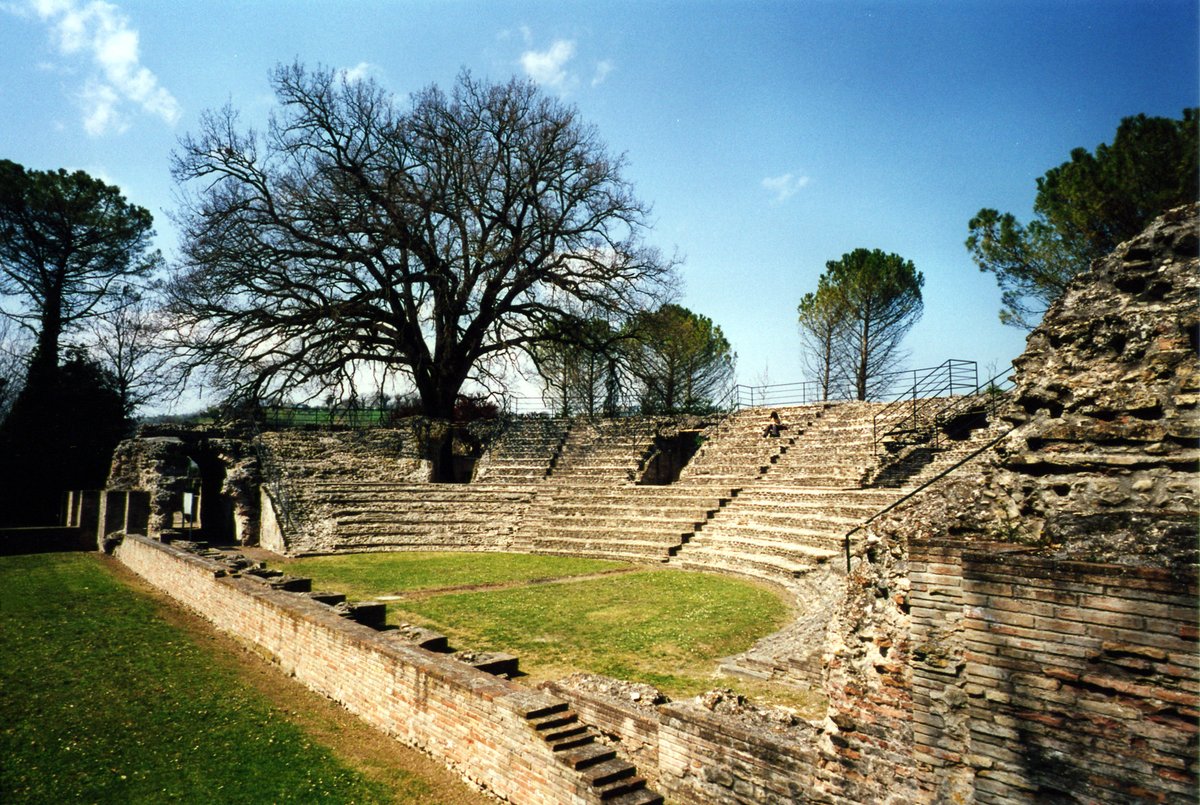 If you love Roman history, the Roman Theatre of Falerio Picenus in Piane is an unmissable stop in the province of Fermo. This archaeological gem dates back to the 1st century BC and represents one of the best-preserved Roman theatres in the Marche region. The semicircular structure, built following the natural slope of the hill, could accommodate up to 1,600 spectators. Today you can still admire the stone steps (cavea) divided into three sections, the orchestra, and the remains of the stage. The uniqueness of this site lies in its location: it stands in the area of the ancient city of Falerio Picenus, an important Roman centre that once flourished along the Via Salaria. During your visit, you'll notice architectural details that tell the story of daily life in that era, such as the polychrome marbles that adorned the stage and the rainwater drainage systems. The theatre has been the subject of excavations and restorations that have also uncovered artefacts displayed in the Fermo Archaeological Museum. The view from the upper steps embraces the hilly landscape of the Marche, creating a striking contrast between ancient and modern. Access is easy and well-signposted, with informative panels explaining the site's history. I recommend visiting at sunset, when the warm light enhances the shapes of the ancient stones. For archaeology enthusiasts, it's fascinating to note how the theatre was part of a larger complex that included baths and an amphitheatre, traces of which remain nearby.
Roman Amphitheatre of Falerio Picenus
- Via Anfiteatro romano, Piane (FM)
- Open in Google Maps
- View on Google Images
 The Roman Amphitheatre of Falerio Picenus in Piane is one of those places that makes you feel the weight of history. Built in the 1st century AD, this archaeological site represents one of the most important discoveries in the province of Fermo, a tangible testament to the ancient Roman city that once stood in this area. The elliptical structure, typical of Roman amphitheatres, is still clearly recognizable despite the centuries that have passed. The stone seating, which once accommodated up to 2000 spectators, tells of a vibrant past where gladiator shows and animal hunts took place. The strategic position on a gentle natural slope is no coincidence: the Romans skillfully exploited the terrain's conformation to optimize construction. The materials used, mainly local stone and bricks, blend perfectly with the hilly landscape of Le Marche. Visiting the amphitheatre allows you to literally walk in the footsteps of the ancient Romans, imagining the sounds and atmospheres that must have filled this space during performances. The state of preservation is remarkable, with some sections of the perimeter walls still clearly visible. The proximity to the Roman Theatre, also part of the Falerio Picenus archaeological complex, completes the discovery experience of this ancient city. Access is free and the site is always open to visitors, though the best times are spring and autumn, when mild temperatures make the visit more pleasant. The surrounding panorama, with the gentle hills of Le Marche as a backdrop, adds a touch of landscape beauty to this important archaeological testimony.
Monte Rinaldo Civic Archaeological Museum
- Go to the page: Monte Rinaldo Archaeological Museum: Piceni artifacts and Hellenistic-Roman sanctuary
- Via Crocifisso, Monte Rinaldo (FM)
- Open in Google Maps
- View on Google Images
 If you love archaeology, the Monte Rinaldo Civic Archaeological Museum is an unmissable stop in the province of Fermo. Located in the historic center of the village, this small but precious museum houses artifacts from the important La Cuma archaeological area, a Roman sanctuary from the 2nd century BC discovered by chance in the 1950s during agricultural work. What makes this place special is the opportunity to admire up close terracotta ex-votos, black-glazed pottery, and coins that testify to the commercial relations between the Piceni and the Romans. The well-organized display cases guide you through the history of the territory, from the oldest finds to the Roman era. Don't miss the section dedicated to votive statues, which represent local deities and offer a unique glimpse into ancient religiosity. The museum is passionately managed by local volunteers, ready to share anecdotes about the discoveries. I recommend combining the visit with the archaeological site itself, for a complete experience that will make you feel like a true explorer of the past.
La Cuma Archaeological Area
- Strada Provinciale 174 Cuma, Monte Rinaldo (FM)
- https://www.turismo.marche.it/Guida/Eccellenze/Title/Monte-Rinaldo-Localita-La-Cuma--Santuario-tardo-repubblicano/IdPOI/3702/C/109021
- Open in Google Maps
- View on Google Images
- +39 073 4777121
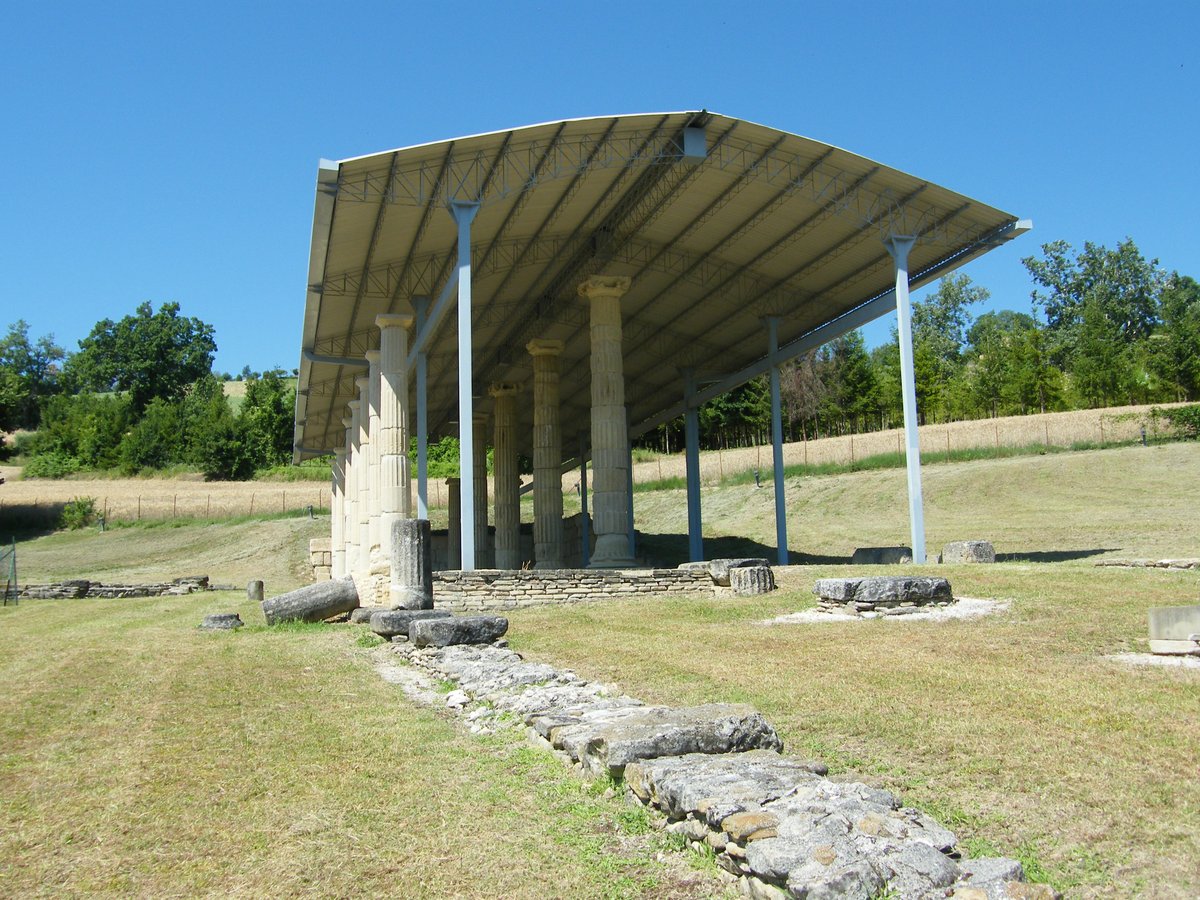 The La Cuma Archaeological Area in Monte Rinaldo represents one of the most significant discoveries of Roman Picenum. This site, situated on a hill at 475 meters above sea level, preserves the remains of a Hellenistic-Roman sanctuary dating back to between the 3rd and 2nd centuries BC. What immediately stands out is the layout of the spaces: the main temple, with its base in opus quadratum, and a series of side rooms that likely housed workshops and service areas are clearly recognizable. The uniqueness of La Cuma lies in its strategic position along the ancient road connecting Firmum Picenum (modern-day Fermo) to the Chienti Valley. Excavations have uncovered numerous artifacts, including architectural terracottas and fragments of votive statues, now preserved in the Civic Archaeological Museum of Monte Rinaldo. The visit allows you to walk among the foundations of the buildings, imagining the religious and commercial life that animated this place. The site is well signposted and accessible, with explanatory panels guiding visitors through the different historical phases. For archaeology enthusiasts, La Cuma offers an authentic experience, far from the crowds of more famous sites, where the silence and the hilly landscape of the Marche region create a suggestive atmosphere.
Teatro Comunale dell'Iride
- Go to the page: Iride Theatre Petritoli: 19th-century theatre with perfect acoustics and active season
- Via del Teatro 4, Petritoli (FM)
- https://www.comune.petritoli.fm.it/
- Open in Google Maps
- View on Google Images
- +390734658141
 The Teatro Comunale dell'Iride in Petritoli is an authentic architectural gem that captures the essence of cultural life in the Marche region. Built in the second half of the 19th century, this theater stands out for its horseshoe structure and rich interior decoration, with stuccoes and gilding reminiscent of the great theaters of the era. The main hall, with its wooden boxes arranged on three tiers, offers an intimate and cozy atmosphere, perfect for attending drama performances, concerts, and local productions. The programming is curated by the municipal administration and local cultural associations, with particular attention to promoting emerging artists and Marche traditions. Throughout the year, the theater also hosts theater festivals and events related to Petritoli's history, such as historical reenactments involving the local community. Its central location in Piazza della Libertà makes it easily accessible during a visit to the village. The building has undergone recent restoration work that preserved its originality, maintaining intact details like the painted curtain and crystal chandelier. For those visiting the Fermo province, a stop at the Teatro dell'Iride is an opportunity to discover a corner of living culture, away from more conventional tourist routes.
Monte Urano Clock Tower
- Via Giuseppe Sacconi, Monte Urano (FM)
- Open in Google Maps
- View on Google Images
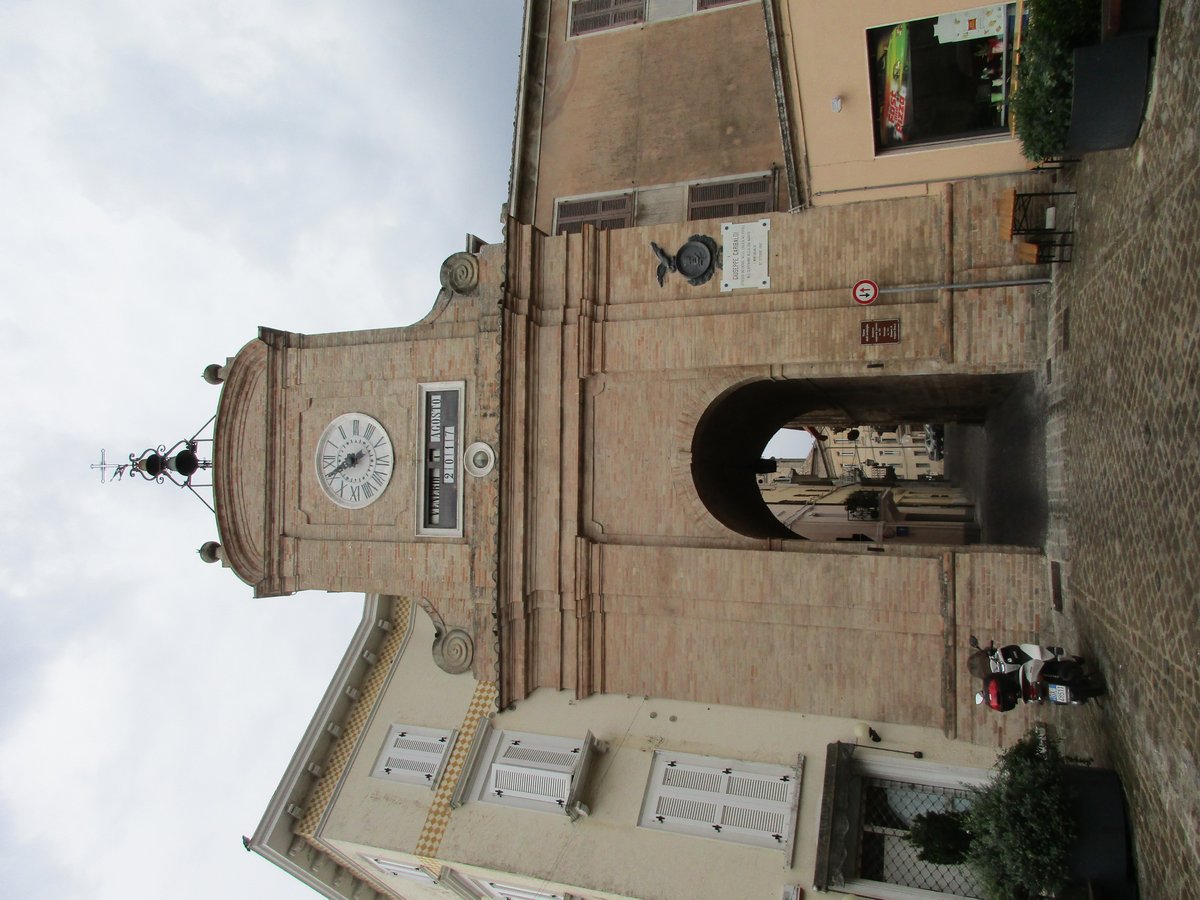 The Clock Tower of Monte Urano stands majestically in the historic center, dominating Piazza Umberto I with its elegant brick structure that tells centuries of history. Built in the 18th century, this civic tower represents the true heart of the Marche village, an essential landmark for anyone visiting this corner of the Fermo province. Its mechanical clock, still perfectly functional, marks the hours with a chime that echoes through the cobblestone alleys, creating an atmosphere suspended in time. The particularity of this tower lies in its strategic position, situated right at the entrance to the medieval historic center, almost marking the passage between modernity and tradition. The structure develops over three levels, with a massive base that gradually tapers upward, culminating in the bell chamber that still houses the original bells. What strikes most is how the tower is perfectly integrated with the surrounding buildings, creating a harmonious architectural complex that reflects the Picene identity of the territory. During patron saint festivities, the tower becomes the focal point of celebrations, illuminated by lights that enhance its austere beauty. The visit allows you to appreciate up close the construction details, such as the terracotta cornices and arched openings that characterize the local architectural style. For photographers, the best time is sunset, when the warm sunlight enhances the brick tones creating suggestive shadow plays. The tower is not just a monument to admire, but a living witness to Monte Urano's history, which continues to serve its function of orientation and gathering for the community.
Monte Urano Fallen Soldiers Monument
- Via Patrioti, Monte Urano (FM)
- Open in Google Maps
- View on Google Images
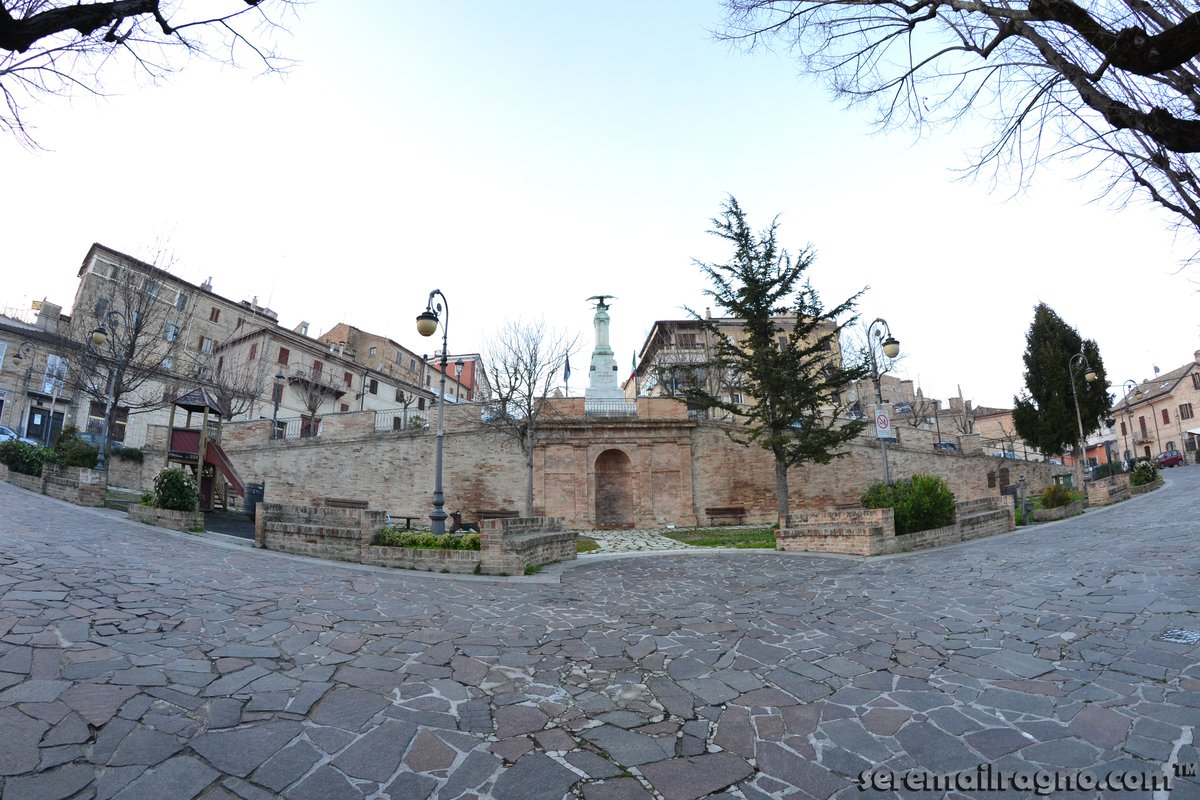 The Monte Urano Fallen Soldiers Monument stands in the heart of the town as a silent witness to local history. Located in a central and easily accessible position, this memorial represents an important landmark for the community. Made from local stone, the monument features a simple yet meaningful structure, with inscriptions commemorating the names of Monte Urano's fallen soldiers. Its strategic placement allows visitors to appreciate not only the historical significance of the site but also the panoramic view of the Marche hills that unfolds all around. Visiting this site means immersing oneself in the collective memory of Monte Urano, an experience that goes beyond mere architectural observation. The monument seamlessly integrates with the urban fabric of the village, creating a dialogue between past and present that characterizes many historic centers in the Marche region. The care with which it is maintained demonstrates the importance residents place on preserving their historical identity. During the visit, one can observe how this space serves as a gathering point for the community, especially during commemorative occasions. The simplicity of the structure does not diminish its emotional impact; rather, it enhances its authentic and genuine character.