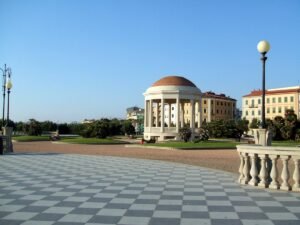
If you're looking for a historical itinerary that lets you discover a perfectly preserved medieval city, Historic Grosseto: Between Walls and Towers is the ideal choice. In just one day, this route will guide you to discover the imposing Medici walls, a rare example of intact Renaissance fortification in Italy, and the compact historic center enclosed within them. The itinerary, perfect for those who love history and walking, concludes with a mention of the evocative coastal towers that dot the Maremma coastline, symbols of a past of defense and control. I'll provide all the practical information to best organize your day, from travel times to must-see points of interest, in a direct and no-frills tone, just as an experienced traveler would do.
🗺️ Your trip at a glance
A linear 8-stop itinerary that begins with the walkable Medici walls, passes through the historic center with its monuments, and concludes at the coastal tower of Collelungo.
- Ideal for those seeking a historical walking route away from crowded paths, suitable for everyone.
- Highlights: intact Medici walls, compact historic center, panoramic coastal tower, and interactive maps for each stop.
- Perfect for travelers who love medieval and Renaissance history, walking tours, and authentic details without lengthy explanations.
Itinerary stops
Stop no. 1
Porta Corsica
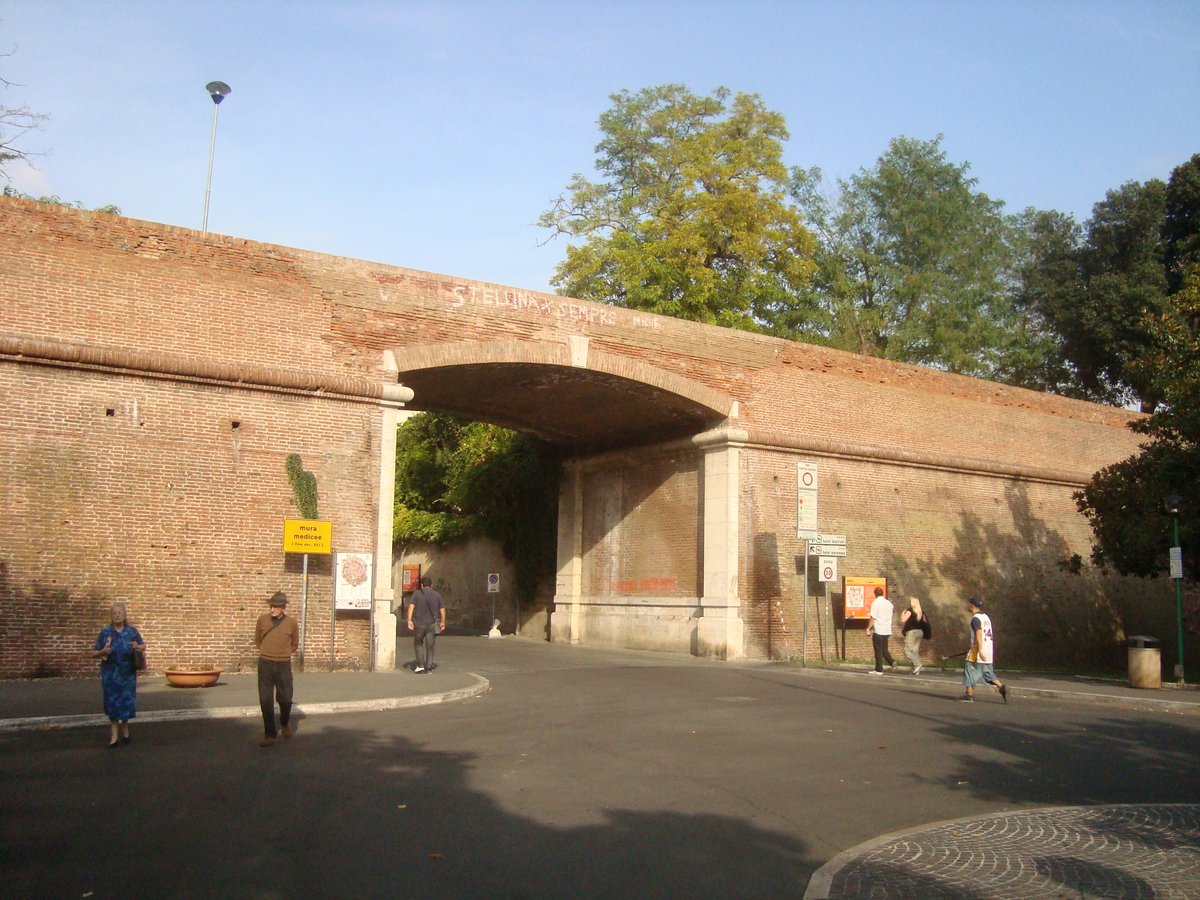 Starting the tour of Historic Grosseto from Porta Corsica is no coincidence: it's precisely from here that you access the historic center through the imposing, perfectly preserved Medici walls. This gate, located on Via Antonio Gramsci, is one of the six that interrupt the hexagonal wall circuit, immediately giving you a sense of the Renaissance defensive structure. Its simple yet solid architecture, with the large brick arch, almost seems to invite you to cross the threshold to discover what lies within. I paused for a moment to observe the details: the stones worn by time, the inscription above the arch recalling the Medici era. It's an ideal starting point because it immerses you right away in the historical atmosphere, without too many frills. From here, you can already glimpse the streets of the center and imagine the walks along the bastions that await you. Personally, I find that starting from Porta Corsica sets the right tone for the itinerary: practical, direct, with a hint of curiosity for what comes next.
- Via Antonio Gramsci, Grosseto (GR)
- Open in Google Maps
- View on Google Images

You should go if...
Stop no. 2
Garibaldi Bastion
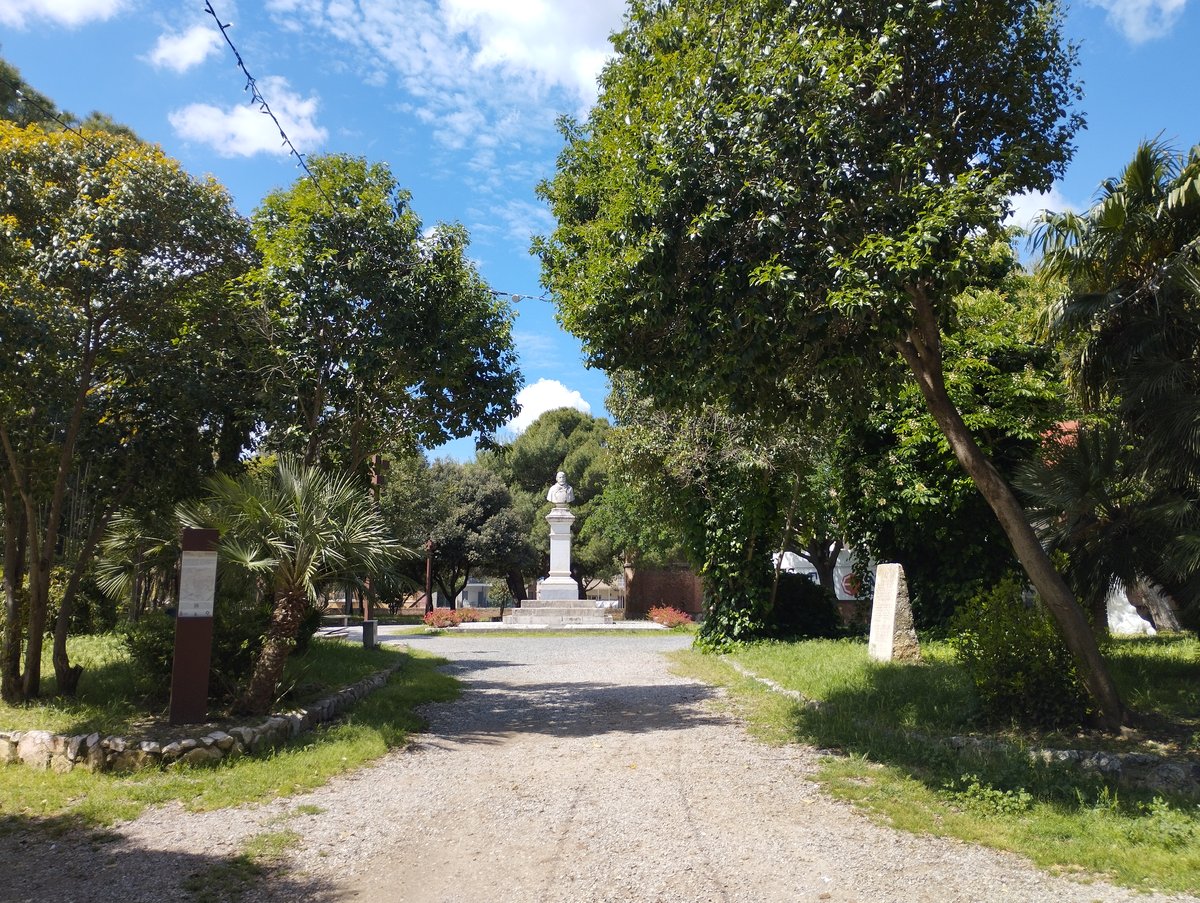 After exploring Grosseto's historic center, the Garibaldi Bastion offers a different perspective on the Medici walls. This bastion, located on Via Alessandro Manetti, is one of the highest points of the city walls and provides a panoramic view stretching from the city to the Maremma countryside. Built in the 16th century as part of the defensive system commissioned by the Medici, today it is a peaceful spot to pause and observe details of the fortifications, such as the still-visible gun ports. Personally, I appreciate how you can sense the passage of time here: the stones tell centuries of history, yet the atmosphere is relaxed, perfect for a break during a walk along the walls. It's not just a monument, but a true viewpoint that helps you understand why Grosseto is called the 'walled city' of Tuscany.
- Via Alessandro Manetti, Grosseto (GR)
- Open in Google Maps
- View on Google Images
You should go if...
Stop no. 3
Windmill Bastion
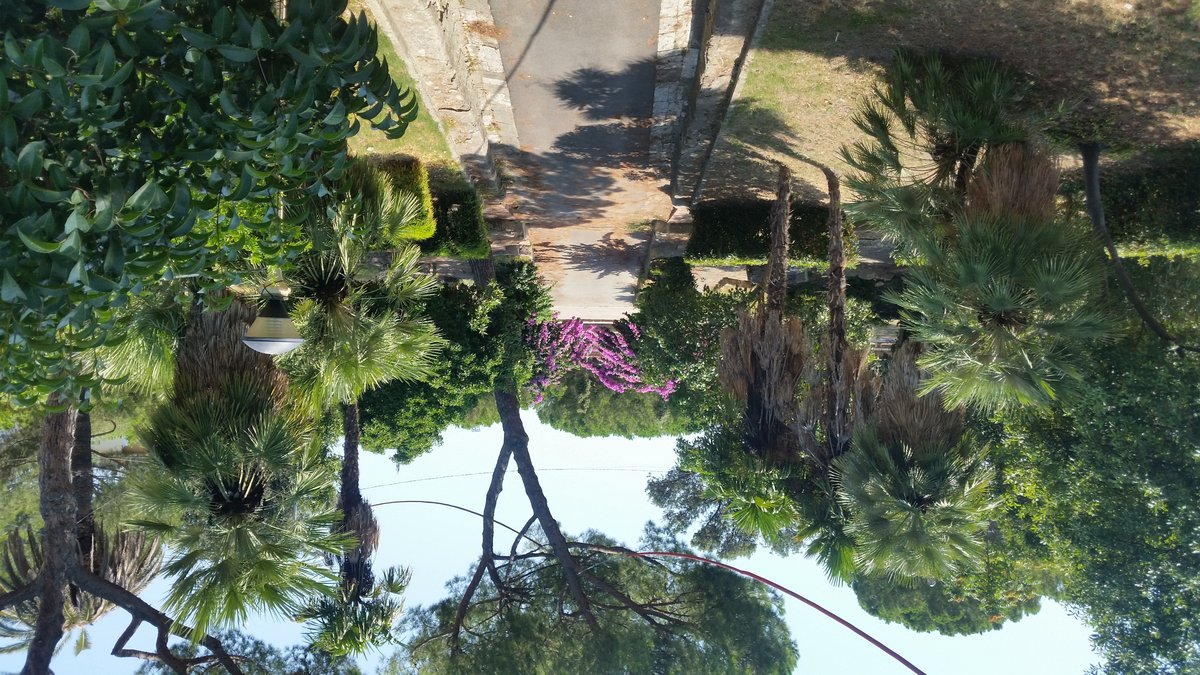 Leaving the Garibaldi Bastion behind, you arrive at the Windmill Bastion on Via del Mulino a Vento, a corner that struck me with its somewhat hidden atmosphere. Here, the name reveals its origin: there was once an actual windmill, part of the 16th-century Medici defensive system, and although no trace of the original structure remains today, the area retains a special charm. I like how this bastion is less frequented than others, almost a secret within Grosseto's walls. The stones seem rougher, and if you look carefully, you notice the details of the fortifications blending with the spontaneous vegetation. It's an ideal spot for a quiet break, perhaps sitting on a bench to observe the discreet comings and goings of the city. Personally, I find that the air here feels different, more intimate, as if you've stepped into a corner of history that few take the time to discover. It's not just a viewpoint, but a piece that completes the puzzle of the Medici walls, showing how each bastion had its specific function.
- Via del Mulino a Vento, Grosseto (GR)
- Open in Google Maps
- View on Google Images
You should go if...
Stop no. 4
Maremma Natural History Museum
 After exploring the bastions, the Maremma Natural History Museum at Strada Corsini 5 offers a completely different perspective on Grosseto. Here, the focus isn't on walls or towers, but on the very land that saw them rise. I was surprised to discover how rich the collection is: fossils of mammoths and woolly rhinoceroses tell of a prehistoric Maremma very different from the one we know today. The rooms are clearly organized, with sections dedicated to geology, local flora, and fauna. I found the area on marsh birds particularly interesting, with dioramas recreating the coastal wetland environments. It's not a huge museum, but the quality of the exhibits is high, and you can feel the love for the territory. Personally, I lingered over the artifacts from Monte Amiata, which show how natural history has been intertwined with human history for millennia. It's a place that helps you understand why this area is so special, going beyond the surface of things.
- Strada Corsini 5, Grosseto (GR)
- Open in Google Maps
- View on Google Images
You should go if...
Stop no. 5
Aldobrandeschi Palace
 After leaving the Natural History Museum, I headed towards Piazza Dante, where the Aldobrandeschi Palace stands out, the seat of the Province of Grosseto. This building is not just a public office, but a true symbol of the city. Its neo-Gothic architecture, with those battlements and mullioned windows reminiscent of a medieval castle, immediately struck me. Built at the beginning of the twentieth century, it represents a tribute to Grosseto's medieval past, when the Aldobrandeschi were one of the most powerful families in the Maremma. Today, walking under its arches, you can feel a special atmosphere: it is a place of power, but also of encounter, with the square in front always lively. I stopped to admire the details in pietra serena stone and the stylophore lions at the entrance. Inside, if you are lucky, you can see some decorated rooms, although access is limited due to institutional functions. It is worth noting how the palace perfectly dialogues with the monument to Canapone nearby, creating a corner of Grosseto where history is not only preserved but lived every day.
- Piazza Dante, Grosseto (GR)
- Open in Google Maps
- View on Google Images
You should go if...
Stop no. 6
Monument to Canapone
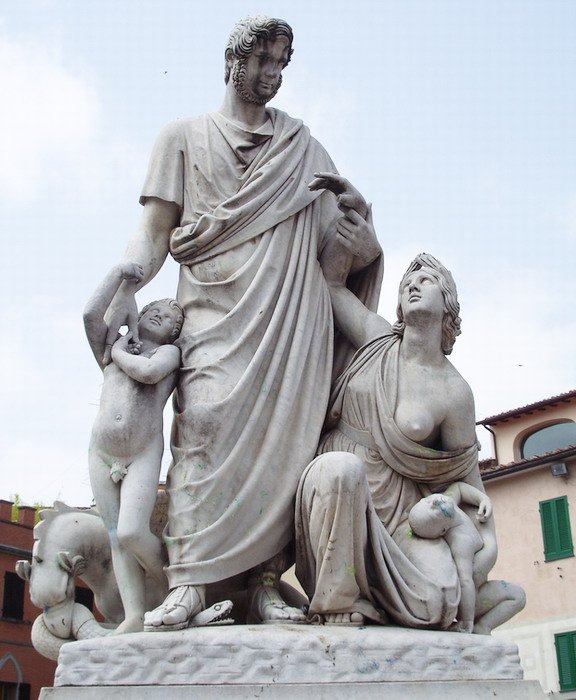 Not far from Palazzo Aldobrandeschi, still in Piazza Dante, I came across the Monument to Canapone, a bronze statue honoring the Maremma patriot Francesco Domenico Guerrazzi, nicknamed 'Canapone'. It's not just a work of art, but a piece of living history: Guerrazzi was a key figure in the Risorgimento in Tuscany, a journalist and politician who fought for the unification of Italy. The sculpture, created by Luigi Belli in 1890, depicts him in a thoughtful pose, with an intense expression that seems to look beyond the present. I was struck by how it's placed right in the nerve center of Grosseto, almost as if watching over the city. The square around it is bustling with people, and seeing this monument surrounded by daily life made me reflect on how history here isn't confined to museums, but is part of the urban fabric. The details of the bronze, slightly oxidized by time, add character. It's worth stopping for a moment to read the plaque, which briefly tells his story – a way to better understand the identity of this area, often tied to its land and its struggles.
- Piazza Dante, Grosseto (GR)
- Open in Google Maps
- View on Google Images
You should go if...
Stop no. 7
Principina Farm
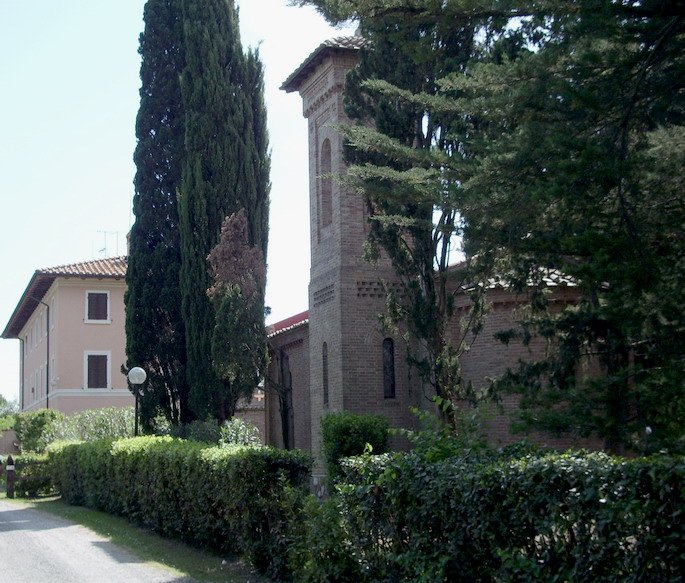 After stopping at the Monument to Canapone in Piazza Dante, I moved towards the outskirts of Grosseto to discover Principina Farm, a place that surprised me with its authenticity. It's not just a farm, but a true slice of Maremma rural life, with cultivated fields, grazing animals, and that tranquil atmosphere that makes you forget you're just minutes from the historic center. I noticed that here you can still feel the rhythm of the seasons, with activities tied to agriculture and local production – I saw wheat fields and olive groves stretching towards the coast. Its location along Provincial Road 158 delle Collacchie makes it easily accessible, but once inside, it feels like entering another world. I was struck by how it's managed with care, maintaining that connection to the land that characterizes this part of Tuscany. There are no major tourist facilities, just simple rural buildings and open spaces where time seems to flow more slowly. It's worth taking a walk through the fields, perhaps observing the fieldwork or simply enjoying the view towards the hills. It's a place that tells a different story of Maremma, one of daily effort and beauty.
- Strada Provinciale 158 delle Collacchie, Grosseto (GR)
- Open in Google Maps
- View on Google Images
You should go if...
Stop no. 8
Collelungo Tower
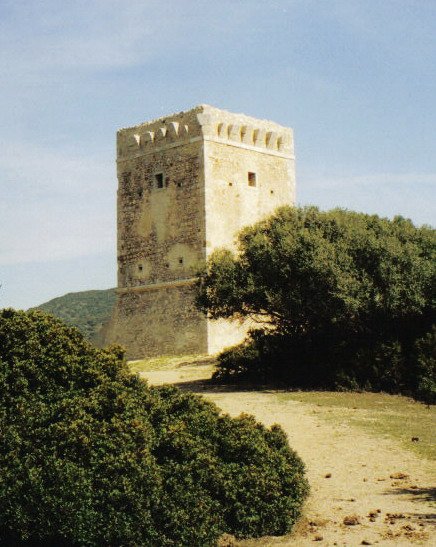 Leaving behind the countryside of the Fattoria di Principina, I headed towards the coast to reach Collelungo Tower, one of the watchtowers that dot the Maremma coastline. Arriving from the Road of the Olive Trees, I immediately noticed how this stone structure stands out against the sky, surrounded by a landscape of ancient olive trees that seem to almost protect it. Built in the sixteenth century as part of the defensive system against pirate raids, it now appears well-preserved, with its cylindrical shape and arrow slits that tell stories of guardians and signals. Climbing up to the base – unfortunately, it's not always accessible inside – I appreciated the view stretching from the pine forest behind to the Tyrrhenian Sea, with Collelungo Beach visible in the distance. I was struck by the sense of isolation, despite it being easily reachable: here, time seems to have stood still, and you can breathe that frontier atmosphere that characterizes this part of Tuscany. It's worth stopping for a few photos and imagining what life must have been like for the sentinels who monitored the coast from here.
- Strada degli Ulivi, Grosseto (GR)
- Open in Google Maps
- View on Google Images
You should go if...