Grosseto Fortress Bastion: Access to the Medici Walls with 360° View over Maremma

The Grosseto Fortress Bastion is the starting point for exploring one of Italy’s best-preserved city walls, built in the 16th century under Cosimo I de’ Medici. Walking along the patrol path offers a 360-degree view ranging from the rooftops of the historic center to the Maremma plain. This accessible route combines history, architecture, and scenery.

  • Direct access to the perfectly preserved 16th-century Medici Walls
  • 360° panoramic view over the historic center and Maremma plain
  • Walkable patrol path with original bronze cannons still in position
  • Renaissance architectural details such as rusticated cornerstones and original arrow slits


Events nearby


Copertina itinerario Grosseto Fortress Bastion: Access to the Medici Walls with 360° View over Maremma
The Fortress Bastion is the main access point to the perfectly preserved 16th-century Medici Walls, which are fully walkable. Enjoy panoramic views over the historic center and the Maremma plain, featuring original bronze cannons and Renaissance architectural details.

Good to know


Introduction

Climbing up the Bastione Fortezza in Grosseto is like stepping into a time machine that catapults you straight into the Renaissance, but with a breathtaking view of today’s Maremma. This isn’t just a simple entrance to the walls: it’s the perfect starting point to explore Italy’s best-preserved defensive perimeter. From here, the panorama opens up 360 degrees: on one side, the compact historic center with its red roofs; on the other, the plain fading towards the sea and the metalliferous hills. I was immediately struck by the accessibility of the path: you don’t need to be an athlete to enjoy this elevated walk, making it truly for everyone. There’s something magical about walking on the same ramparts where, five hundred years ago, sentinels scanned the horizon.

Historical Background

These walls were not built by chance: in the 16th century, Grosseto was a frontier city, exposed to raids from the sea. The Medici of Florence decided to equip it with a state-of-the-art defensive system, and the Bastione Fortezza became its operational heart. Designed by Baldassarre Lanci, military engineer for Cosimo I, it was completed in 1574 and represented the peak of military innovation of the time. It was never conquered, which explains its exceptional state of preservation. Over time, it has lost its military function but not its charm: today it is a balcony onto history, perfectly integrated into city life. I like to think that as I walk, beneath my feet lie centuries of urban stratification.

  • 1557: Construction of the Medici Walls begins at the behest of Cosimo I de’ Medici
  • 1574: Completion of the Bastione Fortezza, designed by Baldassarre Lanci
  • 1757-1766: Major restoration works under Grand Duke Pietro Leopoldo
  • Today: The bastion is fully restored and accessible to the public

The Walk on the Walls

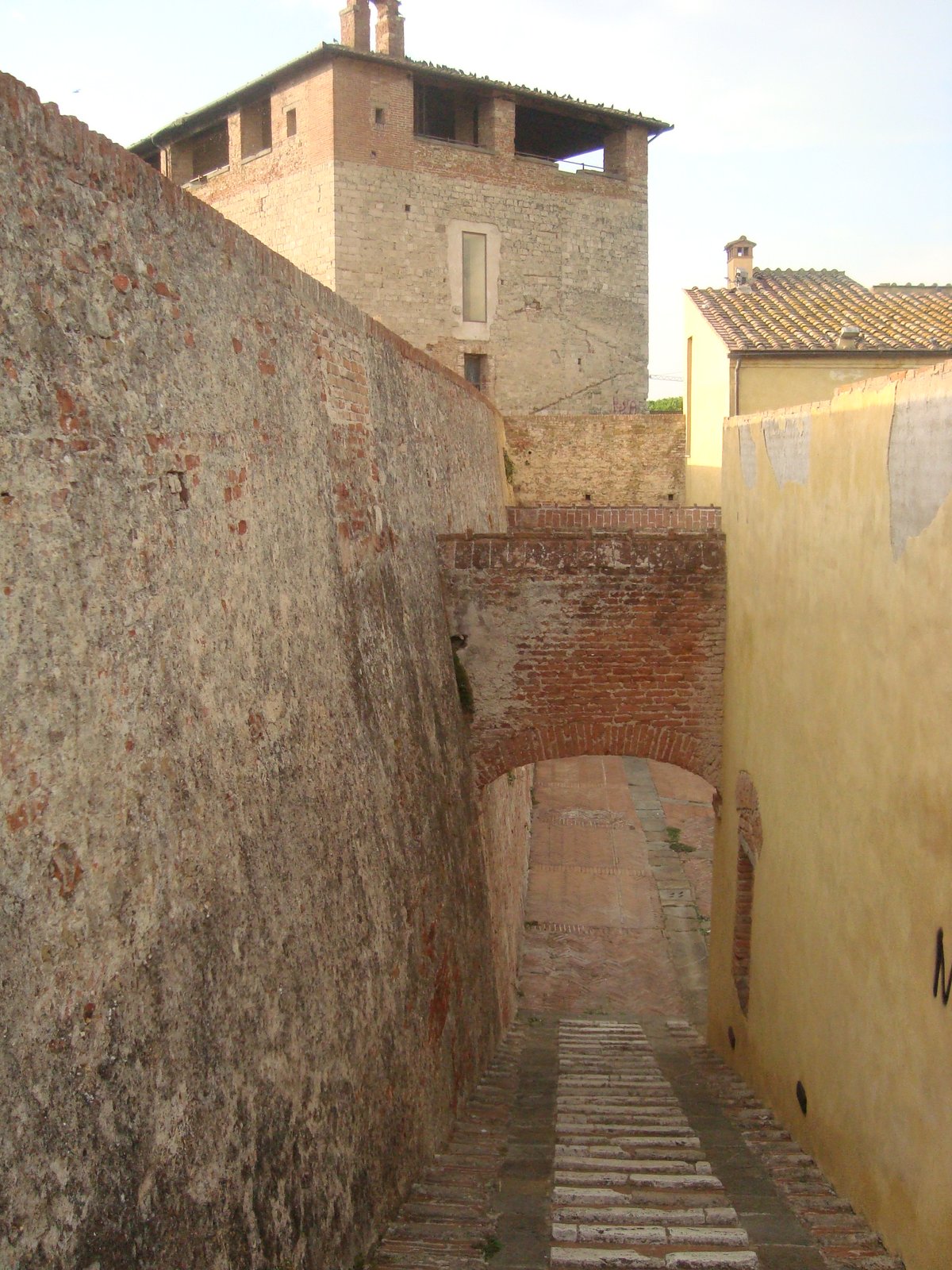
From the Bastione Fortezza, the complete circular route along the Medici Walls unfolds, stretching about 3 kilometers. This is not just a simple walk: it’s a journey through the urban history of Grosseto. Each bastion has its own character: some have become hanging gardens, while others still preserve their original loopholes. The most spectacular stretch runs alongside Porta Vecchia, where the impressive thickness of the walls is best appreciated. Pay attention to the details: on the stones, you can still see marks of ancient craftsmanship, and in some spots, traces of the original brick cladding emerge. Personally, I always stop at the Bastione Rimembranza for the view of the Cathedral of San Lorenzo: from that angle, with the walls in the foreground, you truly understand the harmony of this Renaissance project.

The Details That Tell Stories

What makes the Bastion Fortress special isn’t just its size or the view, but the details that tell everyday stories. Look closely at the rusticated cornerstones: they’re not just decoration, they were designed to deflect artillery fire. The embrasures aren’t all the same: some are for arquebuses, others wider for cannons. On the inner side of the bastion, almost hidden, there’s still the rainwater collection cistern, a crucial element for withstanding sieges. I was surprised to discover that until a few decades ago, there was an open-air cinema here: the walls that for centuries protected the city later hosted summer screenings. These layers of use make the place feel alive, not just a postcard monument.

Why Visit It

Three concrete reasons not to miss the Fortress Bastion: first, it’s the only point on the walls with direct access from the city without having to go around the outside. Second, it offers the most comprehensive view of the relationship between Grosseto and its territory: you can clearly see how the Renaissance city developed within the walls, while the Maremma stretches out endlessly. Third, here you immediately understand the genius of the Medici defensive system: the elevated position, the pointed shape that allowed crossfire, the integration with the urban fabric. It’s a lesson in military architecture that doesn’t require complicated explanations: just look around. And let’s face it, it’s simply a beautiful place for an evening stroll at sunset.

When to Go

The magical moment? Late autumn afternoons, when the low sun caresses the limestone stones and the light turns golden. In summer it’s hot, though there’s always a bit of breeze at higher altitudes. Spring is splendid, with the Maremma bursting into green and the scents of the scrubland rising up to the walls. But it’s in autumn that the play of light and shadow on the walls reaches its peak, and the morning haze over the plain creates an almost surreal atmosphere. I’d avoid the midday hours in summer: the sun beats down fiercely and half the charm is lost. Better an hour before sunset, when the temperature moderates and the city gradually lights up.

In the Surroundings

After descending from the walls, two complementary experiences await: the first is the Archaeological and Art Museum of Maremma, just steps from the bastion, which tells the story of this territory from the Etruscans onward. The second, lighter yet equally authentic, is a stop at one of the town’s wine bars to sample Maremma wines, such as Morellino di Scansano. If you’re in the mood for nature, just a few minutes away is the Diaccia Botrona Nature Reserve, where you can go birdwatching in the ancient reclaimed marshes. These aren’t distant places: they’re part of the same story that begins by climbing the Bastione Fortezza and looking down upon this complex and fascinating territory.

Itineraries nearby


💡 Did You Know…?

As you walk, look for the original bronze cannons still aimed at the countryside. They were cast in the second half of the 16th century and were never used in battle, because Grosseto’s walls, despite their menacing appearance, never suffered a real siege. Their silent presence tells a story of prevention and deterrence that worked perfectly for centuries. Another detail few notice: the walls were built on a previous medieval layout, but with a revolutionary technique for the time, in a ‘pincer’ shape, making them practically impregnable to artillery attacks. This engineering perfection is why they have survived intact to this day.