The Starry Sky Awaits You
Entering the Mausoleum of Galla Placidia is like stepping into another universe. The red brick exterior gives nothing away, but as soon as you cross the threshold, the dome explodes above you with a deep blue sky studded with golden stars and a luminous cross at its center. It’s one of the first ‘starry skies’ in art history, and the effect is hypnotic. Light filters through alabaster windows, creating an almost surreal atmosphere. The mosaics are the oldest in Ravenna and tell stories of salvation and eternal life. You don’t need to be an art expert—the spectacle hits you right in the gut.
A Brief History of a Mausoleum (That Never Was)
Built
after 426 AD by Empress Galla Placidia, daughter of Theodosius the Great, it was intended to be her family tomb together with her brother Honorius and her husband Constantius III. But Galla Placidia died in Rome in 450 and was buried there. The building was probably a chapel connected to the church of Santa Croce. In 1602 it was separated from the narthex. Since
1996 it has been a UNESCO World Heritage site. Here are the key moments:
- 425-450 AD: construction
- 450: death of Galla Placidia in Rome
- 1602: separation from the church of Santa Croce
- 1996: UNESCO declaration
- 2017: new lighting system
The Mosaics: A Rich Iconographic Program
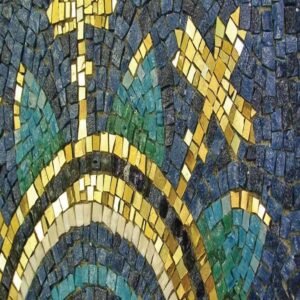
Every inch of wall is covered with enamel and gold tesserae. In the dome, the cross dominates a starry sky, with the symbols of the evangelists at the four corners. In the lunettes, the apostles in pairs reach their hands toward the cross. On the lunette above the entrance, the Good Shepherd with his sheep, symbol of Christ guiding the faithful. Opposite, St. Lawrence approaches martyrdom with his gridiron. Pay attention to details: the doves drinking from a vase and the deer quenching their thirst, echoes of Psalm 42. Water as a source of life is a recurring theme. The mosaics are perfectly preserved and tell a story of triumph over death.
Light and Architecture: A Play of Reflections
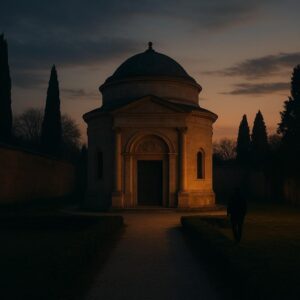
The exterior is simple, almost anonymous: exposed brick, a Latin cross plan, a dome hidden by a lantern. But inside is where the magic happens. The windows are made of alabaster, a translucent stone that diffuses a warm, soft light. The mosaic tiles are intentionally tilted to refract light, creating a sparkling effect. Due to subsidence, the floor is now about 1.5 meters below street level, which adds to the intimate atmosphere. The three empty marble sarcophagi add a touch of mystery. It is a small treasure chest that completely envelops you.
3 reasons not to miss it
1. An absolute masterpiece of early Christian mosaics: the oldest in Ravenna, with an iconographic program blending pagan and Christian symbols. 2. The cumulative ticket (5 monuments for €14.50) also gives you access to San Vitale, the Baptistery, and Sant’Apollinare Nuovo: a great deal to immerse yourself in Byzantine art. 3. Full accessibility: tactile map, paths for the visually impaired, glasses for colorblind visitors. It’s an inclusive experience that few museums offer.
The Best Time to Visit
There’s no wrong season, but I recommend going early in the morning, right when it opens. The light filtering through the alabaster windows is softer and the mosaics seem to come alive. In summer, avoid the midday hours because of the crowds. In winter, the atmosphere is even more intimate. If you can, choose a weekday: the queue is shorter and you can enjoy the almost mystical silence of this small gem.
What to See Next
The Mausoleum is just steps away from the Basilica of San Vitale, famous for its Justinian mosaics, and the Neonian Baptistery, with its mosaic dome of the Baptism of Christ. They are all included on the same ticket. If you have time, also visit the Archbishop’s Museum with the Chapel of Sant’Andrea. And if you are passionate about mosaics, stop by a workshop to try creating your own small masterpiece (you’ll find several in the city center).