Calice al Cornoviglio Castle: Medieval Fortress Overlooking the Val di Vara

Calice al Cornoviglio Castle is a medieval fortress perched on a rocky spur overlooking the Val di Vara. After careful restoration, it is now a visitable municipal property offering an authentic experience away from the more beaten tourist paths. The ascent to the castle through the cobbled alleys of Calice village is part of the adventure, with an intimate and silent atmosphere ideal for those who appreciate history without frills.

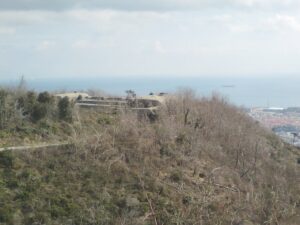
  • Breathtaking panoramas over the Ligurian hills and Val di Vara, with views extending to the sea on clear days
  • Authentic military architecture with a quadrangular tower, walls following the rocky spur, and stone corbels
  • Millennial history linked to the feudal Malaspina and Fieschi families, with 15th-century graffiti discovered during restoration
  • Underlying medieval village with narrow carruggi, honey-colored stone houses, and the parish church of San Michele

Copertina itinerario Calice al Cornoviglio Castle: Medieval Fortress Overlooking the Val di Vara
Visit Calice al Cornoviglio Castle, a restored municipal property with a quadrangular tower and walls following the rocky spur. Discover the history of the Malaspina and Fieschi families, explore the underlying village, and enjoy breathtaking views.

Good to know


Introduction

The Castle of Calice al Cornoviglio is not just a medieval fortress; it’s a privileged vantage point over the Val di Vara that will leave you breathless. Approaching from the village, its massive grey stone structure seems to emerge from the hillside like a silent guardian. The feeling is one of discovering a place outside of time, where the sound of the wind through the walls tells ancient stories. It’s not the typical perfectly restored castle—in fact, its somewhat rough and authentic appearance is precisely its charm. I paused to take in the view from the city walls, with the rooftops of Calice below and the hills fading toward the sea, and I understood why this place is worth the detour.

Historical Overview

Its history is a tapestry of power and strategy. The first reliable records date back to the 12th century, when it was a possession of the bishops of Luni, but the structure we see today is largely the result of transformations carried out by the Malaspina family in the fifteenth century. This family of lords of Lunigiana expanded and fortified it, turning it into a stronghold to control communication routes between the coast and the hinterland. It later passed to the Doria family of Genoa, reflecting the complex alliances of the era. Today, after a long period of neglect, it is privately owned and the subject of careful conservation efforts that preserve its essence without altering it.

  • 12th century: First mentions as an episcopal possession.
  • 15th century: Expansion and fortification by the Malaspina family.
  • Subsequent centuries: Transition under the rule of the Doria family of Genoa.
  • Today: Private property undergoing conservation.

The Architecture That Speaks

Walking among its ruins is like reading a book of stone. The quadrangular tower is the most iconic element, towering and massive, though it is not accessible inside today for safety reasons. What strikes you is how the walls perfectly follow the contour of the rocky spur, a total fusion with the territory. Looking closely, you can still see the stone corbels that supported the machicolations, details that hint at its defensive function. Don’t expect furnished rooms or museum displays: here the experience is all in the atmosphere, in touching the worn stones and searching with your gaze for traces of the ancient windows and patrol walkways. It is a place that asks for a bit of imagination, and perhaps that is its very merit.

The Village Below

A visit to the castle is incomplete without a stroll through the village of Calice al Cornoviglio nestled at its feet. It’s a labyrinth of narrow alleys and honey-colored stone houses, quiet and authentic. I recommend seeking out the parish church of San Michele, simple yet with its own character, and getting lost in the lanes where time seems to flow more slowly. Here, you breathe in the life of an inland Ligurian village, far from the tourist bustle of the coast. Often, on market or festival days, you can catch the aromas of home cooking wafting from the houses. It’s the perfect context to understand why the castle was there: to protect and visually dominate this community and the valley that hosts it.

Why Visit

For three very concrete reasons. First, for a panoramic view of the Val di Vara that you’ll hardly forget, especially on clear days when you can glimpse the sea. Second, because it’s an example of authentic medieval military architecture, not tamed for tourists, where you can touch history firsthand. Third, because it’s the heart of a perfect slow itinerary: you can pair it with discovering local products from the valley, like cheeses or honey, turning the trip into a well-rounded experience. It’s the kind of place you’ll appreciate if you’re looking for something more than just a postcard.

When to Go

The best time? A late autumn afternoon, when the light is low and golden and the hills turn red and ochre. The atmosphere becomes magical, almost melancholic, and there are no crowds. A spring morning is also excellent, with fresh air and vegetation bursting around the walls. In summer, it can get very hot on the bare hill, while in winter the wind can be biting. In any case, avoid days of heavy rain: the access path could be slippery and the charm of the place risks being lost in the fog.

In the Surroundings

To round off the day, here are two thematic suggestions. A few kilometres away lies Brugnato, with its evocative Romanesque abbey and a tiny, well-kept historic centre, perfect for a peaceful stop. If you’d like to delve deeper into the area’s history, head towards Varese Ligure, famous for its circular urban layout and its status as an Orange Flag village of the Touring Club. Both places offer another perspective on this part of Liguria, characterised by history, tranquillity, and gentle landscapes.

Itineraries nearby


💡 Did You Know…?

A little-known, ultra-realistic curiosity: during restoration work, 15th-century graffiti was discovered inside a wall of the keep, including drawings of ships and inscriptions likely left by guards. Additionally, the castle chapel, dedicated to San Lorenzo, preserves traces of almost illegible 14th-century frescoes, whose presence is confirmed by local studies. The view from the main tower allows, on the clearest days, a glimpse of the outline of the sea along the Riviera di Levante on the horizon, a detail that magically connects the inland area to the coast.