Introduction
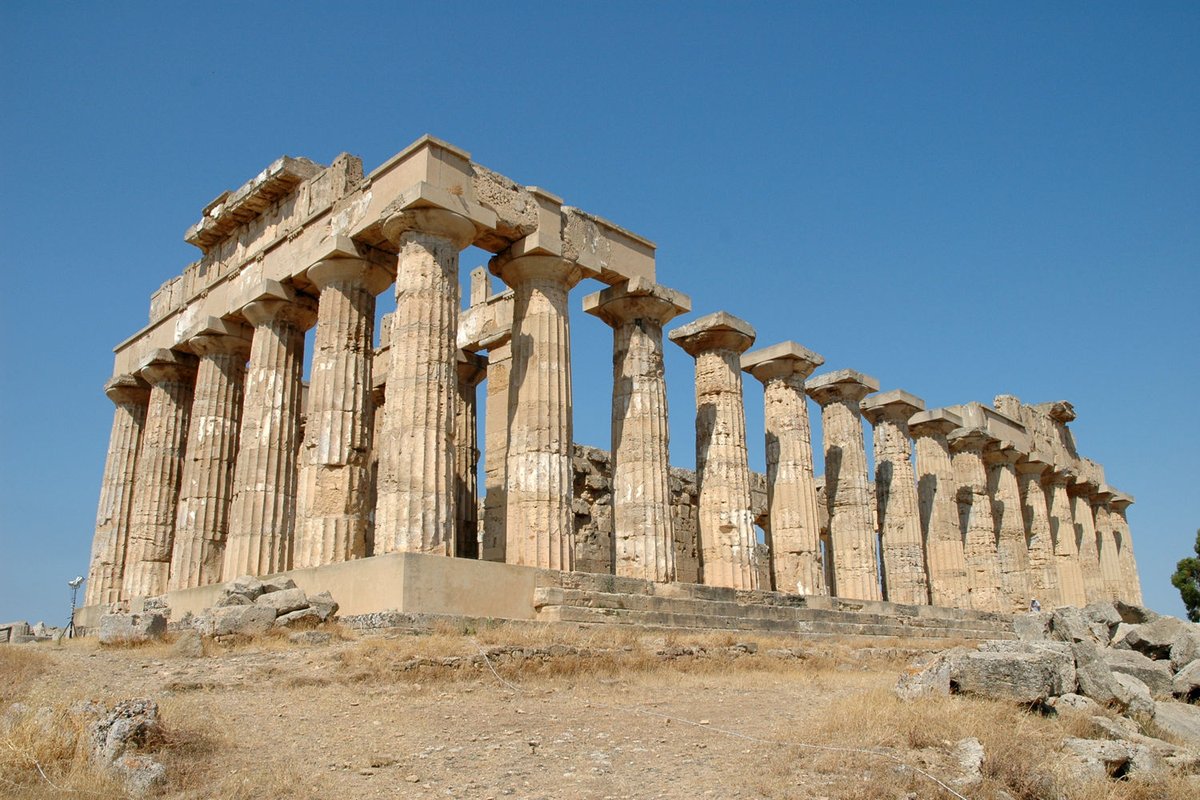
Arriving at Selinunte is like stepping back in time, with the sea breeze gently caressing your face. The largest archaeological park in Europe isn’t just a collection of ruins: it’s an experience that takes your breath away. You walk among imposing temples, some still standing after millennia, others fallen like sleeping giants. And then there’s that view of the Sicilian coast, with the Mediterranean sparkling on the horizon. It’s not just for history enthusiasts: even children are left speechless in front of these ancient stones. Personally, I lost myself gazing at Temple E, perfectly reconstructed, while waves crashed in the distance. A place that makes you feel small, but in a beautiful way.
Historical Overview
Selinunte didn’t arise by chance. Founded in 628 BC by Greek colonists from Megara Hyblaea, it quickly grew into a powerful city, renowned for its rivalry with Segesta. Then, in 409 BC, disaster struck: the Carthaginians destroyed it, and it never fully recovered. The Romans occupied it briefly, but by then its fate was sealed. What we see today are the remnants of that former greatness, abandoned for centuries until modern excavations. I sometimes imagine what it must have been like to live here, with its bustling port and brand-new temples. The timeline helps capture the essence:
- 628 BC: Foundation by the Greeks
- 5th century BC: Peak period, with temples constructed
- 409 BC: Destruction by the Carthaginians
- 3rd century BC: Gradual abandonment
- 16th century onward: Archaeological discoveries and excavations
The Temples of the Acropolis
The acropolis of Selinunte is the beating heart of the park. Perched on a hill, it offers a breathtaking view of the sea and the temples below. Here you’ll find the remains of several sanctuaries, but the one that stands out most is Temple C, likely dedicated to Apollo. Even though partially collapsed, its Doric columns give you a sense of the original grandeur. Walking among the ruins, you’ll notice stone blocks scattered everywhere, as if a giant had played dice. One detail that surprised me: some blocks still have holes for the metal clamps that held them together. It’s not just archaeology, it’s ancient engineering that withstands time. If you climb to the top, the wind tousles your hair and you understand why they chose this very spot: to dominate the land and the sea.
The Eastern Hill and the Stone Giants
If the acropolis is the heart, the Eastern Hill is the most mysterious soul of Selinunte. Here stand three majestic temples, aligned like silent guardians. Temple E, reconstructed in the 1950s, is the only one that shows you how these buildings truly were: tall columns, capitals, and a sense of sacredness that can still be felt. Nearby, Temple F and Temple G, the latter one of the largest in the Greek world, though today it is an impressive heap of ruins. Walking here is surreal: the stone blocks are so enormous that you wonder how they managed to transport them. I spent an hour observing the details of the sculptures, now in the Palermo Museum, but whose traces remain here. It is a place where history speaks to you, even if in fragments.
Why Visit It
First: it’s accessible to everyone, including families. The paths are well-marked, and even children enjoy exploring the ruins as if on an adventure. Second: the unique combination of history and nature. Where else can you see Greek temples with the blue sea as a backdrop? Third: authenticity. It’s not an overly touristy or reconstructed place: you feel the weight of the centuries, and perhaps that’s exactly what makes it special. Plus, the admission ticket includes access to the Gaggera area, with other interesting remains. I’d go back just for that silence broken by the wind and waves.
When to Go
Avoid the midday hours in summer: the sun beats down hard and there’s little shade. I prefer early morning or late afternoon, when the light is golden and the heat is more bearable. Spring and autumn are ideal: the climate is mild, and the colors of the surrounding countryside are splendid. In winter, if you catch a clear day, the panorama is even sharper, but always check the weather because the wind can be biting. I once went in October, and the atmosphere was magical, with few visitors and a fresh air that smelled of salt.
In the Surroundings
After Selinunte, it’s worth making a quick trip to Mazara del Vallo, just a few kilometers away. Here you can see the Dancing Satyr, a bronze statue recovered from the sea, displayed in a dedicated museum. It offers an interesting contrast to the Greek antiquity. Alternatively, if you want to relax, the beaches of Marinella di Selinunte are nearby and perfect for a refreshing swim. The sand is fine and the water crystal clear, ideal for unwinding after so much history. Both places add an extra dimension to your day in this part of Sicily.