
🧭 What to Expect
- Ideal for a cultural weekend or as a base for exploring Sicily's western coast.
- Highlights: well-curated museums like Pepoli, historical monuments from the Middle Ages to Baroque, and sea views.
- Offers ease of visit with a compact, pedestrian-friendly historic center.
- Includes an interactive map to locate all described attractions.
Events nearby

The City of Trapani is a destination that surprises with its historical richness and strategic seaside location. Despite its compact size, the historic center holds artistic and architectural treasures that tell centuries of dominations, from the Normans to the Spanish. Walking through the city center means encountering Baroque churches, noble palaces, and museums preserving unique artifacts, such as those in the Pepoli Museum. But Trapani is not just history: its waterfront offers spectacular views of the Egadi Islands, especially at sunset, and its castles, like the Colombaia, seem straight out of a fairy tale. For those visiting western Sicily, stopping here is an opportunity to discover an authentic city, where maritime tradition blends with a vibrant cultural offering. Plan your itinerary starting from the symbolic places, without overlooking the details that make this experience unique.
Overview
Itineraries nearby


Pepoli Museum and Cloister
- Go to the page: Pepoli Museum Trapani: Renaissance Cloister and Eighteenth-Century Coral Works
- Via Conte Agostino Sieri Pepoli 180, Trapani (TP)
- https://www2.regione.sicilia.it/beniculturali/museopepoli/museopepoli.html
- Open in Google Maps
- View on Google Images
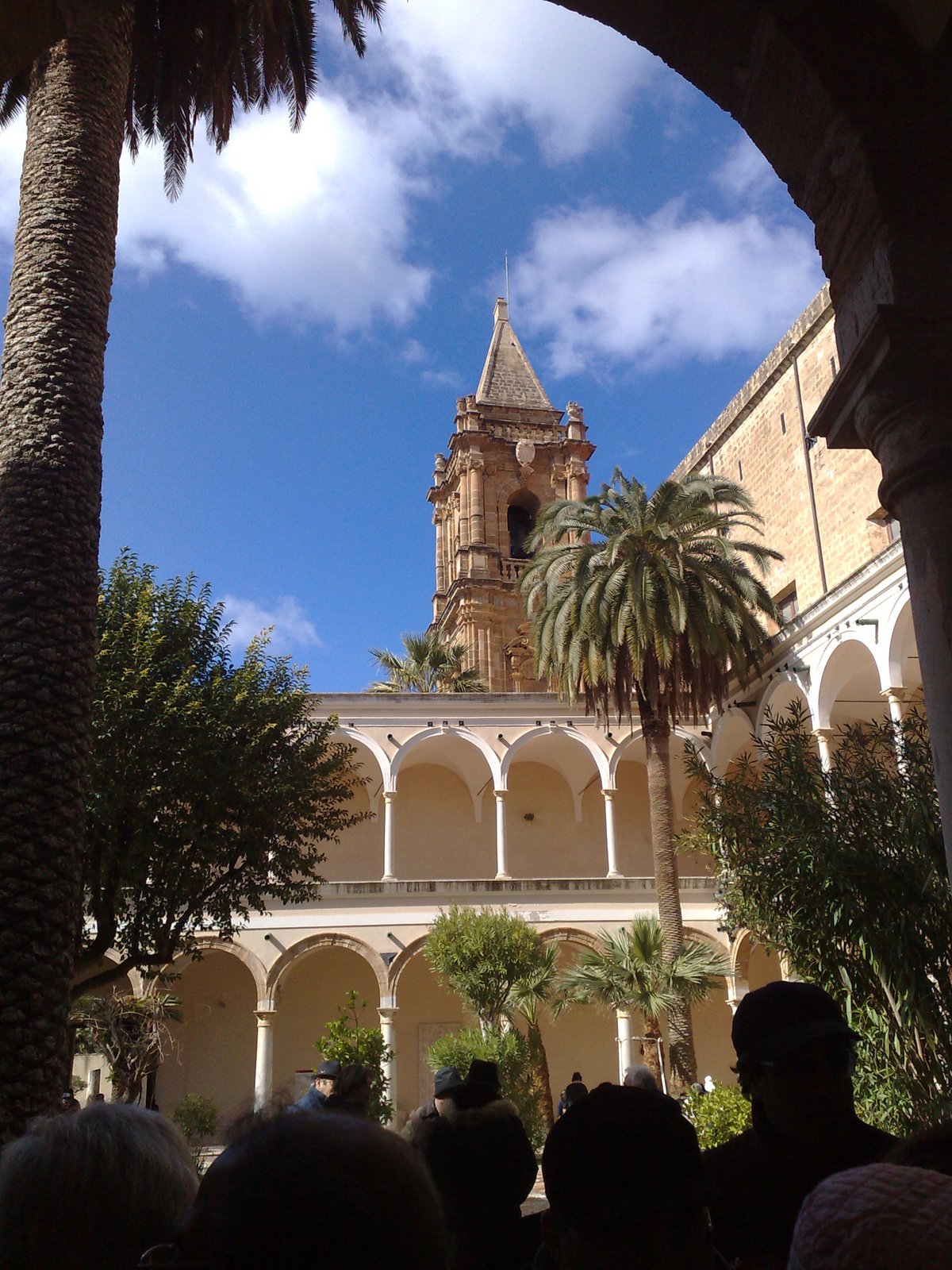 If you think museums are dusty places, the Regional Museum Conte Agostino Pepoli will change your mind. Located in the former Carmelite convent, next to the Sanctuary of the Annunciation, this museum is a true concentration of Trapani's beauty. The permanent collection is a journey through centuries of local craftsmanship, with a section dedicated to Trapani's famous coral that will leave you in awe. They're not just jewels: you'll see true masterpieces of carving, with statues and sacred objects that show incredible skill. Then there are the coral and ivory nativity scenes, works so detailed that you'll lose yourself observing each figurine. The Renaissance cloister is an oasis of peace in the heart of the city, with elegant arches and a well-kept garden where you can take a break between rooms. What struck me is how the museum tells different stories: there are paintings by Sicilian artists from the 17th and 18th centuries, archaeological finds from the area, and even a collection of traditional nativity scenes that gives an idea of local festivities. Don't miss the majolica section, with decorated plates and vases showing Arab and Spanish influences – a typical mix of western Sicily. The layout is modern and clear, the captions are helpful without being heavy. I recommend dedicating at least an hour and a half to visit it calmly, perhaps avoiding the hottest afternoon hours. A detail I appreciated: the staff is available and passionate, ready to share anecdotes about the works if you ask. For me, this museum is an essential stop to understand Trapani's identity, beyond the beaches and amazing food.
Santuary of the Annunciation
- Go to the page: Santuary of the Annunciation: Our Lady of Trapani and Her Gothic and Baroque Treasures
- Via Conte Agostino Sieri Pepoli, Trapani (TP)
- http://www.madonnaditrapani.it/
- Open in Google Maps
- View on Google Images
 Let me tell you right away that the Sanctuary of the Annunciation is not just a church; it's the spiritual heart of Trapani. You arrive, and the exterior immediately strikes you: that Baroque façade in tuff stone, with its warm color that seems to absorb the Sicilian sun. But it's inside where the magic happens. The atmosphere is that of a place lived in for centuries, where silence has a different weight, more dense. The central nave is wide, bright thanks to the side windows, and leads you straight to the main altar. And here's the point: the statue of the Madonna of Trapani, carved in alabaster according to tradition by Nino Pisano in the 14th century. You see it there, in that gilded niche, and you understand why the people of Trapani are so devoted to her. Legend says it arrived from the sea on a ship without a crew, an image that has always made me think. It's not a majestic or imposing statue; instead, it has an almost human sweetness, with that inclined face and clasped hands. Wandering through the side chapels, you'll find other surprises, like the sculptural group of the Annunciation, a work from the Gagini school worth a few minutes of observation. Personally, I lingered on the details of the stuccoes, those putti and festoons that seem to move on the walls. Admission is free, but if you want to delve deeper, there's the small attached museum with sacred vestments and ex-votos. A tip? Go in the morning, when the light filters in better and there's less commotion. And don't rush: this is a place where even those who aren't particularly religious can feel something special, a connection with the history and identity of this city.
Castle of the Dovecote
- Via Catulo Lutazio, Trapani (TP)
- Open in Google Maps
- View on Google Images
 The Castle of the Dovecote is one of those places that strikes you even before setting foot inside. You see it standing out against the sky, an artificial island connected to the mainland by a thin strip of asphalt, and you immediately understand it has a story all its own. It's not just a castle; it's a symbol of Trapani, a landmark for those arriving by sea. Its octagonal shape is unmistakable, and walking along the pier that leads to the entrance, with water lapping at the sides, you already feel transported to another era. The construction has ancient origins, even dating back to the Carthaginians, but its current appearance mainly dates to the Aragonese period. It has been everything: a military fortress, a prison, even a lazaretto during epidemics. Today, after lengthy restorations, it is finally visitable and hosts temporary exhibitions and cultural events. The interiors are bare, as one would expect from a military structure, but it's the atmosphere that counts. Climbing onto the terraces and the patrol walkways is the best experience. From up there, the view is breathtaking: on one side, the profile of the city of Trapani and the salt pans; on the other, the open sea towards the Egadi Islands. You perfectly understand why it was built there, guarding the port. There's a certain melancholy in its stones, but also great dignity. A tip: always check the opening hours before going, as they can vary depending on ongoing exhibitions. And bring your camera—the reflections of the sun on the water around the castle, especially at sunset, are something special.
Museum of Prehistory and the Sea - Torre di Ligny
- Via Torre di Ligny, Trapani (TP)
- Open in Google Maps
- View on Google Images
 If you're looking for a place that combines history, archaeology, and a breathtaking view, the Museum of Prehistory and the Sea in Torre di Ligny is a must-visit. This isn't your typical dusty museum: here, you literally immerse yourself in Sicilian prehistory, with artifacts that tell ancient stories thousands of years old. The tower itself, a 17th-century Spanish fortress, is already an attraction: its location at the tip of Trapani's peninsula offers spectacular views of the Tyrrhenian Sea and the Egadi Islands. Inside, the rooms house fascinating collections: ceramics, stone tools, and fossil bones that testify to life in the area from the Paleolithic to the Bronze Age. Personally, I loved the section dedicated to underwater finds, with amphorae and naval artifacts that seem straight out of a pirate tale. The visit is managed by passionate volunteers, who often add curious anecdotes and make everything more vivid. Note: the spaces are narrow and the tower has steep stairs, so it's not ideal for those with mobility issues. But if you endure the climb, a terrace awaits you at the top with a view worth every effort: on clear days, you can even spot the silhouettes of Favignana and Levanzo. A tip? Visit in the late afternoon, when the sunset light tinges the sea and ancient walls with gold—it's a magical atmosphere you'll hardly forget.
Land Castle
- Lungomare Dante Alighieri, Trapani (TP)
- Open in Google Maps
- View on Google Images
 The Land Castle is one of those places that immediately makes you understand Trapani's layered history. Built likely by the Normans in the 12th century on pre-existing Arab structures, it has had a very long life: military fortress, prison, even a private residence. Today it appears as a complex of evocative ruins, with well-preserved parts like the walls and a tower that rises above the urban fabric. The location is strategic: it's right at the entrance to the historic center, near Porta Botteghelle, and offers unique glimpses of the rooftops and the sea towards the Egadi Islands. Don't expect a perfectly restored fairy-tale castle. Here the atmosphere is different, more authentic and a bit melancholic. Walking among its stones gives you the feeling of touching the past centuries, when this structure defended the city from attacks from the sea. Unfortunately, access to the interior is often limited or subject to opening hours that aren't always clear – a typically Sicilian detail that's best checked before going. But even just seeing it from the outside, perhaps at sunset when the warm light illuminates the pale stone, is worth the walk. It's a piece of Trapani that endures, a silent witness to battles, dominations, and urban transformations.
Ex Church of Sant'Agostino: From Place of Worship to Stage
- Go to the page: Ex Church of Sant'Agostino: Baroque 17th-Century Auditorium with Exceptional Acoustics
- Via Sant'Agostino, Trapani (TP)
- https://comune.trapani.it/turismo/chiesa-santagostino/
- Open in Google Maps
- View on Google Images
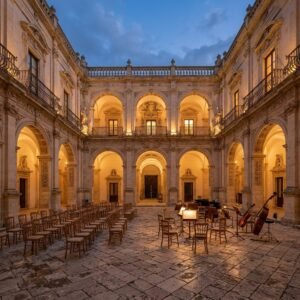
 If you think Trapani only has ancient churches to visit in silence, the ex-church of Sant'Agostino will make you think again. This place, which now houses a multifunctional auditorium, is a perfect example of how spaces can be reborn with new identities while keeping their historical soul intact. The 14th-century Gothic-Chiaramontano facade welcomes you with its elegant simplicity in stone, while the interior surprises you: where there were once naves and altars, you now find a modern stage and comfortable seats. The transformation into an auditorium was done with respect, preserving original elements like the cross vaults and some faded frescoes that tell forgotten stories. What always strikes me is the contrast between the solemnity of the sacred architecture and the lively energy of the events held here: concerts, conferences, theatrical performances that fill with life a space charged with spirituality. It's not uncommon to find people who come both to attend a jazz concert and to admire the architectural details, perhaps discovering that the church was damaged during World War II and then carefully restored. The atmosphere is special, suspended between past and present, and even if you're not an architecture enthusiast, it's worth entering just to breathe in this unique fusion. Sometimes I wonder if the Augustinian friars who prayed here centuries ago would have imagined that their place of worship would become a cultural meeting point for the city. Today the auditorium is a reference point for Trapani's cultural life, hosting quality events in a context that no modern hall could match. If you pass by here, check the schedule: there might be a show that interests you, and experiencing music or words in this space makes everything more special.
Palumbo Rock Lighthouse
- Via Catulo Lutazio, Trapani (TP)
- Open in Google Maps
- View on Google Images
 The Palumbo Rock Lighthouse is one of those places that truly makes you feel at the end of the world, in the best sense. It's not a monument in the historic center, but a solitary lighthouse perched on a rock right at the entrance to Trapani's harbor. You reach it with a short walk along the Tramontana pier, and the journey itself offers a unique view of the city stretching out behind you. The feeling is strange: you're just steps away from traffic and daily life, but here there's only the sound of the wind and waves crashing against the rock. The lighthouse itself, with its white masonry cylindrical tower and green lantern, has an ancient and romantic quality. It's not always open to the public inside, but the real magic is all around. The location is simply spectacular for watching the comings and goings of boats, but especially for the sunsets. When the sun sets behind the Egadi Islands, the sky lights up with oranges and reds that reflect on the water, with the lighthouse in silent silhouette. I visited in the late afternoon and stayed longer than planned, sitting on the rocks, almost forgetting the time. It's a perfect spot for a contemplative break, away from the crowds, where you can breathe pure sea air and enjoy a moment of absolute peace. Bring a bottle of water and a hat if you go in summer, because there's no shade. And watch out for the more exposed sections of the pier when it's windy—it can be a bit blustery. Every step is worth it for that unique atmosphere.
Lucatelli Palace
- Via Cassaretto, Trapani (TP)
- Open in Google Maps
- View on Google Images
 If you stroll through the historic center of Trapani, perhaps heading towards Corso Vittorio Emanuele, you might almost miss Lucatelli Palace. It's not one of those monuments that forcefully imposes itself; quite the opposite. Its facade, sober and linear, could almost go unnoticed among the other buildings. But that's precisely what makes it a small discovery for those who love details. Lucatelli Palace is an elegant example of Sicilian Baroque architecture from the eighteenth century, built at the behest of the Lucatelli family, one of the most influential in the city at the time. Today, unfortunately, it is not always regularly open to visitors inside – it sometimes hosts temporary exhibitions or cultural events, but does not have a fixed museum opening. I recommend checking local initiatives before going, to avoid the risk of finding it closed. What struck me the most, and is worth observing even just from the outside, is the stone entrance portal, crafted with a certain mastery, and the wrought-iron balconies that protrude from the facade. These are details that speak of an era when art blended with the daily life of wealthy families. Its location is strategic: it is just a stone's throw from the Church of Purgatory (where the Mysteries of Trapani are kept) and other attractions in the center. Don't expect lavish rooms open to the public – sometimes you can only glimpse the internal courtyard if the main door is open – but as a silent testimony to eighteenth-century Trapani, it has its own reason for being. For me, it is one of those places that adds a piece to understanding the city, beyond the more beaten paths.