
Teatro Amintore Galli is a symbol of Rimini’s cultural rebirth. Inaugurated in 1857 with Verdi’s opera ‘Aroldo’ conducted by the maestro himself, it is a neoclassical masterpiece by Luigi Poletti. Severely damaged by bombing in 1943, it was faithfully reconstructed and reopened on October 28, 2018.
• Inaugurated by Verdi in 1857
• Neoclassical architecture with four tiers of boxes
• Destroyed in 1943, rebuilt and reopened in 2018
• Guided tours featuring early Christian archaeological remains
Events nearby

Designed by Luigi Poletti and inaugurated by Verdi, the Teatro Amintore Galli is the heart of Rimini’s culture. After wartime destruction and a long restoration, it reopened in 2018. Accessible guided tours and a rich program of performances.
- https://www.teatrogalli.it/
- Piazza Cavour, Rimini (RN)
- Open in Google Maps
- View on Google Images Teatro Amintore Galli a Rimini
Good to know
The beating heart of Rimini’s culture
Stepping into the Teatro Amintore Galli is like diving into history. This neoclassical marvel designed by Luigi Poletti welcomes you with its imposing facade on Piazza Cavour. It’s more than a theater: it’s a symbol of Rimini’s rebirth after the war. As you cross the threshold, you feel the elegance of bygone days mingling with the energy of a vibrant new cultural life. I was struck by the brightness of the foyer and the harmony of the horseshoe-shaped auditorium. A truly moving place.
From Verdi’s Inauguration to the 2018 Rebirth
The theater was designed by Luigi Poletti in 1841, but it opened in 1857 with Verdi himself conducting ‘Aroldo’. A unique honor. Unfortunately, on December 28, 1943, a bombing destroyed the roof. Only the facade and foyer survived. After decades of neglect, it reopened on October 28, 2018.
- 1841: designed by Poletti
- 1857: inauguration with Verdi
- 1943: bombing
- 2018: reopening
A Neoclassical Masterpiece
The theater’s facade is a perfect example of Neoclassical style, with Corinthian columns and a wide portico. Inside, the hall is horseshoe-shaped with four tiers of boxes (23 per tier) and no royal box, reflecting a democratic concept of art. The first tier is double-height, with Corinthian columns supporting the balcony railing. During restoration, remains of an early Christian basilica were uncovered, now visible in an archaeological area beneath the theater. An incredible blend of history and architecture.
Visits and Accessibility for Everyone
The theater can be visited outside of performances, with guided tours by reservation. I recommend booking because you discover details that you would miss on your own. The entrance is accessible with ramps, there are reserved seats and accessible restrooms. It is easily reachable on foot from the station in 20 minutes or by bus (lines 11, 124, 20, METROMARE). The most convenient parking is Rocca Malatestiana. In short, no excuse not to visit it.
Three Good Reasons to Enter
First: history. Being where Verdi conducted the premiere of ‘Aroldo’ is thrilling. Second: acoustics. The hall is designed for perfect sound, as experts say. Third: the city. A visit to the Galli is an excuse to explore Rimini, with its beach and historic center. And then, a ticket to a show is an experience worth the trip.
The Right Time for a Visit
If you want to see the theater in all its splendor, go on a weekday when it’s less crowded. I prefer early morning, when light streams in through the large windows and illuminates the stucco of the foyer. But if you love the thrill of performances, choose the evening: the atmosphere is magical, with elegant audiences and soft lighting. As for the season, autumn is best because the program is rich and the city is less chaotic.
What to See Nearby
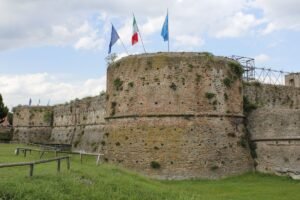
The theater is in Piazza Cavour, heart of the historic center. A stone’s throw away is the Rocca Malatestiana, an imposing fortress worth visiting. And then, get lost in the alleyways of shopping and cafés. After the visit, I stopped at a place in the square for an aperitivo, enjoying the view of the illuminated theater. A lively neighborhood worth exploring.
Itineraries nearby

💡 Did You Know…?
During restoration work, the remains of a 5th-century early Christian basilica were discovered beneath the auditorium, now part of a multimedia museum tour. A journey through time blending ancient history with opera, making the Teatro Galli truly unique.