
🧭 What to Expect
- Ideal for: history and art lovers, families seeking culture
- Highlights: compact historic center, iconic landmarks like the Fountain of the 99 Spouts and the Spanish Fort
- Must-see: the Basilica of Collemaggio, the National Museum of Abruzzo, Abruzzo cuisine
- Tip: visit in spring or autumn for mild temperatures
Events nearby

Are you ready to discover L'Aquila? This Abruzzo city, rebuilt after the 2009 earthquake, preserves an extraordinary historical and artistic heritage. Strolling through the historic center, you'll come across the Basilica of Santa Maria di Collemaggio, a Romanesque-Gothic masterpiece, and the Basilica of San Bernardino with its Renaissance façade. Don't miss the Fountain of the 99 Spouts, the city's symbol, and the Spanish Fort, an imposing 16th-century fortress. For art enthusiasts, the National Museum of Abruzzo houses archaeological finds and artworks. Among the squares, Piazza del Palazzo stands out with its elegant town hall. This itinerary will guide you through the most iconic monuments, revealing lesser-known corners like Renzo Piano's Auditorium del Parco. L'Aquila is a perfect destination for a cultural weekend, blending history, art, and great cuisine.
Overview
Itineraries nearby
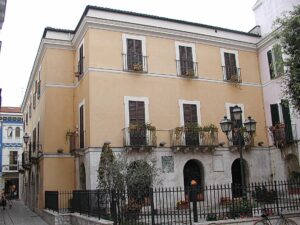


Basilica of Santa Maria di Collemaggio: Romanesque Jewel and Holy Door
- Go to the page: Basilica of Santa Maria di Collemaggio: The First Holy Door and the Perdonanza
- Via San Josemaría Escrivà, L'Aquila (AQ)
- Open in Google Maps
- View on Google Images
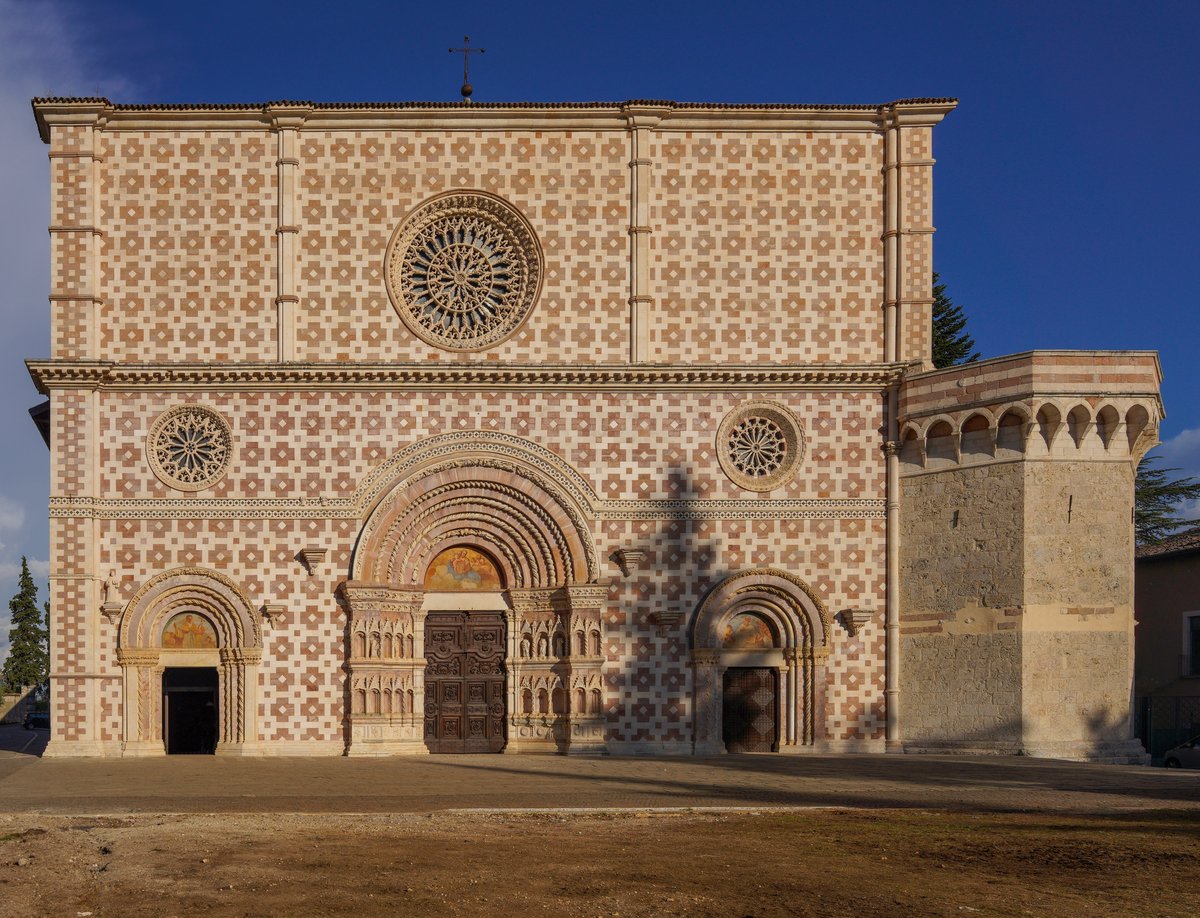 Entering the Basilica of Santa Maria di Collemaggio is like stepping back in time, among faith, art, and history. Founded in 1287 at the behest of Pietro da Morrone (the future Pope Celestine V) after a vision of the Virgin, this church is the symbol of L'Aquila. The façade, a masterpiece of white and red stones arranged in geometric patterns, immediately strikes you: three portals and three rose windows, the central one finely carved. Inside, three naves with pointed arches on octagonal pillars and a visible wooden ceiling create a solemn atmosphere. Don't miss the Mausoleum of Celestine V, a Renaissance work by Girolamo da Vicenza from 1517, which houses the pope's remains. But the true gem is the Holy Door on the left side: it is the first in the history of Christianity, opened every year from August 28 to 29 for the Celestinian Forgiveness, an annual jubilee established in 1294. After the devastating 2009 earthquake, the basilica was carefully restored, reopening in 2017 and winning the European Union Prize for Cultural Heritage in 2020. Today it is open daily from 9 am to 9 pm, with disabled access. Climbing the hill, enjoy the view of the Gran Sasso and the historic center. A place that tells centuries of faith and resilience.
Basilica of San Bernardino: A Renaissance Jewel in L'Aquila
- Piazza San Bernardino, L'Aquila (AQ)
- Open in Google Maps
- View on Google Images
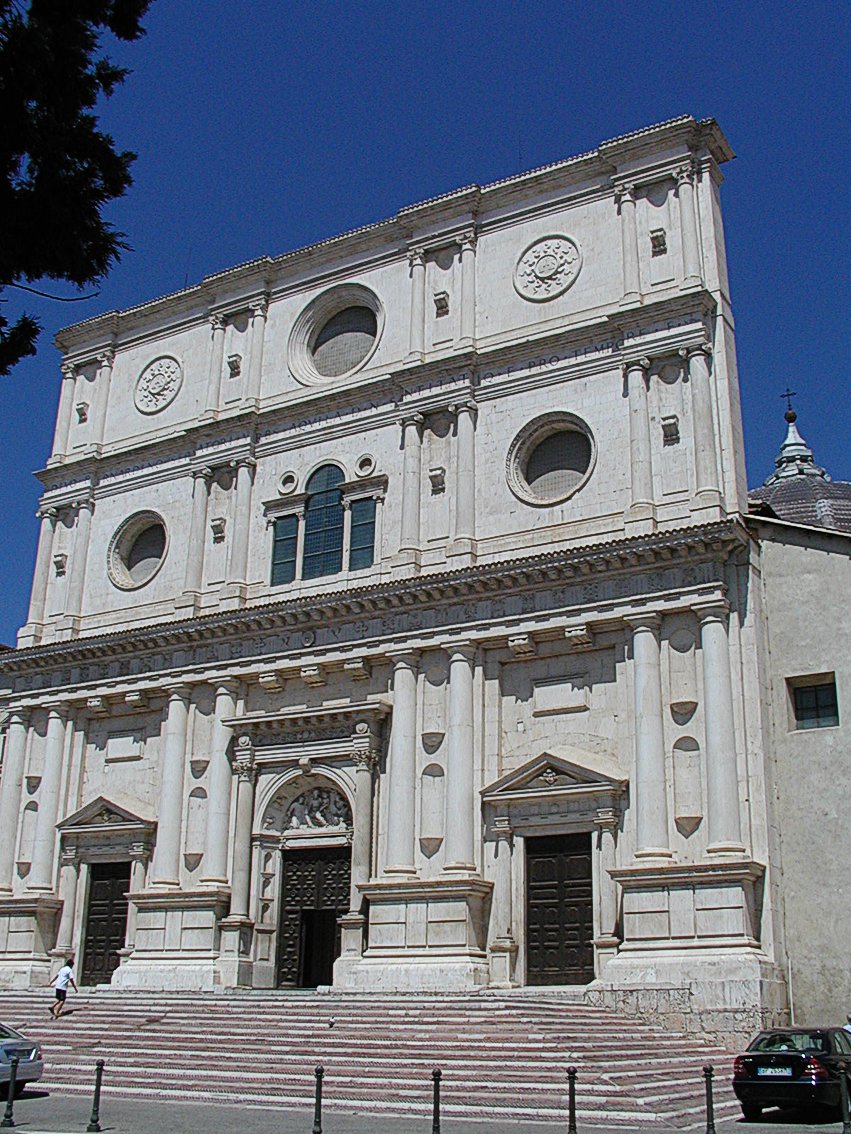 Climbing the elegant staircase that leads from Via Fortebraccio to the heart of the Santa Maria district, you find yourself before the pristine Renaissance facade of the Basilica of San Bernardino. Construction began in 1454 to house the remains of the Sienese saint, who died in L'Aquila in 1444, and was completed in 1472. The facade, designed by Cola dell'Amatrice (1525-1542), is a triumph of Doric, Ionic, and Corinthian orders, with the JHS monograms flanking the rose window. Step inside and be awestruck: the Baroque interior, rebuilt after the 1703 earthquake, is dominated by the carved and gilded wooden ceiling by Ferdinando Mosca (1724), at the center of which shines the Bernardine monogram. But the true treasure is the Mausoleum of San Bernardino, a masterpiece by Silvestro dell'Aquila (1489-1505): a marble ark that holds the saint's relics. Don't miss the terracotta Resurrection by Andrea della Robbia, the Madonna and Child by Silvestro, and the Baroque high altar by Donato Rocco di Cicco (1773). The basilica, severely damaged by the 2009 earthquake, was perfectly restored and reopened in 2015. Today you can visit it free of charge every day from 7:00 AM to 7:00 PM (Via San Bernardino, 3 – tel. 0862 200390). A tip: look up at the 18th-century organ above the entrance, another marvel by Mosca.
The Cathedral of Saints Maximus and George: The Wounded Heart of L'Aquila
- Via degli Scardassieri, L'Aquila (AQ)
- Open in Google Maps
- View on Google Images
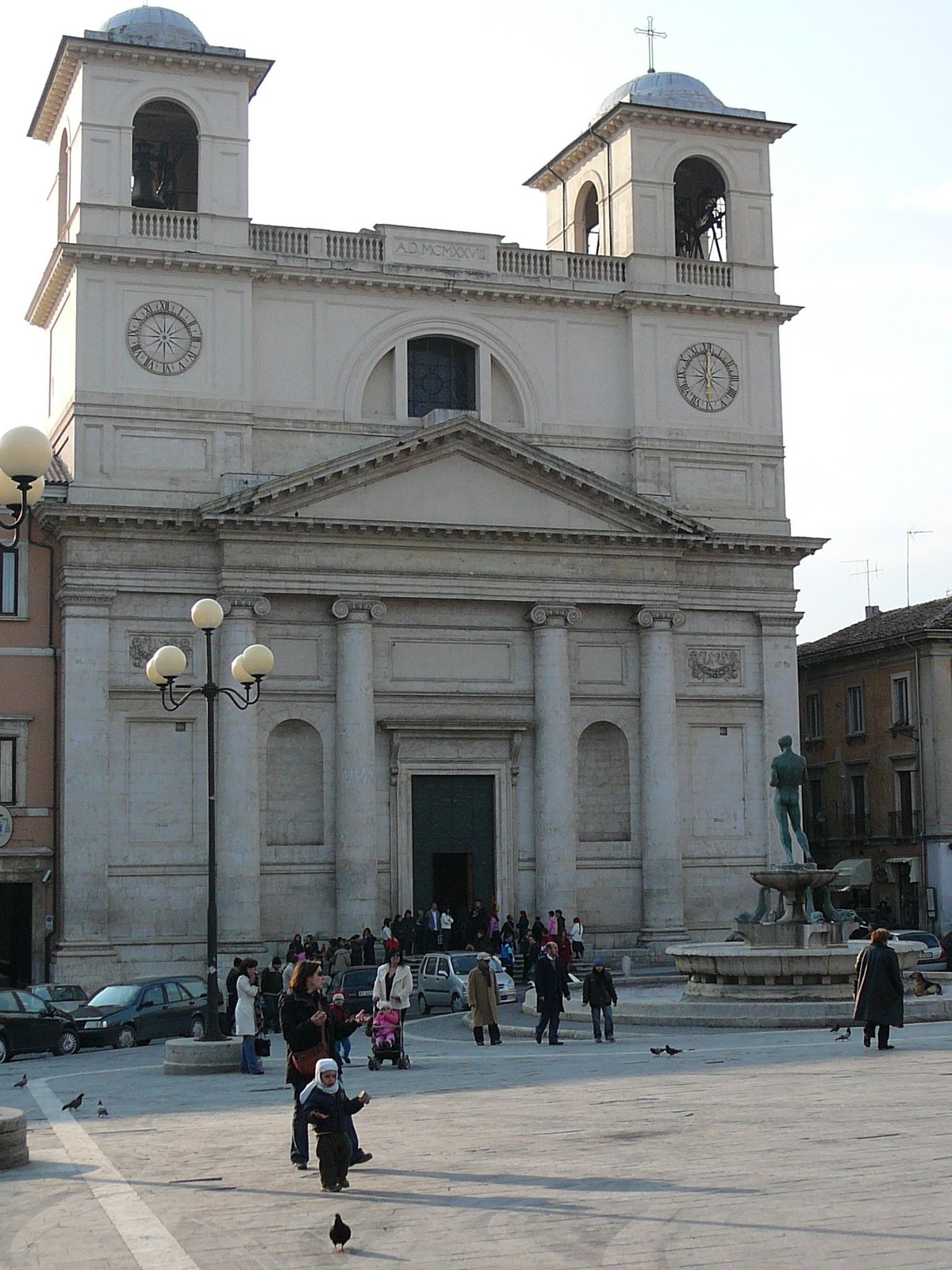 The Metropolitan Cathedral of Saints Maximus and George, overlooking Piazza Duomo, is the beating heart of L'Aquila's history. Founded in 1256 when Pope Alexander IV transferred the bishopric from Forcona, the original building was destroyed and rebuilt several times due to earthquakes. What we see today is the result of a long reconstruction after the 1703 earthquake, which left only the 13th-century right side standing. The interior, in Baroque style, is a Latin cross with a single nave frescoed with the patron saints by Annibale Brugnoli. Among the treasures are the tomb of Cardinal Amico Agnifili by Silvestro dell'Aquila and the false dome painted by Venanzio Mascitelli that tricks the eye. The neoclassical facade, designed by Giambattista Benedetti, was only completed in 1928 with the two bell towers. Unfortunately, the earthquake of April 6, 2009 caused the collapse of the transept and severe structural damage, rendering the cathedral unusable. Restoration work, begun in 2023, has an estimated cost of 37 million euros and will last five years. Reopening is expected in 2028. In the meantime, the cathedral can be admired from the outside, a symbol of a city that is reborn. Not to be missed, during a walk in the center, is the contrast between the imposing facade and the silence of the square.
Forte Spagnolo: the fortress that dominates L'Aquila
- Via Raul Manselli, L'Aquila (AQ)
- Open in Google Maps
- View on Google Images
 The Forte Spagnolo is one of those places that leaves you breathless as soon as you see it. Perched on the highest point of L'Aquila, it dominates the city with its square bulk and four spear-point bastions. Built starting from 1534 at the behest of Charles V, after the anti-Spanish revolt, it was meant to keep the Aquilani under control. And it succeeded: the taxes to finance it were so heavy that the city even sold the silver casket of San Bernardino. Today, it is a symbol of rebirth after the 2009 earthquake.
Entering is like diving into the past. The walls are up to ten meters thick, the moat – never filled with water – is 14 meters deep, and the stone bridge replaced the wooden drawbridge in 1883. Inside, the porticoed courtyard and rooms with wooden ceilings tell stories of Spanish governors, French and German soldiers. But the real surprise is the Museo Nazionale d'Abruzzo (MuNDA), which is housed here. Its highlight? The skeleton of an Elephas meridionalis, a mammoth that lived 1.3 million years ago, discovered nearby in 1954. Today it is visible in a temporary setup, awaiting the completion of restorations.
Walking around the fort offers a breathtaking view of the Gran Sasso. The Parco del Castello is a meeting place for the Aquilani, and in the evening the atmosphere is magical. It's a pity that you can't yet visit all the interior: post-earthquake work is still ongoing. But it's still worth it: you can breathe in a history that never saw battles but deeply marked the city.