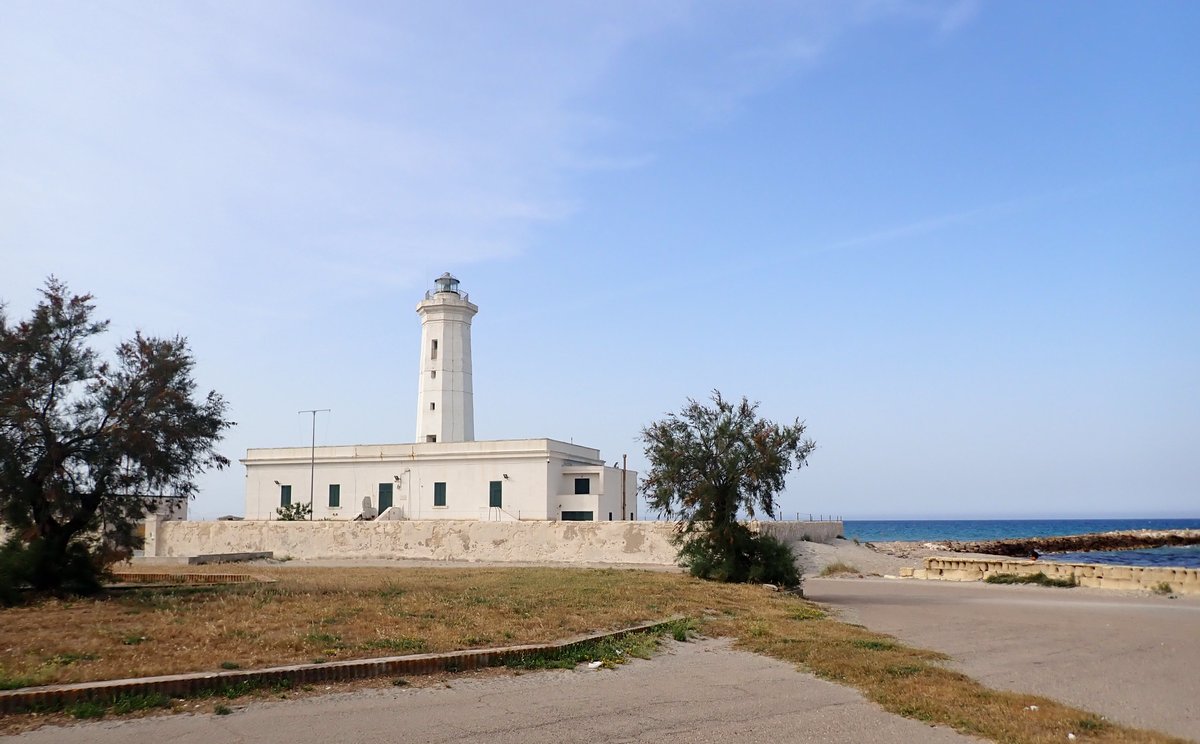
The San Cataldo Lighthouse, built in 1866, offers breathtaking views of the Adriatic coast and surrounding sandy dunes. Located just a few kilometers from Lecce, it’s accessible in 15 minutes from the coastal road. The area is perfect for walks in the nearby pine forest and for photographic shots with the lighthouse silhouetted against the horizon.
- 360-degree view of the Adriatic Sea and the Salento coast
- Protected sandy dunes with spontaneous vegetation like sea lilies
- Ideal photography at sunrise and sunset with light play
- Free beaches nearby for a relaxing stop
Introduction
The San Cataldo Lighthouse is not just a reference point for ships, but a true balcony over Salento offering breathtaking views. Located just a few kilometers from Lecce, this white and red lighthouse stands out against the blue sky and crystal-clear sea, creating a visual contrast that leaves a lasting impression. Don’t expect an ancient structure steeped in history: here the atmosphere is more modern and relaxed, perfect for those seeking a peaceful corner away from the crowds. Personally, I like to think of it as a place where time seems to stand still, especially when the wind caresses the golden sand dunes that surround it. It’s one of those places that, even if not among the most famous, surprises you with its simplicity and beauty.
Historical Notes
The San Cataldo Lighthouse has a relatively recent history, tied to the maritime development of Salento. Built in
1866, it was active for decades as a guide for vessels navigating along the Adriatic coast. During World War II, it sustained some damage but was promptly repaired, attesting to its strategic importance. Today, it is no longer operational as an active lighthouse but has been preserved and enhanced as a tourist attraction. Its simple, functional architecture, with the distinctive red band, makes it easily recognizable. I sometimes wonder what it would have been like to see it in action at night, with its light cutting through the darkness of the sea.
- 1866: Construction of the lighthouse
- 1940-1945: Damage during the war and subsequent repairs
- Today: Tourist site and scenic viewpoint
The Charm of the Dunes
One of the most surprising aspects of the San Cataldo Lighthouse is its natural setting. You don’t arrive directly from the city; instead, you immerse yourself in a landscape of sandy dunes that almost resemble a miniature desert. These dunes, protected as a natural area, are covered with spontaneous vegetation like sea lilies and sea holly, creating a fascinating contrast with the artificial structure of the lighthouse. Walking here is a sensory experience: you can smell the saltiness in the air, hear the wind rustling through the plants, and, if you’re lucky, spot migratory birds. I’ve always found the way the sand shapes with the tides magical, leaving ephemeral traces that seem like natural works of art. It’s not a place for swimming, but for observing and absorbing the tranquility.
Photography and Light
If you’re a photography enthusiast, the San Cataldo Lighthouse is a paradise. Its isolated location and eastward orientation make it perfect for capturing spectacular sunrises, with the first rays of sun illuminating the structure and the sea behind it. Even at sunset, when the sky turns orange and pink, the play of light and shadows on the dunes makes the visit worthwhile on its own. I recommend bringing a wide-angle lens to frame the entire scene, but also to capture details like the internal spiral staircase (if accessible) or the signs of time on the surface. Sometimes, I found myself taking photos almost by chance, because every angle offers a different perspective, from the chromatic contrast between the white of the lighthouse and the blue of the sky to the texture of the sand. It’s a place that inspires creativity, even for those who aren’t experienced photographers.
Why Visit It
Visiting the San Cataldo Lighthouse is worthwhile for at least three concrete reasons. First, it offers a 360-degree view of Salento: from here, you can see the Adriatic Sea, the coast up to Otranto, and on the clearest days, you can glimpse the hills inland. Second, it’s a peaceful alternative to the more crowded spots in the area, ideal for a refreshing break away from the chaos. Third, it’s a starting point to explore the surrounding dunes and natural reserve, with easy trails suitable for everyone. Personally, I recommend it to those seeking something authentic, without too many expectations, yet capable of providing moments of serenity. Sometimes, it almost feels like discovering a secret corner, even though it’s actually well-marked.
When to Go
The best time to visit the San Cataldo Lighthouse is early in the morning or late in the afternoon, when the light is softer and the summer heat isn’t too intense. In spring and autumn, temperatures are mild and the place is less crowded, allowing you to enjoy the peace of the location. In summer, avoid the midday hours because the sun beats down strongly and there’s no shade, but if you go at dawn, you might witness an unforgettable spectacle. I have a preference for the months of September and October, when the air is fresh and the sky is often clear. In winter, however, it can be windy, but the charm remains, with a wilder and more introspective atmosphere.
In the Surroundings
After visiting the lighthouse, you can explore other interesting places nearby. Just a few minutes’ drive away is the Le Cesine Nature Reserve, a protected wetland area with birdwatching trails and rich biodiversity, perfect for a nature walk. Alternatively, head to the center of Lecce to admire the Lecce Baroque style, with masterpieces like the Basilica of Santa Croce and Piazza del Duomo, where art and history blend in a vibrant urban setting. Both options complete the experience, combining natural landscape and culture.