An Evocative Introduction
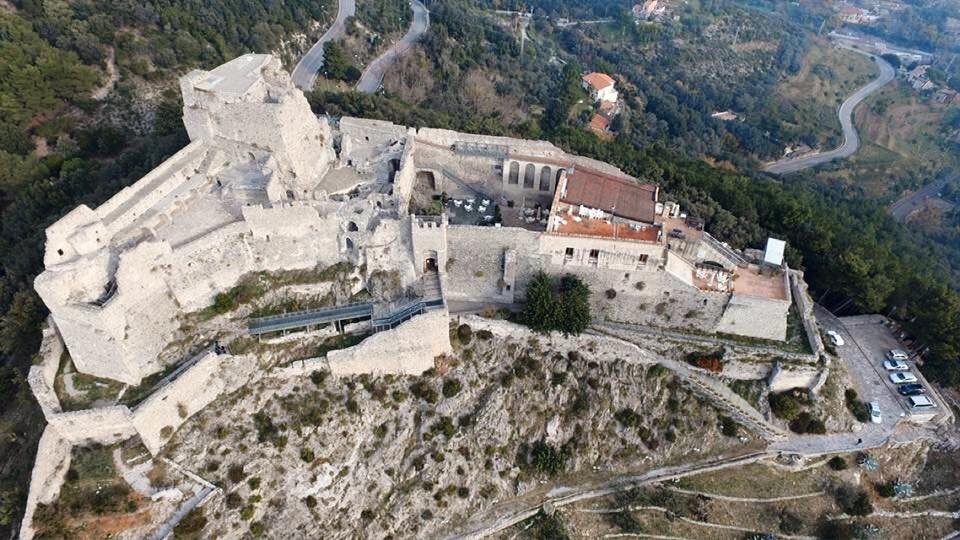
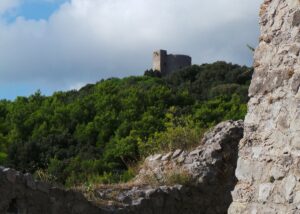
Perched on Monte Bonadies at 300 meters high, the Castle of Arechi is not just a piece of history: it’s a balcony suspended over the Gulf of Salerno. You arrive, park for free, and after just a few steps along the shaded avenue, you start to feel the air change. Then, when you step onto the belvedere terrace, the view leaves you breathless: the Amalfi Coast stands out on the horizon, Salerno spreads out at your feet, and the sea glitters all the way to Punta Licosa. It’s one of those places where time seems to stand still, and you understand why Arechi II chose it as his stronghold.
Historical Notes
The origins of the castle date back to the 6th century, when the Byzantines built an initial fortification on a pre-existing Roman castrum. In the 8th century, the Lombard prince Arechi II, moving the duchy from Benevento to Salerno, expanded the fortress by raising walls and towers. Never conquered by force, in 1077 it fell to starvation under the Norman siege of Robert Guiscard. It later passed to the Swabians and Aragonese, but lost military importance with the advent of firearms, being abandoned in the 19th century. The restorations of the 1970s and 1980s returned it to the city. Today it houses a museum and event spaces.
- 6th century: Byzantine construction
- 8th century: Lombard expansion by Arechi II
- 1077: Norman conquest
- 19th century: abandonment
- 1970-80: restoration and reopening
A Museum of Pottery and Coins
Inside the ancient walls, the archaeological museum is a small marvel. It displays artifacts unearthed during excavations: pottery decorated with red bands (7th-13th century), proto-majolica and graffita ware, glass goblets and bottles from the 12th to 15th centuries, and metal objects such as nails, locks, and arrowheads. But the most fascinating part are the three coin hoards: a treasure of Norman deniers from Rouen, gold coins from Palermo, and a collection of silver and copper coins from Macerata and Naples. Each piece tells the story of the daily life of the soldiers and princes who once inhabited the fortress.
Nature and History Walks
Around the castle, trails wind through the Mediterranean scrub. The NaturArechi trail and the Prince’s Path start from Salerno city center and lead up here, offering endless glimpses of the gulf. Once you’re up, you can stroll around the bastions for free – the outer walls are open to all – and enjoy the well-equipped woodland. If you go up at sunset, the golden light sets the dark stone towers aglow and the sea turns into a sheet of gold. Don’t miss a stop at the refreshment terrace: with a coffee in hand, the view is postcard-perfect.
Why Visit
Three reasons above all. First: the most beautiful view of Salerno. A 360-degree panorama from the city to the Amalfi Coast, a spectacle that never gets old. Second: the museum tells authentic stories, not just of kings but of shepherds and soldiers who lived there. Third: it’s affordable and accessible. The outer ramparts are free, and for 4 euros you step into the heart of history. Plus, it often hosts events like Beer in a Jug and Rock at the Castle, which make it a lively place even in summer.
When to Go
To avoid crowds and enjoy the best light, go in the late afternoon, around 4 pm. The sun sets behind the Amalfi Coast and the Gulf turns orange. The best months are spring and autumn, when the air is cool and the Mediterranean scrub smells of herbs. In summer, the castle is open until 5 pm from Tuesday to Saturday (Sunday closes at 3:30 pm), but the heat can be intense. Always check the updated hours: in 2024, a fire on Monte Bonadies caused temporary closures.
In the Vicinity
As soon as you leave the castle, don’t miss the Salerno Cathedral with its frescoed crypt and the relics of Saint Matthew. On foot from the castle, the path continues towards Croce di Cava and Monte San Liberatore, with the ‘Prince’s Frame’ offering another perspective of the city. If you have more time, head down to Vietri sul Mare, the gateway to the Amalfi Coast, famous for its colorful ceramics: it’s just a few kilometers away and combines sea and craftsmanship in one go.