
🧭 What to Expect
- Ideal for those seeking ancient history, sea, and authenticity without crowds.
- A journey through time between Magna Graecia archaeological sites like Capo Colonna and medieval castles like Le Castella.
- Discover museum treasures from the National Archaeological Museum to the Pythagoras Museum.
- Explore characteristic villages and enjoy breathtaking panoramas over the Ionian Sea.
The Province of Crotone is a corner of Calabria where history and nature blend seamlessly. At Capo Colonna, the ancient Temple of Hera Lacinia overlooks the sea, while the Castle of Charles V recounts centuries of different dominations. Nearby, Le Castella with its castle rising from the water is a unique spectacle. The National Archaeological Museum houses Magna Graecia artifacts, and in Santa Severina, the medieval village feels frozen in time. Fine sandy beaches and transparent waters complete the experience, perfect after a day exploring archaeological sites and castles.
Overview
- Capo Colonna Archaeological Area
- Le Castella Castle
- National Archaeological Museum of Crotone
- Andrea Carafa Castle
- Charles V Castle
- Diocesan Museum of Santa Severina
- Caccuri Castle
- Carafa Castle of Cirò
- Amalfitani Castle
- Cape Colonna Lighthouse
- Acerenthia
- MACK - Museum of Contemporary Art Crotone
- Pythagoras Museum
- Ricca Castle
- Capo Nao Tower
Itineraries nearby


Capo Colonna Archaeological Area
- Go to the page: Capo Colonna: The Solitary Column of the Temple of Hera Lacinia Overlooking the Sea
- Via Michele Di Donato, Crotone (KR)
- Open in Google Maps
- View on Google Images
 The Capo Colonna Archaeological Area welcomes you with a breathtaking panorama over the Ionian Sea, where history and nature merge into a unique experience. Here stood the famous Temple of Hera Lacinia, one of the most important sanctuaries of Magna Graecia, of which today only a single Doric column remains standing, symbol of the site. Walking among the remains of the foundations and altars, you'll discover how this place was a first-rate religious and cultural center, frequented by pilgrims from across the Mediterranean. The Capo Colonna Archaeological Museum, located nearby, completes the visit with artifacts such as votive offerings, ceramics, and coins that tell the story of daily life and rituals of the era. Don't miss the view from the modern lighthouse, which offers an unforgettable glimpse of the Crotone coastline. Ideal for history enthusiasts, the site is easily accessible and well-signposted, with informative panels guiding the path. Bring a water bottle and comfortable shoes: the terrain is partly unpaved and the summer sun can be intense. If you visit in spring, you'll enjoy the colors of the flowering Mediterranean scrub, enveloping the ruins in a magical atmosphere.
Capo Colonna Archaeological Area
Le Castella Castle
- Via Mediterraneo, Isola di Capo Rizzuto (KR)
- Open in Google Maps
- View on Google Images
 The Le Castella Castle stands on a small island connected to the coast by a thin strip of land, creating a unique landscape in the Calabrian panorama. Built in the 15th century on pre-existing Greek and Roman structures, this Aragonese fortress dominates the stretch of sea between Capo Rizzuto and Capo Colonne. Its strategic position made it a bulwark against Saracen raids for centuries. Today, it is reached by crossing a picturesque pedestrian pier that seems suspended over the crystal-clear water. Inside, visitors can admire the perfectly preserved cylindrical towers and the patrol walkways that offer breathtaking views of the Capo Rizzuto Marine Protected Area. Particularly fascinating is the internal chapel, dedicated to Santa Maria, with traces of original frescoes. The castle takes its name from the numerous watchtowers that once dotted this coast, of which only this imposing complex remains today. During the visit, one clearly perceives the atmosphere of a place that has seen Greeks, Romans, Byzantines, and Aragonese pass through. The structure is open year-round and represents an unmissable stop for those visiting the Calabrian Ionian coast, offering not only history but also unforgettable panoramas of the crystal-clear sea that surrounds it.
Le Castella Castle
National Archaeological Museum of Crotone
- Go to the page: Crotone Archaeological Museum: Bronzes, Hera's Treasure, and Underwater Finds from Kroton
- Via Risorgimento 14, Crotone (KR)
- https://linktr.ee/MuseoArcheologicoCrotone
- Open in Google Maps
- View on Google Images
- drm-cal.crotone@cultura.gov.it
- 096223082
 The National Archaeological Museum of Crotone is a true treasure trove that tells the glorious history of ancient Kroton, one of the most important cities of Magna Graecia. Located on Via Risorgimento, the museum occupies a historic building that once housed the National Boarding School. The visit begins with the section dedicated to prehistory and protohistory, where Neolithic artifacts from Capo Alfiere stand out. But it's in the section dedicated to the Greek era that the museum reveals its true value: here you can admire the famous Treasury of Hera Lacinia, a collection of jewelry and precious objects discovered at the sanctuary of Capo Colonna. Among the most significant pieces is the golden crown, a masterpiece of Greek goldsmithing that takes your breath away. Don't miss the section dedicated to sculpture, with the famous head of Apollo and the architectural fragments from the Temple of Hera. The museum also preserves a rich collection of Attic and Corinthian ceramics, including black-figure and red-figure vases that testify to the high artistic level achieved in the Greek colony. Particularly interesting is the section dedicated to medicine, with surgical instruments that recall the medical school of Alcmaeon, one of the first physicians in history. The visit concludes with the Roman and medieval periods, where artifacts from local necropolises stand out. The museum offers a well-organized itinerary that guides you through the centuries, making the complex history of this land accessible even to non-experts.
National Archaeological Museum of Crotone
Andrea Carafa Castle
- Via Libertà, Santa Severina (KR)
- Open in Google Maps
- View on Google Images
 The Andrea Carafa Castle dominates Santa Severina from atop a rocky spur, offering breathtaking views over the Neto Valley. Built during the Norman era in the 11th century, the castle underwent numerous transformations under the Swabians, Angevins, and finally the Carafa family, who gave it its current name. Today it stands as an imposing quadrangular fortress with four corner towers, perfectly preserved. Inside, visitors can explore the underground prisons, the noble halls, and the palatine chapel, where archaeological artifacts discovered during excavations are displayed. Particularly interesting is the Diocesan Museum housed within its rooms, featuring a collection of sacred vestments, illuminated manuscripts, and sacred artworks that narrate the religious history of the area. From the inner courtyard, access is granted to the patrol walkways, offering a unique panorama over the medieval village of Santa Severina and the surrounding hills. The castle also hosts cultural events and temporary exhibitions, which enliven its ancient walls throughout the year. The visit allows you to discover not only medieval military architecture but also the daily life of the courts that succeeded one another here.
Andrea Carafa Castle
Charles V Castle
- Go to the page: Charles V Castle in Crotone: Aragonese Fortress with Ionian Sea Views
- Discesa Castello, Crotone (KR)
- Open in Google Maps
- View on Google Images
 The Charles V Castle rises imposingly over the port of Crotone, a stone giant that tells centuries of history. Built on pre-existing Greek and Norman structures, it owes its current appearance to Emperor Charles V, who in the 16th century ordered its reinforcement against Turkish raids. The fortress features an irregular pentagonal layout with five corner bastions, among which the San Giacomo Bastion facing the sea stands out. Today it houses the National Archaeological Museum with artifacts ranging from the Bronze Age to the Roman era, including the famous Heraion of Capo Colonna. Climbing the walls offers a breathtaking view of the Gulf of Squillace and the ancient acropolis. The interior halls still preserve the original patrol walkways and artillery positions. During the summer, the courtyard becomes a stage for concerts and theatrical performances. The visit allows you to touch the historical layering: from the Greek blocks of the foundation to the Aragonese additions and the Spanish interventions. An experience that combines archaeology, military architecture, and unforgettable panoramas.
Charles V Castle
Diocesan Museum of Santa Severina
- Piazza Campo 2, Santa Severina (KR)
- https://www.museisantaseverina.it/
- Open in Google Maps
- View on Google Images
- +39 0962 51069
 The Diocesan Museum of Santa Severina is housed within the Byzantine Baptistery, one of the few examples of this architectural type in Italy dating back to the 8th century. Visiting it means immersing yourself in a journey that tells the religious history of Calabria through priceless sacred artworks. The collection includes liturgical vestments embroidered in silk and gold, illuminated manuscripts from the 15th century, and sacred silverware of Neapolitan craftsmanship. Among the most significant pieces stands out the Reliquary of Saint Zosimus, the city's patron saint, made of embossed silver in the 18th century. The altarpieces from the 17th-century Neapolitan school show the influence of artists like Luca Giordano on local production. The museum also preserves a Greek Gospel Book from the 10th century, a testament to the Byzantine period that characterized Santa Severina. The exhibition enhances the original spaces of the baptistery, where you can admire the recently restored medieval frescoes. The visit concludes with the section dedicated to episcopal documents that illustrate the history of the diocese from the 16th century. Admission is included in the ticket for the Norman Castle, creating an integrated itinerary between art and architecture.
Diocesan Museum
Caccuri Castle
- Strada Provinciale 32 di Santa Raina, Caccuri (KR)
- Open in Google Maps
- View on Google Images
 Caccuri Castle stands majestically on a rocky spur at 646 meters above sea level, dominating the entire Neto Valley. Built between the 11th and 12th centuries by the Normans, this manor has undergone numerous transformations over the centuries, passing through Swabian, Angevin, and Aragonese dominations. The current structure clearly shows its medieval imprint in its crenellated towers and massive walls, but also reveals later Renaissance interventions. The strategic location was no accident: it controlled the communication routes between the Sila mountains and the Ionian Sea. Today the castle is open to visitors and frequently hosts cultural events and temporary exhibitions. Climbing the towers offers a unique panorama stretching from the Sila mountains to the Ionian Sea. Particularly evocative is the noble chapel inside, with traces of medieval frescoes. The medieval village surrounding the castle retains its ancient charm intact, with cobbled alleys and stone arches. During the visit, you can notice the remains of the original defensive system, including arrow slits for archers and patrol walkways. The castle represents one of the lesser-known but most authentic architectural gems of the Crotone province, perfectly integrated into the surrounding hilly landscape.
Caccuri Castle
Carafa Castle of Cirò
- Viale Pasquale Galluppi, Cirò (KR)
- Open in Google Maps
- View on Google Images
 The Carafa Castle dominates Cirò from the top of a hill, offering a spectacular view of the Ionian Sea and the surrounding hills. Built during the Norman era between the 11th and 12th centuries, this manor has undergone numerous transformations over the centuries, passing through Angevin and Aragonese dominations. The structure presents itself as an imposing fortified complex with square towers and battlements that testify to its original defensive function. Inside, you can admire the noble halls with cross vaults and monumental fireplaces, while the underground prisons tell stories of ancient sentences. Particularly suggestive is the internal courtyard, where cultural events and tastings of local wines are often organized, including the famous Cirò DOC. The castle has recently been restored, maintaining its medieval charm intact. During the visit, don't miss the main tower, from which you can glimpse a panorama that embraces the entire Gulf of Squillace. Access is easy and the location allows you to combine the visit with a stop in the historic village of Cirò, famous for its wineries and genuine hospitality.
Carafa Castle
Amalfitani Castle
- Via Roma, Crucoli (KR)
- Open in Google Maps
- View on Google Images
 The Amalfitani Castle stands majestically in the heart of Crucoli, offering tangible evidence of Calabrian medieval history. Built between the 11th and 12th centuries, this manor represents one of the oldest examples of Norman architecture in the province of Crotone. Its strategic hilltop position allows for visual control of the entire valley down to the Ionian Sea, explaining the defensive reasons for its original construction. The structure develops around a quadrangular inner courtyard with a central well, while the perimeter walls still show signs of ancient arrow slits and machicolations. Particularly interesting is the square-shaped keep tower, approximately twenty meters high, which constitutes the oldest core of the complex. The interior halls preserve original wooden beams and carved stone fireplaces, elements that recount daily life in past eras. During recent restorations, 15th-century wall frescoes were uncovered in the private chapel, depicting Marian scenes of notable artistic value. The castle owes its name to the Amalfitani family, who owned it from the 15th to the 18th century, enriching it with Renaissance architectural interventions. Today visitable by appointment, it offers breathtaking panoramic views over the historic center of Crucoli and the Ionian coast. Its distinguishing feature is the overlapping of architectural styles that narrate centuries of dominations: from the Normans to the Angevins, from the Aragonese to local barons.
Amalfitani Castle
Cape Colonna Lighthouse
- Go to the page: Cape Colonna Lighthouse: Historic 1869 Lighthouse with View of the Hera Lacinia Sanctuary
- Via Michele Di Donato, Crotone (KR)
- Open in Google Maps
- View on Google Images
 The Cape Colonna Lighthouse stands on one of Calabria's most striking promontories, guarding the Capo Colonna Archaeological Park. Built in 1869, this historic lighthouse dominates an area rich with evidence of ancient Kroton, a Magna Graecia colony founded in the 8th century BC. Its strategic position offers an unparalleled view of the Ionian Sea, with horizons stretching as far as the Greek coast on the clearest days. The surrounding area is an open-air museum: here stood the famous Temple of Hera Lacinia, of which only a single Doric column remains today, symbolizing the site. The lighthouse, still operational, guides ships with its beam of light visible for miles. The walk to the lighthouse is an immersive experience between history and nature: you'll walk among archaeological remains, Mediterranean scrubland, and cliffs plunging into the sea. The best time to visit is at sunset, when golden light envelops the ruins and the lighthouse illuminates, creating a magical atmosphere. Access is free and the path is easily walkable, suitable for families too. Don't forget your camera: the views are among the most photographed along the Calabrian coast. The lighthouse represents a perfect blend of 19th-century engineering and archaeological heritage, a place where the Magna Graecian past converses with modern navigation.
Cape Colonna Lighthouse
Acerenthia
- Strada Provinciale 26 Pantalitiche, Cerenzia (KR)
- Open in Google Maps
- View on Google Images
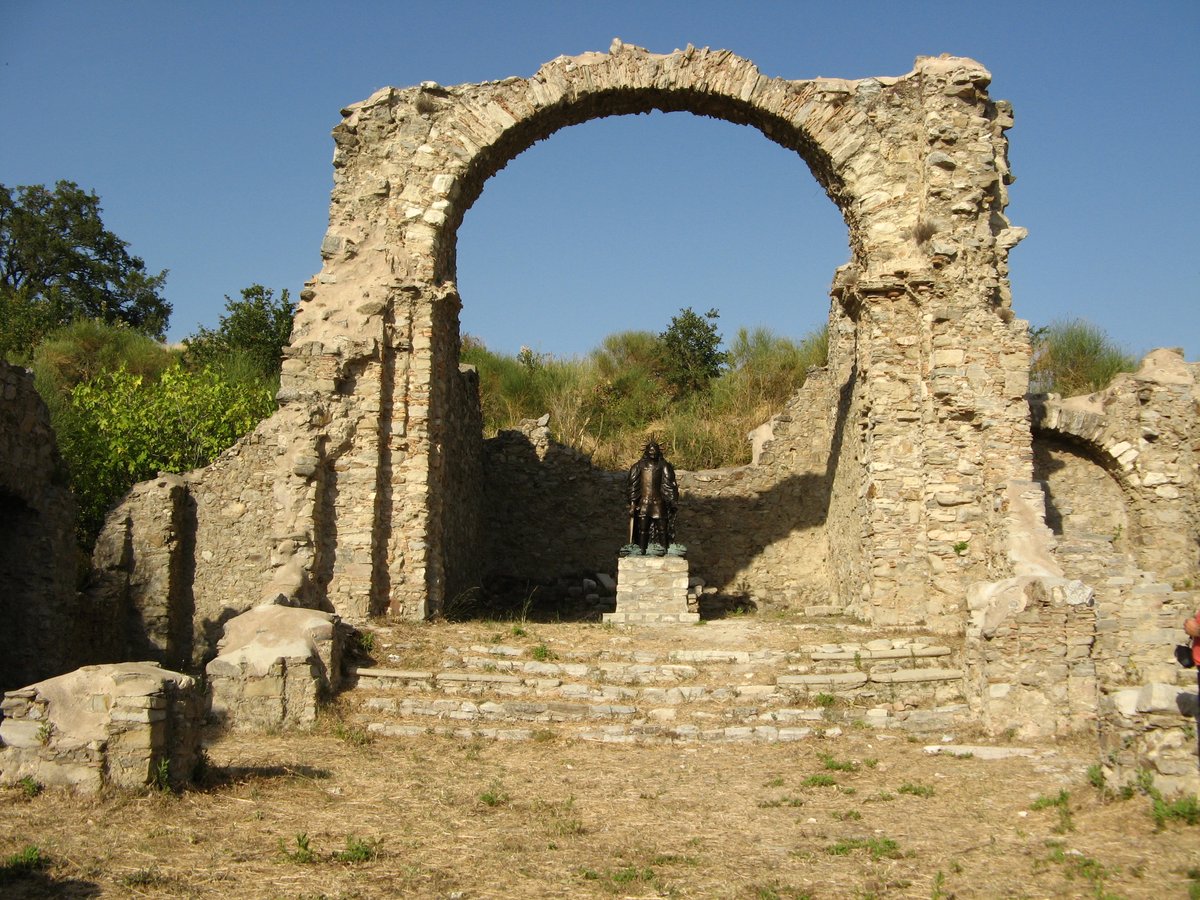 Acerenthia is a captivating archaeological site located in Cerenzia, in the province of Crotone. This ancient settlement, abandoned in the 17th century, preserves the remains of a medieval village of Byzantine origin. The ruins unfold across a hill at an altitude of about 600 meters, offering a panoramic view over the Lese River valley. The site is characterized by stone house ruins, paved streets, and the remains of the Church of San Teodoro, which testify to the importance of this place in the past. Visiting Acerenthia allows you to immerse yourself in a suggestive atmosphere, where history blends with the surrounding nature. The access path, marked by informational signs, winds through Mediterranean vegetation, making the experience ideal for those who love archaeology and light trekking. Bring comfortable shoes and a water bottle, especially during the summer months. The site is free and always accessible, with no entrance tickets required. Its isolated location ensures tranquility, away from tourist crowds. Acerenthia represents a dive into the rural past of Calabria, a place where time seems to have stood still.
Acerenthia
MACK - Museum of Contemporary Art Crotone
- Go to the page: MACK Crotone: Contemporary Calabrian Art in a Historic Palace
- Piazza Castello 20, Crotone (KR)
- https://www.beniculturali.it/luogo/mack-museo-arte-contemporanea-crotone
- Open in Google Maps
- View on Google Images
- info@mackcrotone.it
- +39 0962 905714
 The MACK - Museum of Contemporary Art Crotone represents a cultural surprise in the Crotone landscape. Located in the historic center, this museum was born from an urban regeneration project that transformed a former school building into a cutting-edge exhibition space. The permanent collection includes works by contemporary Calabrian artists such as Mimmo Rotella and Francesco Correggia, along with site-specific installations created specifically for the museum's spaces. Temporary exhibitions rotate regularly, ranging from painting to sculpture, up to new digital technologies. The interior architecture preserves traces of the original structure, creating a suggestive dialogue between past and present. The museum organizes workshops for children and themed guided tours, making art accessible to everyone. The central location allows visitors to combine the visit with other symbolic places of the city, such as the Castle of Charles V. Admission is free on the first Sunday of every month, while on other days the ticket costs 5 euros. The internal bookshop offers catalogs and design objects created by local artists.
MACK - Museum of Contemporary Art Crotone
Pythagoras Museum
- Via Giovanni Gentile, Crotone (KR)
- Open in Google Maps
- View on Google Images
 The Pythagoras Museum in Crotone is not your typical dusty museum. It catapults you directly into the 5th century BC, when this city was the world center of mathematics and philosophy. Pythagoras' genius here is not just a statue: it's a living experience that engages all the senses. The interactive installations let you get hands-on with the world's most famous theorem, while practical workshops transform abstract concepts into fun games. The section dedicated to the Pythagorean school faithfully recreates the environment where disciples studied numbers and universal harmony. Don't expect display cases full of artifacts: here you actively experiment. Multimedia panels explain how the Pythagoreans applied mathematics to music and astronomy, with demonstrations that still amaze with their modernity today. The route is designed to be accessible to everyone, from children to adults, with stations where you can personally verify the master's discoveries. The location in Pignera Park adds extra value: after your visit, you can relax in the shade of Mediterranean pines, just like the ancient philosophers did. The entrance ticket includes access to all activities, including outdoor mathematical games. Always check opening hours on the official website, as they often organize special events and themed guided tours.
Pythagoras Museum
Ricca Castle
- Via San Marco, Isola di Capo Rizzuto (KR)
- Open in Google Maps
- View on Google Images
 Ricca Castle dominates the promontory of Isola di Capo Rizzuto with its imposing 16th-century structure. Built in 1549 at the behest of Ferrante Ricca, this fortress represents one of the finest examples of Calabrian coastal military architecture. Its strategic position is evident: it rises on a rocky spur overlooking the sea, offering an exceptional panoramic view over the Capo Rizzuto Marine Protected Area. The building preserves intact its original defensive features, with angular bastions and arrow slits that tell of its role in spotting Saracen raids. Today the castle is perfectly restored and open to visitors, with rooms hosting temporary exhibitions and cultural events. The main tower, approximately 20 meters high, provides a unique vantage point over the coastal stretch from Le Castella to Capo Colonna. Access to the fortress is free and allows close admiration of architectural details such as the stone staircases and patrol walkways. During your visit, don't miss the inner courtyard where you can still breathe the atmosphere of the 16th century. Ricca Castle represents a fundamental piece for understanding the history of Calabrian coastal defense, complementary to the nearby Torre Vecchia and the more famous Castle of Le Castella.
Ricca Castle
Capo Nao Tower
- Via Michele Di Donato, Crotone (KR)
- Open in Google Maps
- View on Google Images
 The Capo Nao Tower stands on a rocky spur overlooking the Ionian Sea, just a few kilometers from the center of Crotone. Built in the 16th century as a watchtower against Saracen raids, it is now a symbol of the Crotone coast. Its strategic position offers a breathtaking panoramic view stretching from the Gulf of Squillace to Capo Colonna. The structure, made of local stone, retains its intact cylindrical shape and austere appearance. Access is free and open, but the path requires comfortable shoes to navigate the final unpaved section. The location is ideal for sunset photography, when the golden light reflects off the crystal-clear waters. Around the tower, the Mediterranean scrubland is fragrant with curry plant and mastic. There are no services in the immediate vicinity, so bring water and a sun hat. The tower is also visible from the Giant's Trail, a hiking route that runs along the coast. Its history is intertwined with that of the Capo Nao Lighthouse, active just to the south, which has guided sailors since 1929. Visiting this place means breathing in the essence of Calabria: wild, authentic, and full of memories.
Capo Nao Tower