Evocative Introduction
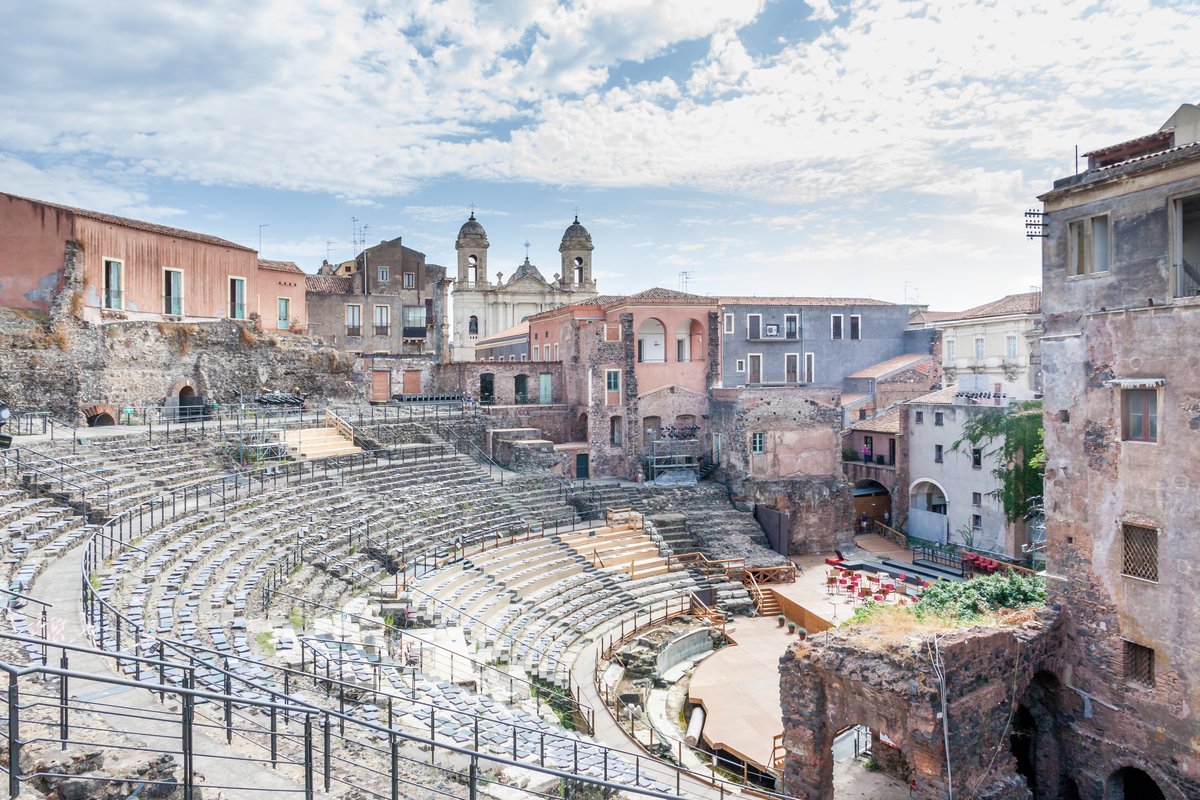
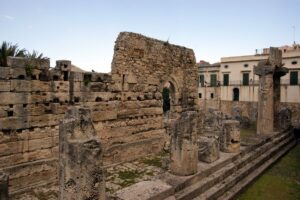
The Greek Roman Theatre of Catania is a gem set in the baroque chaos of the historic center. Entering, you feel like you’ve stepped back in time: the cavea in lava stone opens onto a unique panorama of 18th-century roofs and domes. It’s not a sterile museum, but a living place, where the houses of the neighborhood directly overlook the ancient steps. The water that emerges in the orchestra, from the mythical Amenano river, adds an almost magical touch. And then there’s the Odeon, a small adjacent theatre, still used for summer performances. A place that makes you feel the history, without needing many words.
Evocative Introduction
The Greek Roman Theatre of Catania is a gem set in the baroque chaos of the historic center. Entering, you feel like you’ve stepped back in time: the cavea in lava stone opens onto a unique panorama of 18th-century roofs and domes. It’s not a sterile museum, but a living place, where the houses of the neighborhood directly overlook the ancient steps. The water that emerges in the orchestra, from the mythical Amenano river, adds an almost magical touch. And then there’s the Odeon, a small adjacent theatre, still used for summer performances. A place that makes you feel the history, without needing many words.
Historical Notes
The roots of the theater date back to the 5th-4th centuries BC, when the Greeks built a sandstone structure here. It was likely the setting for Alcibiades’ speech in 415 BC to persuade the Catanaeans to ally with Athens. In the 1st century AD, under Augustus, the Romans restored it, and in the 2nd century they monumentalized it with marble and expansions. After declining in the 6th century, in 1098 Count Roger stripped it of its marble for the Cathedral. The 1693 earthquake damaged the houses built over the cavea, and only in the late 1800s did systematic excavations begin, which are still ongoing. Today, almost the entire site is visitable, with the Antiquarium housing artifacts.
- 5th-4th cent. BC: Greek theater in sandstone
- 1st-2nd cent. AD: Roman restoration and expansion
- 1098: marble stripped for the Cathedral
- 1693: earthquake damages overlying structures
- 19th-21st cent.: excavations and opening to the public
Historical Notes
The roots of the theater date back to the 5th-4th centuries BC, when the Greeks built a sandstone structure here. It was likely the setting for Alcibiades’ speech in 415 BC to persuade the Catanaeans to ally with Athens. In the 1st century AD, under Augustus, the Romans restored it, and in the 2nd century they monumentalized it with marble and expansions. After declining in the 6th century, in 1098 Count Roger stripped it of its marble for the Cathedral. The 1693 earthquake damaged the houses built over the cavea, and only in the late 1800s did systematic excavations begin, which are still ongoing. Today, almost the entire site is visitable, with the Antiquarium housing artifacts.
- 5th-4th cent. BC: Greek theater in sandstone
- 1st-2nd cent. AD: Roman restoration and expansion
- 1098: marble stripped for the Cathedral
- 1693: earthquake damages overlying structures
- 19th-21st cent.: excavations and opening to the public
Architecture and Materials
The theatre is a masterpiece of ancient engineering. The cavea, about 80-98 meters wide, is divided into three sectors by passageways and into nine wedges by stairways. The steps are made of limestone, while the front rows were covered in marble for the authorities. The supporting structure uses the lava hill, with vaulted corridors (ambulacra) for circulation. The orchestra, 22 meters in diameter, preserves remains of the opus sectile floor. The stage was very rich: Corinthian columns, statues (like Leda with the swan) and marble reliefs. Today only the foundations remain, but its grandeur can be imagined. Next to it, the smaller Odeon (37 meters) has a well-preserved cavea with 17 vaulted rooms. The contrast between dark lava stone and white marble must have been spectacular.
Architecture and Materials
The theatre is a masterpiece of ancient engineering. The cavea, about 80-98 meters wide, is divided into three sectors by passageways and into nine wedges by stairways. The steps are made of limestone, while the front rows were covered in marble for the authorities. The supporting structure uses the lava hill, with vaulted corridors (ambulacra) for circulation. The orchestra, 22 meters in diameter, preserves remains of the opus sectile floor. The stage was very rich: Corinthian columns, statues (like Leda with the swan) and marble reliefs. Today only the foundations remain, but its grandeur can be imagined. Next to it, the smaller Odeon (37 meters) has a well-preserved cavea with 17 vaulted rooms. The contrast between dark lava stone and white marble must have been spectacular.
Excavations and Rediscovery
For centuries, the theater lay buried under houses and streets. It was the Prince of Biscari in the 18th century who began excavations, recovering statues and inscriptions. But the true liberation came at the end of the 19th century with Paolo Orsi, who expropriated the modern buildings. Excavations continued in the 1950s and 1980s, and since 1998, under the direction of Maria Grazia Branciforti, the eastern entrance and a sacred space have been brought to light. Today, the site is almost entirely visitable, with some 18th-century houses still standing as testimony (Casa del Terremoto, Casa Libérti). The Antiquarium, housed in an 18th-century palace, displays artifacts from the excavations: fragments of statues, ceramics, and coins. A visit blending archaeology and urban stratification, where the past resurfaces among the alleys.
Excavations and Rediscovery
For centuries, the theater lay buried under houses and streets. It was the Prince of Biscari in the 18th century who began excavations, recovering statues and inscriptions. But the true liberation came at the end of the 19th century with Paolo Orsi, who expropriated the modern buildings. Excavations continued in the 1950s and 1980s, and since 1998, under the direction of Maria Grazia Branciforti, the eastern entrance and a sacred space have been brought to light. Today, the site is almost entirely visitable, with some 18th-century houses still standing as testimony (Casa del Terremoto, Casa Libérti). The Antiquarium, housed in an 18th-century palace, displays artifacts from the excavations: fragments of statues, ceramics, and coins. A visit blending archaeology and urban stratification, where the past resurfaces among the alleys.
Why Visit It
Three good reasons not to miss it. First: it is a one-of-a-kind theater, because it is not an isolated archaeological site, but lives within the city: from the steps you see laundry hanging out and hear the noise of the market. Second: tickets cost only €6 (reduced €3) and include the Odeon and the Antiquarium. The first Sunday of the month is free. Third: it is less crowded than other sites, so you can enjoy the peace and take photos without the rush. Plus, the visit pairs perfectly with a tour of Catania’s Baroque center, just steps from Piazza del Duomo. An authentic experience, away from mass tourist circuits.
Why Visit It
Three good reasons not to miss it. First: it is a one-of-a-kind theater, because it is not an isolated archaeological site, but lives within the city: from the steps you see laundry hanging out and hear the noise of the market. Second: tickets cost only €6 (reduced €3) and include the Odeon and the Antiquarium. The first Sunday of the month is free. Third: it is less crowded than other sites, so you can enjoy the peace and take photos without the rush. Plus, the visit pairs perfectly with a tour of Catania’s Baroque center, just steps from Piazza del Duomo. An authentic experience, away from mass tourist circuits.
When to Go
The best time? Early morning, just as it opens at 9 a.m., or late afternoon around 5 p.m. In summer, the heat can be intense, but the volcanic stone retains coolness during the central hours? Better to avoid. In winter, with fewer tourists, the atmosphere is even more evocative, especially if it rains: the water in the orchestra creates unique reflections. If you want to see the Odéon used for performances, go in summer, when they organize outdoor concerts. But for a quiet visit, choose a weekday between October and April.
When to Go
The best time? Early morning, just as it opens at 9 a.m., or late afternoon around 5 p.m. In summer, the heat can be intense, but the volcanic stone retains coolness during the central hours? Better to avoid. In winter, with fewer tourists, the atmosphere is even more evocative, especially if it rains: the water in the orchestra creates unique reflections. If you want to see the Odéon used for performances, go in summer, when they organize outdoor concerts. But for a quiet visit, choose a weekday between October and April.
In the Vicinity
After your visit, the center of Catania awaits you. Just a 5-minute walk away is Piazza del Duomo with the Cathedral of Sant’Agata (which preserves the theater’s marbles) and the Elephant Fountain. Don’t miss a stroll along Via Crociferi, the quintessential Baroque street lined with churches and palaces. If you’re hungry, the nearby Mercato della Pescheria is a burst of colors and flavors: fresh fish, Sicilian street food like arancini and cannoli. And for nature lovers, Mount Etna is visible on the horizon—a day trip is doable.
In the Vicinity
After your visit, the center of Catania awaits you. Just a 5-minute walk away is Piazza del Duomo with the Cathedral of Sant’Agata (which preserves the theater’s marbles) and the Elephant Fountain. Don’t miss a stroll along Via Crociferi, the quintessential Baroque street lined with churches and palaces. If you’re hungry, the nearby Mercato della Pescheria is a burst of colors and flavors: fresh fish, Sicilian street food like arancini and cannoli. And for nature lovers, Mount Etna is visible on the horizon—a day trip is doable.