If you only have one day to visit Ferrara, this walking itinerary is just what you need. Starting from the imposing Castello Estense, the city’s symbol, it will take you through the historic center to the famous Palazzo dei Diamanti, passing by Torre della Vittoria and Chiesa di San Michele. Five stops carefully designed for art and history lovers, with pauses at iconic sites and lesser-known corners. The route is entirely on flat streets, perfect for families and slow travelers. In less than 3 km, you’ll get a full taste of Ferrara’s Renaissance, with ducal courts, Renaissance frescoes, and diamond-tipped facades. No guide needed: the center is compact and well-signposted. Wear comfortable shoes and bring a water bottle, and get ready to fall in love with one of the most fascinating cities in Emilia-Romagna.
🗺️ Your trip at a glance
Ferrara: A 1-Day Walking Itinerary from Castello Estense to Palazzo dei Diamanti is a concentrated yet comprehensive route, designed for those who want to experience the city’s essence in just a few hours.
- Ideal for fans of Renaissance art and history, but accessible to everyone, including families with children.
- What you’ll do: walk about 3 km through the historic center, visiting 5 iconic stops including castles, towers, churches, and decorated palaces.
- Why it’s different: it combines UNESCO masterpieces like Castello Estense with lesser-known gems like Chiesa di San Michele, offering an authentic, crowd-free experience.
Itinerary stops
Stop no. 1
Castello Estense: The Symbol of Ferrara
 Start your day in Ferrara at the city’s beating heart: Castello Estense. As soon as you step into the square, the sheer scale of this quadrilateral fortress with four corner towers and a water-filled moat takes your breath away. Built in 1385 at the behest of Nicolò II d’Este after a popular uprising, the castle stands out with its red brickwork and white marble balconies. Don’t be fooled by its austere exterior: inside, you’ll find frescoed halls like the Sala dell’Aurora, the Giardino degli Aranci with city views, and the mysterious prisons where Ugo and Parisina were once held. Climb the Torre dei Leoni (120 steps) for a breathtaking panorama. Today the castle is a museum open daily except Tuesdays (€12) and hosts temporary exhibitions. Get ready to lose yourself in history, art, and legends—it’s the perfect starting point to discover Ferrara.
- Go to the page: Castello Estense: the fortress of the Este dukes in Ferrara
- Largo Castello 1, Ferrara (FE)
- https://www.castelloestense.it
- Open in Google Maps
- View on Google Images

You should go if…
Stop no. 1
Castello Estense: The Symbol of Ferrara
Start your day in Ferrara at the city’s beating heart: Castello Estense. As soon as you step into the square, the sheer scale of this quadrilateral fortress with four corner towers and a water-filled moat takes your breath away. Built in 1385 at the behest of Nicolò II d’Este after a popular uprising, the castle stands out with its red brickwork and white marble balconies. Don’t be fooled by its austere exterior: inside, you’ll find frescoed halls like the Sala dell’Aurora, the Giardino degli Aranci with city views, and the mysterious prisons where Ugo and Parisina were once held. Climb the Torre dei Leoni (120 steps) for a breathtaking panorama. Today the castle is a museum open daily except Tuesdays (€12) and hosts temporary exhibitions. Get ready to lose yourself in history, art, and legends—it’s the perfect starting point to discover Ferrara.- Go to the page: Estense Castle Ferrara: Medieval Fortress with Frescoed Halls and Rampart Walkways
- Largo Castello 1, Ferrara (FE)
- https://www.castelloestense.it
- Open in Google Maps
- View on Google Images
You should go if…
Stop no. 2
Victory Tower: The City’s Sentinel
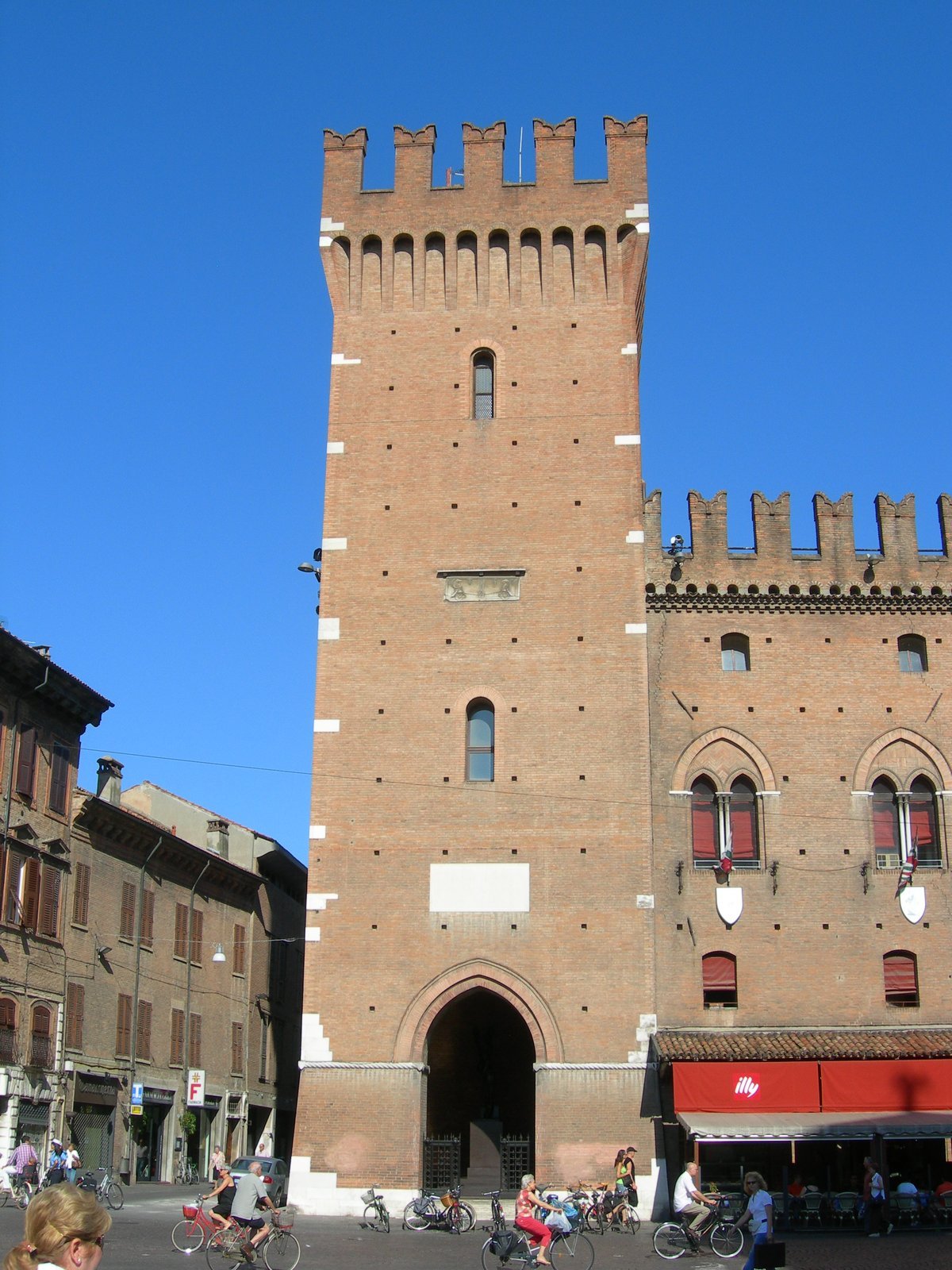 After admiring the Castle, a short walk brings you before the Victory Tower, imposing and massive. At 57 meters high, it was built between 1925 and 1928 on a design by Girolamo Savonuzzi, in a neomedieval style with rosy bricks and Istrian stone. It stands where the Rigobello tower once stood, which collapsed in the 1570 earthquake. As your gaze climbs, notice the bell at the top, cast from the bronze of Austrian cannons. At the base, an ogival arch leads into the Shrine of the Fallen: here the gilded bronze statue “Victory of the Piave in Chains” by Arrigo Minerbi strikes you with its intensity. It is a maimed victory, telling the pain of the Great War. The atmosphere is intimate, almost solemn. Look closely at the details: the six eagles supporting the tower, the coats of arms, the motto “Festina lente.” The tower is the emblem of a Ferrara that looks forward without forgetting the past.
- Via Cortevecchia, Ferrara (FE)
- Open in Google Maps
- View on Google Images
You should go if…
Stop no. 3
Palace of Diamonds
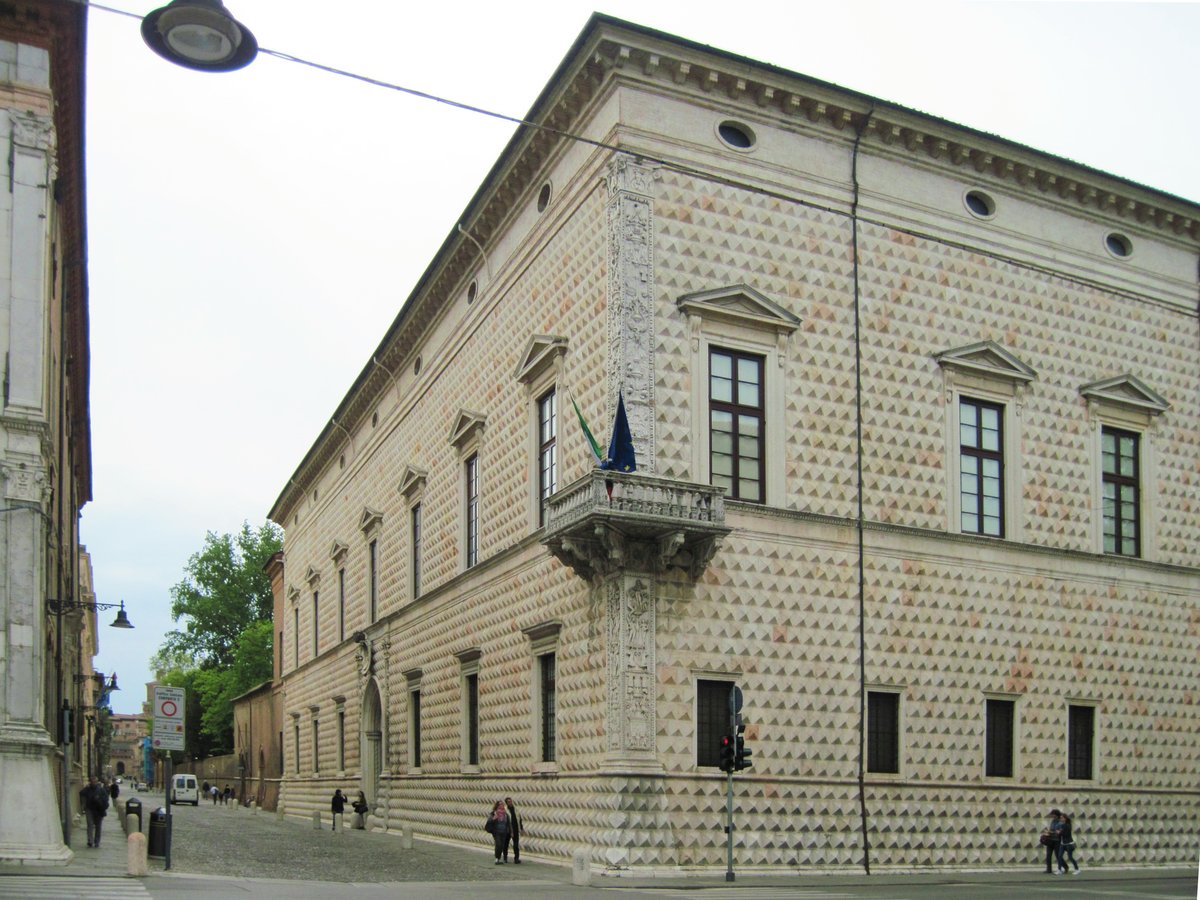 Continuing along Corso Ercole I d’Este, you come across the Palace of Diamonds, one of the most famous examples of Renaissance architecture. The name comes from over 8,500 white marble ashlars veined with pink, carved into diamond shapes: a facade unique in the world. Designed by Biagio Rossetti in 1493 for Sigismondo d’Este, the palace is the heart of the Addizione Erculea. Legend has it that a real diamond is hidden under one of the points. Inside, on the piano nobile, the National Picture Gallery houses masterpieces by Dosso Dossi, Garofalo, and Carlo Bononi. On the ground floor, temporary exhibitions of international caliber – such as those dedicated to Warhol and Escher – animate the space. The inner courtyard is an oasis of peace, while the corner with candelabra and balcony offers a breathtaking perspective. A place that enchants for both its architecture and art.
- Go to the page: Palazzo dei Diamanti Ferrara: Facade with 8,500 Diamond-Shaped Bosses and the National Art Gallery
- Corso Biagio Rossetti, Ferrara (FE)
- Open in Google Maps
- View on Google Images
You should go if…
Stop no. 4
Church of San Michele del Gesù
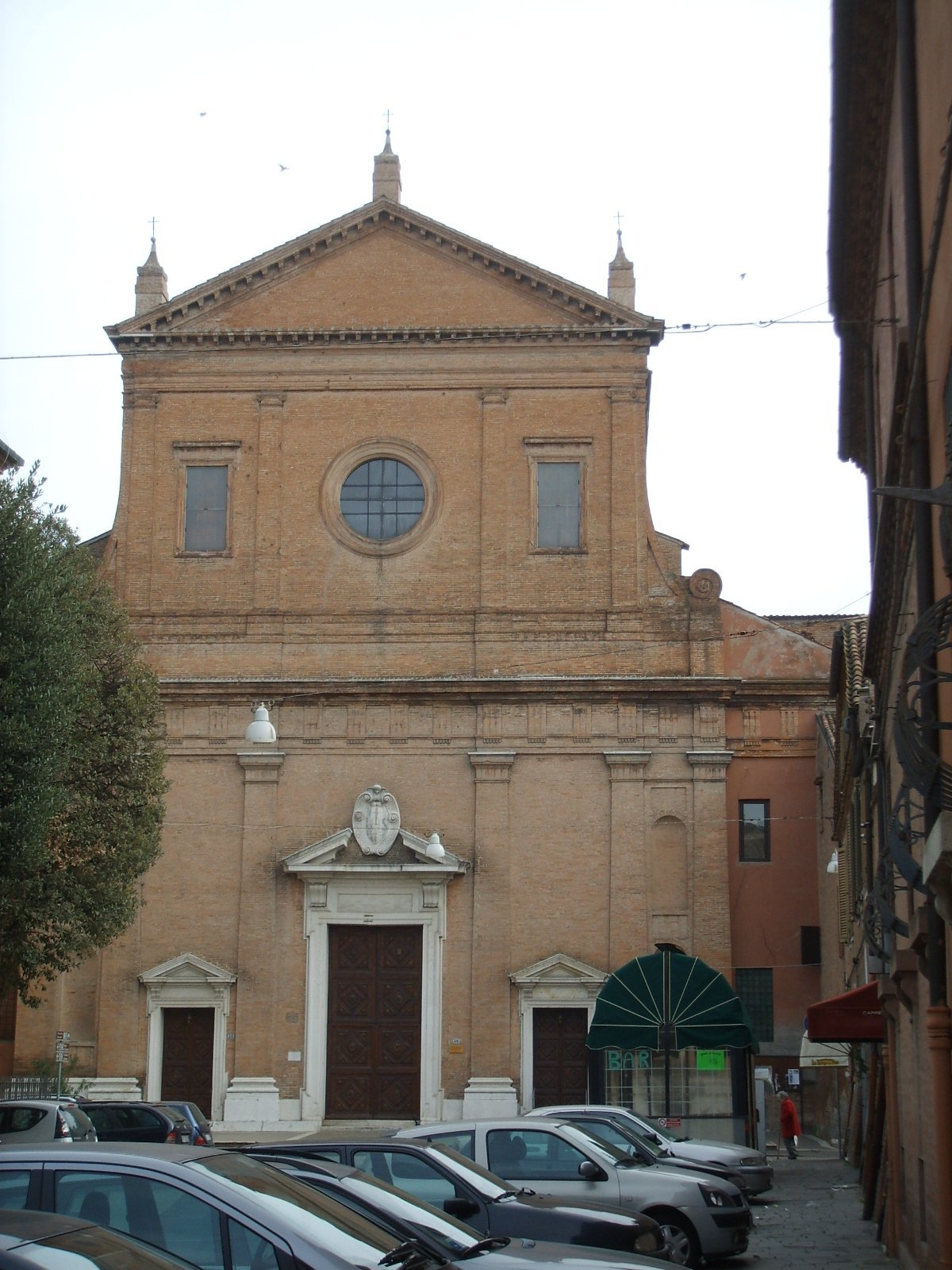 Leaving Palazzo dei Diamanti, take Via Borgo dei Leoni and you’ll find yourself in front of the sober brick facade of San Michele del Gesù Church. Built in 1570 for the Jesuits, it is a gem of the Counter-Reformation. Enter and let yourself be surprised by Guido Mazzoni’s Compianto sul Corpo di Cristo (Lamentation over the Body of Christ), a polychrome terracotta sculptural group of rare emotional intensity. Nicknamed ‘Pianzun dla Rosa’, it comes from the destroyed church of Santa Maria della Rosa. Behind the high altar, the funeral monument of Duchess Barbara of Austria, work of Pirro Ligorio. The church, damaged by the bombings of 1944, has been restored and today offers an oasis of peace. Opening hours are limited (Saturday and Sunday), so plan your visit. Entrance is free, with guided tours every 15 minutes.
- Via Borgo dei Leoni, Ferrara (FE)
- Open in Google Maps
- View on Google Images
You should go if…
Stop no. 5
Massari Park: A Dive into Greenery
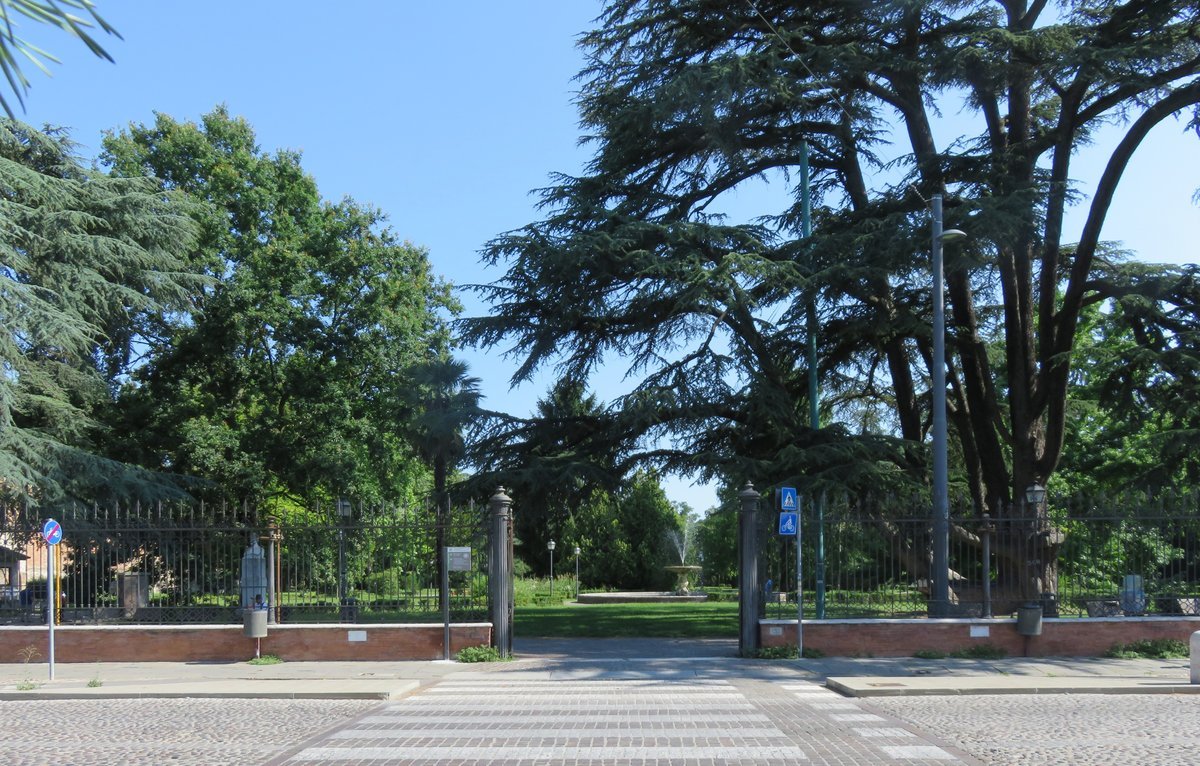 After your stop at the Church of San Michele, take a break in the city’s green lung: Massari Park. Four hectares of lawns and monumental trees, created in 1780 as a formal garden for Marquis Bevilacqua, later transformed into an English-style landscape by the Massari counts. Here you’ll find majestic cedars of Lebanon, a ginkgo biloba, ancient yews, and a giant oak. As you stroll, you’ll encounter busts of Verdi, Battisti, and Dante. The park also serves as a film set: its entrance on Corso Ercole I d’Este was chosen by Vittorio De Sica for The Garden of the Finzi-Continis. The atmosphere is relaxed, with benches, a drinking fountain, and a café. Open daily (hours vary by season). Perfect for a picnic or reading in the shade.
You should go if…