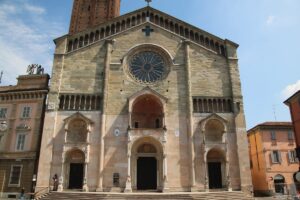
Forlì’s historic center is a delightful surprise waiting to be discovered. This 1-day walking itinerary with 6 stops takes you into the heart of the Romagna city, passing medieval gates, art museums, and historic theaters. Perfect for those short on time but who don’t want to miss the essentials, the route is designed to be easy and scenic, with a map included. Starting from Porta Schiavonia, you’ll cross Piazza Saffi with its majestic statue, visit the Palazzo Romagnoli museum and the Teatro Diego Fabbri, then finish at Parco della Resistenza. Each stop is crafted to give you an authentic taste of Forlì: from Liberty architecture to the charm of ancient churches. If you’re looking for what to see in Forlì’s historic center, this tour is the ideal solution. Put on comfortable shoes and spend 24 hours immersed in Forlì’s culture.
🗺️ Your trip at a glance
A compact itinerary that reveals the best of Forlì in 6 stops. Ideal for a day between history and art.
- Ideal for: city-breakers and history enthusiasts.
- Highlights: included map, 6 stops, flat route.
- Why it’s different: self-guided itinerary, perfect for families.
Itinerary stops
Stop no. 1
Porta Schiavonia: Forlì’s Monumental Gateway
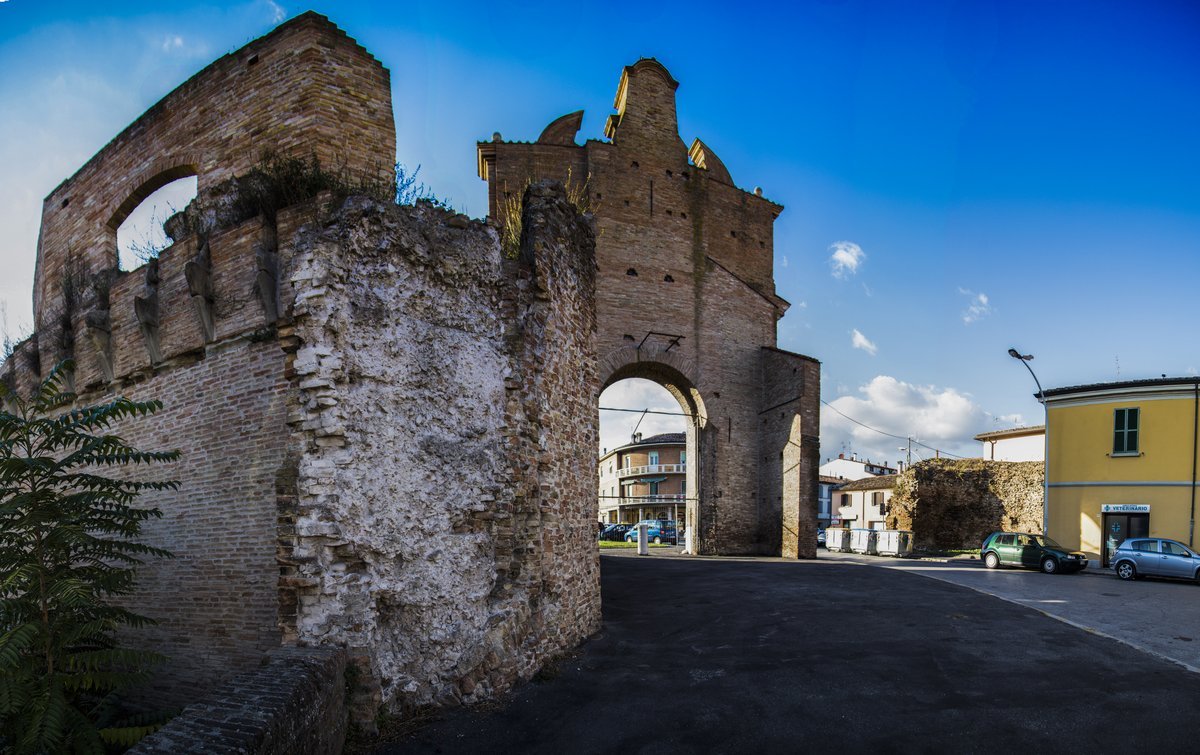 Forlì is not a city that flaunts its wonders, but it knows how to surprise. Here is Porta Schiavonia, the only surviving bastion of the ancient city walls, demolished in the early 20th century. Located at the end of Corso Garibaldi, this Baroque-style gate is the sole survivor of the original four. It was built in the 1600s atop the dilapidated Rocchetta di Schiavonia, which controlled the entrance from Faenza. Today, all that remains of its medieval past are some towers and stretches of wall along via del Portonaccio. The round arch with pilasters and classical decorations stands out, topped by a Latin inscription and the city coat of arms. In the early 1900s, the entrance hall housed farm laborers, a symbol of popular welcome. Nearby, the Monument to the Mud Angels commemorates the volunteers who helped after the May 2023 flood. Starting here means experiencing Forlì’s layered history firsthand: a gate that has seen Slavic merchants (hence the name ‘Schiavonia’), popes, and urban planning ordinances. The area is currently being redeveloped and is about to change its face, but the gate remains, proud and silent.
- Piazzale di Porta Schiavonia, Forlì (FC)
- Open in Google Maps
- View on Google Images

You should go if…
Stop no. 2
Risorgimento Museum
 Just a stone’s throw from Piazza Saffi, the Risorgimento Museum of Forlì is a must for anyone wanting to immerse themselves in the history of our country. Housed in the 18th-century Palazzo Gaddi, the museum was founded in 1888 thanks to a donation by the wife of Piero Maroncelli, a patriot and Carbonaro. Since then it has enriched its collection with memorabilia of other illustrious Forlì natives: Aurelio Saffi, Achille Cantoni, Giuseppe Garibaldi, and many others. The exhibition covers from the Napoleonic period to World War II, with sections dedicated to World War I, the African wars, and the Resistance. Don’t miss the Raniero Paulucci de Calboli room, with fine bookbindings and sculptures by Adolfo Wildt. Admission is free, but I recommend checking the hours as it often opens by appointment. The building itself is worth the trip: the neoclassical frescoes by Felice Giani and the Baroque staircase will leave you speechless.
- Corso Giuseppe Garibaldi, Forlì (FC)
- Open in Google Maps
- View on Google Images
You should go if…
Stop no. 3
Palazzo Guarini Torelli
 Continuing along Corso Garibaldi, you come across Palazzo Guarini Torelli, a noble building that seems to hide its treasures behind a deliberately austere facade. Built in the 1500s, the design has even been attributed to Michelangelo Buonarroti, though there is no definitive proof. What immediately catches the eye is the pre-Baroque balcony on the corner and the 17th-century portal. But the real surprise is inside – or rather, in the courtyard: a square portico with three arches on each side, topped by a loggia with Corinthian columns, all in brick and stone. The effect is one of restrained elegance, typically Renaissance. Beyond the courtyard lies a garden with a dovecote tower of unusual proportions. For years, the famous statue of Ebe by Antonio Canova lived here, commissioned by Countess Veronica Guarini and now housed at the San Domenico Museums. Unfortunately, the interiors are not visitable as they are privately owned, but it is worth pausing outside and imagining the splendors of a bygone era. If you are lucky, during events such as the FAI Days, you might find extraordinary openings.
- Corso Giuseppe Garibaldi, Forlì (FC)
- Open in Google Maps
- View on Google Images
You should go if…
Stop no. 4
Numai Tower
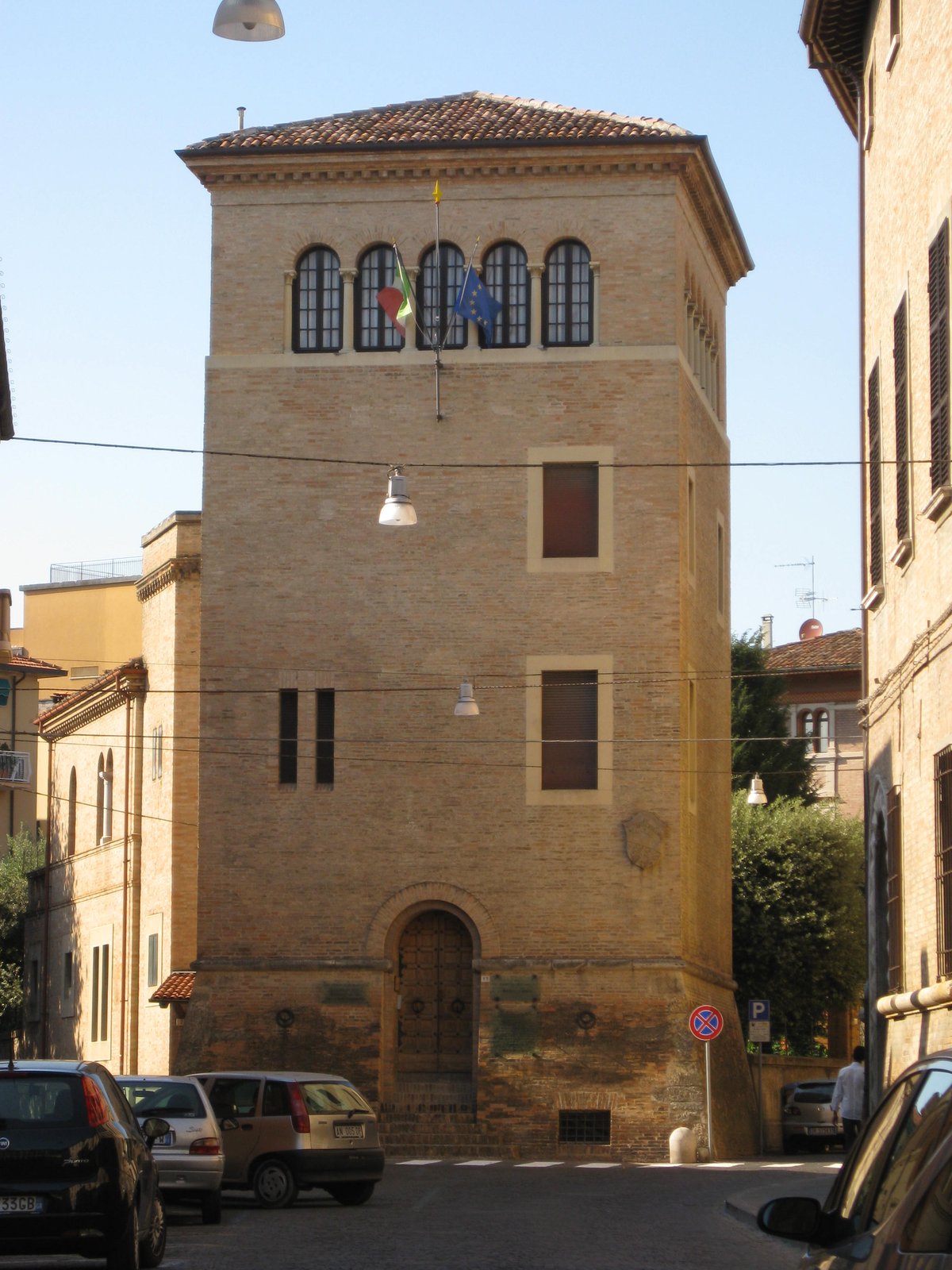 Leaving Palazzo Guarini Torelli, I take you to a place that seems from another time: the Torre Numai, the sole survivor of the ancient noble towers of Forlì. On Via Torre Numai, this brick house-tower rises with its characteristic medieval buttress and a beautiful diamond-shaped Renaissance portal. Built between the 14th and 15th centuries, it belonged to the powerful Ghibelline family Numai, connected to the nearby palace by an underground passage that has since collapsed. After several changes of ownership, it was bought and restored in the early 1900s by the Pedriali Fabbri family. In 1965 it was donated to the Associazione Arma Aeronautica, which now looks after it as the “Casa dell’Aviatore”. Inside, there is a 15th-century courtyard with small columns and Corinthian capitals, and a small aviation museum dedicated to Luigi Pedriali. The atmosphere is a surreal mix of medieval and flight: you almost feel you can hear the roar of engines within the ancient walls. Visits are by appointment (Tuesday and Friday mornings), but it’s worth planning ahead. And if you’re here in June, don’t miss the evening opening with a show!
- Via Torre Numai, Forlì (FC)
- Open in Google Maps
- View on Google Images
You should go if…
Stop no. 5
Basilica of San Pellegrino Laziosi
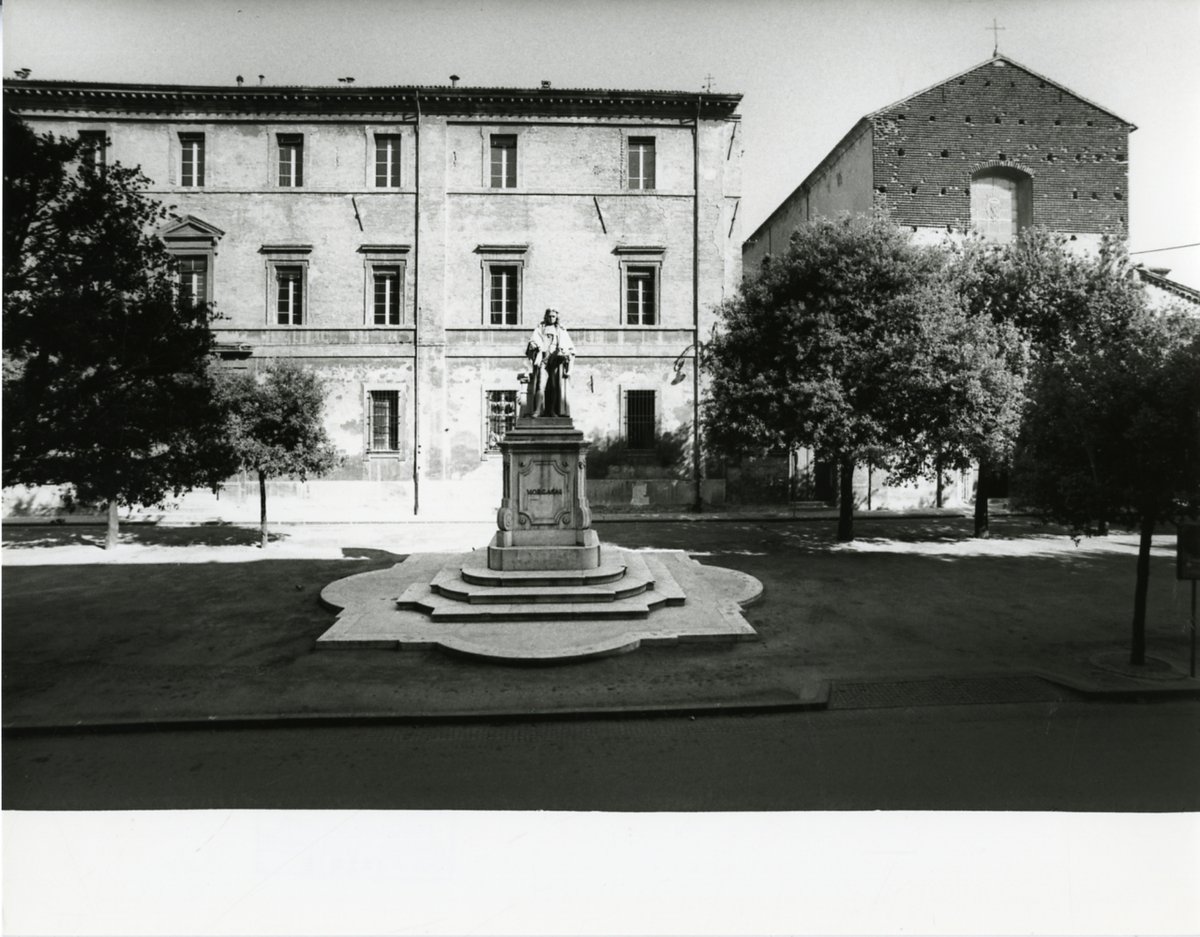 Entering Piazza Morgagni, your eye is immediately drawn to the brick façade of the Basilica of San Pellegrino Laziosi, better known as Santa Maria dei Servi. The sober Gothic exterior is deceptive: once through the door, you find yourself in a Baroque jewel with three naves, ten side altars, and polychrome marble. The true heart is the Cappella di San Pellegrino, designed by Giuseppe Merenda in the 18th century, where the saint’s body rests in a crystal urn. The miracle of his healed leg is depicted in a painting by Simone Cantarini after a drawing by Guido Reni. Don’t miss the Sala del Capitolo, a 14th-century chapter house with a Giotto-inspired fresco by Giuliano da Rimini and scenes from the saint’s life. If you come on May 1st, the Fiera di San Pellegrino fills the square with stalls selling citrons, the fruit the saint used to heal the sick. Admission is free, and contrary to what you might expect, the atmosphere is intimate yet welcoming, far from the tourist crowds.
- Piazza Giovan Battista Morgagni, Forlì (FC)
- Open in Google Maps
- View on Google Images
You should go if…
Stop no. 6
Diego Fabbri Theatre: The Final Stop
 After the intimate atmosphere of Santa Maria dei Servi, head to Corso Diaz for the grand finale: the Diego Fabbri Theatre. Inaugurated in 2000 with Riccardo Muti, this theatre is the beating heart of Forlì’s cultural scene. It replaced the old Comunale theatre destroyed by war, and today, with its 710 seats (stalls and gallery), it offers a program ranging from drama to dance, comedy to musicals. The structure is modern, not in the Italian style, and welcomes everyone: there are family spaces, rehearsal rooms, and even a restaurant. The 2025/26 season is incredibly rich: from Neri Marcorè to Elio Germano, via Kataklò and the Russian Classical Ballet. The beauty is that there’s a lively, popular atmosphere here, without snobbery – tickets are affordable and there’s always something for every taste. If you’re in town, check out the program: it could be the highlight of your day.
- Corso Armando Diaz 47, Forlì (FC)
- https://www.accademiaperduta.it/teatro_diego_fabbri_forli-856.html
- Open in Google Maps
- View on Google Images
You should go if…