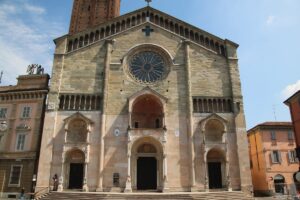
If you’re a fan of medieval history and architecture, this 3-day itinerary among castles, fortresses, and strongholds in the province of Parma will captivate you from the start. We begin at Castello di Tabiano, one of the best-preserved fortresses, then move on to Roccalanzona and Castello di Varano de’ Melegari. Each stop is a dive into the past: battlements, towers, and drawbridges will make you feel like a true medieval lord. There are also gastronomic surprises, with stops in villages to taste local specialties. The route is designed for a comfortable car trip, with short walks along the walls. Ideal for a long weekend of discovery. Get ready for an adventure among the Parma hills, where each castle tells a different story, from the Malaspina to the Rossi. This 3-day itinerary will take you to discover 9 architectural gems, among the most beautiful in Italy. Authentic and engaging, it will make you fall in love with the province of Parma.
🗺️ Your trip at a glance
Experience a journey through time among the 9 most captivating castles in the province of Parma. A 3-day cycle combining history, architecture, and unique landscapes.
- Ideal for: enthusiasts of medieval history and fortified architecture.
- Route: 9 of Italy’s most beautiful castles, from Tabiano to Montechiarugolo.
- Experience: a car itinerary with village stops, wine and food tastings, and walks along the walls.
Itinerary stops
Day 1 – Stop no. 1
Tabiano Castle: The Start of a Journey Through Castles
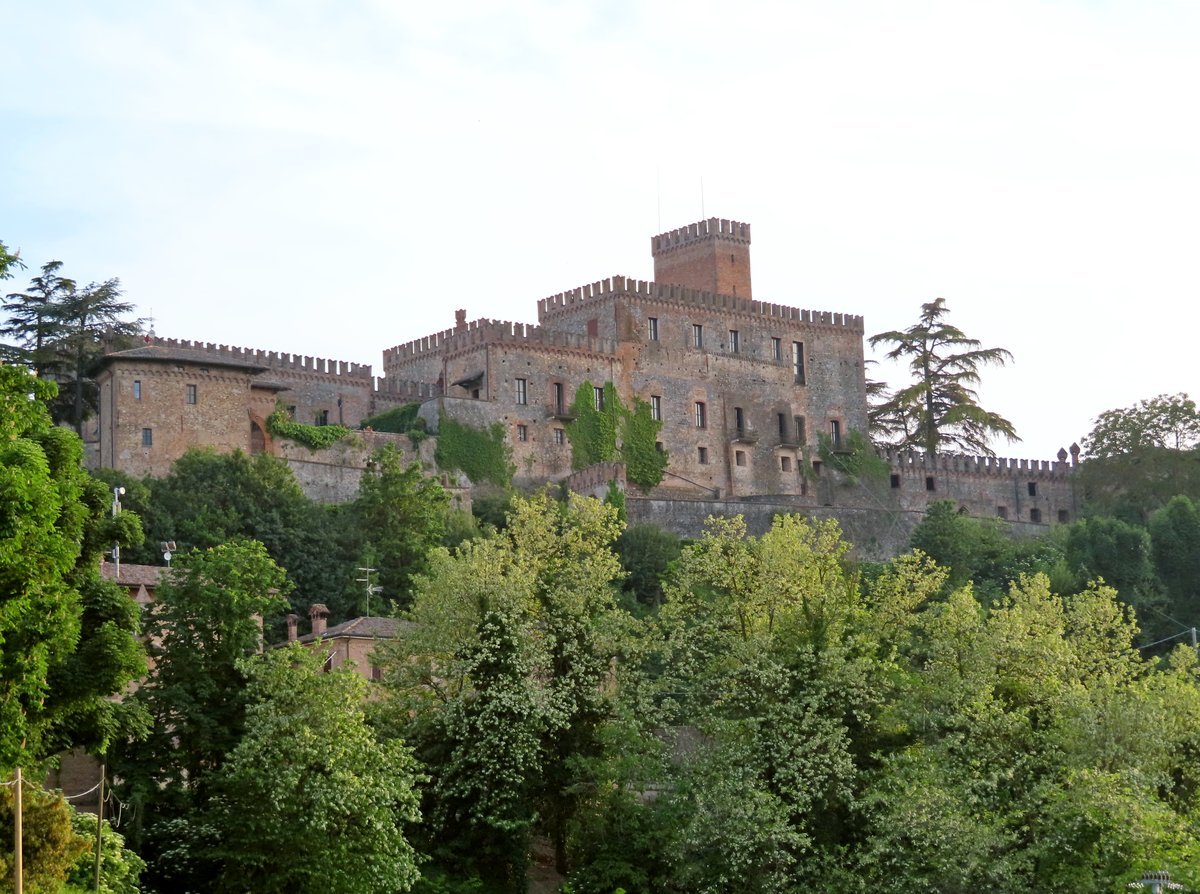 It begins here, at Tabiano Castle, perched on a rocky spur that dominates the Po plain. Built between the 10th and 11th centuries by the Pallavicino marquises, the stronghold was tasked with guarding the precious saltworks of Salsomaggiore and the Via Francigena. Walking within its walls, you can still feel the atmosphere of the struggles between Guelphs and Ghibellines, with the two imposing 12th-century circular towers standing sentinel. In the 19th century, the restoration by Giacomo and Rosa Corazza transformed the fortress into an elegant residence, enriching the rooms with stuccoes, frescoes, and fine flooring. Today the castle is a private residence open to the public for guided tours (Saturdays and Sundays, 10:00 AM, 11:00 AM, 4:00 PM, 5:00 PM; admission €10). Climb up to the terraces: the panorama stretches from the Alps to the Apennines, a vista that alone is worth the trip. At the foot of the castle, the ancient village of Tabiano Castello houses a charming relais and the restaurant Il Caseificio, perfect for a lunch of local products.
- Via Castello, Salsomaggiore Terme (PR)
- Open in Google Maps
- View on Google Images

You should go if…
Day 1 – Stop no. 2
Castle of Scipione: The Salt Castle of the Pallavicino
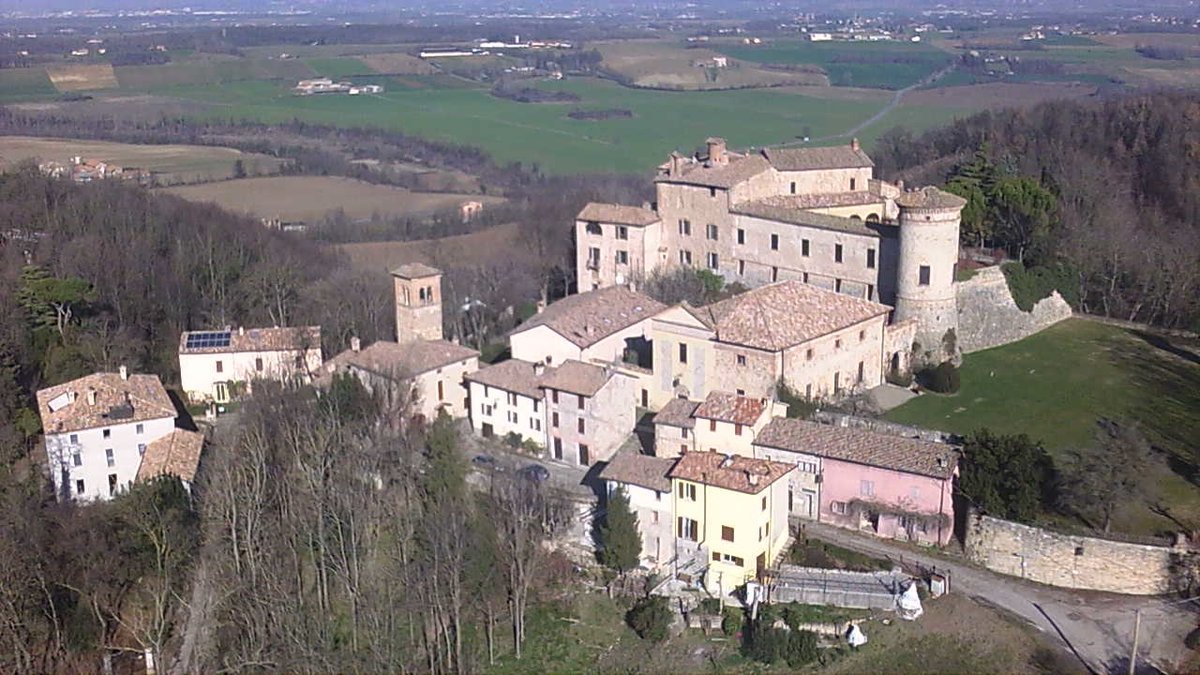 Just a few minutes from Salsomaggiore Terme, the Castle of Scipione stands on the hills of the Stirone Park. It is the oldest castle in the province of Parma, built in the 11th century by the Pallavicino Marquises and still inhabited by their descendants today. According to tradition, its name comes from a Roman villa of Scipio Africanus. Salt was the source of wealth here: the castle controlled the extraction wells, so much so that it was called the “salt castle”. The medieval structure blends with elegant 17th-century additions: the panoramic loggia, the courtyard of honor, the garden. Inside, coffered ceilings, frescoes, and period furnishings tell centuries of history. Not to be missed: the Devil’s Parlor, with a secret door that was an escape route, and the 15th-century prisons, still intact. The guided tour also reveals the Gallery of Ancestors and the dining room set in the Russian style. The visit lasts about 55 minutes and leaves visitors enchanted by the beauty and history that still lives here. A place that smells of the Middle Ages and legends, like those of the ghosts of Giangerolamo and his wife Giacoma.
- Via di Scipione Castello, Salsomaggiore Terme (PR)
- Open in Google Maps
- View on Google Images
You should go if…
Day 1 – Stop no. 3
Bargone Castle: A Hidden Gem in the Hills
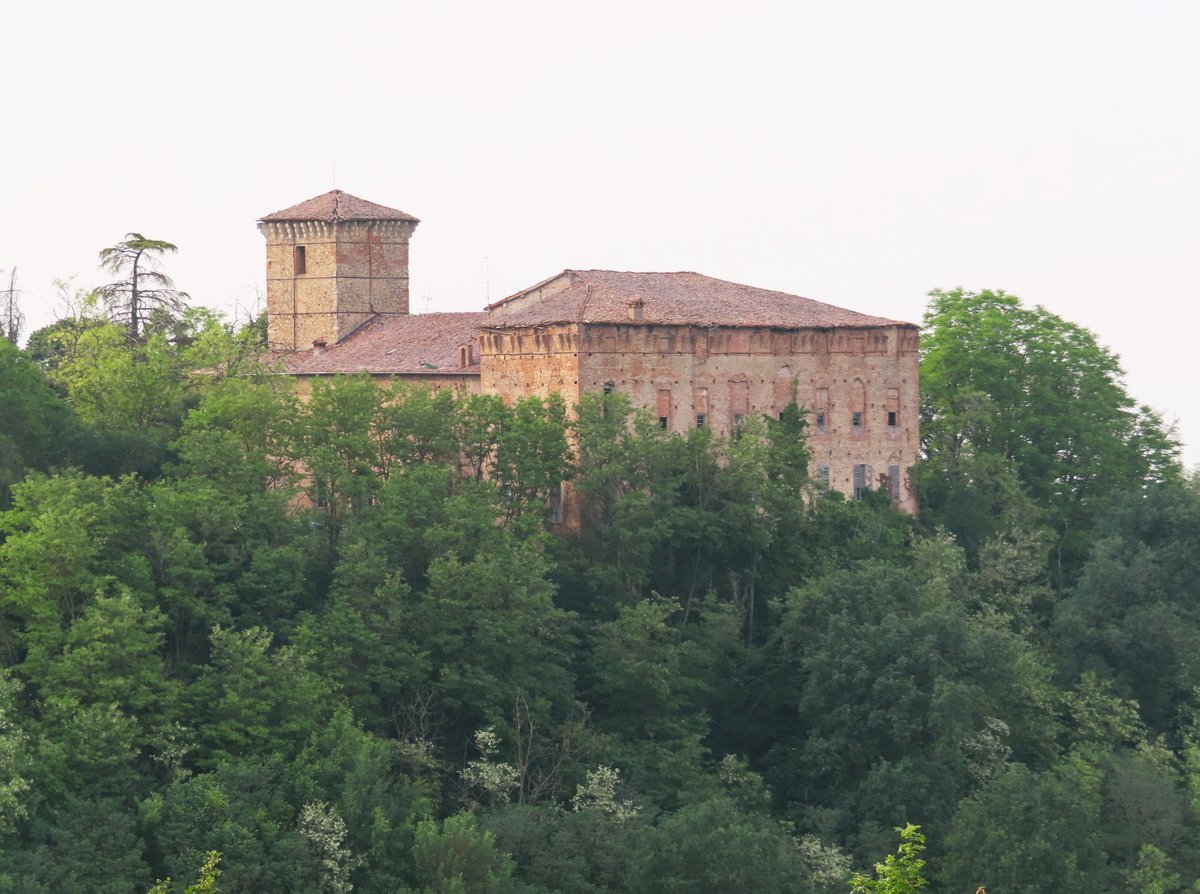 As you climb toward the hamlet of Bargone, you’ll encounter an imposing structure overlooking the valley: Bargone Castle. This ancient manor, dating back to 846, is a private residence—unlike Scipione Castle, it’s not open to the public, but the view from outside is well worth the detour. Perched on a hill, it boasts an entrance ravelin with Ghibelline merlons and a massive keep. Inside, closed to visitors, hides a Renaissance courtyard and a hall frescoed by Girolamo Magnani, the set designer for Verdi. Legend has it that the blessed Rolando de’ Medici retired here, and the castle was once one of the most feared strongholds of the Pallavicino family. Sadly, it’s now abandoned since the last owner passed away, but cyclists and hikers enjoy it as a rest stop along the trails. If you love history-laden places, even an exterior view will stir your emotions.
- Via Bargone, Salsomaggiore Terme (PR)
- Open in Google Maps
- View on Google Images
You should go if…
Day 2 – Stop no. 4
Montechiarugolo Castle: Between History and Legend
 The final stop of the second day, Montechiarugolo Castle welcomes you with its imposing structure overlooking the Enza stream. Unlike the previous one, here you truly enter: crossing the drawbridge, you discover a Renaissance courtyard with statues from the Reggia di Colorno. The Hall of Festivities and the Middle Room preserve frescoes ranging from Gothic to Mannerism, while the 15th-century loggia offers a breathtaking view of the valley. A curiosity: in a small room, an Egyptian mummy is kept, linked to the legend of the Fairy Bema, whose ghost is said to still appear on the ramparts every May 19. The castle also served as an internment camp during World War II. Today, thanks to the Marchi family, it can be visited with a guide: a one-hour tour that is worth every minute.
- Piazza Mazzini, Montechiarugolo (PR)
- Open in Google Maps
- View on Google Images
You should go if…
Day 2 – Stop no. 5
Castelguelfo Castle – Noceto
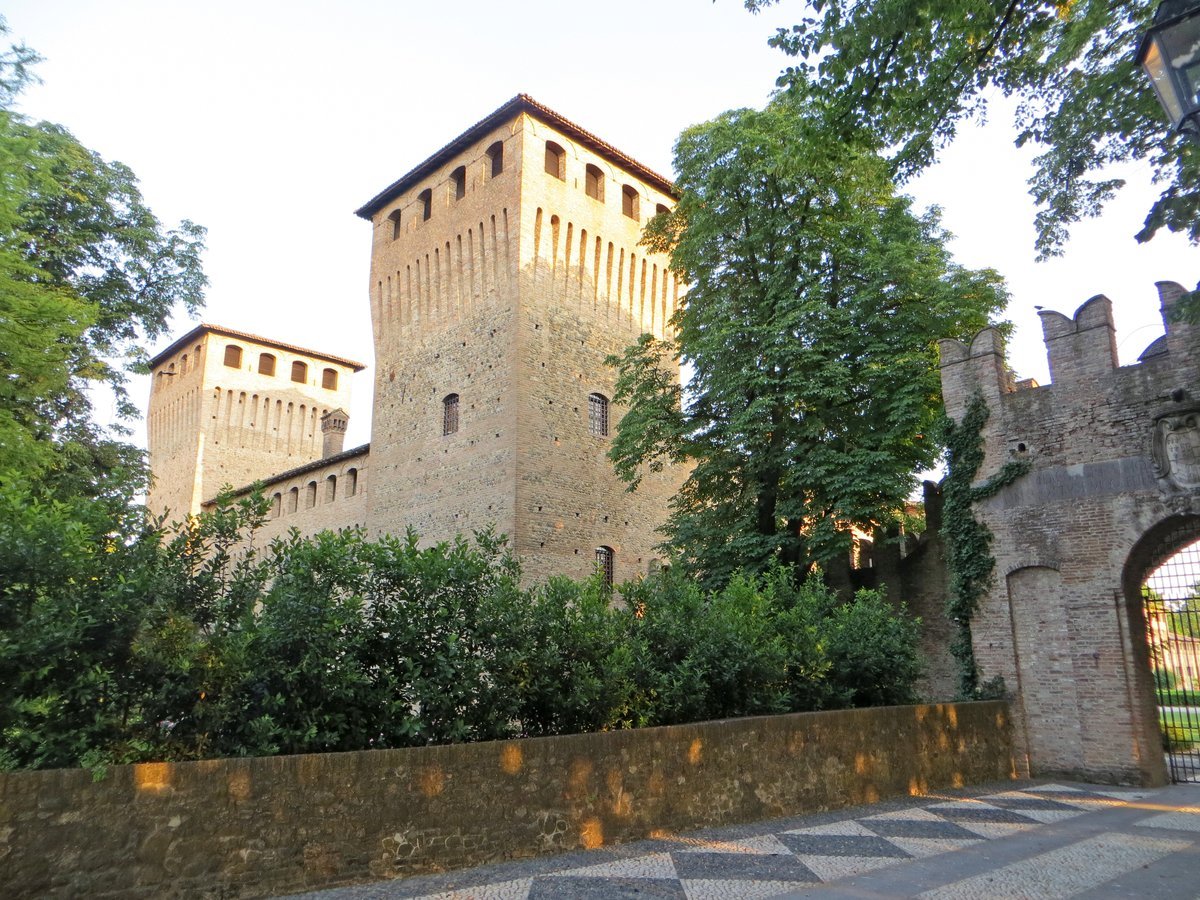 The final stop of the second day, Castelguelfo Castle rises along the Via Emilia like a silent giant. Its origins date back to the 12th century, when it was a tower defending the ford on the Taro. Stories of emperors, bishops, and warlords intertwine here: the Rossi family conquered it, Giberto III da Correggio destroyed it, and Ottobuono de’ Terzi renamed it Castrum Guelphum. Today it is privately owned by the Rovagnati family and unfortunately cannot be visited. But it is worth stopping in front of the ravelin on the state road to admire its north facade with corbels and machicolations, the swallowtail battlements, and the park glimpsed beyond the boundary wall. A place full of charm and mystery, inviting you to imagine court life within its towers.
- Via Emilia, Noceto (PR)
- Open in Google Maps
- View on Google Images
You should go if…
Day 2 – Stop no. 6
Rocca dei Sanvitale
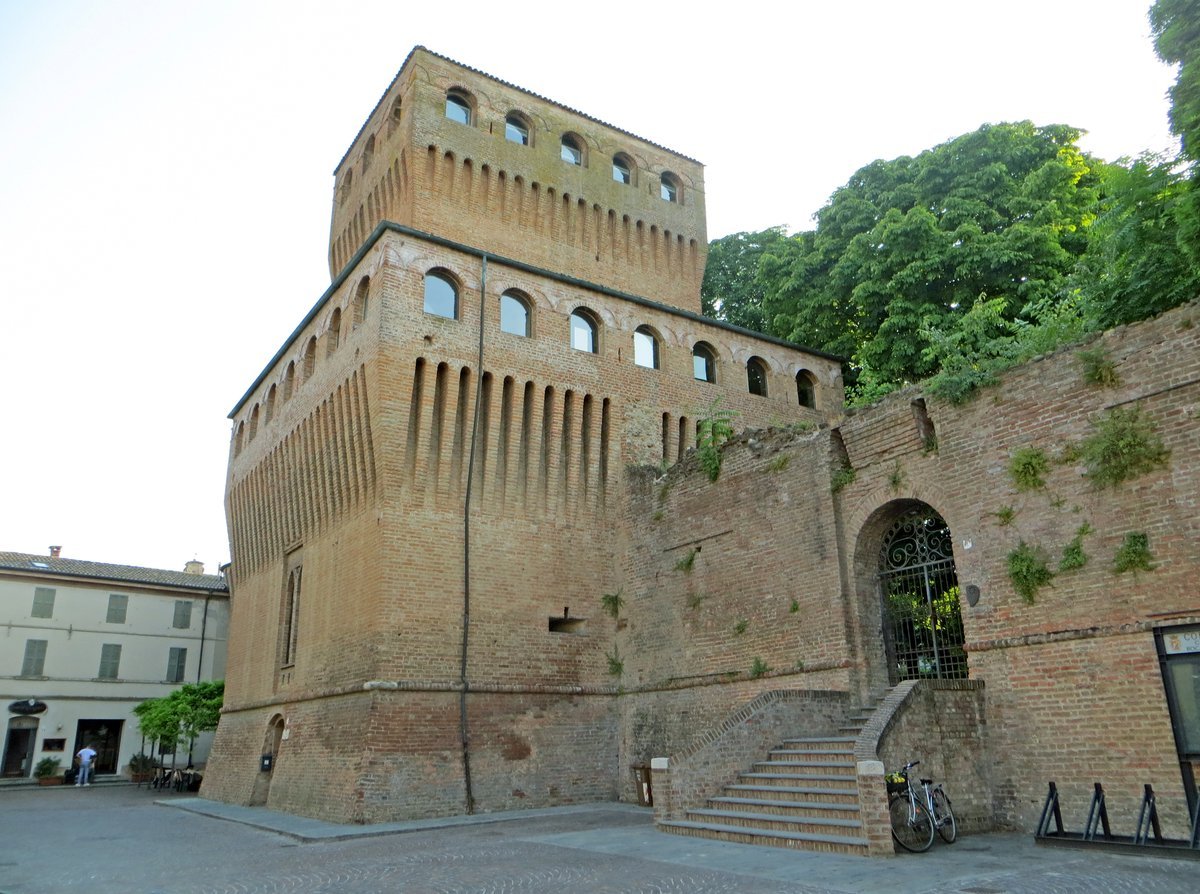 Sixth stop of the second day, the Rocca dei Sanvitale in Noceto is much more than a castle: it is the Castle of Music. Built in the 13th century as a fortress of the Pallavicino family, it saw the passage of the Sanvitale, Visconti, and Rossi families, up to the conspiracy of 1612 which cost Alfonso Sanvitale his life. Today, after a restoration in 2005, it houses the Museum of Luthiery with instruments by master Scrollavezza and the Museum of Records with an extraordinary collection of 78 rpm records. Go up to the first floor for the Camera Ottica (camera obscura), unique in Italy, which projects the upside-down image of Piazza Garibaldi. The inner courtyard with the centuries-old horse chestnut tree is perfect for a break. And if you hear strange voices, they might be the ‘muroni’, the spirits of soldiers walled up alive according to legend. A place that combines history, art, and music in a surprising way.
- Via Giuseppe Mazzini, Noceto (PR)
- Open in Google Maps
- View on Google Images
You should go if…
Day 3 – Stop no. 7
Roccalanzona Castle: The Impregnable Rocha Leone
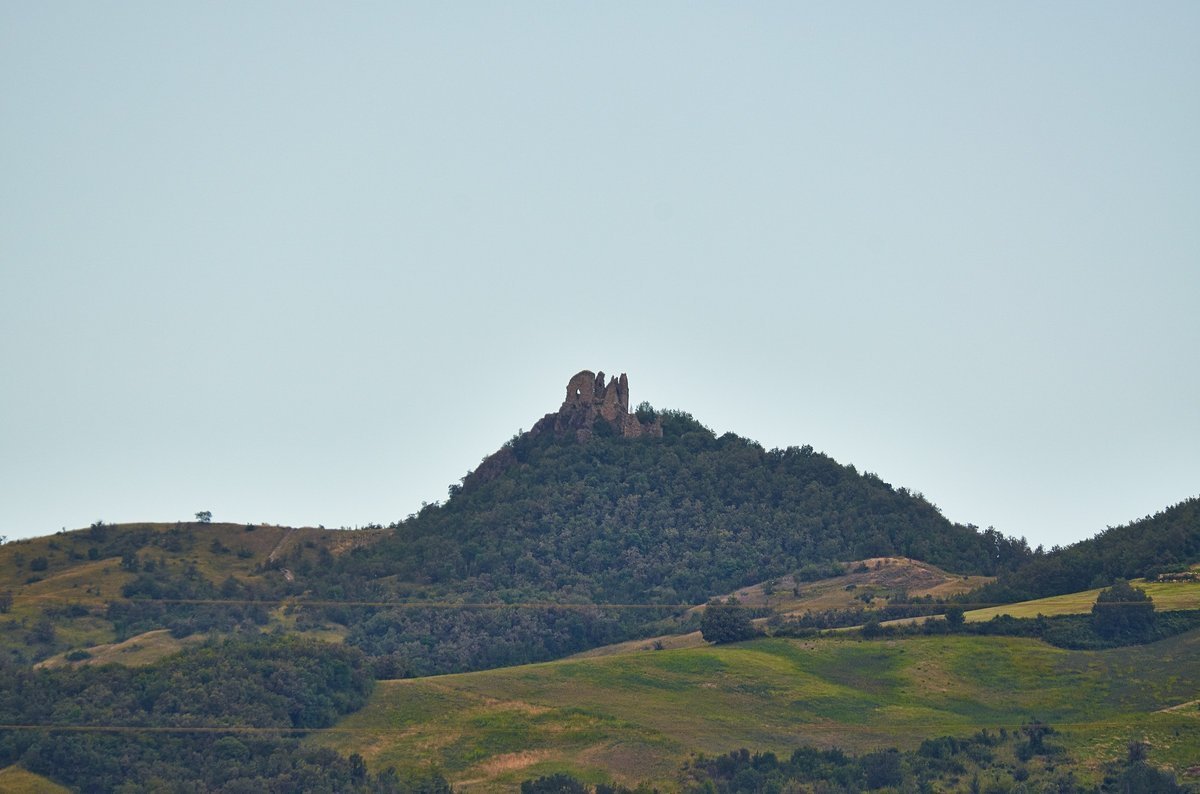 Last stop of the third day, the Castle of Roccalanzona awaits you on a spur of ophiolitic rock on the border between Val Ceno and Val Dordone. Never mind that it is now in ruins: its history is among the most fascinating in the area. First appearing in a document from 1028, it reached its peak under Pier Maria Rossi in the 15th century. It was considered impregnable and never conquered, not even by Ludovico il Moro with bombards. Walking among the ruins—the rectangular keep, the walls with loopholes, a vaulted room with an arrow slit—you breathe an atmosphere out of time. The ancient ridge road Maria Longa, which leads to the castle, was already strategic in Lombard times and along it an inscription from the 1300s was found. Today the Rocha Leone Association organizes guided tours with a multimedia presentation. Don’t miss the legend of Pietra Corva: two lovers from rival families threw themselves from the cliff and their souls still hover on full moon nights. A perfect ending for an itinerary among castles.
- Strada del Pagano, Varano de’ Melegari (PR)
- Open in Google Maps
- View on Google Images
You should go if…
Day 3 – Stop no. 8
Castello Pallavicino: The Impregnable Fortress on the Ceno River
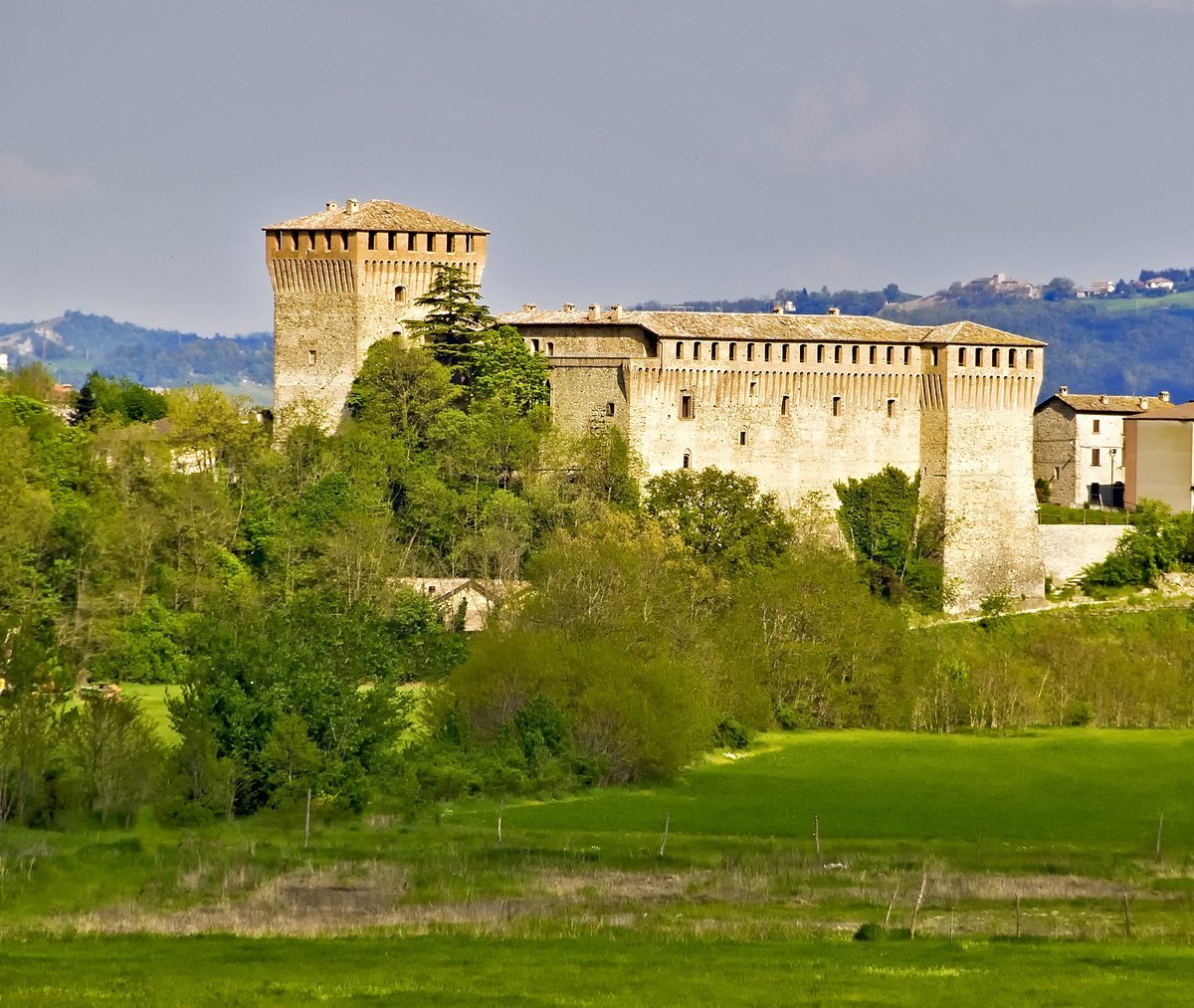 The final stop of the third day, Castello Pallavicino awaits you on a sandstone rock overlooking the Ceno Valley. First mentioned in 1087, it was rebuilt by the Municipality of Parma in 1208 and subsequently destroyed and rebuilt several times. Its current appearance dates from the 15th century, featuring a unique defensive system: three towers aligned toward the river, and the keep on the northern edge. The guided tour, led by guides in medieval costumes, takes you to the prison of Annibale Bentivoglio, the kitchens, the patrol walkways, and the frescoed Hall of Honor. From the terrace, the view is breathtaking. And if you like, look for the ghost of Beatrice: a young marchioness who died at 21 and, according to legend, still wanders these walls. A grand finale for your castle itinerary.
- Strada della Rocca, Varano de’ Melegari (PR)
- Open in Google Maps
- View on Google Images
You should go if…
Day 3 – Stop no. 9
Castello di Varsi: Last Remnants of the Middle Ages
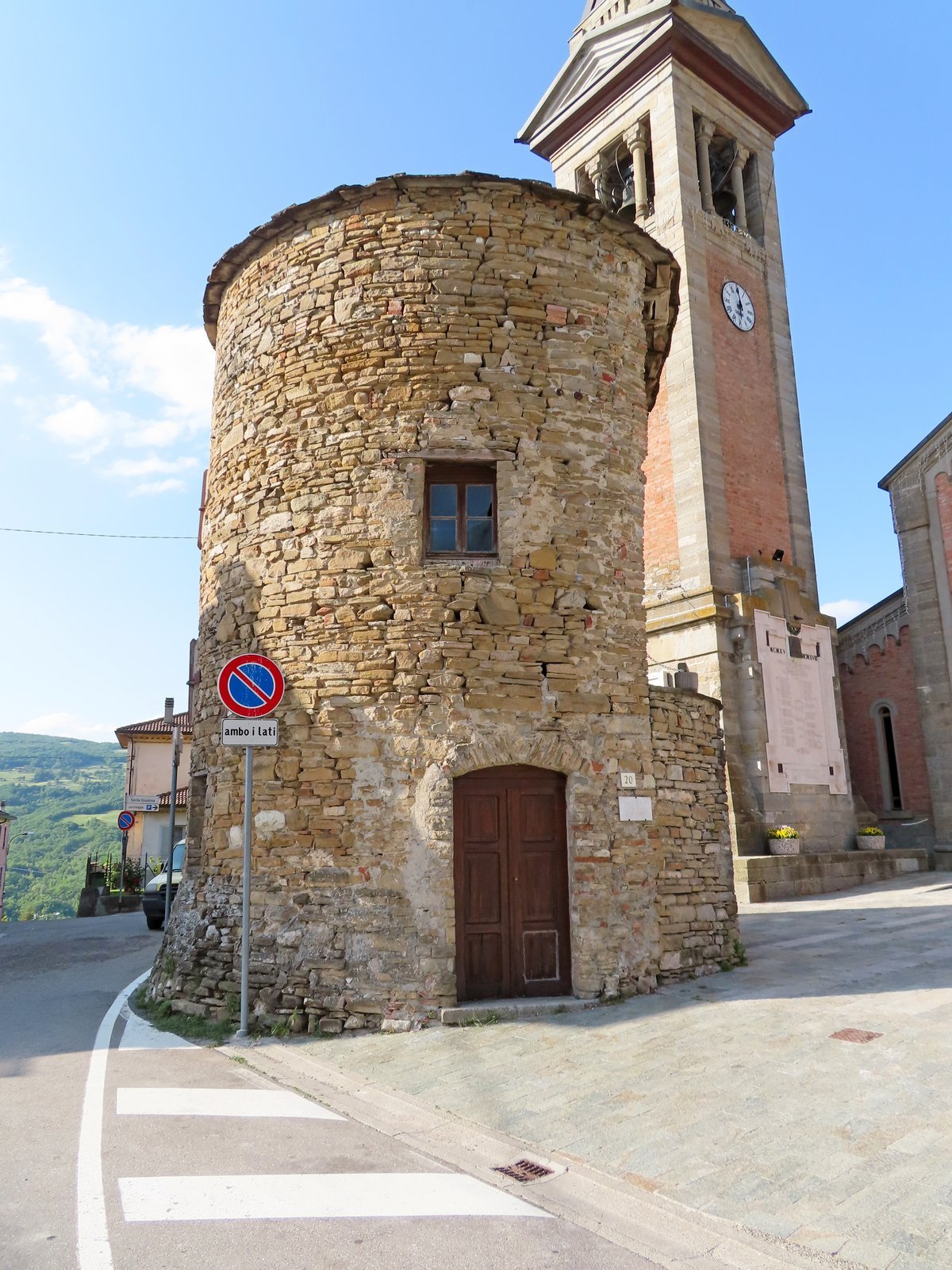 We end the day with a place that tells centuries of history, even if only fragments remain today. The Castello di Varsi, commissioned by the Diocese of Piacenza in the 10th century, was the stage for struggles between the Malaspina and Scotti families, with a 15-day siege as early as 1206. For centuries it dominated the valley, but at the end of the 19th century its quadrangular structure with circular towers was almost completely demolished to make way for Piazza Monumento. Today, three stone towers still stand: the isolated one to the west, the southern one with a stretch of wall, and the slender northern tower leaning against the church of San Pietro. Until 1926, the town’s bell rang from the latter. The castle is privately owned and not open to visits, but walking among these ruins is like leafing through a history book: the mutilated walls, the few arrow slits, the 18th-century portal opening onto the central wing. A subdued yet fascinating finale for those who love authentic traces of the past.
- Piazza Monumento, Varsi (PR)
- Open in Google Maps
- View on Google Images
You should go if…