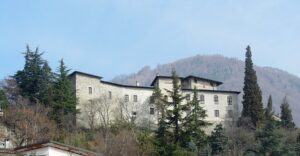
The Scaliger Castle of Sirmione is a medieval castle that seems to float on the waters of Lake Garda. Built by the Della Scala family in the 13th century, it is one of the best-preserved lakeside fortifications in Italy, with a fortified harbor unique of its kind. Inside, you can explore the 47-meter keep, the patrol walkways, and a Roman and medieval lapidary. Here’s what not to miss:
• The 15th-century harbor: a rare example of a military lake port, visitable after the 2018 restoration.
• The keep and its 146 steps: climb to the top for a breathtaking view of the lake and the village.
• The patrol walkways: walk along the swallowtail crenellations and admire the panoramas.
• The drawbridge and towers: discover the original defensive systems, including portcullises and secret passages.
Evocative Introduction
You stand before a castle that seems to float on water. The Rocca Scaligera of Sirmione is one of the best-preserved medieval fortresses in Italy, and the moment you see it, you understand why. With its walls rising steeply from Lake Garda, its crenellated towers, and its unparalleled inner harbor, it transports you straight back to the Middle Ages. It’s impossible not to be left speechless: it looks like something out of a history book, yet it’s real, solid, and waiting for you.
Evocative Introduction
You stand before a castle that seems to float on water. The Rocca Scaligera of Sirmione is one of the best-preserved medieval fortresses in Italy, and the moment you see it, you understand why. With its walls rising steeply from Lake Garda, its crenellated towers, and its unparalleled inner harbor, it transports you straight back to the Middle Ages. It’s impossible not to be left speechless: it looks like something out of a history book, yet it’s real, solid, and waiting for you.
Historical Background
The Scaliger Fortress was built by the Della Scala family between 1270 and 1280, although some claim Mastino I began work as early as 1259. It served to control access to the Sirmione peninsula and dominate the lake. After the Scaligeri, it passed to the Visconti and then to Venice, which expanded the dockyard in the 15th century. It was used as barracks, storage, and even a prison. Restored between 1917 and 1935, it reopened to the public in 2018. Today it is a museum that tells centuries of history.
Historical Background
The Scaliger Fortress was built by the Della Scala family between 1270 and 1280, although some claim Mastino I began work as early as 1259. It served to control access to the Sirmione peninsula and dominate the lake. After the Scaligeri, it passed to the Visconti and then to Venice, which expanded the dockyard in the 15th century. It was used as barracks, storage, and even a prison. Restored between 1917 and 1935, it reopened to the public in 2018. Today it is a museum that tells centuries of history.
The Unique Dock
What makes this fortress special is the fortified dock—the only Scaligera dock still intact in Italy. You enter the courtyard and see it: a medieval marina surrounded by walls, where the military fleet once sheltered. Today, the water fills it again, and from the walkways, the view is incredible. It’s not just a castle; it’s a fortified port. You’ll feel like you can see the Scaligera boats moored there.
The Unique Dock
What makes this fortress special is the fortified dock—the only Scaligera dock still intact in Italy. You enter the courtyard and see it: a medieval marina surrounded by walls, where the military fleet once sheltered. Today, the water fills it again, and from the walkways, the view is incredible. It’s not just a castle; it’s a fortified port. You’ll feel like you can see the Scaligera boats moored there.
Climbing the Keep: Breathtaking View
To reach the top of the keep, you must climb 146 steps. Is it worth it? Absolutely yes. From the top, at 47 meters, the view is breathtaking: the lake, the Sirmione peninsula, and the mountains in the background. The swallowtail battlements frame it all. Along the way, you pass through the patrol walkways and the second enclosure with the drawbridge. It’s an experience that makes you feel like a true lord of the castle.
Climbing the Keep: Breathtaking View
To reach the top of the keep, you must climb 146 steps. Is it worth it? Absolutely yes. From the top, at 47 meters, the view is breathtaking: the lake, the Sirmione peninsula, and the mountains in the background. The swallowtail battlements frame it all. Along the way, you pass through the patrol walkways and the second enclosure with the drawbridge. It’s an experience that makes you feel like a true lord of the castle.
Why Visit It
First: it’s a unique water castle with a dock you won’t find anywhere else. Second: climbing the keep gives you one of the best views of Lake Garda, especially at sunset. Third: it’s a perfect example of medieval military architecture, with Ghibelline battlements, drawbridges, and a Roman lapidary in the portico. And the ticket costs only 6 euros, or 14 if you also want to see the nearby Villa Romana.
Why Visit It
First: it’s a unique water castle with a dock you won’t find anywhere else. Second: climbing the keep gives you one of the best views of Lake Garda, especially at sunset. Third: it’s a perfect example of medieval military architecture, with Ghibelline battlements, drawbridges, and a Roman lapidary in the portico. And the ticket costs only 6 euros, or 14 if you also want to see the nearby Villa Romana.
When to Go
The best time? Early in the morning, when the light hits the walls and the lake is still calm. Or at sunset, when the sun turns the fortress red. In summer, try to avoid the middle of the day: it’s hot and crowded. In spring or fall, on the other hand, it’s perfect: the temperatures are mild and the colors of the lake are stunning. On Sundays it closes early (2:00 PM), so go on Saturday if you want more time.
When to Go
The best time? Early in the morning, when the light hits the walls and the lake is still calm. Or at sunset, when the sun turns the fortress red. In summer, try to avoid the middle of the day: it’s hot and crowded. In spring or fall, on the other hand, it’s perfect: the temperatures are mild and the colors of the lake are stunning. On Sundays it closes early (2:00 PM), so go on Saturday if you want more time.
Nearby
Just a stone’s throw from the castle, don’t miss the Grotte di Catullo: the remains of a huge Roman villa with lake views. Or take a stroll through the historic center of Sirmione, with its narrow alleys, small shops, and gelaterias. If you have time, a dip in the city’s thermal waters is a must. Everything is just a few minutes’ walk away, no need to use the car.
Nearby
Just a stone’s throw from the castle, don’t miss the Grotte di Catullo: the remains of a huge Roman villa with lake views. Or take a stroll through the historic center of Sirmione, with its narrow alleys, small shops, and gelaterias. If you have time, a dip in the city’s thermal waters is a must. Everything is just a few minutes’ walk away, no need to use the car.