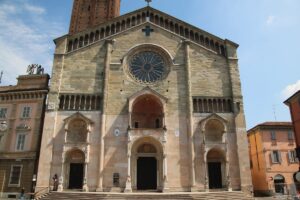
Ready to discover the Piacenza Castles? In this 3-day itinerary, I’ll take you among towers, walls, and museums, exploring medieval fortresses that tell centuries of history. We start at Rocca d’Olgisio, a jewel perched on the hills, then visit Castello di Monticelli and immerse ourselves in the art of Palazzo Farnese and Galleria Ricci Oddi. A tour designed for history and architecture enthusiasts, with well-organized stops and practical tips to enjoy every place. Forget generic guides: here you’ll find real details, opening hours, and curiosities to make the most of the Piacenza area. Ready to hit the road?
🗺️ Your trip at a glance
An intense itinerary among castles, palaces, and art collections, perfect for a weekend getaway.
- Ideal for: history and architecture enthusiasts wanting an immersion in the Piacenza Castles
- Highlights: iconic stops like Rocca d’Olgisio and Palazzo Farnese, with museums and fortresses uncrowded
- For those who: curious travelers who love short itineraries but rich in cultural content
Itinerary stops
Day 1 – Stop no. 1
Rocca d’Olgisio
 The first stop of our itinerary is a true gem: the Rocca d’Olgisio, perched at 564 meters on a rocky spur between the Tidone and Chiarone streams. It is one of the oldest fortified complexes in the Piacenza area, with first records in 1037 when it was donated to the monks of San Savino. Its history is marked by sieges and betrayals: in 1500 it withstood 1,160 cannon shots from the French before falling due to betrayal. The walls are imposing: a triple wall on the south side, an entrance with a drawbridge, and the motto “Arx Impavida” (fearless fortress) carved in stone. Inside, a 50-meter deep well and a 16th-century loggia with masks. From May to October it is visitable with a guide (first Sunday of the month, ticket €10). Don’t miss the view of the Po Valley and the nearby trail to the prehistoric caves linked to Saints Faustina and Liberata.
- Strada comunale Pecorara, Pianello Val Tidone (PC)
- Open in Google Maps
- View on Google Images

You should go if…
Day 1 – Stop no. 2
Castle of Borgonovo Val Tidone
 Continuing our itinerary among the Piacenza castles, we arrive at Borgonovo Val Tidone. Here stands the Castle of Borgonovo, a mighty brick fortress that now houses the town hall. Built in 1196 by the Municipality of Piacenza to defend the western border, it was destroyed and rebuilt several times. The rectangular plan, the two corner towers, and the dry moat crossed by masonry bridges with pointed arches tell of its medieval origins. Inside, the porticoed courtyard and the scenic 18th-century staircase are the result of the transformation into a noble residence desired by the Marquises Zandemaria, who set up a picture gallery with 240 works by Correggio, Guercino, and others. Today, it can be visited externally and, during the town hall opening hours, also the interiors. Not to be missed: the hall with 16th-century frescoes and the three-tiered loggia.
- SS412, Borgonovo Val Tidone (PC)
- Open in Google Maps
- View on Google Images
You should go if…
Day 1 – Stop no. 3
Malaspina Dal Verme Castle
 We climb to Bobbio, and the Malaspina Dal Verme Castle welcomes us from the top of the village. Commissioned by Corradino Malaspina in 1304, it was a Ghibelline stronghold before passing to the Visconti and then, in 1436, to the Dal Verme family, who transformed it into an elegant residence. Today you can visit the rectangular keep with five floors: furnished halls, the Sala delle Marine with a stone fireplace and coat of arms, and a sixteenth-century fresco of the Madonna and Child. Climbing the tower, the view over the Val Trebbia is stunning. But the real attraction is the legend of the well of knives, an underground well whose walls were lined with blades – said to be used for throwing enemies in. The castle is open Saturday and Sunday (10 AM–1 PM and 3–6 PM, ticket €4). A tip: arrive calmly and get lost in the medieval alleys before entering.
- Vicolo del Torrino 3, Bobbio (PC)
- http://www.polomusealeemiliaromagna.beniculturali.it/musei/castello-malaspina-di-bobbio
- Open in Google Maps
- View on Google Images
You should go if…
Day 2 – Stop no. 1
Castelbosco: The Castle That Produces Energy and Hosts a… Unique Museum
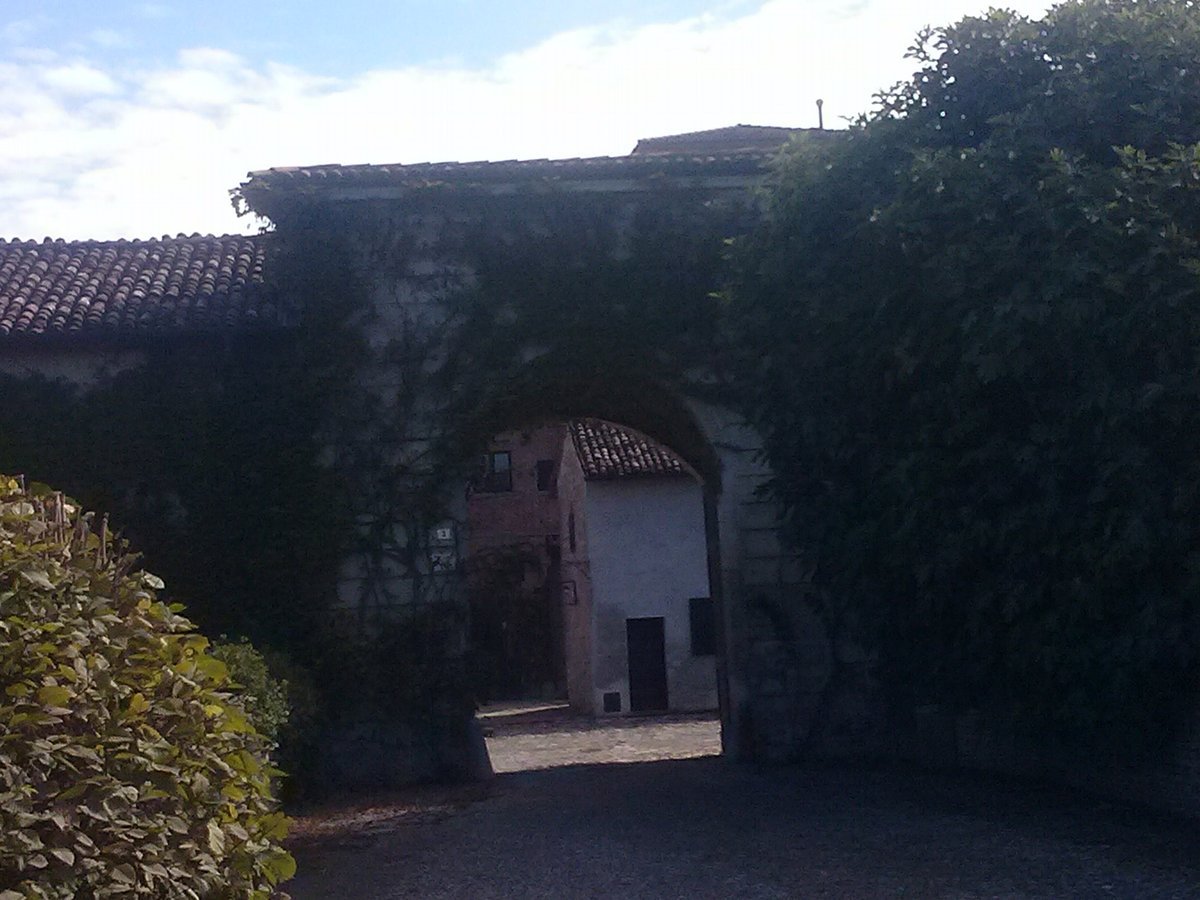 The second day of our tour through the castles of Piacenza begins with a stop that is decidedly out of the ordinary. In Gragnano Trebbiense, Castelbosco is much more than a medieval castle: here history and innovation merge in a unique project. The building, constructed between the 13th and 14th centuries by the Scotti family and remodeled several times, is now a farm that raises about 1,500 cattle and produces energy from biodigesters. Inside, since 2015, it houses the famous Museum of Poop, an exhibition exploring the cycle of waste in an artistic and educational way. The museum, conceived by Gianantonio Locatelli, displays works by contemporary artists and objects made of ‘merdacotta’, an innovative material. Visits are only by appointment, but it’s worth booking to discover this experimental corner. Outside, the castle retains two towers, battlements, and traces of the drawbridge: a fascinating contrast with the modernity buzzing within.
- Strada per Rivarossa, Gragnano Trebbiense (PC)
- Open in Google Maps
- View on Google Images
You should go if…
Day 2 – Stop no. 2
Calendasco Castle: Red Bricks and History on the Po
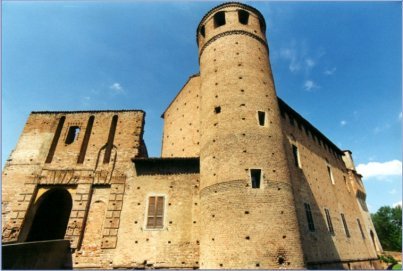 Let yourself be captivated by the charm of Calendasco Castle, a jewel in red bricks standing between two bends of the Po River. Its trapezoidal shape with four round towers and Guelph merlon emerges from the landscape, a witness to centuries of history. Entering, you pass under the large cylindrical tower, once protected by a drawbridge whose slots remain. The inner courtyard with a double loggia welcomes you with an atmosphere of yesteryear. Here, in 1290, Saint Corrado Confalonieri was born, and even today you can feel the stories of the families who lived here: the Scotti, the Confalonieri, the Arcelli. Recent restorations have uncovered original terracotta flooring and an ancient fireplace, while sixteenth-century frescoes decorate the entrance hall. Don’t miss the magnificent Reception Room with a coffered ceiling. Today the castle is partly municipal and partly private, and is opened for cultural events. A place that speaks of power, intrigue, and daily life, to be discovered at leisure.
- Via Castello, Calendasco (PC)
- Open in Google Maps
- View on Google Images
You should go if…
Day 2 – Stop no. 3
Palazzo Farnese: The Unfinished Giant
 Third and final stop of the day, one of Piacenza’s most monumental sites awaits you: Palazzo Farnese, begun in 1558 at the behest of Margaret of Austria and never completed. Strolling through the inner courtyard, you’ll be struck by the elegant two-story loggias and the 17th-century gate adorned with the Farnese lilies. But the true treasure lies inside: nine museum sections, all accessible with a single ticket. Don’t miss the Etruscan bronze liver, unique in the world, and Botticelli’s Tondo (Madonna Adoring the Child with the Young St. John), displayed in a room with specially designed lighting. Equally fascinating are the Carriage Museum, rich in vintage models, and the art gallery with works from the 14th to the 19th century. The palace is a continuous succession of frescoed rooms, like the Alcove of Elisabetta Farnese, and imposing spaces such as the octagonal Ducal Chapel. If you’re short on time, focus on the Archaeological Museum and the Art Gallery; but if you can, allow a couple of hours to absorb all the history that wafts through the air.
- Via Campo della Fiera, Piacenza (PC)
- https://www.palazzofarnese.piacenza.it/it
- Open in Google Maps
- View on Google Images
You should go if…
Day 3 – Stop no. 1
Castle of Monticelli d’Ongina
 The itinerary’s last day begins with a real surprise: the Castle of Monticelli d’Ongina, one of the most imposing lowland castles in Emilia-Romagna. Commissioned by Rolando Pallavicino in 1420 and completed by his son Carlo, bishop of Lodi, it is a perfect example of defensive brick architecture, with a square layout, four cylindrical corner towers, and two keeps with traces of ancient drawbridges. But the true gem is the Bembo Chapel: frescoed by Bonifacio and Benedetto Bembo around 1460, it houses a Last Supper that some critics believe predates Leonardo’s. Also not to be missed are the museums in the cellars: the Po River Ethnographic Museum with a 7th-century dugout canoe, the Po River Aquarium, and the Archaeological Museum. If you love ghost stories, listen to the legend of Giuseppina, a young woman murdered in 1872 whose ghost is said to still wander the walls. The castle is open on Sundays (reservation required at 338 1801426) and, with its €1.3 million allocated by the Ministry for restorations, promises to give you a plunge into the Middle Ages.
- Piazza Casali, Monticelli d’Ongina (PC)
- Open in Google Maps
- View on Google Images
You should go if…
Day 3 – Stop no. 2
Paderna Castle
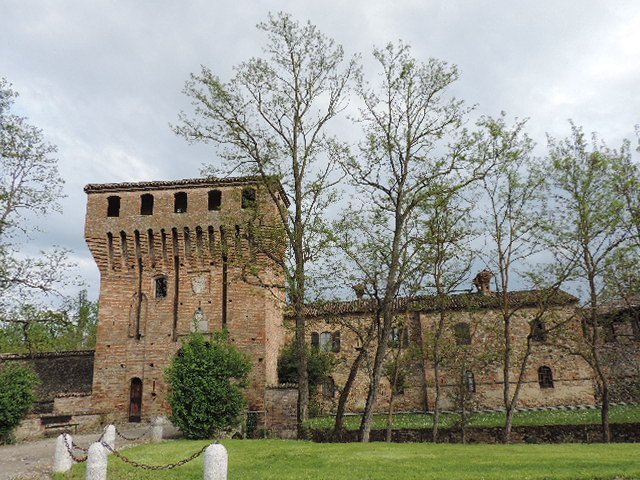 The Castle of Paderna stands as a true medieval jewel, surrounded by a moat still filled with water that enhances its charm. Arriving in Pontenure, you will find yourself facing a square structure, typical of lowland fortifications, divided between the residential and agricultural areas. The entrance tower preserves the housing for the double drawbridge, while the mighty keep in the water served as the last refuge. Inside, the Church of Santa Maria, Romanesque in style with a Greek cross plan and columns reused from Roman times, is a small masterpiece. In addition to exploring the armory with ancient weapons, you can stroll through the farmyard, where the rural life of yesteryear still lingers. The property, owned by the same family for over 500 years, is now also an educational farm and hosts the famous exhibition “Fruits of the Castle” with flowers and ancient fruits. And if you love ghost stories, legends say that at night you can hear the screams of the knight Confalonieri… A place that blends history, nature, and a touch of mystery.
- Via Firenze, Pontenure (PC)
- Open in Google Maps
- View on Google Images
You should go if…
Day 3 – Stop no. 3
Ricci Oddi Gallery: Piacenza’s Modern Art Haven
 Our final stop brings us to the heart of Piacenza, where the Ricci Oddi Gallery of Modern Art houses a collection of over 700 works from the 19th and early 20th centuries. Nobleman Giuseppe Ricci Oddi donated his collection to the city, inaugurated in 1931 in a building designed by Giulio Ulisse Arata, blending the former convent of San Siro with modernist lines. The nineteen rooms are organized by region and movement: from the Tuscan Macchiaioli to Fontanesi, and on to 20th-century greats like Boccioni, Carrà, and Morandi. The true gem is Gustav Klimt’s Portrait of a Lady, stolen in 1997 and recovered in 2019 after a dramatic twist of fate. Works by Boldini, Hayez, and Medardo Rosso add further allure. The gallery recently reopened after a major restoration: refreshed walls, new displays, and audioguides. If you love figurative art, this is a must.
- Via San Siro 13, Piacenza (PC)
- https://riccioddi.it
- Open in Google Maps
- View on Google Images
You should go if…