Discover Siena in one day with a walking itinerary through 10 historic palaces and medieval towers. Let yourself be guided through the UNESCO World Heritage historic center, visiting noble residences and towers that tell centuries of history. An alternative route to the classics, starting from Palazzo del Magnifico and ending at Palazzo Venturi Gallerani, touching architectural gems such as Palazzo Salimbeni, Palazzo Piccolomini, and the Torre del Mangia. Each stop is a dive into Siena’s republican past, among frescoes, courtyards, and Gothic facades. Perfect for art and history lovers, this one-day itinerary lets you experience Siena authentically, without haste, discovering lesser-known corners. Practical and detailed, with useful information on opening hours and access, it is ideal for a long weekend or a day trip.
🗺️ Your trip at a glance
A one-day walking itinerary among Siena’s historic palaces and towers, an original route that reveals the lesser-known side of the city. Ideal for those seeking a cultural experience away from mass tourist circuits.
- Ideal for curious travelers and enthusiasts of history and architecture.
- Highlights: exclusive route on 10 stops, practical details for each palace, stress-free walking itinerary.
- Who it’s for: designed for day trips and cultural city breaks.
Itinerary stops
Stop no. 1
Palazzo del Magnifico: a dive into the Renaissance dream
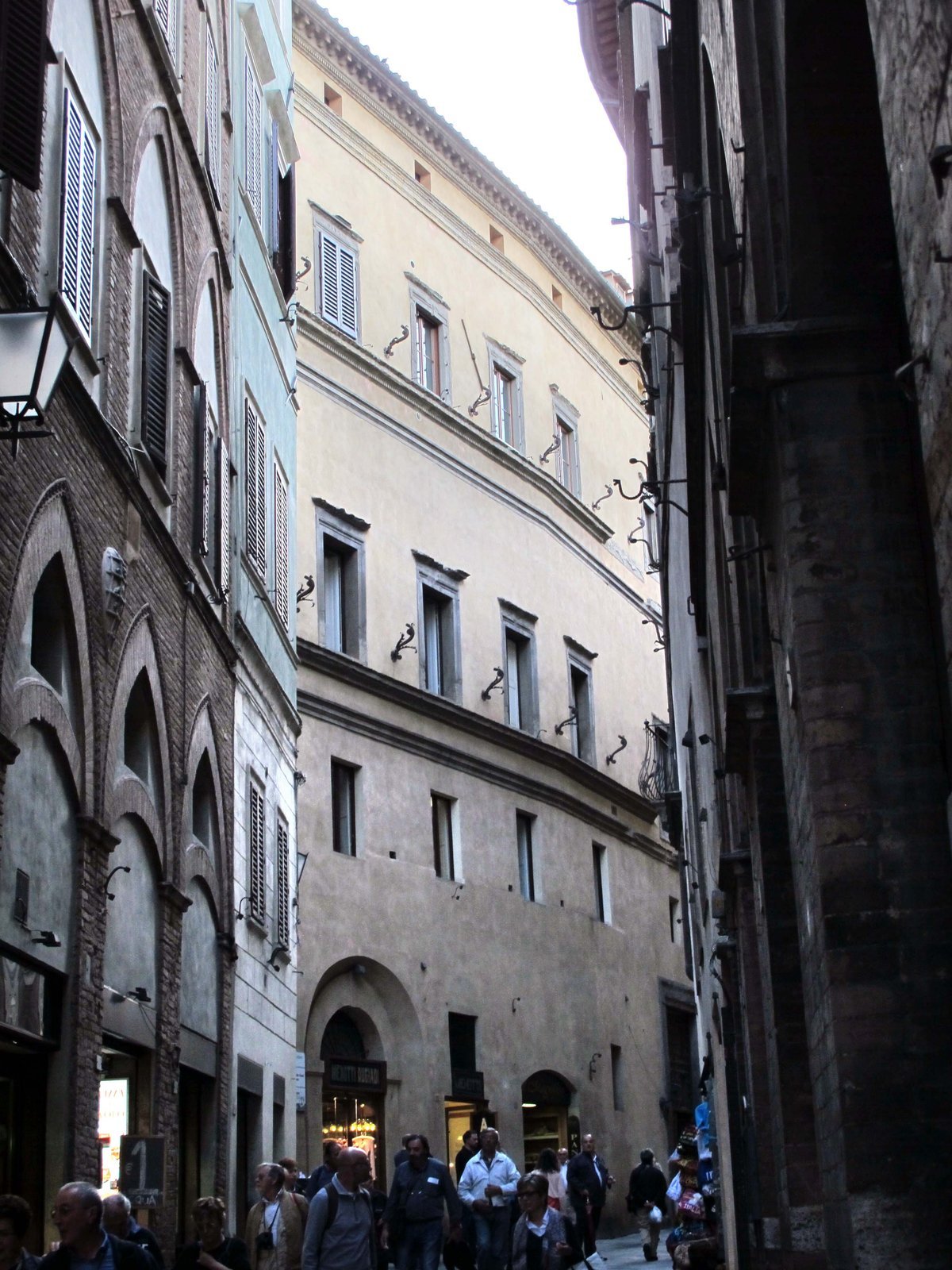 We start our walk from a place that is anything but ordinary. Palazzo del Magnifico, once the home of Pandolfo Petrucci – the de facto ruler of Siena between 1487 and 1512 – is now a welcoming B&B on Via di Monna Agnese. Its history is fascinating: Petrucci, nicknamed the Magnificent for his work in pacification, had the palace built in 1508 based on a design by Giacomo Cozzarelli. The main hall was a masterpiece, with a ceiling painted by Pinturicchio and frescoes by Signorelli and Genga, unfortunately dismantled and scattered among the Metropolitan Museum in New York, the National Gallery in London, and the National Picture Gallery of Siena. Today, entering the palace, you can still breathe that atmosphere of power and refinement, but with modern comforts: rooms with parquet floors, frescoed ceilings, and a continental breakfast that prepares you for the day. If you like to imagine life in the past while enjoying a coffee, this is the right place.
- Via di Monna Agnese, Siena (SI)
- Open in Google Maps
- View on Google Images

You should go if…
Stop no. 2
Royal Palace
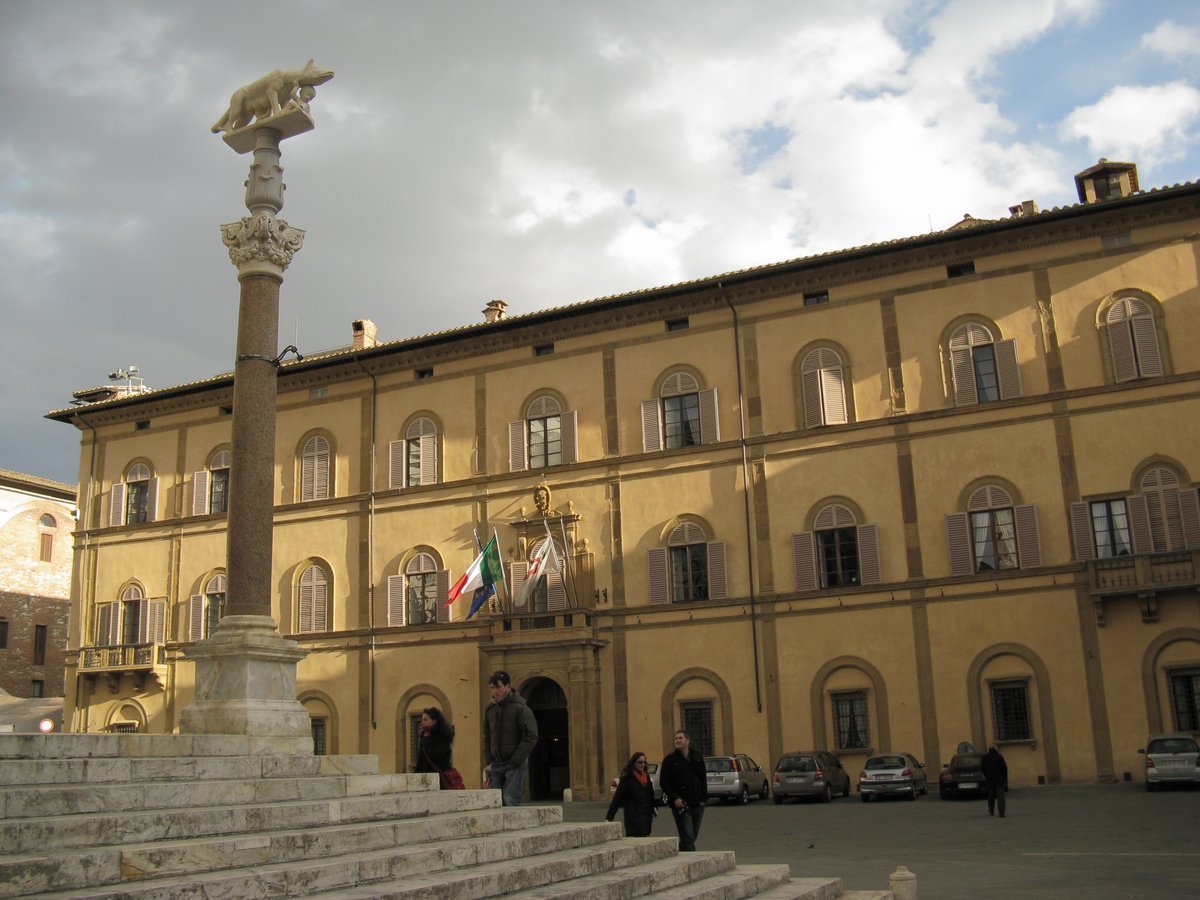 Royal Palace stands imposingly in the center of Piazza Jacopo della Quercia, right in front of the Duomo. Begun in the second half of the 15th century by Jacopo Petrucci as a family residence, it later passed to his son Cardinal Raffaello. After the fall of the Republic of Siena, the Medici purchased it in 1593 and transformed it into a symbol of their dominion: the architect Bernardo Buontalenti rebuilt it between 1590 and 1594, and later Governor Mattias de’ Medici commissioned a renovation from Benedetto Giovannelli Orlandi, turning it into a true royal palace. Today it houses the Prefecture and Provincial Administration, hence the name ‘Government Palace’. Access is free, but some areas are reserved for offices; it’s worth entering at least the Buontalenti courtyard and, if possible, taking a look at the Saloncino, the small court theater built in the remains of the New Duomo. Inside, 17th-century frescoes and Flemish tapestries are preserved, testaments to the prestige of this Medici residence.
- Piazza Jacopo della Quercia, Siena (SI)
- Open in Google Maps
- View on Google Images
You should go if…
Stop no. 3
Torre del Mangia: Breathtaking View of Siena
 From Piazza del Campo, your gaze inevitably rises to the Torre del Mangia, the civic tower of Palazzo Pubblico that dominates the city with its 87 meters of height (102 including the lightning rod). Built between 1325 and 1348 in brick and stone, it is the third tallest ancient tower in Italy. Its curious name comes from the first bell-ringer, Giovanni di Balduccio, nicknamed ‘Mangiaguadagni’ (later shortened to ‘Mangia’) because he squandered all his salary in taverns. To reach the top, you must climb about 400 steps (no elevator), but the effort is well worth it: from the belvedere, on clear days, the view stretches as far as Monte Amiata. At the top stands the Campanone (called ‘Sunto’), a 6,764 kg bell cast in 1666, whose deep sound accompanies the Palio and city festivals. Pay attention to the hours: from March to October, you can go up until 7 pm; in winter until 4 pm, with entries every 45 minutes. The ticket costs €10 (or €15 combined with the Museo Civico) and can only be purchased on the same day. Tip: arrive early to avoid the queue and enjoy the view at your leisure.
- Go to the page: Torre del Mangia: 360-Degree View Over Siena and the Tuscan Hills from 88 Meters
- Via di Salicotto, Siena (SI)
- Open in Google Maps
- View on Google Images
You should go if…
Stop no. 4
Palazzo Sansedoni
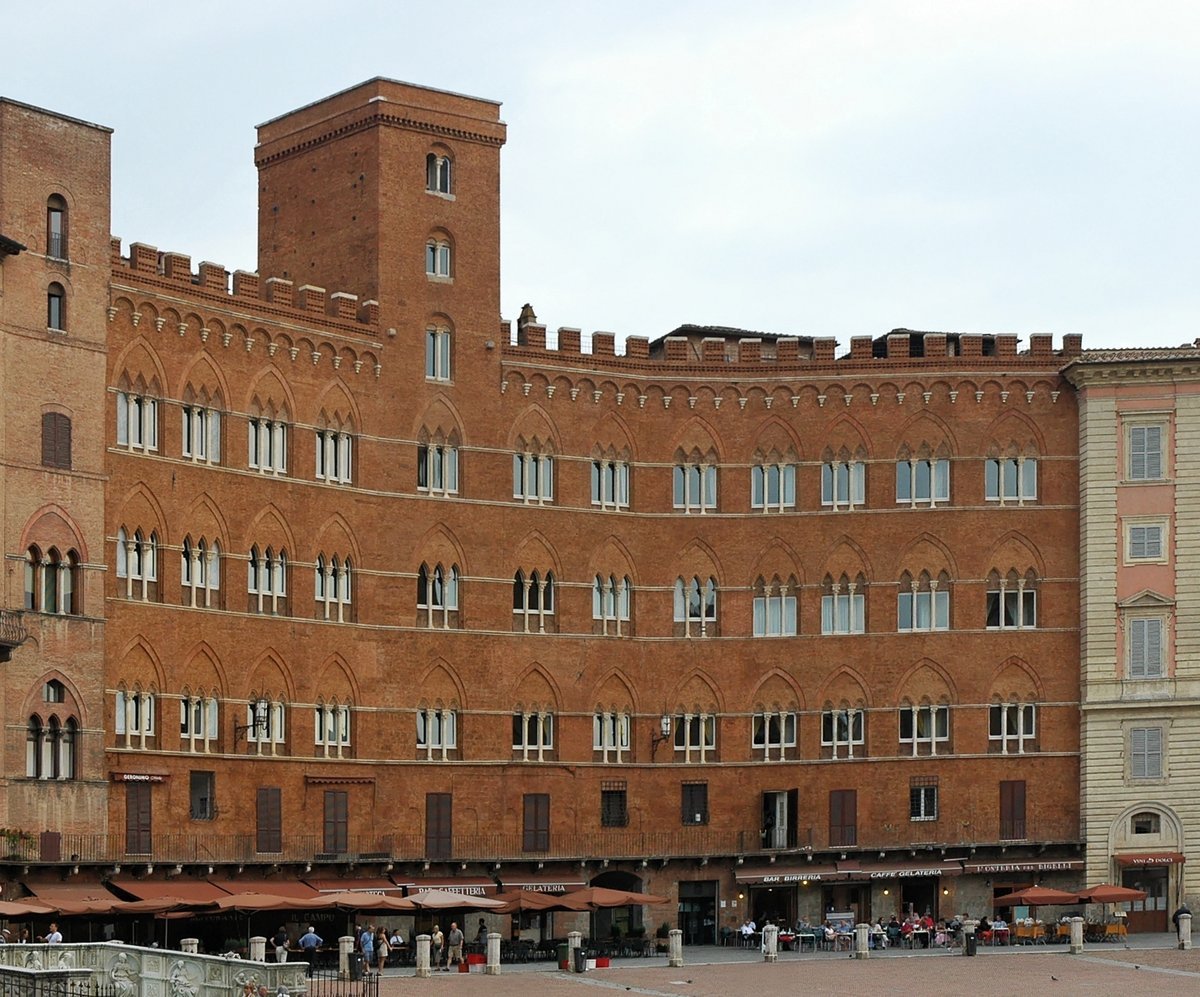 From the Torre del Mangia, just cross the square to find another gem: Palazzo Sansedoni. Yes, the one with the curved brick facade that follows the shape of the Campo. What you might not know is that this was once the site of Siena’s tallest tower before the Mangia was built: a whopping 62 meters of brick and stone, erected between 1243 and 1261 by the Sansedoni family, one of the most influential in medieval Siena. Then, in 1760, it was demolished because it was unstable, making way for the current 18th-century palace. Today it houses the Fondazione Monte dei Paschi, but it can be visited by appointment. Inside, you’ll find the Baroque chapel of Blessed Ambrogio Sansedoni – with frescoes by the Melani brothers and Gabbiani – and a rich art collection spanning from the 14th to the 19th century. Note: the entrance is not on the square but from Vicolo dei Borsellai, a passage that almost seems to hide the palace. A tip? If you’re in town on December 20, don’t miss the Mass in honor of Blessed Ambrogio, celebrated right here.
- Vicolo dei Borsellai, Siena (SI)
- Open in Google Maps
- View on Google Images
You should go if…
Stop no. 5
Palazzo Piccolomini: The State Archives and the Famous Biccherna Tablets
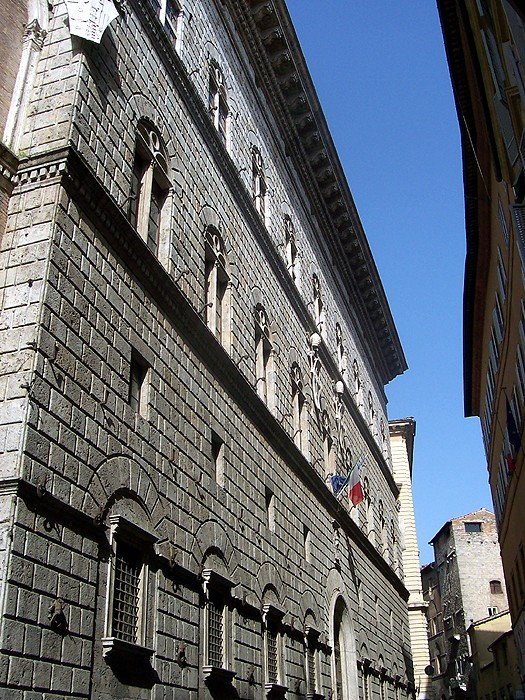 After navigating the maze of alleys that led you from Palazzo Sansedoni, you now stand before another icon of Sienese Renaissance: Palazzo Piccolomini. Built from 1469 on a design by Bernardo Rossellino, this palace is the magnificent city residence of the Piccolomini bankers, with a stone facade reminiscent of Palazzo Rucellai in Florence. Look up: the mullioned windows divided by string courses and the cornice are a triumph of balance. On the ground floor, the original wrought-iron handrails are still in place. Today the building houses the State Archives, which hold a unique treasure: the Museum of the Biccherna Tablets. These are ancient covers of account registers, decorated by Sienese artists from the 13th to the 18th century — a window into the administrative and artistic life of the city. Admission is free, but check the hours: it often opens only in the morning. A tip? Stop to admire the crescents of the Piccolomini coat of arms carved on the facade, and if you’re lucky, you can also visit the inner courtyard. An unmissable stop for those seeking a less crowded Siena.
- Via Banchi di Sotto 52, Siena (SI)
- Open in Google Maps
- View on Google Images
You should go if…
Stop no. 6
Palazzo Tolomei
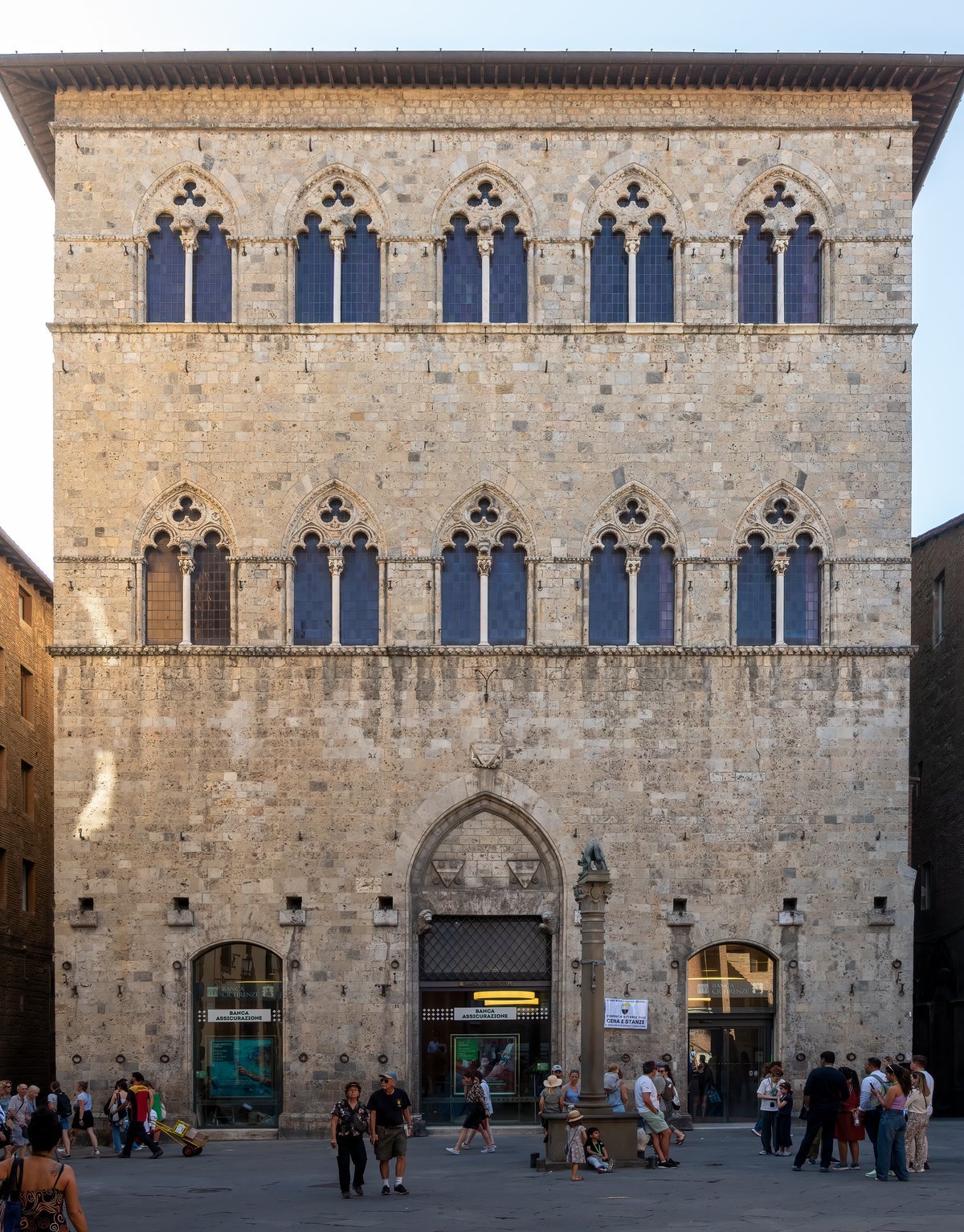 Leave the river of tourists behind and turn into Vicolo della Torre: here is Palazzo Tolomei, the oldest private palace in Siena. Past the tin wolf perched on a column, lift your gaze to the ten Gothic mullioned windows framed by pointed arches and trefoil oculi: they are considered the finest in the city. The Tolomei family, powerful bankers, built it before 1205, but after its destruction in 1267 due to political vendettas, they rebuilt it between 1270 and 1275. Here lived Pia dei Tolomei, the noblewoman mentioned by Dante in Purgatory, who used to lean out from those windows before dying in Maremma. Today the palace houses the Cassa di Risparmio di Firenze, but the façade can be freely admired. Note the massive central portal and the lion busts: details that tell centuries of power.
- Vicolo della Torre, Siena (SI)
- Open in Google Maps
- View on Google Images
You should go if…
Stop no. 7
Palazzo Bichi Ruspoli
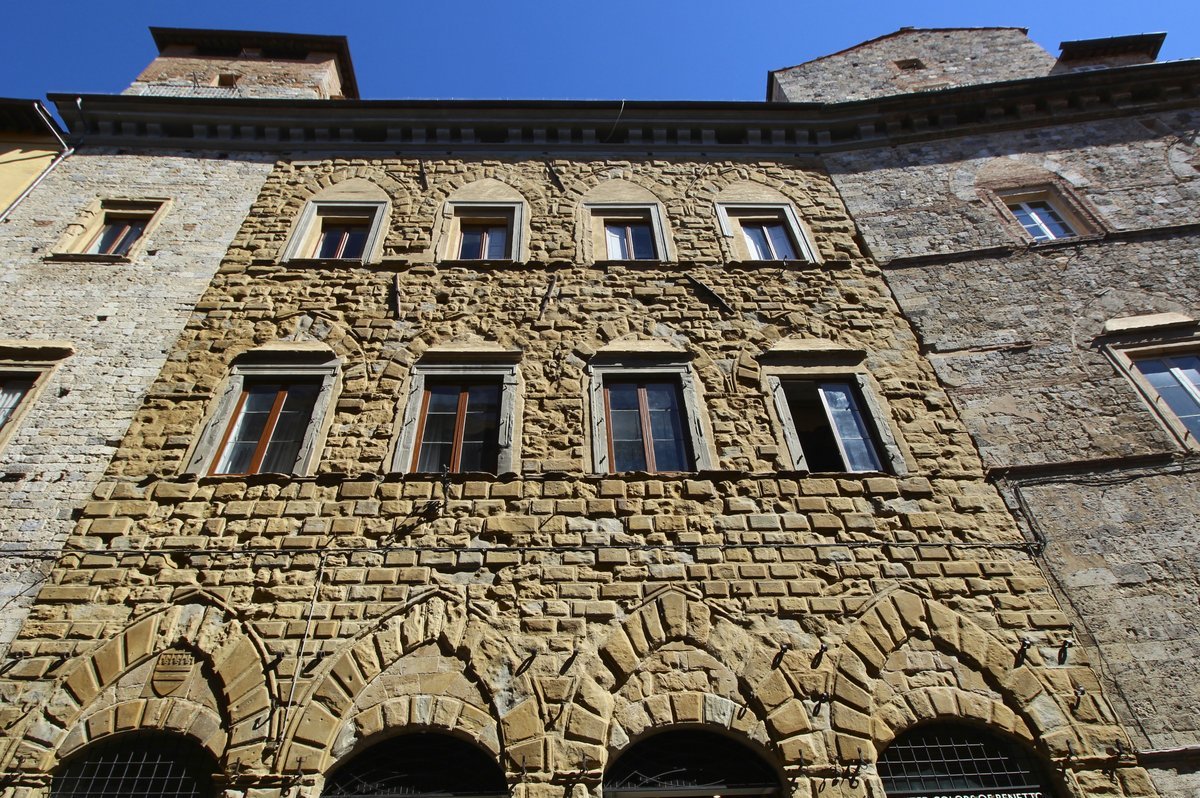 Continue along Banchi di Sopra to find Palazzo Bichi Ruspoli, a jewel that combines three souls: a 13th-century tower, a 15th-century palace, and an 18th-century residence commissioned by the Marquis Bichi Ruspoli. Architect Jacopo Franchini oversaw the late Baroque renovation, while inside the piano nobile preserves intact original 18th-century tapestries with satin stitch embroidery and powder pink silk appliqués. Three successive rooms – Aurora, Apollo and the Muses, Peace and the Virtues – feature frescoes and mirrors that amplify the light. Now home to Confindustria Toscana Sud, the palace is open only on special occasions, but the facade on Banchi di Sopra already tells centuries of history. Note the three different stonework patterns: clear evidence of the merging.
- Banchi di Sopra, Siena (SI)
- Open in Google Maps
- View on Google Images
You should go if…
Stop no. 8
Palazzo Tantucci
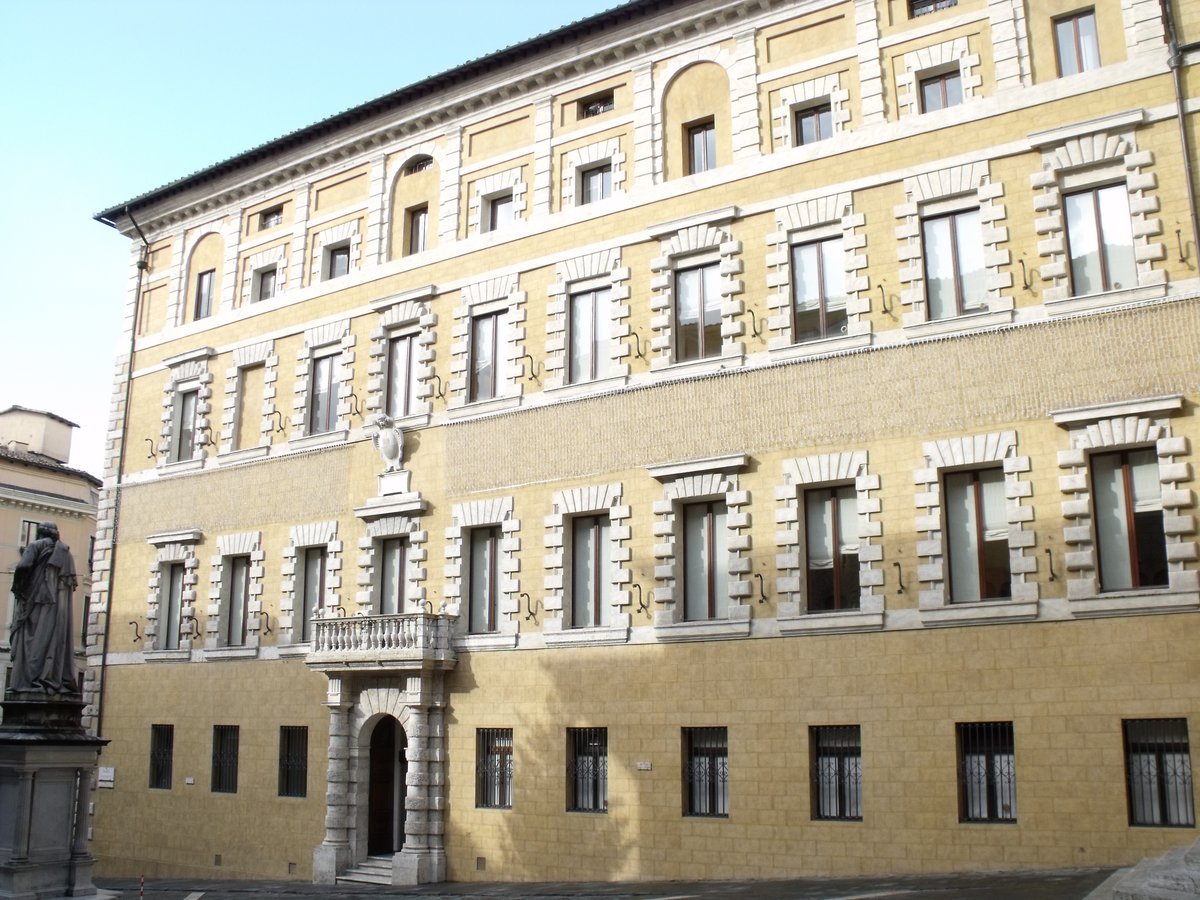 Leaving Banchi di Sopra, we immerse ourselves in Via dei Montanini until we come across Palazzo Tantucci, a building that symbolically marks the end of the Republic of Siena. Built in 1548 by commission of Mariano Tantucci and designed by Bartolomeo Neroni, known as “il Riccio,” this Mannerist palace is the last great public building erected before the city’s fall. Its simple yet elegant facade faces Piazza Salimbeni, engaging in dialogue with the neighboring Salimbeni and Spannocchi palaces. Since 1868, it has been owned by the Monte dei Paschi di Siena, which integrated it into its administrative complex. Today, unfortunately, it is not open to the public (it houses offices), but it is worth observing its late Renaissance architecture from the outside. Look closely, and you will notice the continuity with the adjacent buildings: in the 19th century, architect Giuseppe Partini unified the three structures into a single harmonious urban scene.
- Via dei Montanini, Siena (SI)
- Open in Google Maps
- View on Google Images
You should go if…
Stop no. 9
Palazzo Buonsignori and the National Picture Gallery
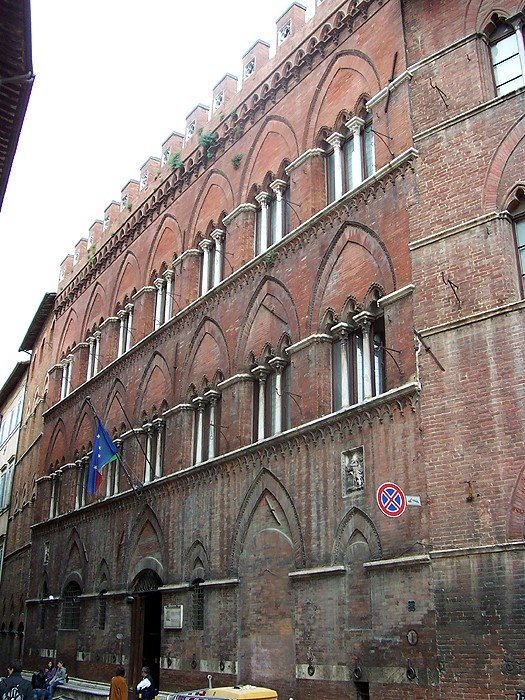 After Palazzo Tantucci, we head up Via San Pietro, where one of Siena’s most beautiful private palaces welcomes us: Palazzo Buonsignori. Built in the mid-15th century for banker Giovanni Bichi, its brick façade features Guelph battlements and mullioned windows reminiscent of the Palazzo Pubblico. Since 1932, it houses the Pinacoteca Nazionale, an unmissable journey into Sienese painting. Here you’ll find masterpieces on gold ground by Duccio di Buoninsegna, Simone Martini, Pietro and Ambrogio Lorenzetti, as well as panels by Sassetta and Giovanni di Paolo. Don’t miss the Spannocchi Collection, with a Saint Jerome by Albrecht Dürer and a Nativity by Lorenzo Lotto. The palace adjoins Palazzo Brigidi, where a spiral staircase known as “della Pia” evokes Dante’s Pia de’ Tolomei. The atmosphere is intimate, almost mystical: it’s the ideal place to immerse yourself in medieval art, far from the chaos.
- Via San Pietro 29, Siena (SI)
- Open in Google Maps
- View on Google Images
You should go if…
Stop no. 10
Palazzo Venturi Gallerani: the last neoclassical gem
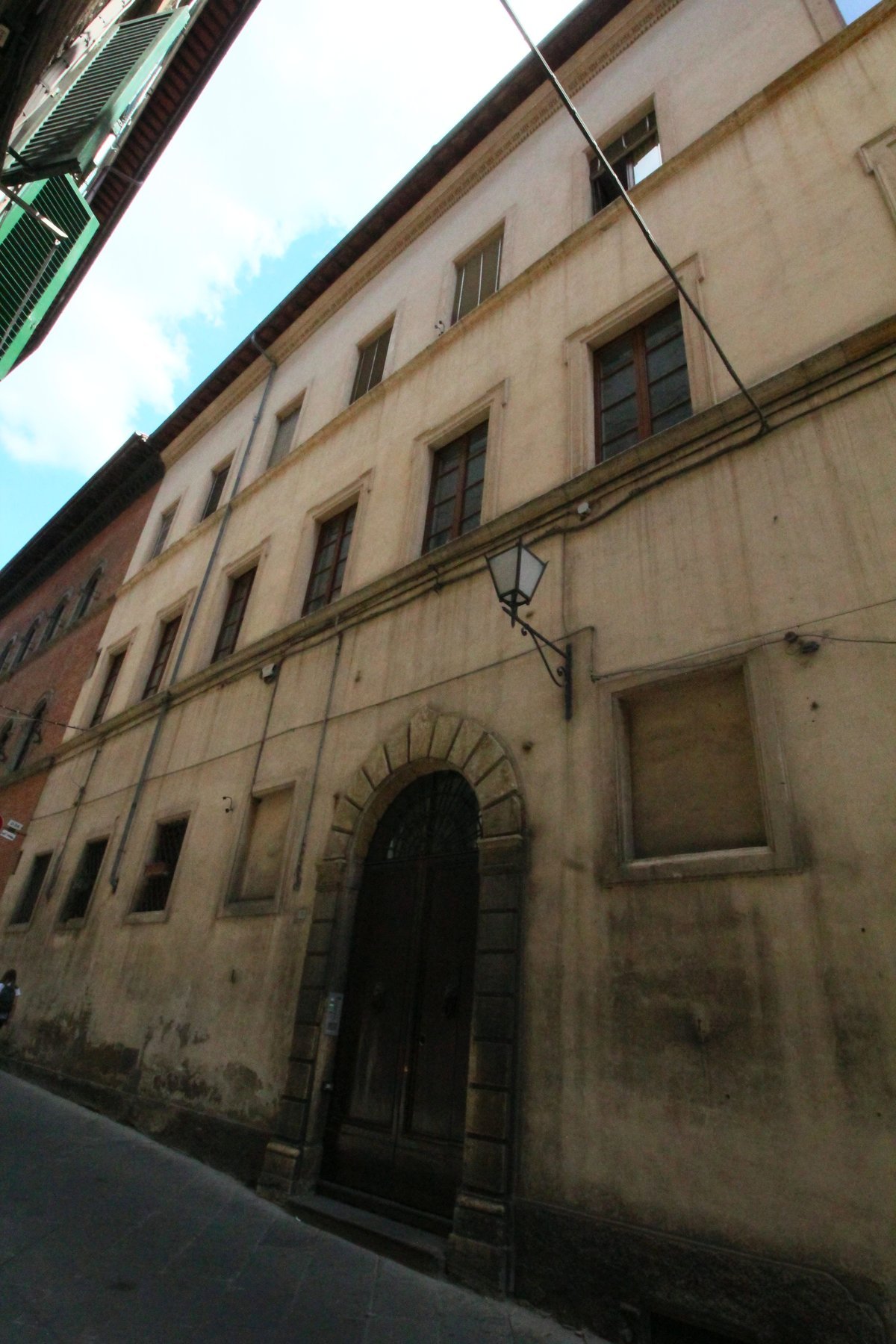 We close the itinerary with a lesser-known jewel: Palazzo Venturi Gallerani, at via delle Cerchia 5. Built between 1777 and 1791 in neoclassical style, it is a noble palace that today can only be admired from the outside – but what a story! On the piano nobile, the encaustic frescoes by Luigi Ademollo depict mythological scenes: a Bacchanal with maidens in blue peplos, episodes from the Iliad (Achilles dragging Hector), and horses leading Hannibal. But the highlight is the Chapel of the Blessed Andrea Gallerani, founder of the Hospital of Mercy. Above the door, a Latin epigraph recalls that here Pope Pius VI, exiled from Rome, found refuge during the earthquake of May 26, 1798: he prayed to the blessed and the city was spared. A final dive into intimate Siena, between art and devotion.
- Via San Pietro, Siena (SI)
- Open in Google Maps
- View on Google Images
You should go if…