
🧭 What to Expect
- Ideal for those who love seaside cities rich in history and culture
- Highlights: Terrazza Mascagni, Mercato Centrale, Medici fortresses
- Must-see: the Quattro Mori and the Cisternone
- Best time to visit: spring and autumn
- Tip: visit the Mercato Centrale in the morning to enjoy the street food
Events nearby

If you think Livorno is just a transit port, you're wrong. This Tuscan city has a unique character, shaped by the sea and history. What to see in Livorno in a day? I suggest starting at Terrazza Mascagni, the famous waterfront with its characteristic black-and-white checkerboard mosaics, offering spectacular sea views. Then head to the Monument of the Quattro Mori, symbol of the city's maritime past, and the nearby Fortezza Vecchia and Fortezza Nuova, testimonies of Medici rule. Don't miss the Cisternone, a masterpiece of neoclassical architecture, and the Mercato Centrale, where you can savor local flavors. For art lovers, the Museo Civico Giovanni Fattori tells the story of 19th-century Tuscan painting. And if you love the sea, the Fanale di Livorno and the Torre del Marzocco are evocative stops. This article will guide you through the main attractions, with practical tips to best experience the Labronic city.
Overview
- Terrazza Mascagni: Livorno's Balcony Over the Sea
- Monument of the Four Moors
- Fortezza Vecchia: A Dive into History and the Sea
- Fortezza Vecchia: A Dive into History and the Sea
- Fortezza Nuova: the pentagon on the water
- Cisternone: A Water Temple in the Heart of Livorno
- The Mercato Centrale: A Dive into Livorno's History and Flavors
- Diacinto Cestoni Civic Aquarium
- Giovanni Fattori Civic Museum: A Dive into 19th-Century Livorno
- Giovanni Fattori Civic Museum: A Dive into 19th-Century Livorno
- Armenian Church of Saint Gregory the Illuminator
- Fanale di Livorno
- Fanale di Livorno
- Torre del Marzocco: A Marble Giant in the Port
- Calafuria Tower: A Medieval Jewel on the Livorno Coast
Itineraries nearby
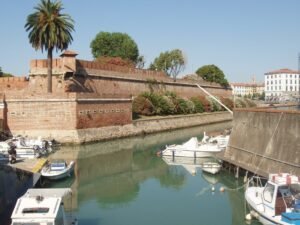
Terrazza Mascagni: Livorno's Balcony Over the Sea
- Livorno (LI)
- Open in Google Maps
- View on Google Images
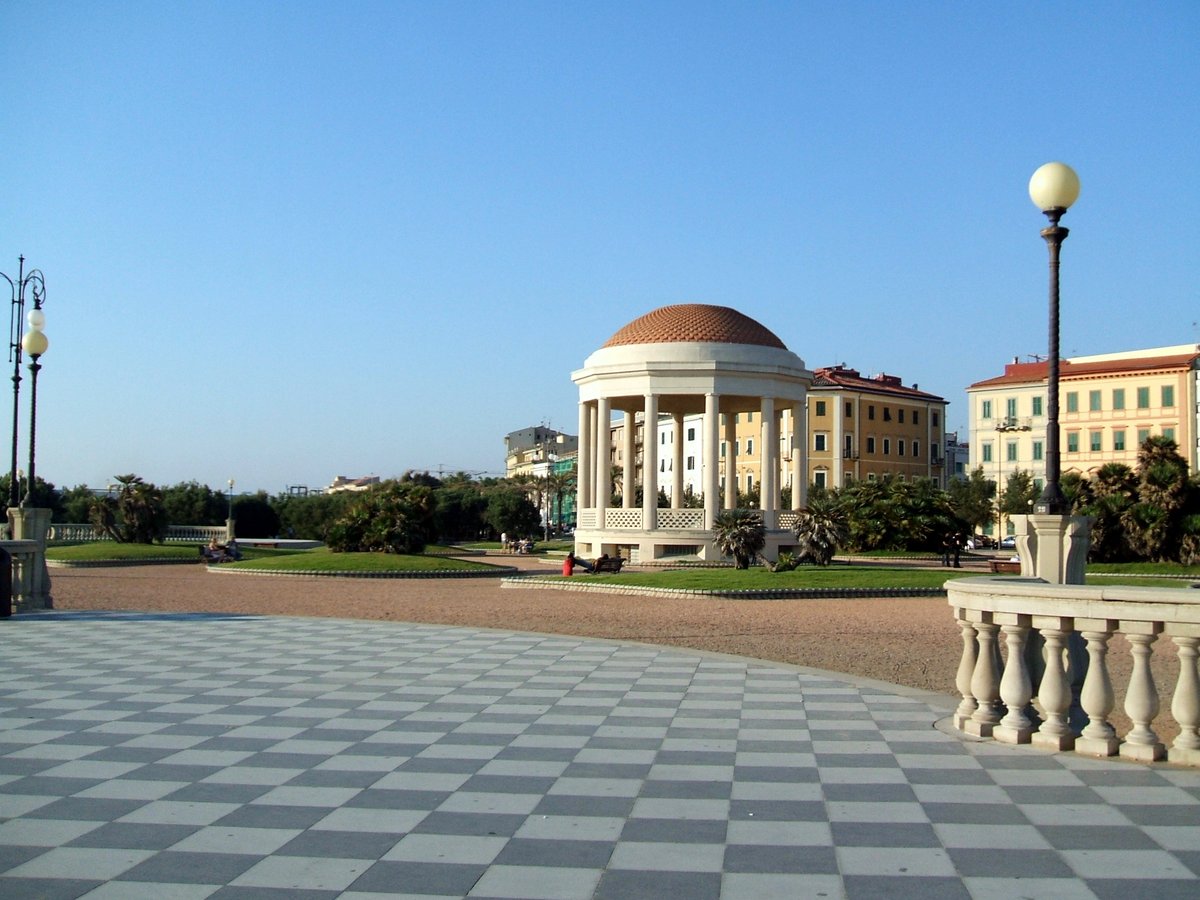 If there's one place that embodies Livorno's elegant soul, it's the Terrazza Mascagni. This huge belvedere, spanning over 8,000 square meters, was born in 1925 on the ruins of the Forte dei Cavalleggeri, transformed by engineer Enrico Salvais into a square suspended over the sea. The detail that immediately catches the eye? The checkerboard pavement made up of over 34,000 black and white tiles, a hypnotic effect that changes appearance depending on the light. The balustrade, with its approximately 4,000 columns, marks the boundary with the blue, offering a view that stretches from the Tuscan Archipelago to Corsica on the clearest days. At the center, a neoclassical gazebo – rebuilt after the war – hosts summer concerts and frames weddings and photo shoots. Named after Livornese composer Pietro Mascagni, the terrace is the perfect spot for sunset: the sun sinking into the sea tints the checkerboard with golden reflections. I love sitting on a white bench and listening to the sound of the waves, perhaps after a walk to the Bagni Pancaldi, the historic beach establishment right next door. The terrace is free, pet-friendly, and accessible to all thanks to barrier-free ramps. In winter, when the sea rages, waves crash onto the pavement creating a wild atmosphere; in summer, the sea breeze invites relaxation. In short, an absolute must for anyone visiting Livorno, to be enjoyed in every season.
Monument of the Four Moors
- Piazza Giuseppe Micheli, Livorno (LI)
- Open in Google Maps
- View on Google Images
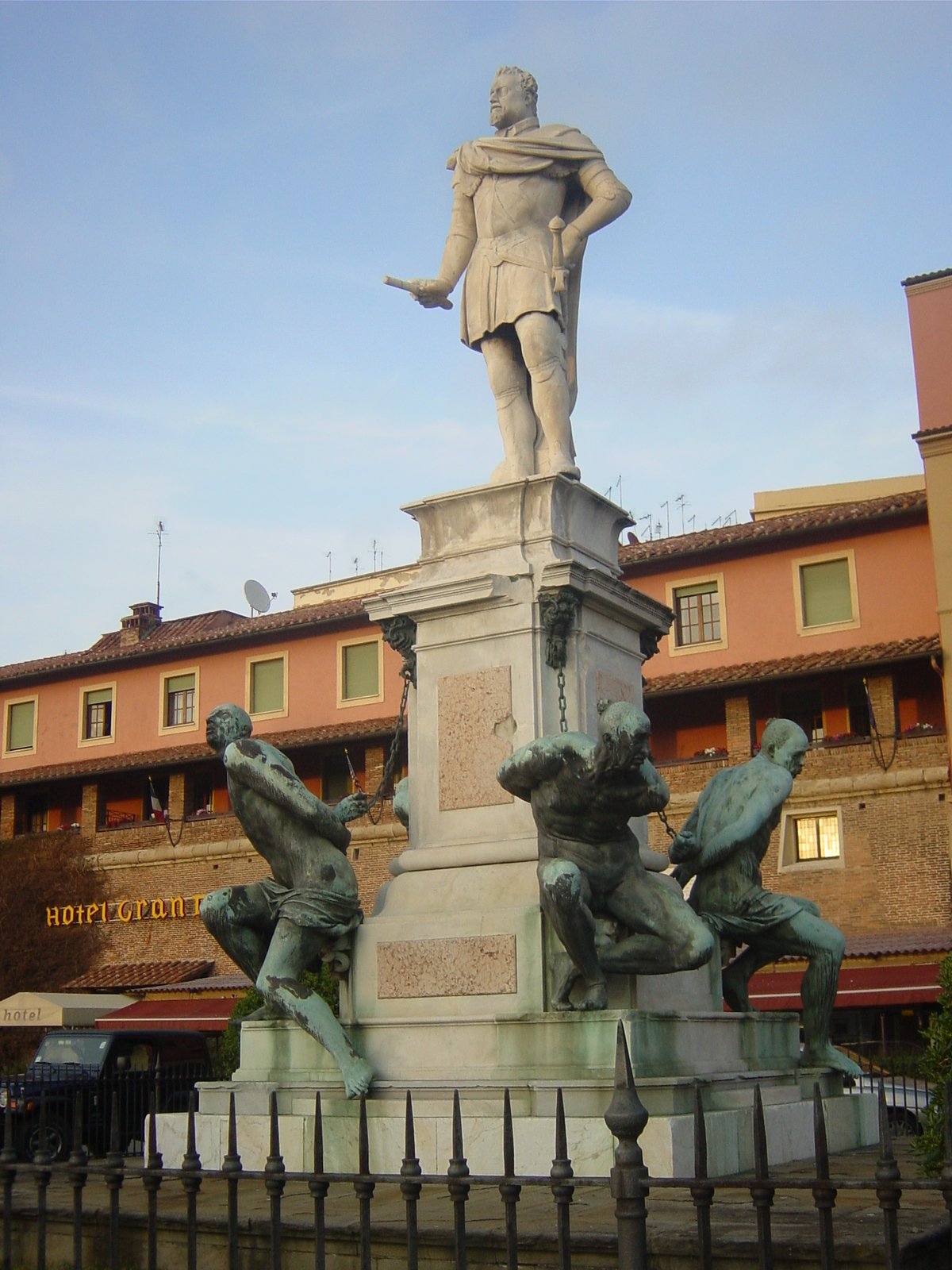 If you're strolling through Livorno, stop in Piazza Micheli. Here, in front of the Old Dock, stands the Monument of the Four Moors, one of the city's most powerful symbols. At the center, a Carrara marble statue of Ferdinando I de' Medici, over 4 meters tall, sculpted by Giovanni Bandini between 1595 and 1599. The Grand Duke wears the uniform of Grand Master of the Order of the Knights of Saint Stephen and gazes seaward, as if watching over the port he helped expand.
But the most striking part is the four bronze prisoners at his feet. Created by Pietro Tacca between 1623 and 1626, they depict chained Barbary corsairs with astonishing realism: twisted bodies, grimaces of pain, anatomical details that make them seem alive. It's said Tacca used real prisoners from the Livorno Bagno as models, such as Morgiano and Ali. Each has a different story: one is young and vigorous, another older, marked by time.
Fun fact: if you stand on a specific white tile in the square—the one placed by the municipality—you can see the noses of all four Moors at once. It's said to bring good luck. The monument has faced tough times: in 1799 the French removed the bronze trophies, and during World War II it was dismantled for protection. It was restored in 2021 ahead of its 400th anniversary in 2026. In 2025, a redevelopment project proposed adding four statues of Moors freed from chains, sparking debate between those who defend history and those who reinterpret it.
A traveler's tip: go early in the morning, when light hits the marble and bronze creates deep shadows. And don't forget to look out at the sea behind you—it's all part of the experience.
Fortezza Vecchia: A Dive into History and the Sea
- Go to the page: Ancient Fortress of Livorno: History, Events, and Harbor Views
- Piazzale dei Marmi, Livorno (LI)
- Open in Google Maps
- View on Google Images
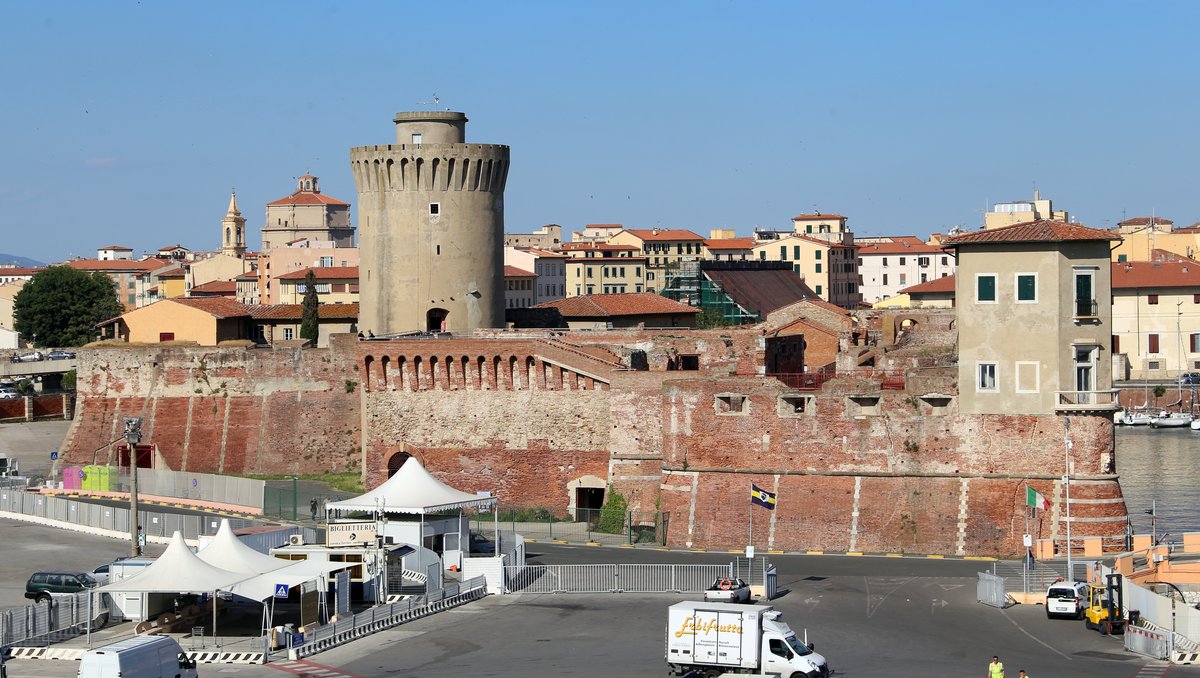 Walking along Livorno's seafront, you can't miss the imposing silhouette of the Fortezza Vecchia standing against the harbor. It's a place steeped in centuries of history, yet today it's more alive than ever. Built starting in 1519 to a design by Antonio da Sangallo the Elder, the fortress is a masterpiece of Renaissance military architecture. Its three bastions – dell'Ampolletta, della Canaviglia, and della Capitana – seem to embrace the sea. Within the walls lie even older remains: an 11th-century tower, the 13th-century Mastio di Matilde, and the 14th-century Quadratura dei Pisani. It's like leafing through a history book, all in one place. Today the Fortezza Vecchia is a vibrant cultural hub: in summer it hosts concerts, theater performances, and film festivals, with a capacity of 900 seats. The 2026 program is packed, with names like Sergio Rubini, Fabrizio Bentivoglio, and Dario Ballantini, and many events are free. If you prefer a quieter visit, climb the Mastio: from there the view spans from the Gulf of La Spezia to the Island of Elba. Don't miss the new sea library in the Palazzina del Capitano, open Tuesday, Wednesday, and Thursday from 10 am to 7 pm. Personally, I love sitting on the walls at sunset: the sun setting over the Tyrrhenian Sea paints the bastions orange, and you can almost hear the echo of cannon shots announcing the arrival of sovereigns. A place you never tire of visiting.
Fortezza Vecchia: A Dive into History and the Sea
- Go to the page: Old Fortress of Livorno: History and Breathtaking Views
- Piazzale dei Marmi, Livorno (LI)
- Open in Google Maps
- View on Google Images
Walking along Livorno's seafront, you can't miss the imposing silhouette of the Fortezza Vecchia standing against the harbor. It's a place steeped in centuries of history, yet today it's more alive than ever. Built starting in 1519 to a design by Antonio da Sangallo the Elder, the fortress is a masterpiece of Renaissance military architecture. Its three bastions – dell'Ampolletta, della Canaviglia, and della Capitana – seem to embrace the sea. Within the walls lie even older remains: an 11th-century tower, the 13th-century Mastio di Matilde, and the 14th-century Quadratura dei Pisani. It's like leafing through a history book, all in one place. Today the Fortezza Vecchia is a vibrant cultural hub: in summer it hosts concerts, theater performances, and film festivals, with a capacity of 900 seats. The 2026 program is packed, with names like Sergio Rubini, Fabrizio Bentivoglio, and Dario Ballantini, and many events are free. If you prefer a quieter visit, climb the Mastio: from there the view spans from the Gulf of La Spezia to the Island of Elba. Don't miss the new sea library in the Palazzina del Capitano, open Tuesday, Wednesday, and Thursday from 10 am to 7 pm. Personally, I love sitting on the walls at sunset: the sun setting over the Tyrrhenian Sea paints the bastions orange, and you can almost hear the echo of cannon shots announcing the arrival of sovereigns. A place you never tire of visiting.Fortezza Nuova: the pentagon on the water
- Scali del Teatro, Livorno (LI)
- Open in Google Maps
- View on Google Images
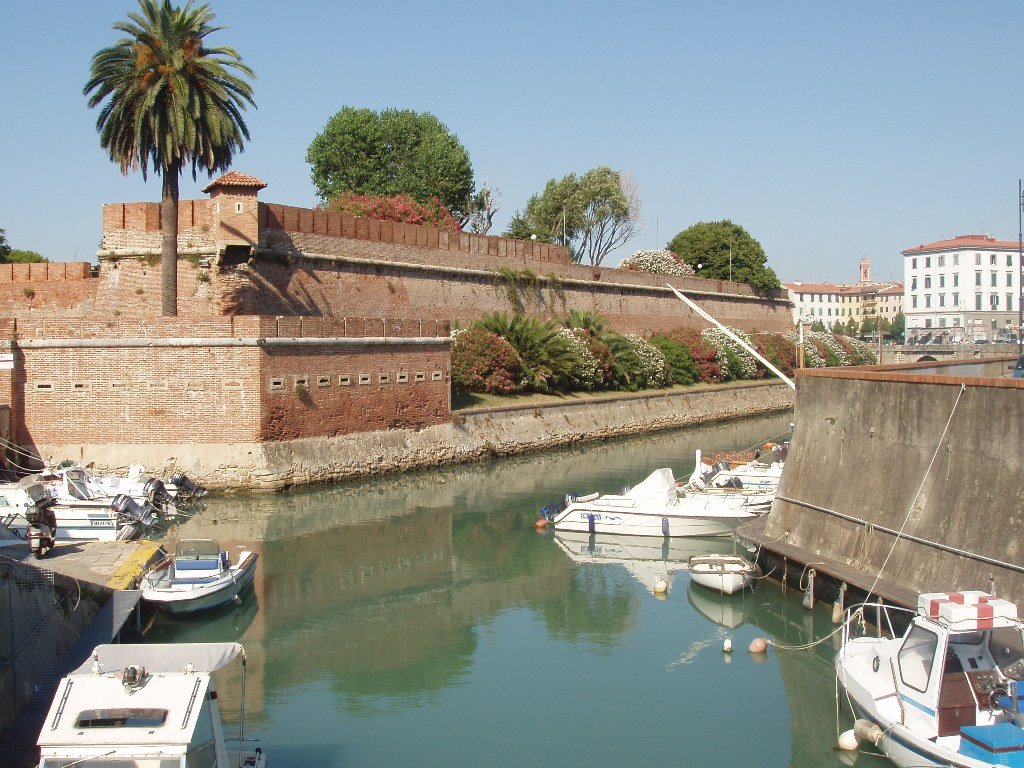 If there is a place that captures the soul of Livorno, it is the Fortezza Nuova. Built starting in 1590 from a design by Bernardo Buontalenti, this pentagonal fortification is completely surrounded by water, a true islet in the heart of the Venezia district. Walking across the three-arched bridge that connects it to the mainland, you immediately breathe history: there used to be a drawbridge, later replaced to make way for a more convenient entrance. The fortress has seen hard times – during World War II, bombings destroyed most of the internal buildings, and today what remains is a fascinating mix of ruins and green lawns. After the war, it housed displaced people, but fortunately it was transformed into a large public park, with tree-lined avenues, benches, and a spectacular view of the canals and Piazza della Repubblica. For me, the beauty is exactly this: walking along the ancient walls, imagining the cannons firing at noon (until the early 1900s!), and then stopping at the kiosk for an aperitif. Today the Fortress is alive: in summer there are outdoor cinemas, concerts, and the famous Effetto Venezia. And if you travel with children, there are play areas and shows every Wednesday. Moreover, it is accessible to all thanks to ramps and an elevator to the bar – a detail I really appreciate. Fortezza Nuova is not just a monument: it is the city's living room, where history and fun meet. Come and discover it, perhaps at sunset, when the walls turn red and the water reflects the lights.
Cisternone: A Water Temple in the Heart of Livorno
- Piazza del Cisternone, Livorno (LI)
- Open in Google Maps
- View on Google Images
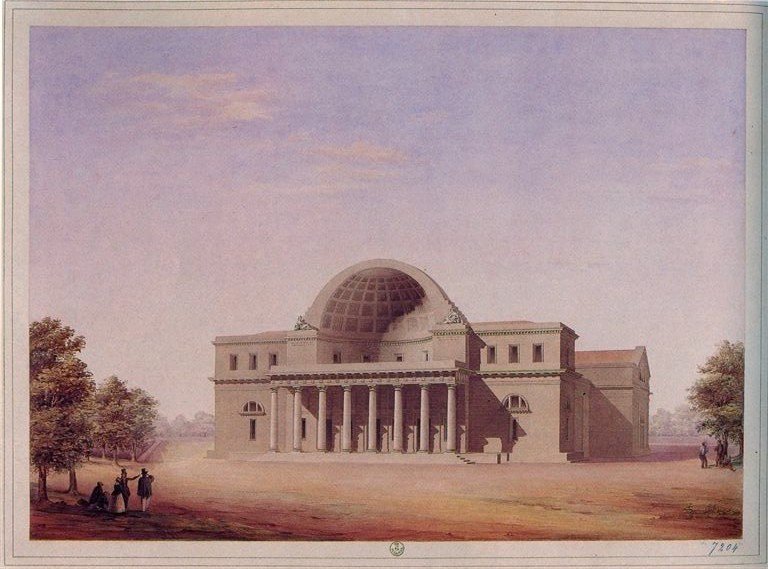 If you're passing through Livorno, don't miss the Cisternone, a structure that seems straight out of a visionary architectural dream. Built between 1829 and 1842 by Pasquale Poccianti, this enormous water reservoir is a neoclassical masterpiece that still supplies water to the city today. The facade, with its coffered semidome inspired by the Pantheon, is one of Livorno's most iconic images. Don't be fooled by the exterior: the interior is a spacious T-shaped cistern divided by five aisles of Tuscan pillars supporting sail vaults. The water still present creates suggestive light plays among the columns. Once filtered with gravel and charcoal, today with chlorine, the structure remains perfectly functional. The Cisternone also has a cinematic past: it appeared in Vittorio De Sica's film "The Condemned of Altona". Admission is free (best to check hours on the city's website or call). Furthermore, from 2025 the square in front is being redeveloped into a green pedestrian area: one more reason to come back and see it. I recommend pairing the visit with a stroll along the seafront or a tour of the Venice Quarter.
The Mercato Centrale: A Dive into Livorno's History and Flavors
- Via Enrico Bartelloni, Livorno (LI)
- Open in Google Maps
- View on Google Images
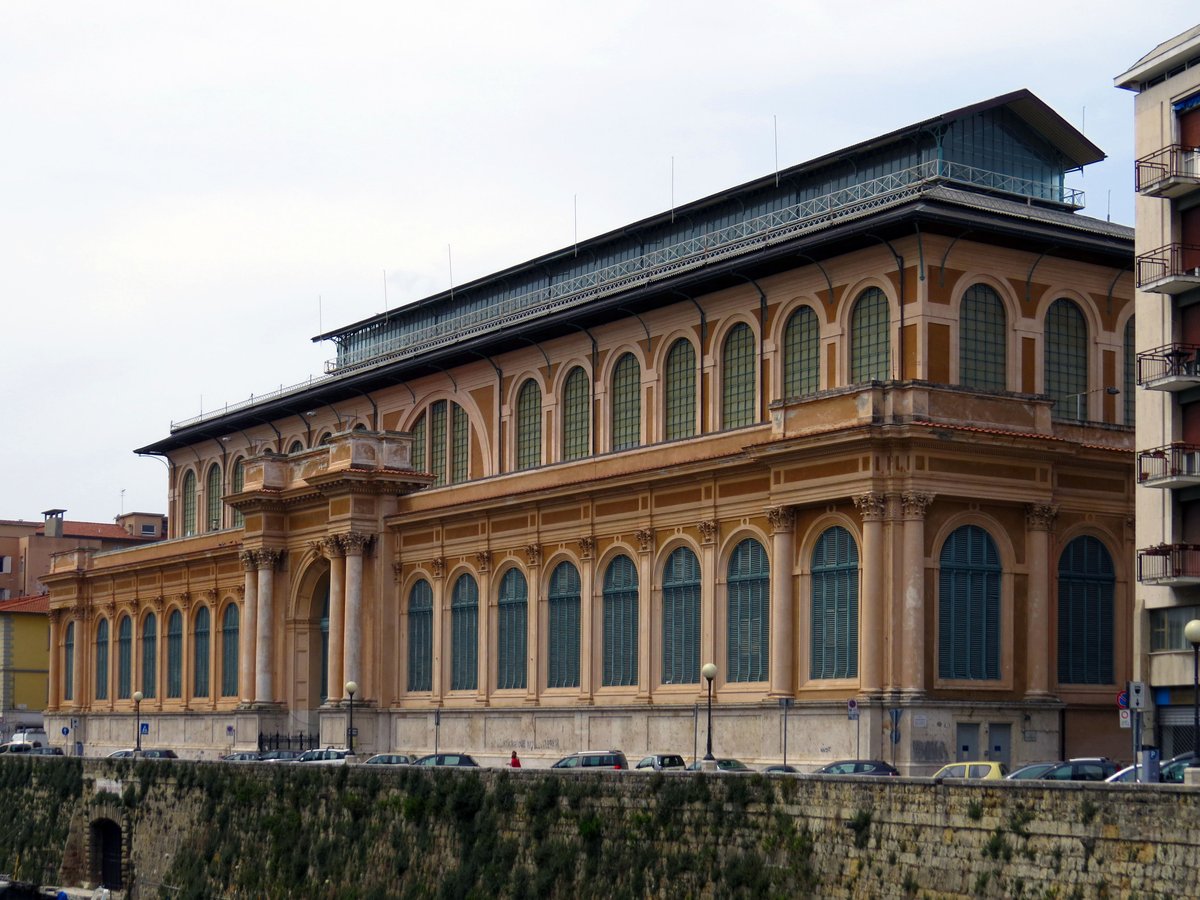 If you want to breathe the authentic soul of Livorno, the Mercato Centrale delle Vettovaglie is the place. Inaugurated in 1894 from a design by engineer Angiolo Badaloni, it is a masterpiece of iron and glass architecture inspired by the great Parisian halles. When you enter, you'll be amazed: a huge nave 35 meters high with metal trusses, Liberty floral decorations, and eight caryatids by sculptor Lorenzo Gori. It's the largest covered market in Tuscany and one of the largest in Europe. Inside, it is divided into three sections: the Salone del Pesce, where you find the freshest cacciucco; the Central Pavilion with all kinds of stalls; and the Gabbrigiane Pavilion dedicated to fruit and vegetables. On Saturday evenings, from September to December, the market stays open exceptionally until 11 PM, with restaurants and street food. A gem: on the second floor, Amedeo Modigliani had his studio – it's said he threw his sculptures into the Fosso Reale. After war damage, it was restored and today is a vibrant cultural hub, with events like Effetto Venezia and Cacciuccomania. In short, it's a place that combines history, architecture, and flavors: not to be missed.
Diacinto Cestoni Civic Aquarium
- Livorno (LI)
- https://www.acquariodilivorno.it/
- Open in Google Maps
- View on Google Images
- +39 0586 269 111
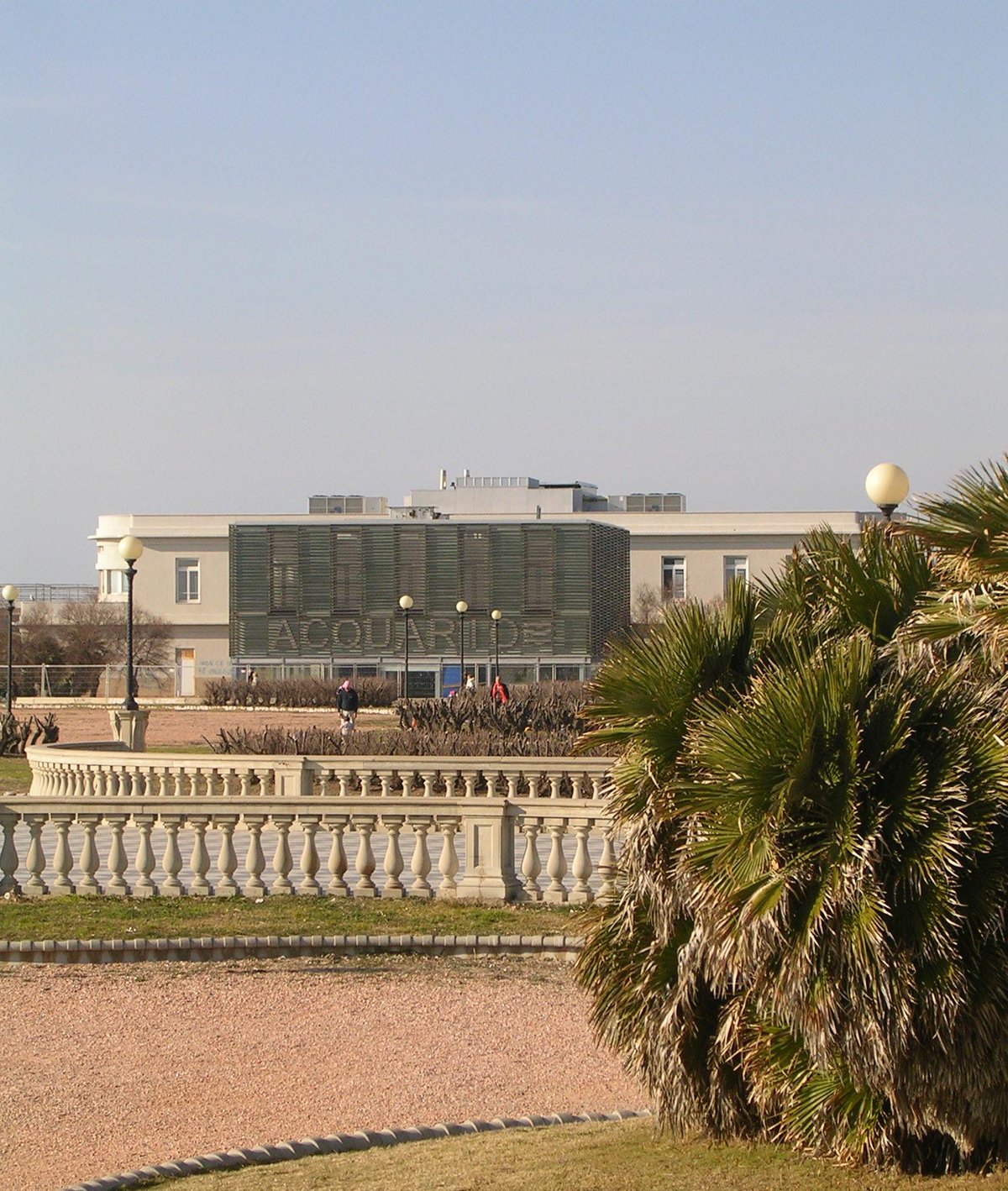 If you come to Livorno and love the sea, the Diacinto Cestoni Civic Aquarium is an unmissable stop. Located right on the seafront, next to the famous Terrazza Mascagni, it is the largest aquarium in Tuscany and one of the largest in Italy. Its history is fascinating: originally built as a heliotherapy center in the 1930s, it was converted into an aquarium and inaugurated on June 20, 1937. Destroyed during World War II, it was reconstructed and expanded several times, until the radical restoration by architect Vittorio Gregotti, which led to its reopening on July 31, 2010, after 13 years of closure. Today it spans two floors covering 3,000 square meters and houses about 2,000 animals of over 300 species in 33 tanks. The highlight? A Greco-Roman marine archaeological area that recreates an ancient shipwreck, unique in Italy. There are also tanks dedicated to sharks, rays, and sea turtles, with a section for the rehabilitation of these animals. The aquarium is managed by Costa Edutainment and also offers educational classrooms and a terrace overlooking the sea. Practical information: address Piazzale Mascagni 1, phone 0586 269111. Full ticket €16, reduced for over 65 and military personnel €11, children free. Opening hours vary, so it's best to check the official website before visiting. I recommend comfortable shoes and half a day to enjoy everything at a leisurely pace.
Giovanni Fattori Civic Museum: A Dive into 19th-Century Livorno
- Go to the page: Giovanni Fattori Civic Museum: Macchiaioli Masterpieces at Villa Mimbelli
- Via San Jacopo in Acquaviva, Livorno (LI)
- https://www.museofattori.livorno.it/
- Open in Google Maps
- View on Google Images
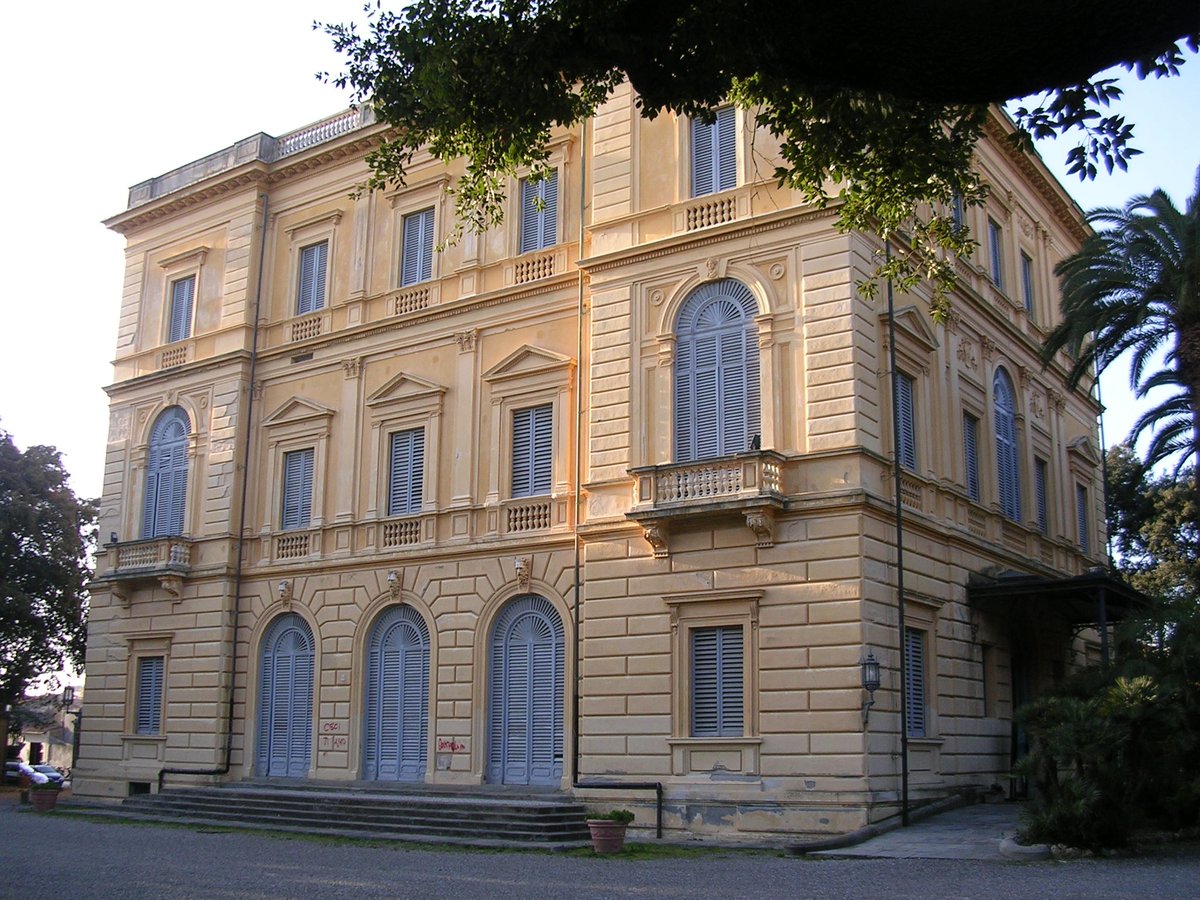 Overlooking Livorno's seafront, Villa Mimbelli is a 19th-century residence that alone is worth a visit. Built between 1865 and 1868 for merchant Francesco Mimbelli to a design by Vincenzo Micheli, it preserves intact frescoes by Annibale Gatti and the Della Valle brothers, as well as rooms like the Turkish Room and the billiard room. The monumental staircase with ceramic putti inspired by the Della Robbia is a gem not to be missed. Since 1994, the villa has housed the Giovanni Fattori Civic Museum, heir to over 150 years of history. Here you'll find around 400 works ranging from the mid-19th century to the 1940s, with a focus on the Macchiaioli. Admire masterpieces by Giovanni Fattori such as Maremmane Herds and Mrs. Martelli at Castiglioncello, alongside works by Silvestro Lega, Telemaco Signorini, Vittorio Corcos, and even an Amedeo Modigliani. The collection also touches on local artists like Plinio Nomellini and Lorenzo Viani. Walking through these rooms is like stepping into a period drawing-room: the original furnishings and frescoed ceilings create a unique atmosphere. On the ground and first floors, the 19th-century style dominates with red, turquoise, and Moorish rooms; on the second floor, Macchiaioli and Divisionist masterpieces. The surrounding park, with exotic plants, houses the former Granaries, venue for temporary exhibitions and the Combat Prize for young artists. The museum is open Tuesday to Sunday (10am-1pm and 4pm-7pm; last admission 30 minutes before closing). It is accessible via ramp and elevator. Always check the official website for hours, especially during reinstallations.
Giovanni Fattori Civic Museum: A Dive into 19th-Century Livorno
- Go to the page: Giovanni Fattori Civic Museum: The Macchiaioli Collection in Livorno
- Via San Jacopo in Acquaviva, Livorno (LI)
- https://www.museofattori.livorno.it/
- Open in Google Maps
- View on Google Images
Overlooking Livorno's seafront, Villa Mimbelli is a 19th-century residence that alone is worth a visit. Built between 1865 and 1868 for merchant Francesco Mimbelli to a design by Vincenzo Micheli, it preserves intact frescoes by Annibale Gatti and the Della Valle brothers, as well as rooms like the Turkish Room and the billiard room. The monumental staircase with ceramic putti inspired by the Della Robbia is a gem not to be missed. Since 1994, the villa has housed the Giovanni Fattori Civic Museum, heir to over 150 years of history. Here you'll find around 400 works ranging from the mid-19th century to the 1940s, with a focus on the Macchiaioli. Admire masterpieces by Giovanni Fattori such as Maremmane Herds and Mrs. Martelli at Castiglioncello, alongside works by Silvestro Lega, Telemaco Signorini, Vittorio Corcos, and even an Amedeo Modigliani. The collection also touches on local artists like Plinio Nomellini and Lorenzo Viani. Walking through these rooms is like stepping into a period drawing-room: the original furnishings and frescoed ceilings create a unique atmosphere. On the ground and first floors, the 19th-century style dominates with red, turquoise, and Moorish rooms; on the second floor, Macchiaioli and Divisionist masterpieces. The surrounding park, with exotic plants, houses the former Granaries, venue for temporary exhibitions and the Combat Prize for young artists. The museum is open Tuesday to Sunday (10am-1pm and 4pm-7pm; last admission 30 minutes before closing). It is accessible via ramp and elevator. Always check the official website for hours, especially during reinstallations.Armenian Church of Saint Gregory the Illuminator
- Via della Madonna, Livorno (LI)
- Open in Google Maps
- View on Google Images
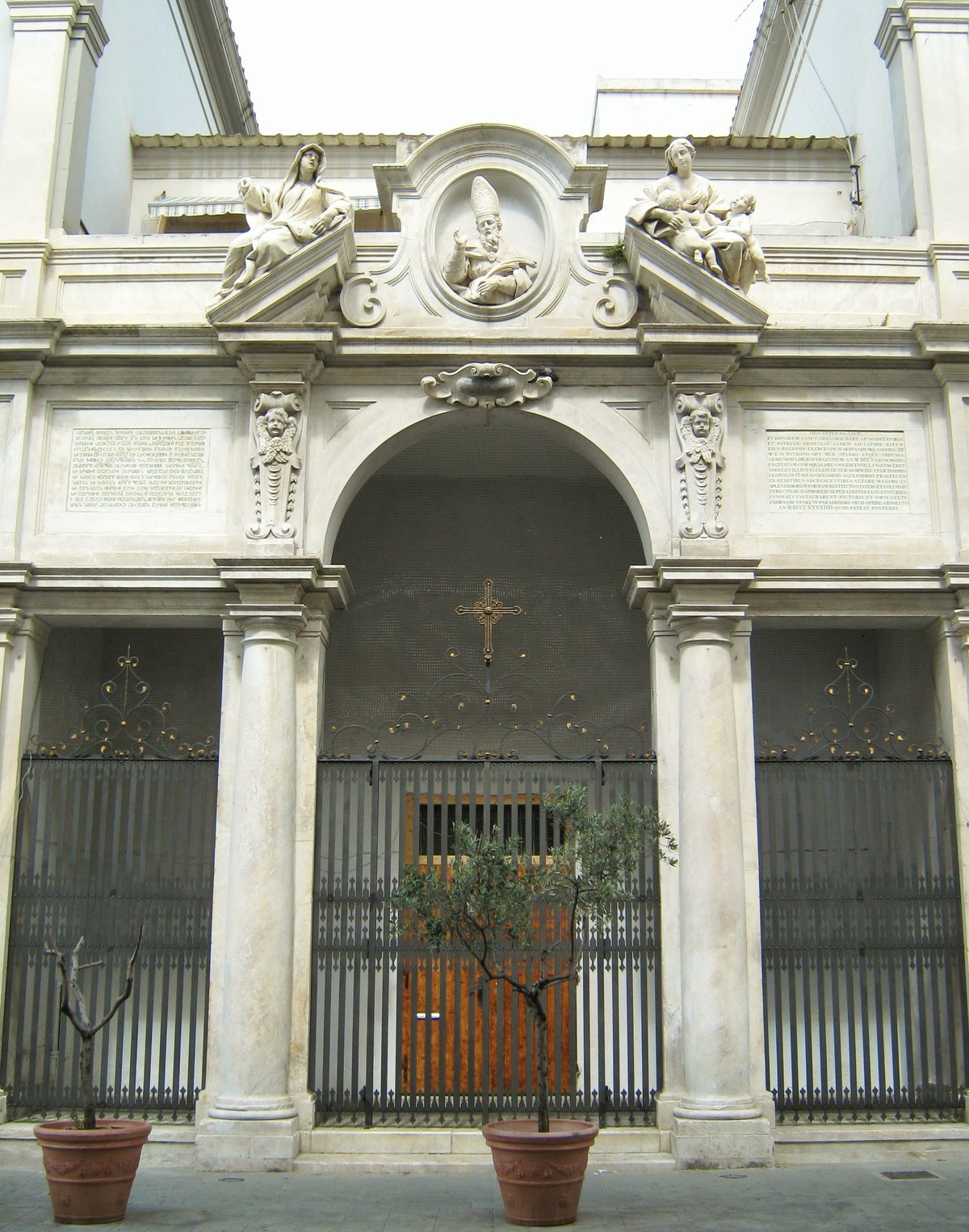 Walking along Via della Madonna, at number 32, you come across something unexpected: the Baroque façade of the Armenian Church of Saint Gregory the Illuminator. It is all that remains of a place of worship that tells centuries of history and of a vibrant community. The Armenians arrived in Livorno in the 17th century for trade, and only in the 18th century did they obtain permission to build a national church, thanks to Ferdinando de' Medici. The project was entrusted to Giovan Battista Foggini, who designed a Latin cross building with a dome. Work began in 1701 and finished a few years later, but the church only opened in 1714 due to legal issues. The façade is a Baroque gem: a portico with a Serliana window surmounted by statues of Faith and Charity, works by Andrea Vaccà, flanking Saint Gregory. The original iron gate was stolen after the war but was rebuilt in 2008. On the façade, two 19th-century plaques, one in Armenian and one in Latin, tell the story and the restorations of 1844 overseen by architect Olinto Paradossi. During World War II, the church was bombed and heavily damaged. Then, with the decline of the Armenian community, most of the building was demolished. Today only the façade remains, owned by the Patriarchate of Cilicia, and since September 27, 2008, it has housed an intercultural center. Inside, reduced to a small space, there were works by Vaccà and Giovanni Baratta, many stolen or lost. Two statues by Paolo Emilio Demi survived and were moved to the church of Santa Maria del Soccorso. Visiting this place is a dive into Livorno’s multicultural history. Even though little of the original structure remains, the façade speaks of a community that left a deep mark. Don’t forget to check out the Armenian cemetery (now disappeared) that once lay along today's Via Provinciale Pisana: there rested Gregorio Sceriman, artist and man of letters.
Fanale di Livorno
- Go to the page: Fanale di Livorno: The City's Historic Lighthouse
- Via del Molo Mediceo, Livorno (LI)
- Open in Google Maps
- View on Google Images
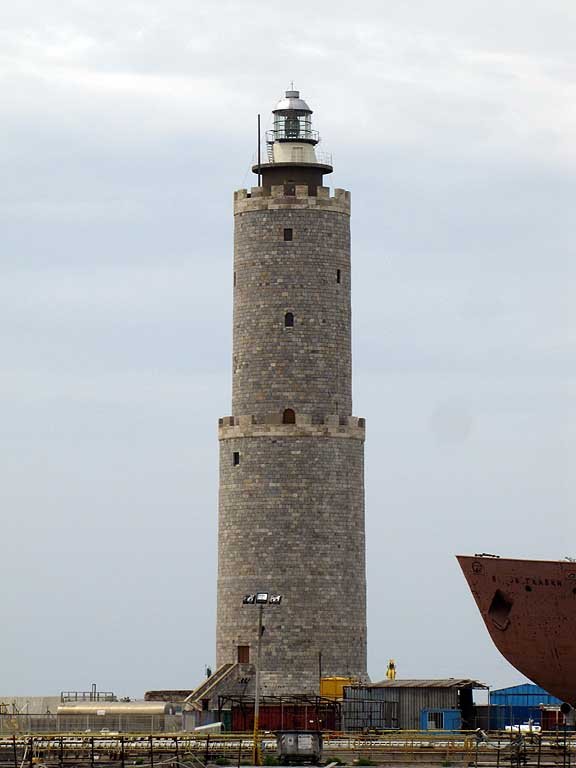 If you happen to stroll along Livorno’s seafront, you can’t miss this tower dominating the horizon. It’s the Fanale, Italy’s oldest lighthouse, and its story goes way back. Built by the Republic of Pisa between 1303 and 1305 and attributed to Giovanni Pisano, it was surrounded by the sea and also served as a fortification. After the Battle of Meloria, the Pisans wanted to show off their maritime power. The Fanale has witnessed figures like Francesco Petrarch, who mentioned it in his itinerary, and Galileo Galilei, who used it for his experiments. During World War II, in 1944, the retreating Germans destroyed it, but the people of Livorno faithfully rebuilt it between 1954 and 1956, using 90% of the original materials recovered from the rubble. Today, after restoration, it is open to the public again. Climbing the 297 steps of the concrete spiral staircase leads to the lantern, from which you can enjoy a breathtaking view of the port and the city. The lighthouse stands 52 meters tall, with a base diameter of 12 meters, and is built of stone from Verruca. Its light, now automated, emits four white flashes every twenty seconds, visible up to 24 nautical miles. Visiting it is a dive into history and a chance to understand the seafaring soul of Livorno. Recommended for everyone, young and old.
Fanale di Livorno
- Go to the page: Fanale di Livorno: Discovering Italy's Oldest Lighthouse
- Via del Molo Mediceo, Livorno (LI)
- Open in Google Maps
- View on Google Images
If you happen to stroll along Livorno’s seafront, you can’t miss this tower dominating the horizon. It’s the Fanale, Italy’s oldest lighthouse, and its story goes way back. Built by the Republic of Pisa between 1303 and 1305 and attributed to Giovanni Pisano, it was surrounded by the sea and also served as a fortification. After the Battle of Meloria, the Pisans wanted to show off their maritime power. The Fanale has witnessed figures like Francesco Petrarch, who mentioned it in his itinerary, and Galileo Galilei, who used it for his experiments. During World War II, in 1944, the retreating Germans destroyed it, but the people of Livorno faithfully rebuilt it between 1954 and 1956, using 90% of the original materials recovered from the rubble. Today, after restoration, it is open to the public again. Climbing the 297 steps of the concrete spiral staircase leads to the lantern, from which you can enjoy a breathtaking view of the port and the city. The lighthouse stands 52 meters tall, with a base diameter of 12 meters, and is built of stone from Verruca. Its light, now automated, emits four white flashes every twenty seconds, visible up to 24 nautical miles. Visiting it is a dive into history and a chance to understand the seafaring soul of Livorno. Recommended for everyone, young and old.Torre del Marzocco: A Marble Giant in the Port
- Via Tintoretto, Livorno (LI)
- Open in Google Maps
- View on Google Images
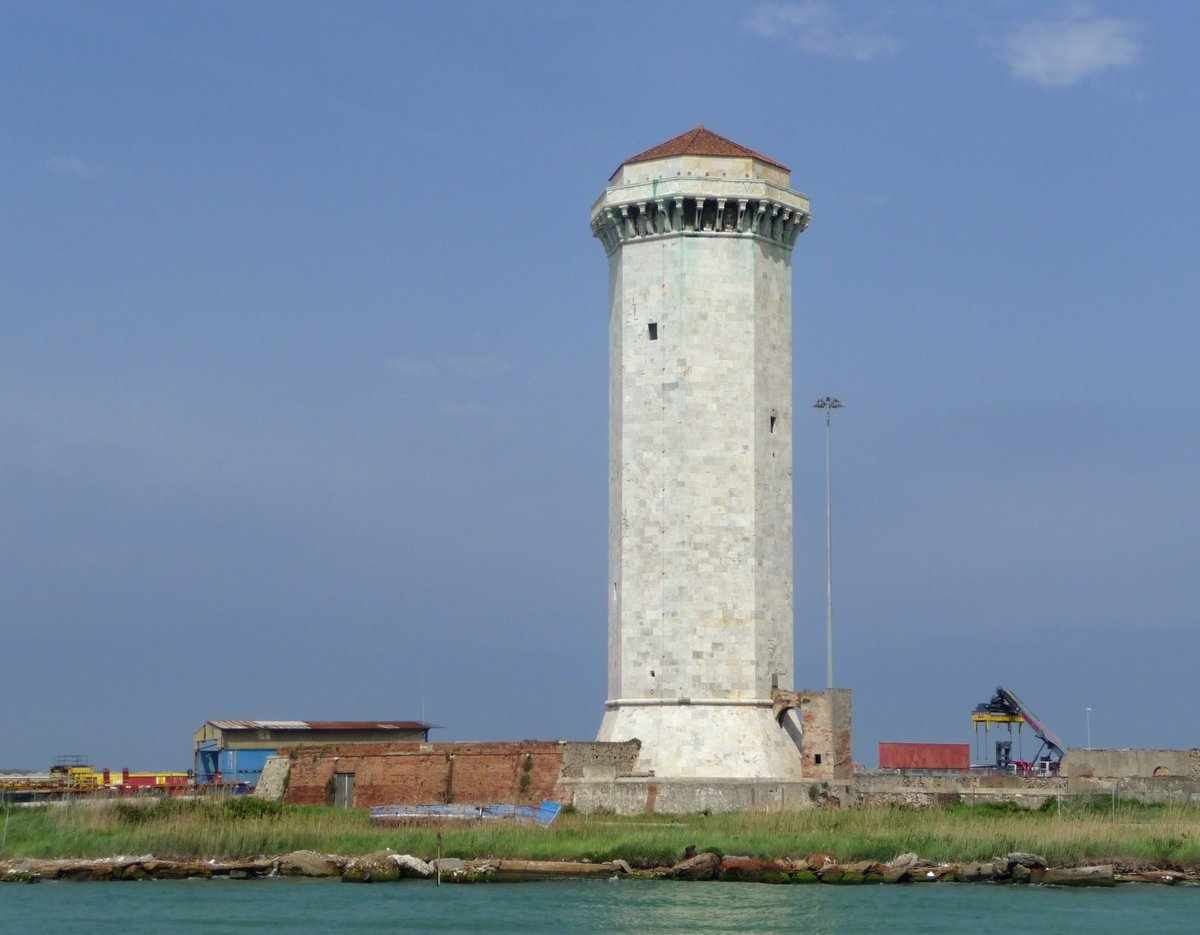 The Torre del Marzocco is one of the most fascinating and mysterious remnants of Livorno's past. Standing 54 meters tall and clad in white marble from the Monti Pisani, this octagonal tower was built by the Florentines starting in 1423 on a small island in Porto Pisano. Its name comes from the Marzocco, the rampant lion symbol of Florence, which once stood atop its pinnacle as a gilded copper weather vane, lost to the sea after a lightning strike in 1737. On each side, the names of the winds are carved, and beneath the corbels stand out the emblems of the Florentine Republic: the lily, the people's cross, the lion, and the eagle seizing the dragon.
The attribution is uncertain: Filippo Brunelleschi, Lorenzo Ghiberti, or Leon Battista Alberti are mentioned, but the tower resembles the Tower of the Winds in Athens. In 1535, Duke Alessandro de' Medici added a fortification at its base, with warehouses and cannon emplacements. Today, the tower is closed to the public, set within the industrial port and difficult to reach, but a 16-million-euro project plans to dig a canal around it, transforming it into an island accessible by sea, with conservative restoration.
Address: Via Vasco Natale Jacoponi, 57123 Livorno. Free admission, but check opening times.
Calafuria Tower: A Medieval Jewel on the Livorno Coast
- Via del Littorale, Livorno (LI)
- Open in Google Maps
- View on Google Images
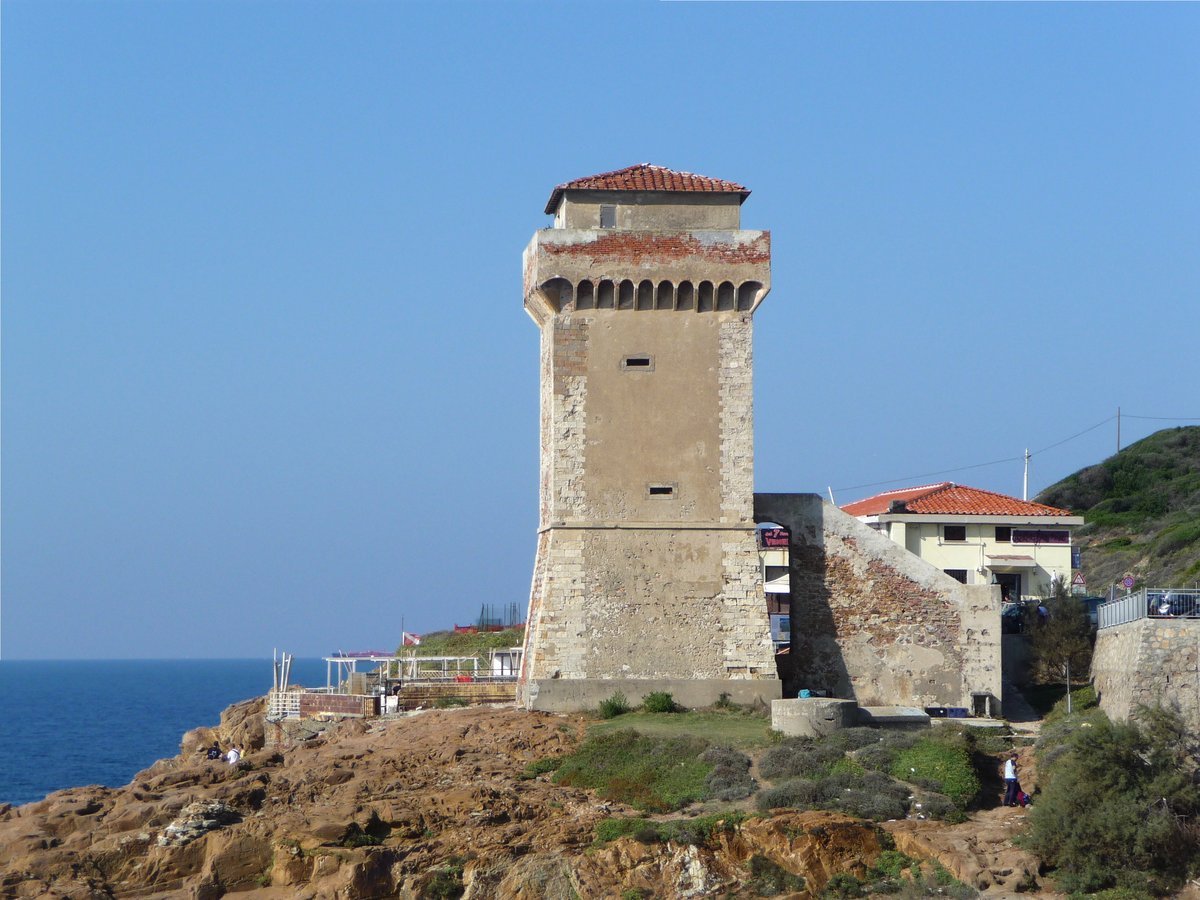 Arriving at Calafuria Tower is like stepping back in time, with the sea embracing you from every side. Built in 1550 by the Medici as a watchtower against pirates, it stands on a rocky spur overlooking the Tyrrhenian Sea, about 20 meters high. Its square plan and projecting balcony are typical of Medici coastal towers, and on clear days the view stretches as far as Corsica. Also known as Torre dei Mattaccini, it has served as a backdrop for cult films such as 'Il Sorpasso' (1962) and 'La pazza gioia' (2016). For years it hosted the studio of painter Alberto Fremura, who dedicated his painting 'Sogno a Calafuria' to it. Today the tower is state-owned and, after safety works in 2020, awaits a new lease on life: in 2025 it was included in a tender for concession to third-sector entities, with cultural and tourist purposes. The surrounding area is a natural treasure: the sandstone cliff is a Site of Community Importance, with seabeds rich in biodiversity. Beneath the balcony nests a protected colony of pallid swifts. To enjoy the tower, simply drive along the SS1 between Antignano and Quercianella: park and follow the trails overlooking the sea. However, be aware: swimming here is not recommended, as the rocks are treacherous. Better to go snorkeling or diving nearby – the seabeds are spectacular – or simply sit and watch the sunset. This place carries the scent of history, cinema, and wild nature. And if you're lucky, you might hear the rustle of swifts returning to their nests.