Santa Maria del Rosario Venice: Tiepolo and Massari

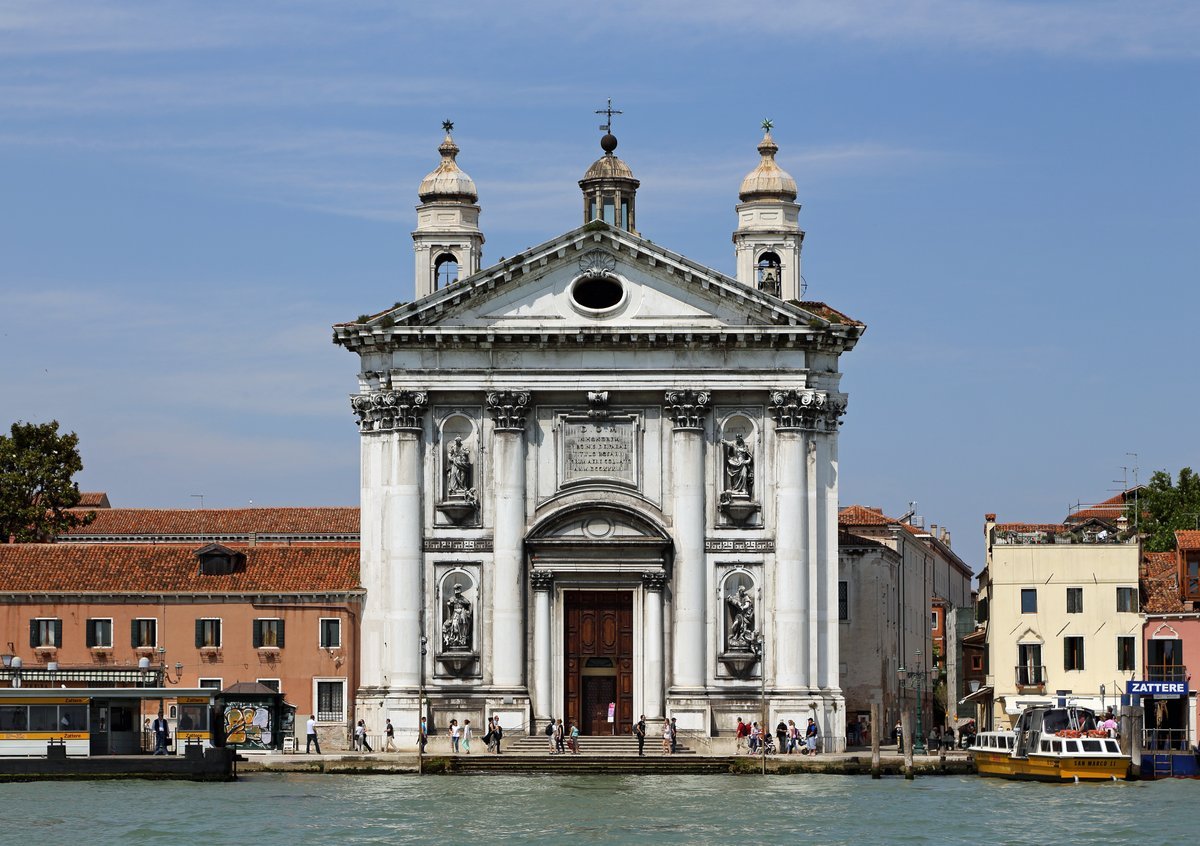
Santa Maria del Rosario, known as the Church of the Gesuati, overlooks the lively Fondamenta delle Zattere, in the heart of Dorsoduro. Here, the architecture of Giorgio Massari and the pictorial cycle by Giambattista Tiepolo merge in a remarkably coherent 18th-century ensemble, completed by sculptures and reliefs by Giammaria Morleiter. The visit is quick, ideal for a stop during a stroll, and pairs well with a trip on lines 1 or 2 to Accademia. Don’t miss:
– The ceiling with Tiepolo’s three scenes of Saint Dominic.
– Piazzetta’s altarpiece with Saints Vincent Ferrer, Hyacinth, and Louis Bertrand.
– Jacopo Tintoretto’s Crucifixion and Tiepolo’s Madonna.
– Entrance with Chorus Pass: full €3, reduced €1.50, with continuous hours from Monday to Saturday.


Events nearby


Copertina itinerario Santa Maria del Rosario Venice: Tiepolo and Massari
On the Fondamenta delle Zattere, the Church of the Gesuati gathers the best of 18th-century Venice: Massari’s architecture, Tiepolo’s ceilings, Morleiter’s sculptures. Opening hours, prices, and how to get there.

Good to know


Evocative Introduction

There is a corner of Venice where the eighteenth century is not a memory but a living presence. I am speaking of the church of Santa Maria del Rosario, which everyone still calls “dei Gesuati”, overlooking the Fondamenta delle Zattere. The white marble of Giorgio Massari’s façade reflects in the water, and as soon as you cross the door, one of the most harmonious interiors in the city welcomes you. A single hand conceived space, altars, and decorations, while Tiepolo painted the ceiling like an open sky. It is not just a church: it is a total masterpiece of eighteenth-century Venice.

Historical Notes

The story begins in 1392, when the Gesuati, the order founded by Blessed Giovanni Colombini, settled here. They first built an oratory, then a church dedicated to the Visitation, consecrated in 1524. In 1668 the order was suppressed and the complex passed to the Dominicans, who radically renovated it. The current church, designed by Giorgio Massari, was built between 1724 and 1736 and dedicated to Mary Most Holy of the Rosary; the consecration came in 1743. The best of eighteenth-century Venetian art worked here: Tiepolo, Piazzetta, Morleiter. After the Napoleonic suppressions, the church became a parish church and part of the convent housed an orphanage from 1823. Among the curiosities is the tomb of Apostolo Zeno, who donated his library to the monastery.

  • 1392: arrival of the Gesuati
  • 1423: expansion with the oratory of San Girolamo
  • 1524: consecration of the first church
  • 1668: suppression of the Gesuati
  • 1724-1736: construction of Massari’s church
  • 1743: consecration

A Masterpiece by Giorgio Massari

The second church of the Gesuati is one of the finest examples of 18th-century Venetian architecture. Massari didn’t stop at the façade: he designed everything, from altars to sacristies, creating a harmonious whole. The plan is a single nave with side chapels, and light enters in a carefully studied way. The marble façade is compact, elegant, with a play of columns and statues that brings it to life. Inside, the sculptures and bas-reliefs by Giammaria Morleiter depict scenes from the Gospels and figures such as Abraham, Moses, Saint Peter and Saint Paul. The sobriety of the marble is matched by the richness of the altarpieces, and every element seems exactly where it belongs. It may not be Venice’s most famous church, but it is perhaps one of the most perfect.

Tiepolo’s Ceiling

The real spectacle is when you look up. The ceiling of the nave is a triumph by Giambattista Tiepolo, divided into three large canvases: Saint Dominic in Glory, Saint Dominic Overthrowing the Albigensian Heresy and Distributing the Rosaries, and Saint Dominic Blessing a Lay Member of the Order. Painted between 1737 and 1739, they seem to erase the boundary between architecture and sky. A few years later, in 1748, Tiepolo also signed the altarpiece of the Madonna with Saint Rose of Lima, Saint Catherine of Siena, and Saint Agnes of Montepulciano. Not to be missed is David playing the harp in the main chapel, and the altarpieces by Piazzetta, Tintoretto, and Sebastiano Ricci. An extraordinary dialogue between color and light, all to be admired at leisure.

Why Visit It

It’s not only the church of the Gesuati that draws me in: it’s the feeling of stepping into a total work of art. If you’re already in the Zattere area, it’s a dive into the 18th century just steps from the water. The ticket is inexpensive: €3 full price, €1.50 reduced, and with the Chorus Pass you can also visit other churches in the network. The location is convenient: take vaporetto lines 1, 2, or N to the Accademia stop. Plus, it’s less crowded than San Marco, where you can enjoy Tiepolo in relative peace. If you love Baroque and Rococo art, this is a must-see.

When to go

I recommend a weekday afternoon, perhaps in autumn, when the low light on the Zattere sets the façade’s marbles aglow. As you step inside, if the weather is fine, the sun’s rays filter through the windows and Tiepolo’s ceiling seems to breathe. Early mornings are quieter, but the sunset on the fondamenta is something truly special. Plan your visit during the less crowded months to fully savor the dialogue between Massari and Tiepolo in peace. Bring a pair of curious eyes, and then treat yourself to a leisurely stroll along the water.

In the Surroundings

After the visit, stay on the Zattere and enjoy the view of the Giudecca Canal. Just steps away is the Squero di San Trovaso, one of the last gondola workshops in Venice, where you can see firsthand how these boats are built. If you have time, continue towards Punta della Dogana or Ca’ Rezzonico, the museum of 18th-century Venice: a perfect complement to your journey into the century you’ve just admired inside the church. In short, turn your visit into a mini-exploration of Dorsoduro.

Itineraries nearby


💡 Did You Know…?

A curious fact: the church is dedicated to Santa Maria del Rosario, but everyone calls it the ‘Gesuati’ after the ancient occupants, a Sienese order suppressed in 1668. Inside, a Thorn from the Redeemer’s Crown and the body of Saint Mariano the Martyr are venerated, while the tomb of Apostolo Zeno, the scholar who enriched the convent’s library, also lies here. If you look out onto the fondamenta, notice the distant dialogue with Palladio’s Redentore on the other bank: Massari used it as a model precisely for this church.