Compsa: Roman Cisterns and Irpinian Forum with Views of the Ofanto Valley

Compsa is an authentic archaeological site with perfectly preserved Roman cisterns, the forum of the ancient Irpinian city, and a panoramic position overlooking the Ofanto River valley. The area is easily accessible with well-marked trails showcasing the millennia-old urban organization. • Roman cisterns in opus reticulatum perfectly preserved after 2000 years • Forum with traces of tabernae and daily life of the Irpini people • 360-degree panoramic position over the Ofanto Valley and Apennines • Authentic and uncrowded site, ideal for an intimate experience

Copertina itinerario Compsa: Roman Cisterns and Irpinian Forum with Views of the Ofanto Valley
The archaeological site of Compsa in Conza della Campania preserves perfect Roman cisterns, the ancient forum, and views of the Apennines. An authentic and uncrowded visit near Lake Conza.

Good to know


Introduction

Arriving at Compsa is like stepping back in time. This archaeological site, perched on a hill in Conza della Campania, welcomes you with its silent remains that tell millennial stories. Don’t expect perfect reconstructions: here the atmosphere is authentic, made of stones worn by time and breathtaking views of the Campanian Apennines. Walking among the ruins of the ancient Irpinian city makes you feel part of a history that has withstood earthquakes and invasions. The sweeping view over the Ofanto river valley is impressive, especially at dawn, when the grazing light enhances the contours of the ancient structures. An unforgettable place, ideal for those seeking genuine emotions away from mass tourism.

Historical Notes

Compsa was an important center of the Hirpini, a Samnite people who controlled this part of the Apennines. Probably founded between the 4th and 3rd centuries BC, it became a Roman municipium after the Samnite Wars. In 216 BC, during the Second Punic War, Hannibal briefly occupied it after the Battle of Cannae. The site was inhabited until the 1980 earthquake, which destroyed the modern town of Conza but partially spared the ancient ruins. Today, traces of the forum, baths, and some Roman domus can still be recognized.

  • 4th-3rd century BC: Foundation by the Hirpini
  • 216 BC: Occupation by Hannibal
  • 1st century BC: Roman municipality
  • 1980: Earthquake that devastated the area

The Roman Cisterns

One of the most fascinating elements of Compsa are the perfectly preserved Roman cisterns. These imposing reservoirs in opus reticulatum showcase the hydraulic engineering of the ancient inhabitants. The three main cisterns, buried underground and covered by barrel vaults, could hold thousands of liters of rainwater. Observing them up close, you can still see the filtration holes and distribution channels. It’s incredible how these structures, built over 2000 years ago, have survived almost intact to this day. They represent a unique example of ancient technology in the Southern Apennines and give you a sense of how advanced the civilization that lived here truly was.

The Forum and Daily Life

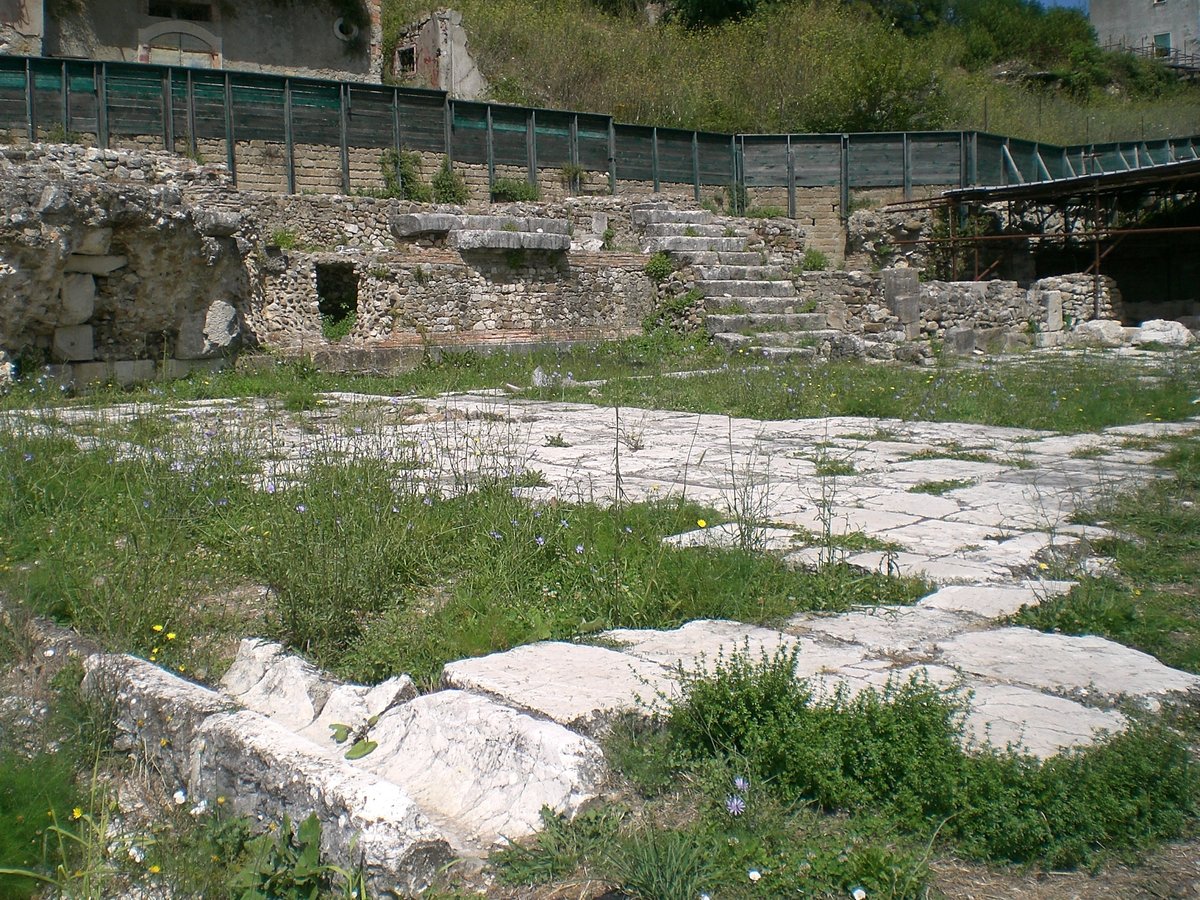
Walking among the remains of the forum, the beating heart of ancient Compsa, you can imagine the daily life of the Irpini and later the Romans. Here you can recognize the foundations of the porticoes, where commerce took place, and the remains of public buildings. Particularly evocative are the traces of the tabernae, the shops that faced the main square. In some, you can still distinguish the stone counters where goods were displayed. This space, now silent and dominated by the wind, once teemed with activity: merchants, artisans, politicians deciding the city’s fate. A dive into history that makes you appreciate the continuity between past and present.

Why Visit It

Compsa is worth visiting for three concrete reasons. First: the authenticity of the site, which hasn’t been reconstructed but left in its natural state, offers you a more intimate and personal experience. Second: the panoramic location is exceptional, with a 360-degree view over the Ofanto Valley and the surrounding mountains. Third: it’s a less crowded place, ideal for those who want to avoid queues and crowds. Plus, its proximity to Lake Conza allows you to combine culture and nature in a single day. A unique opportunity to discover a piece of Irpinian history off the beaten tourist track.

When to Go

The best time to visit Compsa is early morning in spring or autumn. During these seasons, the light is softer and the climate ideal for exploring the site on foot. Summer can be too hot, while in winter the wind makes the visit less pleasant. If you go first thing in the morning, besides avoiding any crowds, you’ll be able to admire the sun rising behind the mountains, illuminating the ruins with a magical light. The silence of the place at these hours is particularly evocative and allows you to fully appreciate the site’s atmosphere.

In the Surroundings

Complete your visit with two nearby experiences. Lake Conza, a natural oasis created after the 1980 earthquake, perfect for a relaxing walk and birdwatching. Not far away, the Archaeological Museum of Conza displays artifacts uncovered in the Compsa excavations, including Irpinian ceramics and Roman coins that help contextualize what you’ve seen at the site. Both locations enrich your understanding of the territory and its millennial history.

💡 Did You Know…?

Compsa was an important center of the Irpini, a Samnite population that controlled this part of the Apennines. During the Samnite Wars, the city resisted the Roman advance for a long time before being conquered. Coins bearing the effigy of the goddess Mefitis, a deity linked to the sulfurous waters of the area, have been found at the site. The amphitheater, small in size but well-preserved, hosted performances for the local population. Recent excavations have uncovered a domus with polychrome mosaics that testify to the wealth of some local families during the imperial era.