
The Roman Theatre of Teramo, built under Augustus in the 1st century AD, was the cultural hub of ancient Interamnia Praetuttiorum and could accommodate up to 3,000 spectators. Today, its impressive opus reticulatum structures, with semicircular cavea and stage remains, can be visited free of charge in the historic centre, just steps from the Cathedral.
- Semicircular stone cavea with original travertine seating tiers
- Stage remains with foundations and vomitoria (side entrances)
- Central location in Teramo’s heart, easily accessible on foot
- Free visit with flexible hours, ideal for a spontaneous stop
Events nearby


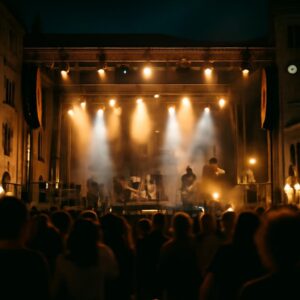

1st-century AD Roman theatre with stone seating tiers and stage remains, freely accessible in Teramo’s centre near the Cathedral. Discover the opus reticulatum architecture and history of Interamnia Praetuttiorum.
- Largo Anfiteatro, Teramo (TE)
- Open in Google Maps
- View on Google Images Teatro romano di Teramo a Teramo
Good to know
Introduction
Walking through the heart of Teramo, among the streets of the historic center, you’ll encounter an imposing testament to ancient Rome: the Roman Theatre. This archaeological gem, located right behind the Cathedral of Santa Maria Assunta, emerges with its stone tiers and the remains of the stage, offering an emotionally striking view that bridges different eras. Built in the 1st century AD, the theatre was an integral part of the social life of Interamnia Praetuttiorum, the ancient name of Teramo, and today gives visitors the opportunity to walk among the same stones that once hosted performances for thousands of people. Its position, nestled between medieval and modern buildings, creates a fascinating contrast, making the visit a unique experience that tells centuries of history in just a few square meters. It’s not just an archaeological site, but a journey through time accessible to everyone, ideal for those seeking direct contact with Abruzzo’s roots.
Historical Background
The Roman Theatre of Teramo was constructed during the reign of Emperor Augustus, between 30 BC and 14 AD, as part of the urban development of Interamnia Praetuttiorum, the city of the Praetutii. With a capacity of approximately 3,000 spectators, it was used for theatrical performances and public events, symbolizing Roman power and culture in Abruzzo. During the Middle Ages, parts of its structures were repurposed for later constructions, such as the nearby Cathedral, but the remains lay buried for centuries. Archaeological excavations in the 20th century, led by Luigi Illuminati in the 1930s, uncovered the cavea and the stage, revealing details such as the vomitoria (public entrances) and the foundations of the stage. Today, the site is a national monument, studied to understand Roman architecture in provincial contexts.
- 1st century AD: Construction under Augustus
- Middle Ages: Partial reuse in local constructions
- 1930s: Archaeological excavations by Luigi Illuminati
- Today: Accessible site and part of Teramo’s heritage
Architecture and Details
The theatre stands out for its semicircular cavea made of local stone, partially preserved, which once rested against a natural slope, taking advantage of the terrain for stability and acoustics. The steps, in travertine, are still visible and allow visitors to imagine spectators seated to watch comedies and tragedies. The stage, of which only the foundations remain, was decorated with columns and statues, as attested by fragments found during excavations. A peculiar element is its proximity to the Cathedral: some blocks from the theatre were reused for its construction, creating a tangible link between the Roman and medieval eras. Today, visitors can observe the vomitoria, the side passages for public access, which showcase the advanced engineering of the Romans. There are no invasive modern reconstructions, so the experience is authentic: you walk among genuine ruins, with informative panels explaining every detail without altering the atmosphere.
Visiting Experience
Visiting the Roman Theatre of Teramo is an immersive and free experience, with no tickets or strict schedules, perfect for a spontaneous stop during a walk through the city center. The site is accessible on foot from Piazza Martiri della Libertà, and you can explore it independently, getting up close to the seating tiers and imagining the ancient performances. To make the visit more engaging, I recommend approaching the remains of the stage, where you’ll notice carvings on the stones, evidence of Roman craftsmanship. In spring, the sunset light illuminates the stones, creating shadow plays that highlight the architectural volumes. There are no significant physical barriers, but the terrain is uneven: comfortable shoes are a must. It’s a quiet and uncrowded place, ideal for taking photos without crowds or for a reflective break. The absence of high fences allows for a panoramic view from above, showing how the theatre integrates with the modern urban fabric.
Why Visit It
Three practical reasons make this theater unmissable: first, it’s free and always open, unlike many Italian archaeological sites, so it fits into any itinerary without additional costs. Second, its location in the historic center makes it easy to combine with other attractions, such as the Cathedral or nearby museums, maximizing your time. Third, it offers an authentic context: there are no artificial reconstructions, so you breathe in real history, with details like the marks of Roman chisels on the stones. Additionally, it’s a lesser-known site compared to other Roman theaters, ensuring an intimate experience without queues or crowds. For families, children can run freely among the ruins, while history enthusiasts will find inspiration to delve deeper into daily life in ancient Interamnia.
When to Go
The most enchanting time to visit is at sunset, when the warm light of the spring or summer sun casts deep shadows across the steps, creating an almost magical atmosphere. In summer, evenings are mild and the site remains naturally lit until late, perfect for a post-dinner stroll. Avoid the midday heat on very hot days, as there is no shade. In autumn, fallen leaves add a romantic touch, though it remains pleasant in any season thanks to Teramo’s generally temperate climate. We recommend checking the weather forecast: sunny days make the stone colors more vivid.
In the Surroundings
Just steps away from the theatre, it’s worth visiting the Cathedral of Santa Maria Assunta, with its Romanesque portal and the silver altar frontal by Nicola da Guardiagrele, a masterpiece of Abruzzese goldsmithing. For a thematic experience, the Francesco Savini Archaeological Museum houses artifacts from the theatre itself and other local excavations, such as pottery and coins, completing your understanding of Teramo’s Roman past. Both sites are located in the historic centre, accessible on foot within minutes.
Itineraries nearby


💡 Did You Know…?
Discover that the theatre was built reusing materials from a previous public building, and excavations have uncovered coins and fragments of decorations that attest to its long history. An interesting fact: the acoustics are still excellent—try whispering from the proscenium and you’ll notice your voice carries clearly to the top row.