
Discover Vibo Valentia in a day with a historical itinerary that takes you from the Norman-Swabian Castle to the ancient Greek walls of Hipponion. A compact route in the heart of the historic center, perfect for those who love strolling among archaeological finds and medieval architecture. Start at the castle, the city’s symbol, continue to the Archaeological Museum with its Magna Graecia treasures, and end along the Greek walls, remnants of the colony of Hipponion. This itinerary offers an immersion into history without leaving the center, ideal for a morning. Vibo Valentia historical itinerary Norman Castle Greek walls is the key to experiencing the city authentically.
🗺️ Your trip at a glance
A compact and fascinating historical route. Discover Vibo Valentia in a few hours among castle, museum, and Greek walls.
- Ideal for history and archaeology enthusiasts
- Highlights concentrated itinerary easily walkable
- For those who seek a short but complete cultural trip
Itinerary stops
Stop no. 1
Norman Castle: The Medieval Heart of Vibo
 I start my day where it all began: the Norman-Swabian Castle. Perched atop Vibo Valentia, this medieval fortress sits on the ancient acropolis of Hipponion, the Greek colony. A layering of eras that you can feel as you climb. The entrance is on Via Sette Martiri, and the ticket costs €5 (reduced €2 for ages 18-25, free under 18). Open Tuesday to Sunday, 9 AM to 8 PM, closed Mondays. Inside, besides strolling among cylindrical towers and the triangular spur, you can visit the National Archaeological Museum “Vito Capialbi”, which houses artifacts from Hipponion. The highlight? The Laminetta Aurea, a gold leaf with instructions for the afterlife. But the real spectacle, for me, is the view: from the courtyard you can see the Tyrrhenian Sea and, on clear days, even Stromboli. A fortress that served as a residence for Normans, Swabians, Angevins, and even as a Bourbon prison: here every stone has a story.
- Via Antica Monteleone, Vibo Valentia (VV)
- Open in Google Maps
- View on Google Images

You should go if…
Stop no. 2
Vito Capialbi National Archaeological Museum
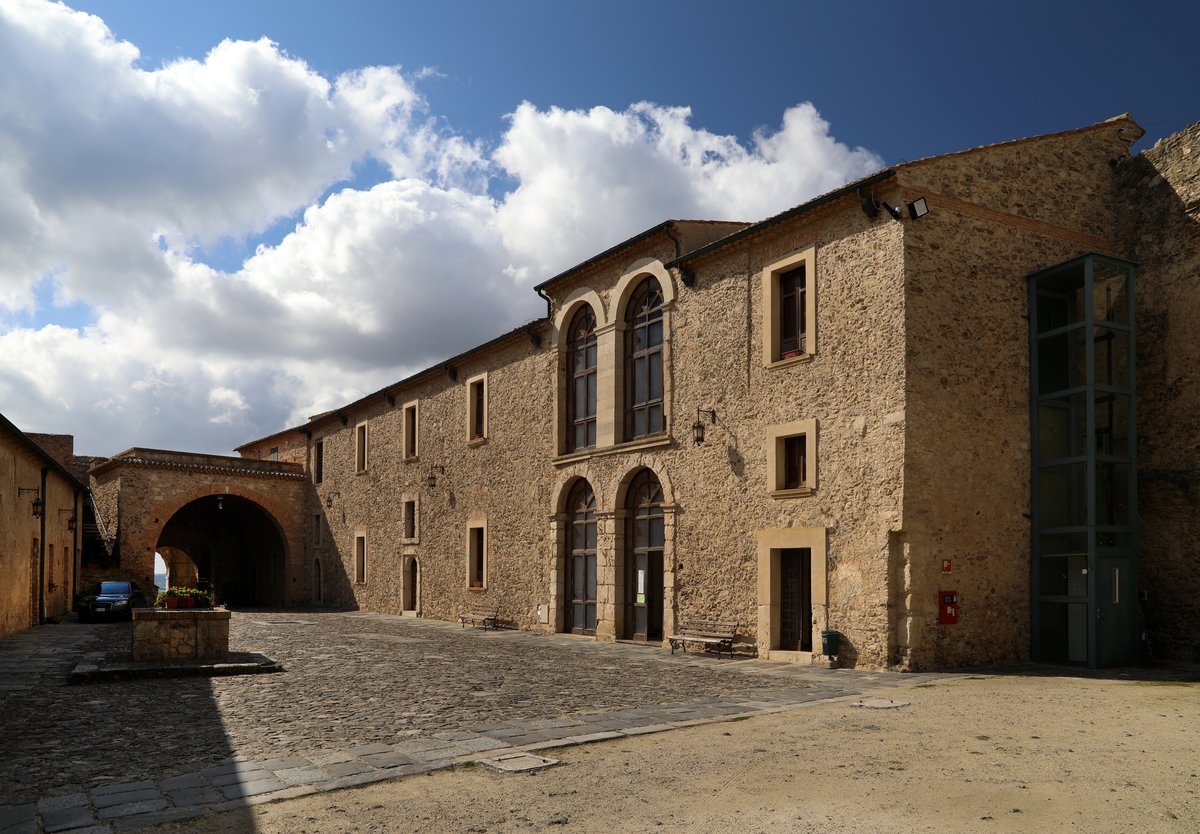 After exploring the Norman-Swabian Castle, descend into its underground to visit the Vito Capialbi Archaeological Museum, a true treasure chest of artifacts telling the story of Hipponion and Valentia. The collection is incredible: the Orphic gold leaf stands out, a sort of passport to the afterlife, and the bust of Agrippa. Among votive helmets and Locrian pinakes, you can breathe a unique atmosphere. Don’t miss the kit from Tomb 11 with gold and silver jewelry. The museum is open every day (9:00 AM – 7:20 PM) and with the ticket (€5) you also get access to the Greek walls. A dive into Magna Graecia that leaves you breathless.
- Go to the page: Vito Capialbi National Archaeological Museum: The Story of Hipponion
- Via Antica Monteleone, Vibo Valentia (VV)
- https://www.beniculturali.it/mibac/opencms/MiBAC/sito-MiBAC/Luogo/MibacUnif/Luoghi-della-Cultura/visualizza_asset.html?id=153555&pagename=157031
- Open in Google Maps
- View on Google Images
You should go if…
Stop no. 3
Greek Walls of Hipponion
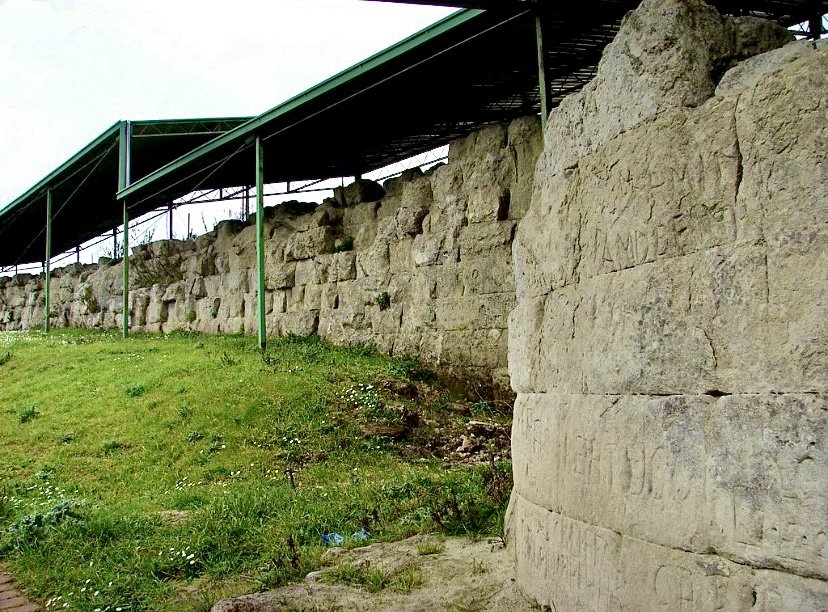 Leave the museum and walk along Via Paolo Orsi: in a few minutes you’ll find yourself in front of one of the best-preserved stretches of the Greek walls of Hipponion. This is a segment about 500 meters long, part of the defensive wall that once extended for over 7 kilometers around the polis. The walls were built between the 6th and 3rd centuries BC with large squared blocks of sandstone and calcarenite, arranged in a double facing. The technique is Cyclopean, with transversal walls and clay infill. Along the path, the only remaining tower stands out at about 4 meters high, while the other eight original towers, which reached 15-17 meters, are reduced to foundations. Here you can still read the signs of the siege by Dionysius I of Syracuse in 388 BC. The ticket for the Archaeological Museum (€5) includes the visit, and with a bit of luck you may attend a special opening showcasing the results of the latest excavations from the ArcheoVibo project. A place that speaks of power and defense, but also of the daily life of a Greek colony.
- Via Paolo Orsi, Vibo Valentia (VV)
- Open in Google Maps
- View on Google Images
You should go if…


