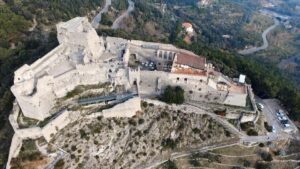
Discover a 3-day itinerary in the Caserta province, perfect for history lovers and authentic village enthusiasts. Start in Casertavecchia with its Romanesque cathedral and medieval alleys, then explore the remains of ancient Calatia in Maddaloni and the village of Sant'Agata de' Goti overlooking the Isclero River. Day two brings you to the Campanian Amphitheatre in Santa Maria Capua Vetere, one of the largest from Roman times, and the Mithraeum with its frescoes. Conclude in Teano, where history comes alive in the Archaeological Museum and among the theatre ruins. This Caserta province villages archaeology itinerary will gift you unique glimpses, far from the beaten tourist paths, with delicious stops to sample buffalo mozzarella and local wines.
🗺️ Your trip at a glance
A 3-day itinerary in the province of Caserta, away from the most crowded tourist routes, combining perfectly preserved medieval villages with significant Roman archaeological sites.
- Ideal for travelers seeking authenticity and culture without crowds, enthusiasts of medieval and Roman history.
- Highlights: includes villages like Casertavecchia and Borgo San Giovanni, the Monumental Complex of the Belvedere of San Leucio, and sites like the Roman Theater of Teano.
- Perfect for those who want a structured trip with detailed maps and stops exploring both the architecture and social history of the area.
Itinerary stops
Day 1 - Stop no. 1
Casertavecchia
 The Caserta: Villages and Archaeology itinerary begins at Casertavecchia, the ancient urban core situated 401 meters above sea level along Via Erchemperto. This medieval village, abandoned in the 14th century for the construction of the Royal Palace, preserves its Norman urban layout intact. The 1129 Cathedral, with its 32-meter-high bell tower and 16-spoke rose window, dominates the main square. The stone-paved alleys lead to the Castle of the Counts of Caserta, of which the perimeter walls and tower remain. The Church of the Annunciation, with 14th-century frescoes, completes the journey among gray tuff architectures and panoramic glimpses over the Campanian plain. The elevated position guarantees a view stretching all the way to Vesuvius, making the visit an immersive experience in the Lombard and Norman history of the province.
- Go to the page: Casertavecchia: Norman Cathedral from 1129 and Medieval Alleys on the Tifatini Mountains
- Via Erchemperto, Caserta (CE)
- Open in Google Maps
- View on Google Images

You should go if...
Day 1 - Stop no. 2
San Leucio Belvedere Monumental Complex
 The San Leucio Belvedere Monumental Complex represents a unique social experiment in the Italian landscape, conceived by Ferdinand IV of Bourbon in 1789. This site is not merely a former silk factory, but a truly autonomous community where principles of social equality and collective work were tested. Silk production reached levels of excellence, to the extent that San Leucio fabrics were in demand by European courts. Today, visitors can explore the historic looms, royal apartments, and the silk museum, which preserve original 18th-century machinery. The complex's rational architecture reflects the Enlightenment ideal of a society organized according to efficiency and collective well-being, featuring communal spaces, schools, and services for all residents.
- Via del Setificio, Caserta (CE)
- https://www.comune.caserta.it/belvedere/
- Open in Google Maps
- View on Google Images
You should go if...
Day 2 - Stop no. 1
Borgo San Giovanni
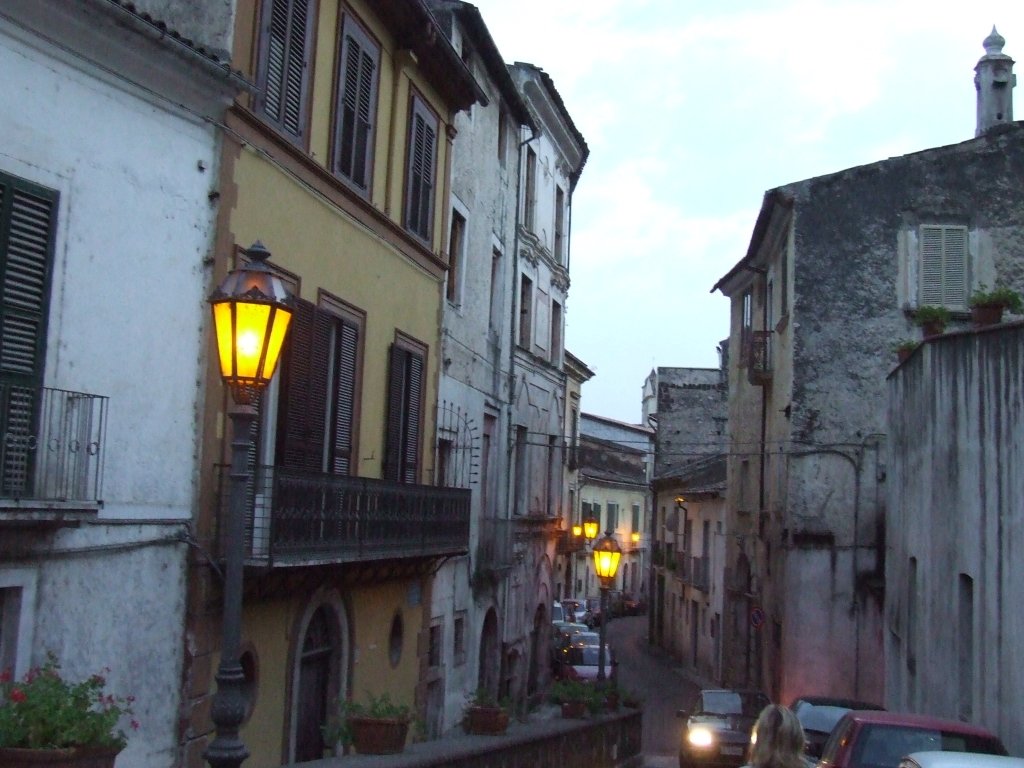 Leaving behind the social innovation of San Leucio, the second day of the itinerary begins with Borgo San Giovanni, a historic nucleus that preserves its medieval atmosphere intact. This cluster of stone houses develops around the Church of San Giovanni Battista, a religious building with Romanesque forms that dominates the urban fabric. The cobbled alleys lead to inner courtyards where time seems to have stood still, revealing vernacular architecture with tuff portals and flower-filled balconies. The strategic position on the Matese slope offers panoramic glimpses of the valley below, combining the charm of rural habitat with proximity to the Matese Regional Park. Here, local craftsmanship keeps ancient techniques alive, especially in wood and wool processing, while the old public fountains tell of a past where water was a common good.
- Go to the page: Borgo San Giovanni: Medieval Alleys and Views of the Matese Massif
- Borgo San Giovanni, Piedimonte Matese (CE)
- Open in Google Maps
- View on Google Images
You should go if...
Day 2 - Stop no. 2
MUCIRAMA Civic Museum
 The MUCIRAMA Civic Museum in Piedimonte Matese, located on Via Scalelle, represents a cultural landmark for understanding the history of the Matese territory. Through a collection ranging from prehistoric artifacts to medieval testimonies, the museum documents human evolution in the area. Particularly significant are the materials from excavations of the nearby medieval village, which illustrate daily life between the 10th and 15th centuries. The exhibition, organized into thematic sections, includes ceramics, work tools, and archival documents, offering a comprehensive view of the cultural roots of this area in the province of Caserta. The visit proves essential for those wishing to explore the connection between the natural environment of Matese and the communities that have inhabited it.
- Via Scalelle, Piedimonte Matese (CE)
- http://www.mucirama.it/
- Open in Google Maps
- View on Google Images
You should go if...
Day 2 - Stop no. 3
Alife Archaeological Museum
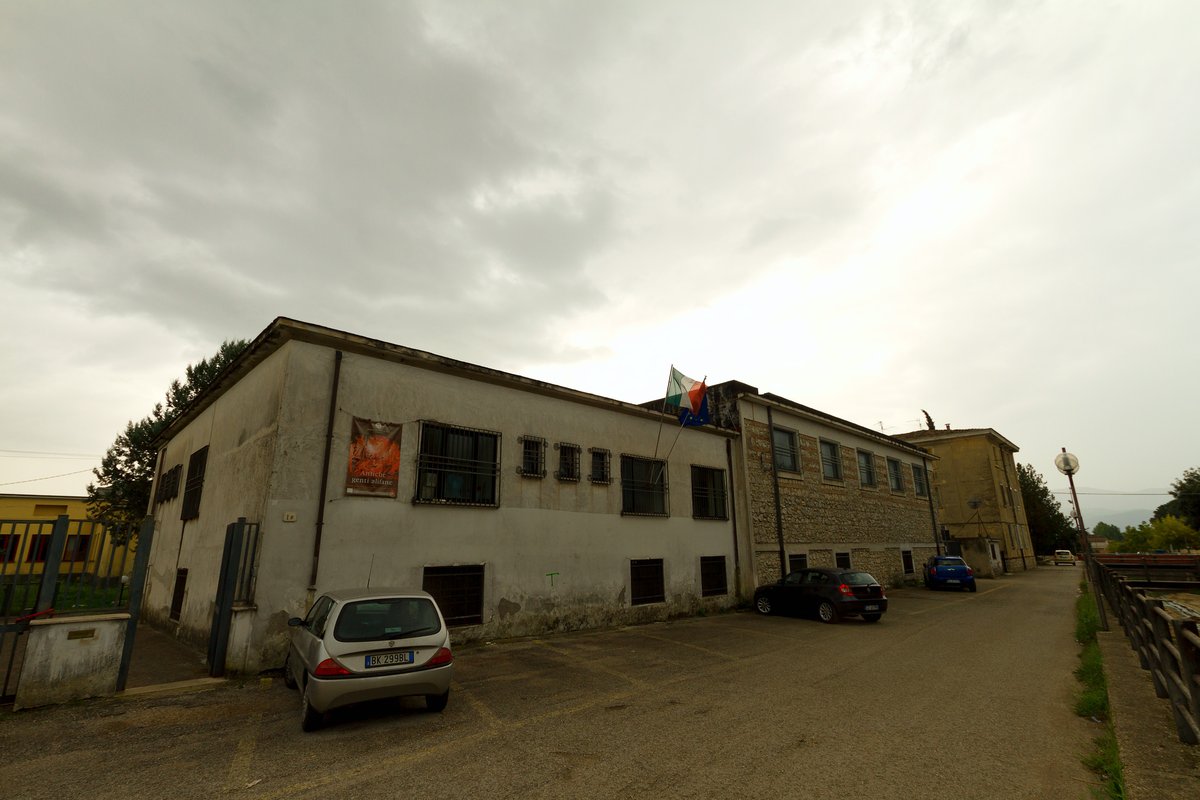 The Alife Archaeological Museum, located on Via Pietro d'Ascoli, preserves the material evidence of ancient Allifae, a Roman colony founded in the 4th century BC. The collection is organized into chronological sections illustrating the center's evolution from the Samnite period to the Imperial age, with artifacts such as black-glazed pottery, coins, and everyday tools. Notable are the materials from excavations of the nearby amphitheater and cryptoporticus, which document urban organization and commercial activities. The modern, educational layout includes explanatory panels and reconstructions that facilitate understanding of the historical context. The visit offers a detailed insight into life in a frontier Roman city, highlighting relationships with the surrounding territory and cultural influences.
- Via Pietro d'Ascoli, Alife (CE)
- Open in Google Maps
- View on Google Images
You should go if...
Day 3 - Stop no. 1
Teano Roman Theatre
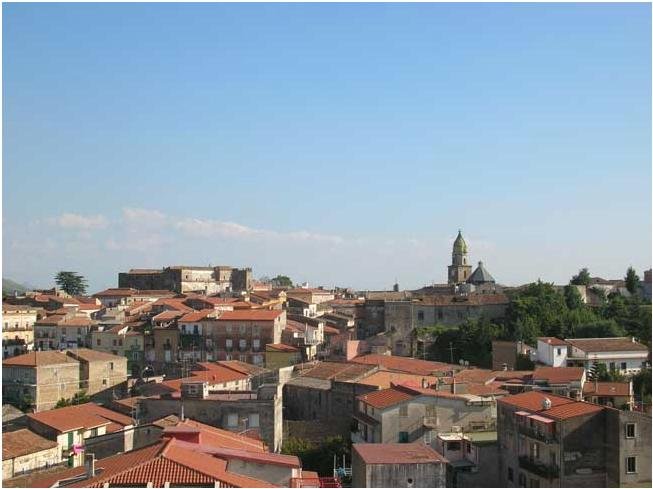 The Roman Theatre of Teano, located on Via Pioppetto, represents one of the most significant testimonies of the Roman era in northern Campania. Built in the 1st century BC, the theatre skillfully exploits the natural slope of the hill, with a cavea that could accommodate up to 3,500 spectators. Recent restoration works have brought to light parts of the original marble decoration and stage structures, offering a concrete vision of ancient theatre architecture. The elevated position ensures an exceptional panoramic view over the Garigliano Valley, combining historical and landscape value. The visit allows visitors to understand the organization of spaces for public performances in ancient Teanum Sidicinum, highlighting the city's cultural role in the region.
You should go if...
Day 3 - Stop no. 2
Roman Theatre of Teano
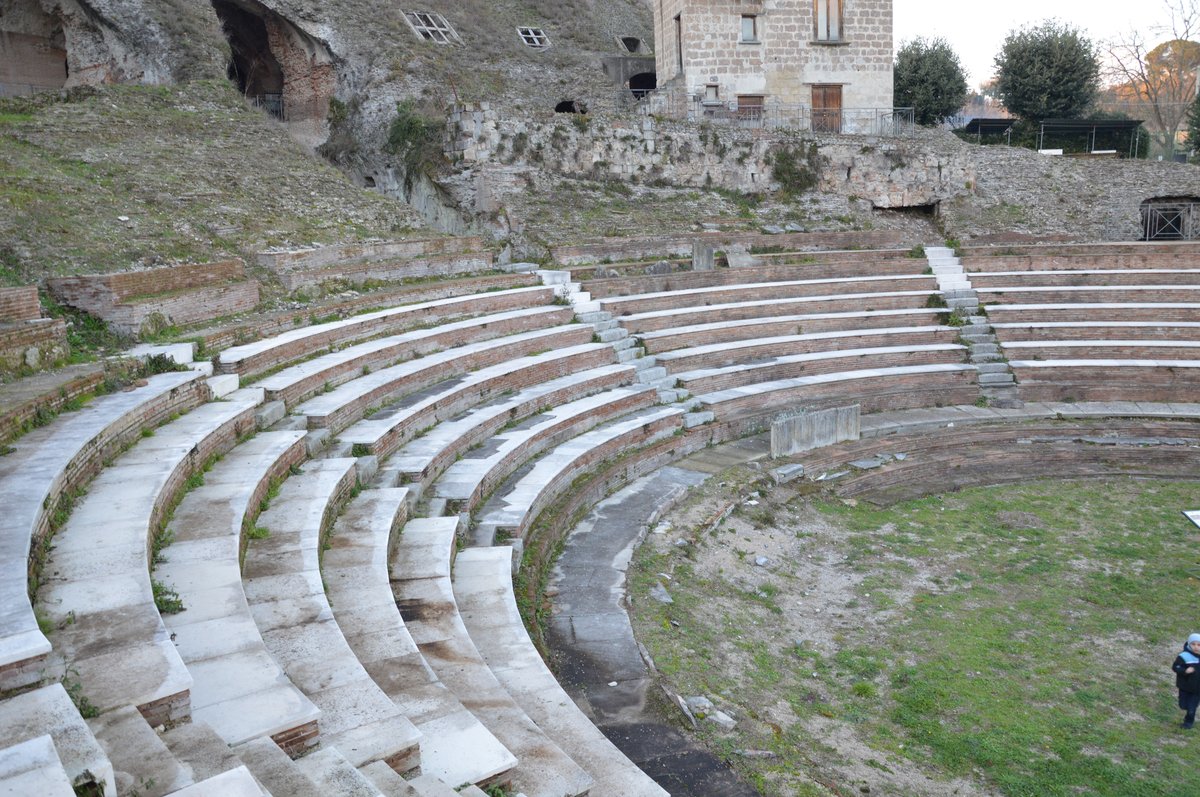 The Roman Theatre of Teano stands as one of the most significant testimonies of the Roman era in Campania. Located on Via Pioppetto, this archaeological site dates back to the 1st century BC and could accommodate up to 3,500 spectators. The structure perfectly preserves the semicircular cavea, divided into three sections, and the orchestra where choruses performed. During excavations, architectural elements emerged, revealing the use of precious marbles for the stage. The theatre was an integral part of ancient Teanum Sidicinum, capital of the Sidicini, and hosted theatrical performances and public assemblies. Its strategic position on the Via Latina made it an important cultural centre until the 4th century AD. Today, visitors can admire the remains of the stage and vomitoria, while informative panels reconstruct the daily life of the period.
- Via Pioppetto, Teano (CE)
- Open in Google Maps
- View on Google Images
You should go if...