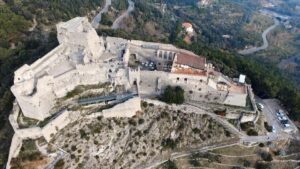
If you're looking for a Benevento province castles villages itinerary that takes you to discover the authentic heart of Sannio, this 2-day route is perfect for you. Starting from Montesarchio with its imposing castle and the National Archaeological Museum of Sannio Caudino, you'll immerse yourself in a land rich in history and medieval charm. You'll explore villages like Sant'Agata de' Goti, listed among Italy's Most Beautiful Villages, where cobblestone streets and Norman architecture will tell you centuries of history. It's the perfect journey for a weekend, discovering fortresses, well-preserved historic centers, and that genuine authenticity that makes the Benevento territory unique.
🗺️ Your trip at a glance
A 2-day itinerary exploring the historic heart of Sannio, from the fortress of Montesarchio to the medieval elegance of Sant'Agata de' Goti. Perfect for a cultural escape discovering castles, museums, and authentic villages in the Benevento province.
- Ideal for those seeking a cultural weekend off the beaten tourist path, blending medieval history with authenticity.
- Highlights: 7 stops including castles, archaeological museums, and historic villages, with interactive maps for each location.
- Perfect for curious travelers, history enthusiasts, and families looking for a relaxing outing.
Itinerary stops
Day 1 - Stop no. 1
Montesarchio Castle
 Our "Borghi e Castelli del Sannio" itinerary begins precisely at Montesarchio Castle, an imposing fortress that rises on the Montesarchio hill guarding the ancient Via Appia. Built during the Lombard era and expanded in the Norman period, this majestic complex now houses the National Archaeological Museum of Sannio Caudino, where extraordinarily valuable artifacts are displayed, such as the famous Assteas crater. Climbing the towers offers a unique panoramic view over the Caudina Valley, while the ancient prisons tell stories of brigands and illustrious prisoners. The perfectly preserved structure represents the ideal starting point to immerse yourself in the history of the Samnite territory.
- Strada Provinciale Vitulanese-Castello, Montesarchio (BN)
- Open in Google Maps
- View on Google Images

You should go if...
Day 1 - Stop no. 2
National Archaeological Museum of Samnium Caudinum
 After exploring the castle, descend directly into its depths to visit the National Archaeological Museum of Samnium Caudinum. This museum is housed in the castle's ancient prisons, creating a unique atmosphere where history and archaeology merge. The collection focuses on the Samnite civilization with artifacts from excavations in the Caudine area, including painted ceramics, weapons, and everyday objects that tell the story of this people's resistance against Rome. Particularly moving are the funerary goods from local necropolises, which reveal the customs and practices of a distant era. The well-organized exhibition route guides you through centuries of history in evocative spaces that still preserve the original structures of the prison cells.
- Via Castello, Montesarchio (BN)
- http://www.polomusealecampania.beniculturali.it/index.php/il-museo-montesarchio
- Open in Google Maps
- View on Google Images
You should go if...
Day 1 - Stop no. 3
Ceppaloni Castle
 Leave behind the archaeological finds of Montesarchio and head towards Ceppaloni, where Ceppaloni Castle stands atop a rocky spur in a strategic position that will leave you breathless. This medieval manor, dating back to the 11th century, still preserves its cylindrical towers and perimeter walls intact, telling centuries of Samnite history. As you ascend Via Castello, you'll immediately notice how Norman architecture blends with subsequent Angevin additions, creating a complex that dominates the entire Sabato River valley. Inside, the restored rooms allow you to imagine the courtly life that once unfolded here, while from the top of the towers, your gaze sweeps from the Partenio Mountains to Taburno Camposauro. Particularly interesting is the castle chapel, where traces of 14th-century frescoes can still be seen.
- Via Castello, Ceppaloni (BN)
- Open in Google Maps
- View on Google Images
You should go if...
Day 2 - Stop no. 1
Ducal Castle
 Begin the second day of your Samnium itinerary with a visit to the Ducal Castle in Sant'Agata de' Goti, located on Via San Rocco. This imposing manor, built between the 11th and 12th centuries, stands as one of the best-preserved examples of Norman architecture in Campania. Its perimeter walls made of local limestone extend in a quadrangular layout, with corner towers that once provided visual control over the entire Isclero River valley. Inside, the restored rooms guide you through halls that hosted important feudal families such as the Della Ratta and Carafa. Particularly evocative is the palatine chapel, where traces of 14th-century frescoes depicting Marian scenes are preserved. From the windows of the noble floor, your gaze embraces the historic center of Sant'Agata with its characteristic row houses and terracotta roofs.
- Via San Rocco, Sant'Agata de' Goti (BN)
- Open in Google Maps
- View on Google Images
You should go if...
Day 2 - Stop no. 2
Bishop's Palace
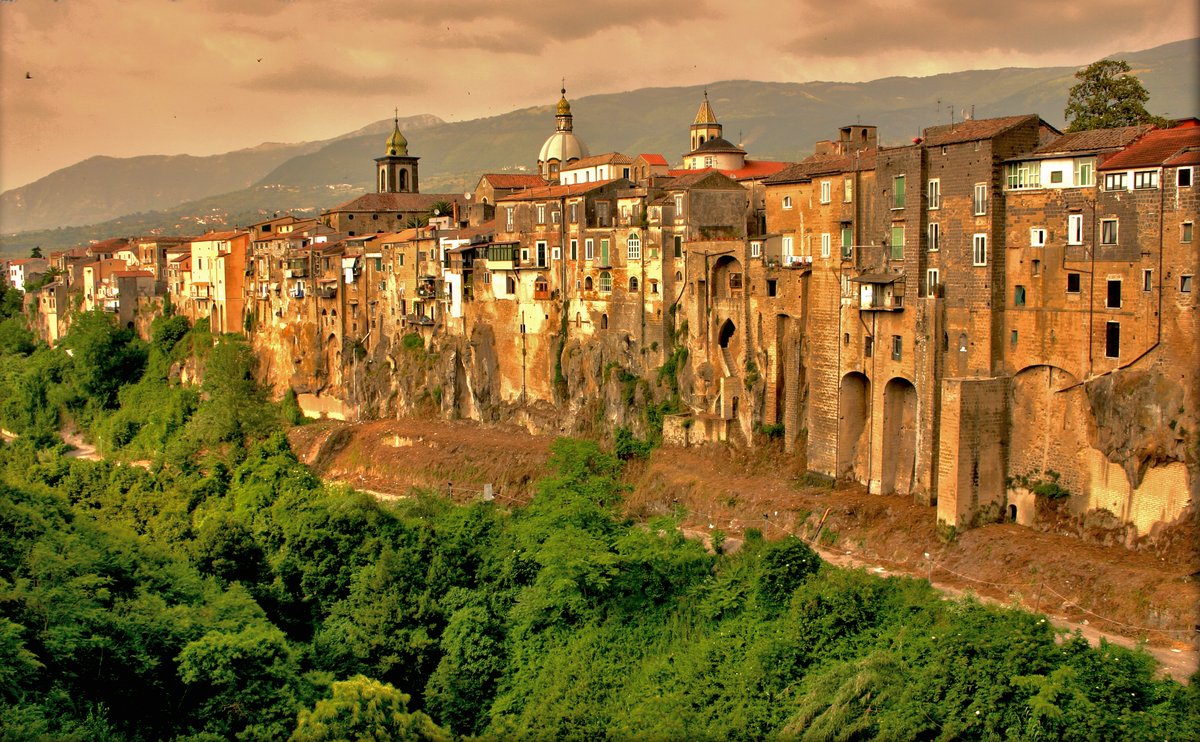 Overlooking Piazza Umberto I, the Bishop's Palace stands as an architectural gem that narrates centuries of Samnite religious history. Its 18th-century facade conceals interiors rich in detail: frescoed ceilings, monumental staircases, and reception halls that have hosted bishops and dignitaries. Walking through its corridors, one senses the strategic importance of this building within the urban fabric of Sant'Agata de' Goti. The private chapel preserves sacred artworks from the Neapolitan school, while the historical archive safeguards documents that illuminate the life of the diocese through the centuries. An unmissable stop for those wishing to fully understand the cultural identity of this village.
- Go to the page: Bishop's Palace of Sant'Agata: 18th-century frescoes and courtyard with well in the medieval village
- Piazza Umberto I, Sant'Agata de' Goti (BN)
- Open in Google Maps
- View on Google Images
You should go if...
Day 2 - Stop no. 3
Diocesan Museum
 After exploring the Bishop's Palace, we move towards Piazza del Carmine to discover the Diocesan Museum, a true treasure trove of art and devotion. Housed in the former Carmelite convent, the museum preserves works from churches across the diocesan territory, with a special focus on local artistic production from the Middle Ages to the 18th century. Among the most significant pieces are altar frontals in scagliola, a decorative technique typical of the Sannio region, and exquisitely embroidered sacred vestments. The exhibition halls guide visitors through centuries of faith and creativity, with panel paintings, wooden sculptures, and liturgical silverware that narrate the spirituality of local communities. Particularly fascinating is the section dedicated to illuminated manuscripts, which testify to the activity of Benedictine scriptoria in the area. An emotional journey for those wishing to delve into the religious and artistic dimension of this corner of Campania.
- Piazza del Carmine, Sant'Agata de' Goti (BN)
- Open in Google Maps
- View on Google Images
You should go if...
Day 2 - Stop no. 4
Carolino Aqueduct Natural Area
 Leaving behind the sacred treasures of the Diocesan Museum, we head towards Contrada Longano to discover the Carolino Aqueduct Natural Area, a monumental example of 18th-century hydraulic architecture. This imposing viaduct, commissioned by Charles of Bourbon to supply the Royal Palace of Caserta, stretches for over 500 meters through the Isclero River valley, with arches reaching nearly 60 meters in height. The nature trail running alongside the structure allows visitors to admire up close the local stone masonry and its perfect integration with the surrounding hilly landscape. Particularly striking is the Ponte della Valle section, where the aqueduct crosses the stream with a bold sequence of round arches. The area, now protected as a Site of Community Importance, hosts rich Mediterranean vegetation and offers an exceptional vantage point over the valley below and the village of Sant'Agata de' Goti.
- Go to the page: Caroline Aqueduct: 22m Bourbon arches and nature trail in Samnium
- Contrada Longano, Sant'Agata de' Goti (BN)
- Open in Google Maps
- View on Google Images
You should go if...