Piazza Grande Modena: Romanesque Cathedral and UNESCO Ghirlandina in the Historic Heart

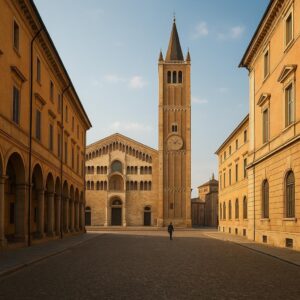
Piazza Grande in Modena is the historic heart of the UNESCO World Heritage site, home to the 12th-century Romanesque Cathedral and the iconic Ghirlandina bell tower. The square is paved with ancient stones and offers free access to the main monuments, making it perfect for iconic photos and tasting local traditions.

  • Romanesque Cathedral with Wiligelmo’s sculptures and medieval metopes
  • 89-meter Ghirlandina with views over Modena and the Apennines
  • Square paved with ancient stones and arcades for strolls
  • Free access and proximity to trattorias serving traditional balsamic vinegar


Events nearby

Copertina itinerario Piazza Grande Modena: Romanesque Cathedral and UNESCO Ghirlandina in the Historic Heart
Piazza Grande in Modena is a UNESCO World Heritage site featuring the Romanesque Cathedral by Wiligelmo and the 89-meter Ghirlandina bell tower. Admire medieval sculptures, climb the tower for panoramic views, and sample balsamic vinegar in the nearby arcades.

Good to know


Introduction

Piazza Grande in Modena is not just a square: it’s the beating heart of the city, where history, art, and daily life blend into a single space. Walking on its cobblestones, you feel enveloped by the authentic atmosphere of Emilia-Romagna, with the Cathedral and Ghirlandina Tower dominating the skyline. This square, a UNESCO World Heritage site since 1997, is the ideal starting point to discover Modena, offering an immediate glimpse into its medieval and Renaissance soul. It’s where Modenese people meet, where tourists stop to take photos, and where every corner tells a story. It’s not just a monument, but a living place, perfect for immersing yourself in the local culture without rush.

Historical Overview

The history of Piazza Grande begins in the 12th century, when it was designed as the civic and religious center of Modena. The Cathedral, dedicated to Saint Geminianus, was built between 1099 and 1184 under the guidance of architect Lanfranco, while the Ghirlandina, the city’s iconic bell tower, was completed in the 13th century as a watchtower and symbol of power. For centuries, the square has hosted markets, processions, and public events, becoming the heart of Modenese life. In 1997, it was added to the UNESCO World Heritage List as an exceptional example of Romanesque art. Today, it retains its medieval charm intact, with the Pietra Ringadora, an ancient speaker’s platform, recalling its role as the city’s forum.

  • 1099-1184: Construction of Modena Cathedral
  • 13th century: Completion of the Ghirlandina
  • 1997: Inclusion in the UNESCO World Heritage List

The Ghirlandina: A Symbol in the Sky

Climbing the Ghirlandina is an experience that offers a breathtaking view over Modena and the Apennines. This 89-meter bell tower, named for its spires that resemble garlands, was built between the 12th and 13th centuries and once served as a watchtower. Inside, you climb 200 steps to reach the top, passing through the Torresani Room, where the guardians lived. From up there, the gaze sweeps over the red roofs of the historic center, the Cathedral below, and on clear days, all the way to the mountains. It is a symbol of civic pride, linked to the legend of the Stolen Bucket, and a must for anyone wanting to capture the essence of Modena from above. The climb is strenuous but rewarded by the unique panorama.

The Duomo: A Romanesque Masterpiece

The Modena Cathedral is a jewel of Romanesque art, with its façade sculpted by Wiligelmo that vividly recounts biblical stories. Upon entering, one is struck by the majestic central nave and the metopes by the Master of the Metopes, grotesque figures that adorn the arches. Inside, the crypt stands out with the relics of Saint Geminianus, the city’s patron saint, and the rood screen by Anselmo da Campione, a sculptural work that divides the presbytery. The bas-reliefs on the Porta dei Principi and the Porta Regia show Lombard and Emilian influences, making the Cathedral a stone book to be read calmly. It is a place of silence and devotion, but also of art that speaks to everyone, perfect for a contemplative stop.

Why Visit It

Visit Piazza Grande for three concrete reasons: first, it’s free and always accessible, allowing you to admire UNESCO masterpieces without a ticket. Second, it’s the ideal spot to taste Modenese tradition: just steps away, you’ll find balsamic vinegar producers and trattorias serving fried gnocco. Third, it offers iconic photos with the Ghirlandina tower silhouetted against the sky, perfect for authentic memories. Plus, the square hosts events like the Albinelli Market or folk festivals, adding a touch of liveliness to your visit. It’s a time investment that pays off in culture and emotions.

When to Go

The most enchanting time to visit Piazza Grande is at sunset, when the warm light illuminates the stone of the Cathedral and the Ghirlandina, creating picture-perfect atmospheres. In summer, evenings come alive with outdoor events, while spring and autumn’s mild weather invites leisurely strolls without the crowds. Avoid the midday heat in summer and opt for weekdays for a more peaceful visit. In winter, the square takes on a magical air with festive lights, yet it remains captivating in any season if you choose the right moment.

In the Surroundings

After Piazza Grande, explore the Albinelli Market, just a two-minute walk away – a covered market from 1931 where you can sample local specialties like Parmigiano Reggiano and balsamic vinegar. Another thematic experience is visiting a traditional vinegar cellar nearby to discover the secrets of Modena DOP balsamic vinegar. Both places immerse you in the local food and wine culture, completing your visit with authentic flavors.

Itineraries nearby


💡 Did You Know…?

The Ghirlandina, standing 89 meters tall, was used as a watchtower: from its summit, one could monitor the approach of enemies and spot fires. Legend has it that the ‘Secchia Rapita’ (Stolen Bucket), preserved in the Town Hall, is the very one stolen from the Bolognese during the Battle of Zappolino in 1325. Piazza Grande also features the ‘Preda Ringadora’, a large marble block once used as a platform for orators and as a place of punishment for debtors.