If you only have one day to discover Asti, this itinerary through medieval towers and monuments in the historic center is perfect for you. Start from the majestic Troyana Tower, the city's tallest, to admire a unique panorama over Asti and its hills. Stroll through the center's streets where ancient towers, noble palaces, and historic shops alternate. Visit the Baptistery of San Pietro, a Romanesque-Gothic jewel with its well-preserved frescoes. This itinerary through Asti's historic center and medieval towers allows you to immerse yourself in the city's medieval history, discovering charming corners and experiencing the authentic atmosphere of one of Piedmont's capitals. A walking route, easy and well-marked, ideal for those who want to capture the essence of Asti in just a few hours.
🗺️ Your trip at a glance
A 7-stop walking itinerary through Asti's historic center, from Torre Troyana to the Baptistery of San Pietro, with an interactive map for easy navigation. Discover the city's medieval history through towers, churches, and monuments on a one-day route.
- Ideal for: travelers with limited time, enthusiasts of medieval history and architecture, families looking for an easy and well-marked walking route.
- Highlights: 7 stops with an interactive map, walking route through the historic center, panoramic view from Torre Troyana, Romanesque-Gothic architecture at the Baptistery of San Pietro.
- Who it's for: those wanting to discover the essence of Asti in a few hours, with a practical itinerary that combines medieval towers, monuments, and authentic atmospheres.
Itinerary stops
Stop no. 1
Troyana Tower
 Starting your itinerary at Troyana Tower means immediately immersing yourself in Asti's medieval atmosphere. Standing 44 meters tall, it's the city's most imposing tower and one of the best preserved in Piedmont. Climbing the 199 steps of the internal staircase leads to the summit, offering an exceptional panoramic view over the historic center and surrounding hills. Built in the 13th century by the powerful Troyana family, it represented not only a defensive element but above all a symbol of prestige for Asti's aristocratic families. Its location in Piazza Medici makes it the perfect starting point for exploring the city's monumental heart. The tower, with its brick structure and characteristic double-arched windows, tells centuries of Asti's history through its architecture.
You should go if...
Stop no. 2
Fountain of the Aqueduct
 The Fountain of the Aqueduct in Piazza Medici is a work that tells the hydraulic history of Asti, built in the 19th century to bring drinking water to the city center. Its stone structure, with a circular basin and central jet, blends perfectly with the surrounding architecture, dominated by the nearby Troyana Tower. This monument is not just a decorative element: it represents an ideal stopping point during the exploration of the historic center, offering a moment of visual and physical refreshment. Observing the details of the basin, you can see how water has shaped the stone over time, adding character to this corner of the square. It is a place that invites you to stop, perhaps sitting on a nearby bench, to absorb the atmosphere of Asti between history and daily life.
- Piazza Medici, Asti (AT)
- Open in Google Maps
- View on Google Images
You should go if...
Stop no. 3
Cathedral of Santa Maria Assunta
 Leaving the Aqueduct Fountain behind, you arrive at the Cathedral of Santa Maria Assunta, a commanding religious edifice that dominates Cathedral Square. Built between the 13th and 14th centuries, it stands as one of the finest examples of Gothic architecture in Piedmont. The red brick façade, with its central rose window and decorated portals, leads into a majestic interior divided into three naves. Here, the polyptych by Gandolfino da Roreto, a Renaissance masterpiece, and the crypt housing Paleo-Christian relics stand out. The cathedral, the bishop's seat, has undergone several modifications but retains its medieval charm intact, with carved capitals and stained-glass windows that filter light to create evocative atmospheres. It is a place where history and faith merge, offering a moment of reflection during your exploration of Asti's historic center.
- Go to the page: Cathedral of Santa Maria Assunta: Frescoes of the Last Judgment and Romanesque Bell Tower in Asti
- Piazza Cattedrale, Asti (AT)
- Open in Google Maps
- View on Google Images
You should go if...
Stop no. 4
Bishop's Seminary Palace
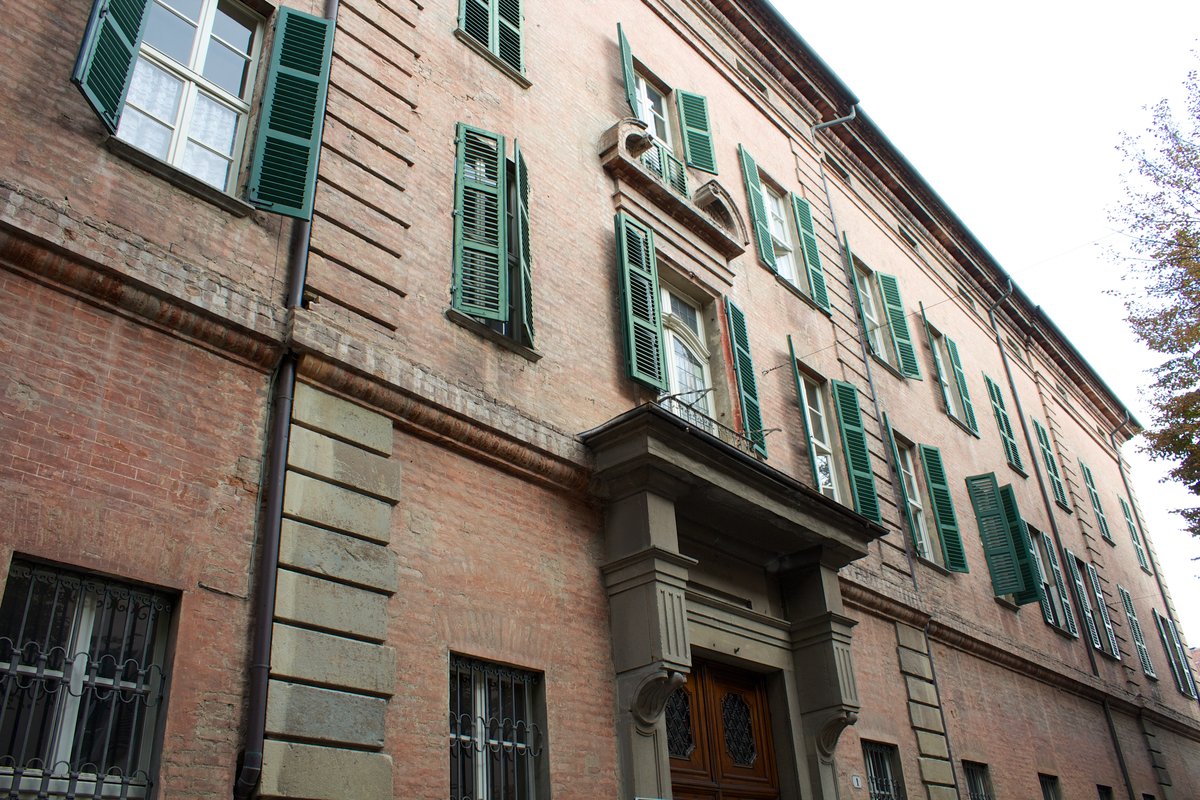 Not far from the Cathedral, the Bishop's Seminary Palace overlooks Piazza Catena with its elegant 18th-century façade. Originally built as a training center for the clergy, it now houses the Diocesan Museum, which collects sacred artworks from churches in the Asti diocese. Inside, visitors can admire liturgical vestments, illuminated manuscripts, and wooden sculptures, with medieval reliquaries standing out. The inner courtyard, with its portico, offers a quiet corner. This stop reveals the connection between Asti and its religious tradition, enriching the itinerary with lesser-known yet significant details.
- Piazza Catena, Asti (AT)
- Open in Google Maps
- View on Google Images
You should go if...
Stop no. 5
Comentina Tower
 Continuing along Corso Vittorio Alfieri, the Comentina Tower rises with its brick structure, a witness to Asti's medieval era. Built between the 12th and 13th centuries, it was part of the defensive system of noble families, such as the Comentini, from whom it takes its name. Its moderate height and central location make it a landmark in the urban fabric. Observing it, one notices typical architectural details of the period, such as arrow slits and the massive base. It is a symbol of the civil power that characterized Asti, enriching the itinerary with a piece of urban history beyond churches and palaces.
- Corso Vittorio Alfieri, Asti (AT)
- Open in Google Maps
- View on Google Images
You should go if...
Stop no. 6
Monument to Vittorio Alfieri
 Leaving the Torre Comentina behind, you'll find yourself in Piazza Vittorio Alfieri, dominated by the monument dedicated to the celebrated Asti-born poet and playwright. Created by sculptor Odoardo Tabacchi in 1862, the bronze group depicts Alfieri seated in a thoughtful pose, surrounded by allegories of his most famous works. The statue stands on a tall granite base, enriched with bas-reliefs narrating episodes from the artist's life. This place is not only a tribute to Piedmontese culture but also a gathering spot for the people of Asti, who meet here among the market stalls and events that enliven the square. Observing the monument allows you to grasp the deep connection between Alfieri and his hometown, a legacy that Asti proudly preserves.
- Piazza Vittorio Alfieri, Asti (AT)
- Open in Google Maps
- View on Google Images
You should go if...
Stop no. 7
Baptistery of Saint Peter
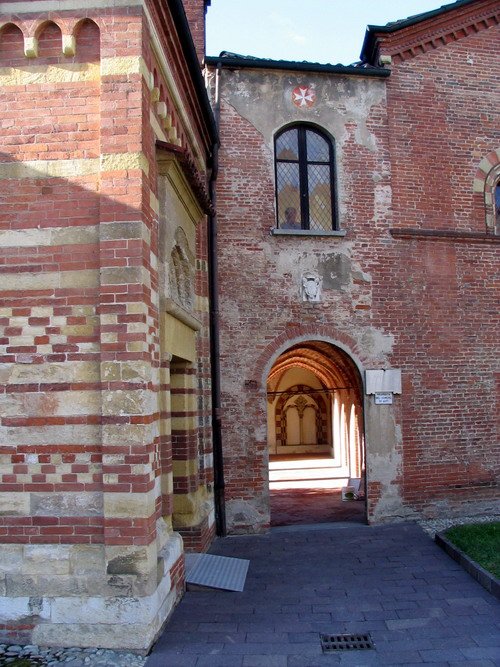 Leaving the Monument to Vittorio Alfieri behind, you arrive at the Baptistery of Saint Peter, one of the oldest religious buildings in Piedmont. Dating back to the 5th-6th century, this red brick structure represents a rare example of Paleochristian architecture in the region. The interior preserves traces of medieval frescoes and an octagonal baptismal font, symbolizing spiritual rebirth. Its location along Corso Vittorio Alfieri makes it an ideal stopping point during your exploration of Asti's historic center. Observing the baptistery's sober elegance allows you to immerse yourself in the city's Christian roots, a heritage that Asti preserves with dedication.
- Corso Vittorio Alfieri 2, Asti (AT)
- https://www.comune.asti.it/pagina796_san-pietro-in-consavia.html
- Open in Google Maps
- View on Google Images
You should go if...