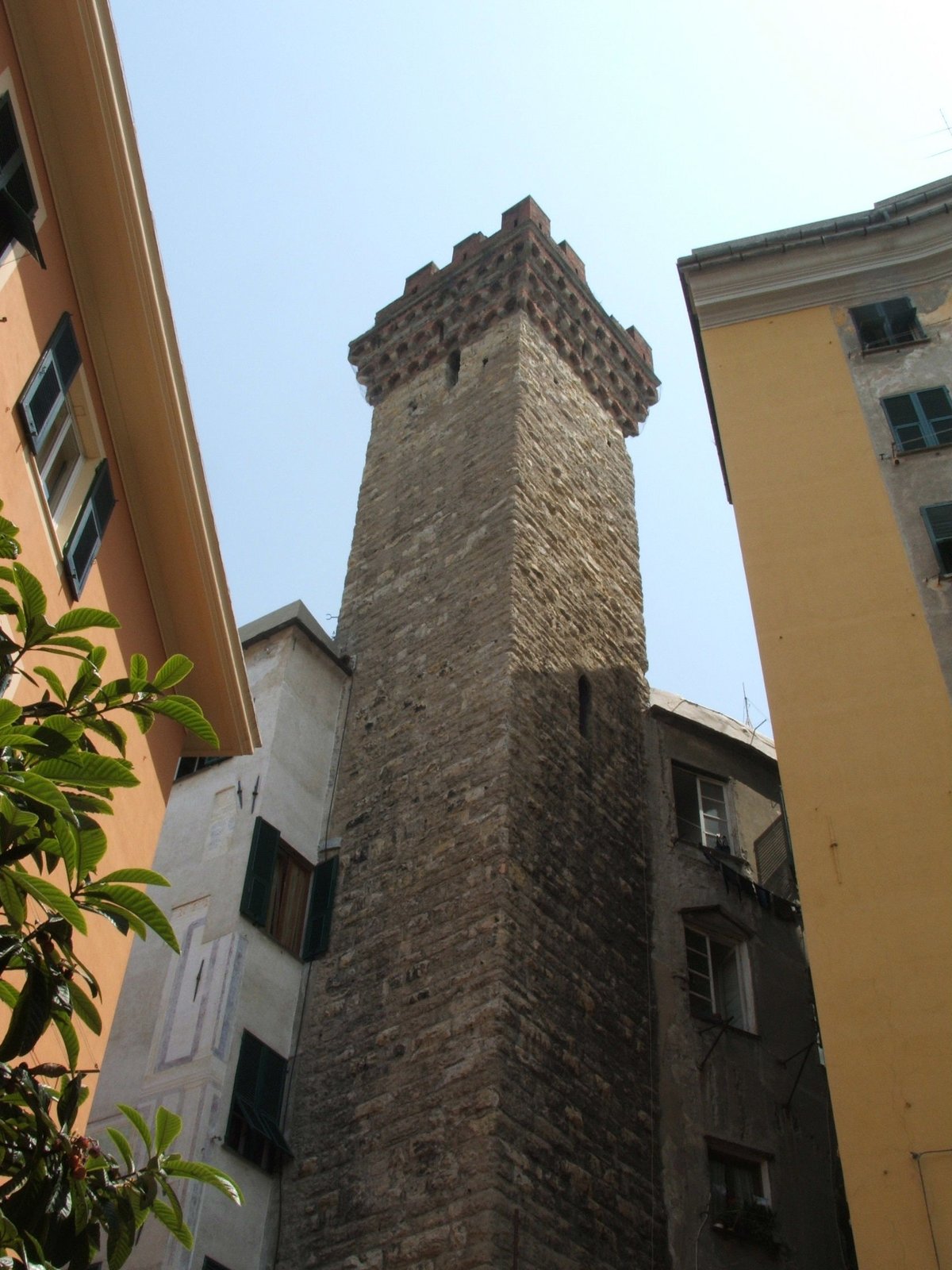
The Embriaci Tower is the only completely preserved medieval tower in Genoa’s historic center, constructed around 1150 by the powerful Embriaci family. Ascending the 150 steps of the stone spiral staircase brings you to a panoramic terrace offering an authentic view over the caruggi and the ancient port. The visiting experience is immersive, featuring steep stairs and original 12th-century architectural details.
- Unique accessible medieval viewpoint in Genoa’s historic center
- Authentic 1150 structure with Promontorio stone and original staircases
- 360-degree view over the caruggi, ancient port, and surrounding hills
- Historical witness to the struggles among Genoese families and mercantile power
Introduction
Do you ever look up among the caruggi of Genoa and feel small? With the Torre degli Embriaci, it always happens. This medieval tower, nearly 40 meters high, is the only one left intact in the historic center after centuries of wars and urban transformations. They call it the ‘giant of Genoa,’ and when you see it, you understand why: it towers over the buildings like a guardian from another era, with its dark stone telling stories of power and rivalry. It’s not just a monument; it’s an experience. Climbing to the top (yes, you can!) offers a view of the rooftops and alleys that makes you feel part of Genoese history. Personally, I like to think that every step is a step back into the 12th century.
Historical Background
The Torre degli Embriaci was built around 1150 by the powerful Embriaci family, who had amassed wealth through the Crusades. It was not merely a symbol of prestige: during that era of feuds among Genoese families, towers served as fortifications and observation points. Its height, unusual for the time, demonstrated the Embriaci’s wealth and influence. Interestingly, while many similar towers were demolished or incorporated into other buildings over the centuries, this one has survived almost miraculously. It is said to have withstood even the bombings of World War II, thus becoming a silent witness to the city’s history.
- Around 1150: Construction of the tower by the Embriaci family
- 13th-14th century: Peak period for Genoese noble towers
- 1576: The tower is mentioned in official documents as still intact
- Today: The only completely preserved medieval tower in the historic center
The Ascent to the Summit
Climbing the Torre degli Embriaci is an adventure that begins right at the entrance, narrow and dark as one would expect from a medieval structure. The stone spiral staircase is steep, with steps worn by time, but each turn reveals arrow slits that once served for defense. When you reach the top after about 150 steps, the view takes your breath away: on one side, the maze of caruggi winding like the city’s veins, and on the other, glimpses of the ancient port and surrounding hills. You’ll notice the terrace isn’t huge—it only fits a few people at a time—which makes the experience even more intimate. Note: there are no very high railings, so if you suffer from vertigo, consider carefully. I visited with a light haze, and the atmosphere was magical, as if suspended between past and present.
The Details That Tell the Story
What I love about the Torre degli Embriaci are the details that go unnoticed if you don’t pay attention. The Promontorio stone, typical of the area, has hues that change with the daylight – at sunset, it turns almost golden. Look closely at the corbels jutting out high up: they were used to support the machicolations, from which stones were dropped on attackers. On the north side, you’ll notice traces of ancient walled-up openings, signs of modifications over the centuries. Inside, the echo of footsteps resonates in a particular way, as if the tower had its own voice. A curious detail: compared to other Italian medieval towers, there are no elaborate decorations here – it’s all substance, functional and austere, much like the Genoese character. Perhaps that’s why I like it so much: it doesn’t try to embellish itself, it simply shows what it is.
Why Visit It
Visiting the Torre degli Embriaci is worthwhile for three concrete reasons. First: it’s the only accessible medieval panoramic point in Genoa’s historic center. While other viewpoints are modern or on recent buildings, here you climb an authentic 12th-century structure. Second: it allows you to truly understand how the city was organized in the Middle Ages, when powerful families competed for control by building ever taller towers. Third: the climbing experience itself – dark, narrow, somewhat strenuous – makes you feel like a genuine inhabitant of the era, not just a tourist observing from the outside. And then there’s that relative silence at the top, surprising considering you’re in the heart of a vibrant city like Genoa.
When to go
The best time? I’d say the first afternoon of autumn, when the low sun illuminates the narrow alleys, creating plays of light and long shadows. In summer, the historic center can be muggy, and the climb up the tower becomes more strenuous, while in winter, the short days limit the hours of daylight to enjoy the view. Spring is beautiful, but it’s often more crowded. A personal tip: avoid the weekends in mid-August, when Genoa is invaded by cruise ship tourists. Better a Tuesday or Wednesday, perhaps after having lunch with a cheese focaccia from one of the nearby fry shops. The late afternoon light, between 3 and 5 p.m., often offers the most photogenic atmospheres.
In the Surroundings
After the tower, continue your medieval exploration with two nearby experiences. Just a few minutes’ walk away is the Palazzo di San Giorgio, the historic seat of Europe’s first public bank, with its frescoed facade telling the story of Genoa’s maritime power. Then, immerse yourself in the caruggi towards Via del Campo: it’s not just the street from De André’s song, but a network of alleys where you can still breathe the atmosphere of ancient Genoa, with artisan workshops and traditional taverns. If you’re interested in religious architecture, the church of San Donato (also medieval) is just steps away and has a distinctive octagonal bell tower. All these places complete the picture of medieval Genoa without needing to travel far.