
The Cathedral of Santa Maria Assunta in Cremona is a Romanesque masterpiece with richly decorated interiors. It houses cycles of Renaissance frescoes and provides access to Italy’s tallest bell tower.
- Renaissance frescoes by Boccaccio Boccaccino and Pordenone in the naves
- 112-meter-high Torrazzo with views over Cremona and the Po Valley
- Crypt with the relics of Saint Homobonus, the city’s patron saint
- 16th-century astronomical clock, one of the oldest in Europe
Events nearby

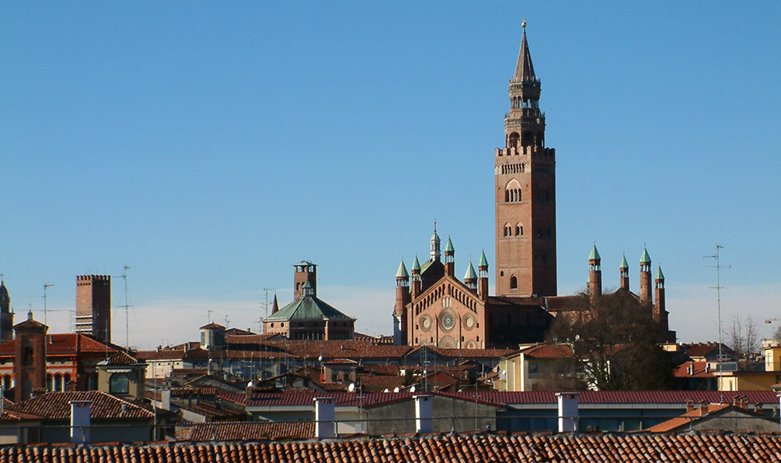
Cremona’s Cathedral of Santa Maria Assunta features Renaissance frescoes by Boccaccino and Pordenone, a crypt with the relics of Saint Homobonus, and a climb up the 112-meter-high Torrazzo for panoramic views.
- Piazza del Comune, Cremona (CR)
- Open in Google Maps
- View on Google Images Cattedrale di Santa Maria Assunta a Cremona
Good to know
Introduction
As soon as you arrive in Piazza del Comune, Cremona Cathedral strikes you with its majesty. The white and pink marble facade glistens under the sun, while the Torrazzo, Italy’s tallest bell tower, soars imposingly at 112 meters. Stepping inside, you’re left breathless: the central nave is a triumph of Renaissance frescoes that tell sacred stories with vibrant colors. It’s not just a church, but a journey through time between art and faith. The contrast between the Romanesque exterior and the richly decorated interiors makes you feel like you’re in a unique place, where every corner hides a detail to discover. It’s an experience that unites spirituality and beauty, perfect for those seeking authentic emotions.
Historical Overview
The construction of the Duomo began in 1107, following an earthquake that destroyed the previous cathedral. In the 12th century, the transept and Romanesque façade were added, while in the 15th century, the interiors were enriched with fresco cycles by artists such as Boccaccio Boccaccino and Gianfrancesco Bembo. The Torrazzo was completed in 1309, becoming a symbol of the city. During the Renaissance, the cathedral became an artistic hub, with works blending Gothic and Renaissance styles. Today, it is a protected cultural heritage site, visited for its history and the masterpieces it houses.
- 1107: Construction begins after the earthquake
- 12th century: Addition of transept and façade
- 1309: Completion of the Torrazzo
- 15th century: Renaissance fresco cycles
The Renaissance Frescoes
Inside, the frescoes are the heart of the Cathedral. In the central nave, admire Boccaccio Boccaccino’s Scenes from the Life of Mary, with depictions like the Annunciation that transport you back to the 16th century. On the walls, works by Gianfrancesco Bembo and Altobello Melone add depth, with colors that withstand the test of time. Don’t miss the Chapel of the Madonna del Popolo, where the frescoes recount local miracles, making your visit a unique visual experience. These works are not merely decorative; they narrate Cremonese devotion and artistic evolution, with details you can observe up close, such as the characters’ expressions or hidden symbols.
The Torrazzo and the Astronomical Clock
Climbing the Torrazzo is an adventure: the 502 steps take you to a height of 112 meters, with a panoramic view over Cremona and the Po Valley. At the top, you’ll notice the 16th-century astronomical clock, one of the oldest in Europe, which displays lunar phases and zodiac signs. Built by Francesco and Giovan Battista Divizioli, it is still functioning and adds a touch of science to the visit. The climb is challenging but rewarded by the view: you’ll see the Po River, the city’s rooftops, and on clear days, the Alps. It’s an experience that combines history, art, and a bit of sport, ideal for those who love challenges.
Why Visit It
Visit the Duomo for three practical reasons: first, the Renaissance frescoes are among the best preserved in Lombardy and offer an artistic journey without requiring extra tickets. Second, climbing the Torrazzo gives you a unique view of the city, perfect for memorable photos. Third, it’s in the heart of Cremona, just steps away from other iconic sites like the Baptistery, allowing you to make the most of your time. Additionally, entrance to the cathedral is free, with only a small fee for the bell tower, making it accessible to everyone. It’s an opportunity to immerse yourself in history without spending too much.
When to Go
The best time to visit the Cathedral is at sunset, when the warm sunlight illuminates the frescoes, creating magical atmospheres inside. In summer, avoid the midday hours due to the crowds; in autumn, the colors of the leaves in Piazza del Comune add charm. If you climb the Torrazzo, choose a clear day to enjoy the view without clouds. No advance booking is required, but arrive early in the morning or in the late afternoon for a quieter visit, especially on weekends.
In the Surroundings
After visiting the Cathedral, explore the Violin Museum, just a few minutes’ walk away, where you’ll discover Cremona’s luthier tradition with instruments by Stradivari. Alternatively, stop by a luthier’s workshop to see craftsmen at work. Another idea is to visit the Romanesque Baptistery next to the Cathedral, with its 12th-century baptismal font. These places complete your experience, adding music and craftsmanship to your day without leaving the historic center.
Itineraries nearby
💡 Did You Know…?
Did you know that the Torrazzo houses the world’s largest astronomical clock? Built in 1583, it displays not only the time but also the movements of the sun, moon, and planets. Legend has it that the two marble lions flanking the main portal come to life at night to protect the cathedral. An interesting detail: in the right nave, look for Boccaccino’s ‘Madonna del Popolo,’ donated after the plague of 1524 as the city’s votive offering.