
The Rocca Sforzesca in Soncino is a rare example of Renaissance military architecture built between 1473 and 1475, perfectly preserved with authentic 15th-century interiors. It offers a complete visit from the prisons to the keep, with explanatory panels and audio guides available.
- Intact Structure: Quadrangular fortress with corner towers, original moat, and still-functional drawbridges.
- Underground Prisons: Cells with original prisoner graffiti and surveillance system from the Spanish era.
- Panoramic Keep: 30-meter-high tower with breathtaking views over Soncino and the Cremonese countryside.
- Full Accessibility: All areas visitable, including the inner courtyard and patrol walkways.
Events nearby

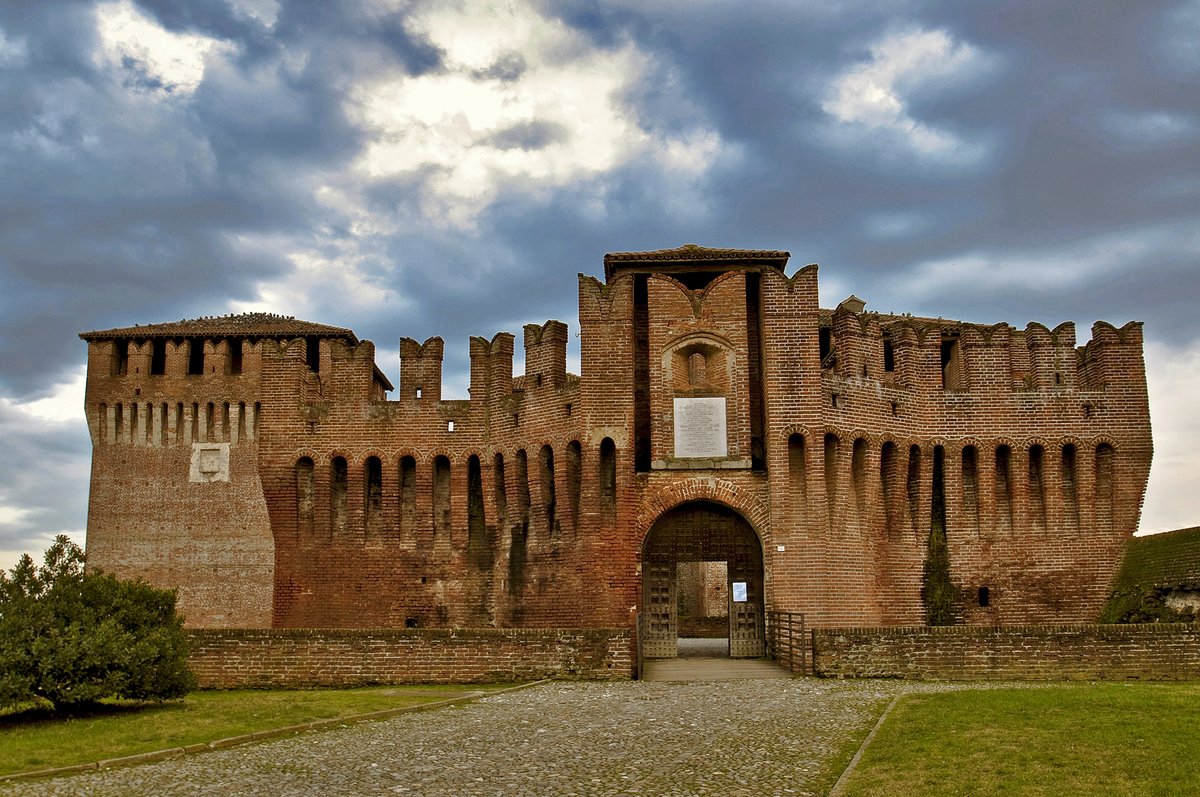
Perfectly preserved 15th-century fortress with corner towers, original moat, and functional drawbridges. Explore the underground prisons, climb the keep for the view, and discover the history of the Sforza family.
- Via Carlo Cattaneo, Cremona (CR)
- Open in Google Maps
- View on Google Images Rocca Sforzesca a Cremona
Good to know
Introduction
As soon as you arrive in Soncino, the Sforza Fortress immediately catches your eye: an imposing stronghold that dominates the medieval village, perfectly preserved despite being over 500 years old. Walking along the dry moat and observing the corner towers, you feel as if you’ve stepped back in time. Its quadrangular structure with a central keep is a rare example of Lombard Renaissance military architecture that has maintained its authenticity intact. It’s not just a monument to photograph, but a place that tells stories of dukes, battles, and daily life from the fifteenth century. The sensation of crossing the drawbridge (now fixed) and entering the inner courtyard is an experience that stays with you, especially when you climb the walls and admire the view over the Cremonese Po Valley.
Historical Notes
The fortress was built between 1473 and 1475 at the behest of Galeazzo Maria Sforza, Duke of Milan, based on a design by Bartolomeo Gadio. It served as a defensive outpost against the Republic of Venice, and in 1499 it even hosted Lucrezia Borgia during a journey. It later came under Spanish rule and was used as a prison until the 19th century. Today it is municipal property and fully open to visitors.
- 1473-1475: Construction commissioned by the Sforzas
- 1499: Stay of Lucrezia Borgia
- 16th-17th century: Use as a Spanish garrison
- 19th century: Abandonment and subsequent restoration
- Today: Open to the public as a museum
Secrets of the Prisons
Descending into the Rocca’s underground prisons is a spine-chilling experience. Political prisoners and convicts were held here during Spanish rule. The dark, damp cells still preserve graffiti carved by inmates, with dates and symbols that tell stories of despair. A unique feature is the ‘well cell’, where prisoners drew water directly from an underground spring. During the guided tour (highly recommended), they’ll explain how the surveillance system worked and what the torture methods of the era were. This section isn’t suitable for young children, but for history enthusiasts, it’s a plunge into the darkest side of the Renaissance.
The Keep and the Views
Climbing to the top of the keep, the main tower standing 30 meters high, offers a breathtaking view over Soncino and the surrounding countryside. From here, you can clearly see the crenellated walls of the village and, on clear days, catch a glimpse of the Bergamo Prealps on the horizon. The stone spiral staircase is steep but manageable, and once at the top, you understand why this spot was strategically important for controlling the territory. Inside the keep, the exhibition rooms display archaeological finds uncovered during restoration work, such as ceramics and coins from the Sforza era. It’s the perfect place for panoramic photos, especially at sunrise or sunset, when the light makes everything more magical.
Why Visit It
Visiting the Sforza Fortress is worthwhile for three practical reasons: first, it’s one of the few Lombard fortresses that is fully accessible, from the prisons to the keep, with no areas closed to the public. Second, the explanatory panels and audio guides (available in Italian and English) allow you to explore independently, with clear information about each area. Third, the entrance ticket also includes access to the Printing Museum, located in the village, where you’ll discover the history of the first book printed in Soncino in 1488. It’s an excellent opportunity to combine culture and savings.
When to Go
The best time to visit the fortress is on an autumn morning, when the typical Po Valley mist envelops the towers, creating a cinematic, historical atmosphere. In summer, opt for late afternoon to avoid the heat and enjoy the sunset from the walls. Avoid weekends with local festivals if you prefer a quieter visit, as the village fills with visitors.
In the Surroundings
Just a stone’s throw from the fortress, don’t miss the Printing Museum in the center of Soncino, which houses a reproduction of the first book printed in Hebrew in 1488. For a culinary experience, stop at one of the local farms to taste Salva Cremasco DOP, the typical cheese of the area, often paired with wines from the Cremona hills.
Itineraries nearby
💡 Did You Know…?
Legend has it that the north tower is home to the ghost of a white lady, perhaps Caterina Sforza, who appears on full moon nights. More realistically, the fortress hosted Leonardo da Vinci during his studies on military fortifications. The well in the inner courtyard, 42 meters deep, was so strategic that during sieges it was filled with sand to deprive enemies of water. Even today, you can see the graffiti left by guard soldiers on the tower walls.