
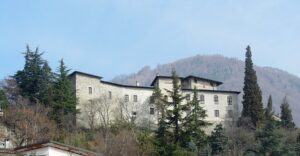
The Visconti Castle of Pandino is a perfectly preserved 1355 Gothic fortress, built as a hunting residence by Bernabò Visconti. The structure combines defensive function with residential elegance, featuring red bricks, corner towers, and a spacious welcoming entrance. The interiors house original 14th- and 15th-century frescoes depicting hunting scenes and courtly life.
- Original 14th-century frescoes in the porticoed courtyard with hunting scenes and heraldic symbols
- Unique ‘soft’ defensive structure in the Cremonese landscape, designed for hospitality
- Majestic internal courtyards preserving the authentic medieval atmosphere
- Tranquil location in the Cremonese countryside, away from crowded tourist routes
Events nearby




A 1355 Gothic fortress in the Cremonese countryside with original 14th-century frescoes, a porticoed courtyard, and a ‘soft’ defensive structure. The perfectly preserved hunting residence of Bernabò Visconti.
- Via Stefano da Pandino, Cremona (CR)
- Open in Google Maps
- View on Google Images Castello Visconteo di Pandino a Cremona
Good to know
Introduction
As soon as you arrive in Pandino, the Visconti Castle strikes you with its imposing Gothic presence dominating the Cremonese countryside. Built in the 14th century as a hunting residence, it’s not a menacing fortress but a perfectly preserved architectural gem, with red bricks that gleam in the sun and slender towers. Crossing the entrance gate is like stepping back in time: the inner courtyards, silent and majestic, immediately transport you to the atmosphere of a distant era. Here, every stone tells stories of dukes and hunting expeditions, while the well-preserved frescoes add a touch of elegance. It’s one of those places that, although little known to mass tourism, offers authentic emotions and a direct glimpse into the courtly life of the past.
Historical Overview
The Visconti Castle of Pandino was founded in 1355 by Bernabò Visconti, Lord of Milan, as a summer residence and base for hunting expeditions in the Po Valley. Unlike many castles of the era, it did not have predominant military functions but was designed for leisure and territorial administration. In the fifteenth century, it came under the control of the Sforza family, who maintained its residential use. Over the centuries, it underwent various transformations, including a period as an agricultural farmstead, but twentieth-century restorations brought the original structure back to light. Today, it is privately owned but significant parts are open to visitors, with rooms preserving traces of its former splendor.
- 1355: Foundation by Bernabò Visconti
- 15th century: Transition to the Sforza family
- Subsequent centuries: Use as a farmstead
- 20th century: Restoration and enhancement
The Courtyard Frescoes
One of the castle’s hidden treasures are the frescoes of the porticoed courtyard, dating back to the 14th and 15th centuries, which depict hunting scenes, heraldic symbols, and geometric patterns typical of Lombard art. These decorations, well-preserved despite the centuries, accompany you as you walk beneath the porticoes, creating a suggestive effect of continuity between architecture and art. Particularly interesting are the fragments showing knights and animals, direct references to the Visconti family’s passion for hunting. They are not monumental works like those in grand palaces, but they possess the merit of authenticity: it almost feels like you can hear the footsteps of ancient inhabitants while admiring these details. It’s a rare example of courtly painting in such a well-preserved context.
The ‘Soft’ Defensive Structure
Although it is a castle, Pandino’s structure reveals a dual soul: residential and defensive, yet without the harshness of military fortresses. The walls are tall and well-defined, with battlements and corner towers, but the entrance is wide and welcoming, designed more for hospitality than defense. Inside, the courtyards are spacious and bright, with loggias that invite lingering. This characteristic makes it unique in the Cremonese landscape: it is a place where military function blends with the elegance of court life. Even the moat, now dry, contributes to an atmosphere of protection without being threatening. It is ideal for those seeking a castle that feels ‘livable’ in its essence.
Why Visit It
Visiting the Visconti Castle of Pandino is worthwhile for at least three concrete reasons. First, the original courtyard frescoes are a rare example of Lombard medieval art still in situ, accessible without needing to book complex guided tours. Second, its location in the Cremonese countryside makes it a peaceful stop, far from the crowds, ideal for a relaxing outing. Third, it’s one of the few Visconti castles perfectly preserved in its 14th-century layout, offering an authentic view of the era’s noble architecture. Additionally, it often hosts local events that enrich the experience.
When to Go
The most enchanting time to visit the castle is on a sunny spring or autumn day, when the slanting light enhances the colors of the bricks and frescoes. During these seasons, the surrounding countryside is at its peak beauty, with green or golden fields providing a stunning backdrop. Avoid days with heavy rain, as some outdoor areas might be less enjoyable. If you prefer a more intimate atmosphere, try scheduling your visit during off-peak hours, perhaps in the early afternoon, when the sun illuminates the courtyards in spectacular fashion.
In the Surroundings
To enrich your day, I recommend combining your castle visit with a stop at the Civic Museum of Crema, just a few kilometers away, where you’ll discover artifacts and stories of the Cremasco territory. Another thematic option is exploring the farmsteads of Lower Cremona, with tastings of local products like Cremona salami, for a culinary experience that completes your journey through taste.
Itineraries nearby
💡 Did You Know…?
Particularly evocative is the inner courtyard, where you can admire the Visconti coats of arms and the graffiti left by the guards on duty. Legend has it that Bernabò Visconti used the castle for his hunting expeditions in the nearby reserve, and that the ghost of his daughter Viridis still wanders through the rooms.