
Are you ready to discover the treasures of Magna Graecia in Locride? This archaeological itinerary in the province of Reggio Calabria takes you on a 3-day journey through the most fascinating remains of ancient Greek civilization. You'll start from Locri Epizefiri, where you can admire the perfectly preserved Greek theater and the Sanctuary of Persephone, then continue to Kaulon with its famous dragon mosaics. Each stop will give you unique emotions, among millennia-old temples and artifacts that tell stories of gods and heroes. An experience that will make you feel like a true explorer of the past, perfect for those who love history without giving up the charm of the Calabrian sea.
🗺️ Your trip at a glance
A 3-day journey among the main archaeological sites of Magna Graecia in the Calabrian Locride region. This itinerary combines history, culture, and coastal landscapes, ideal for those seeking an authentic experience away from crowded tourist circuits.
- Ideal for enthusiasts of ancient history and travelers looking for cultural itineraries off the tourist track.
- Highlights: includes well-preserved Greco-Roman theaters, the dragon mosaic of Kaulon, and a Roman villa with baths, with maps for each stop.
- Perfect for those who want to immerse themselves in Magna Graecia by experiencing authentic artifacts firsthand while enjoying the panoramic view of the Ionian Sea.
Itinerary stops
Day 1 - Stop no. 1
Locri Epizephiri
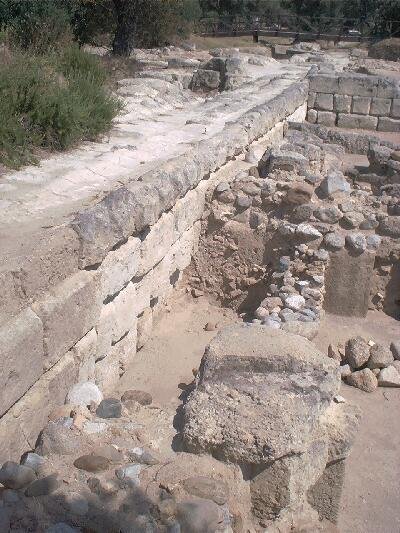 Starting the Archaeology in Locride itinerary from Locri Epizephiri means immediately immersing yourself in the heart of Magna Graecia. This archaeological site, overlooking the Strada Statale 106 Jonica, preserves the traces of one of the most important colonies in the Mediterranean. Walking among the remains of the Temple of Zeus and the House of the Lions, you can sense the ancient splendor of the city, founded in the 7th century BC. The Locrian Tablets, bronze tablets with sacred laws, are a unique example of Greek documentation. The theater, partially carved into the rock, offers a suggestive view of the Ionian Sea. The nearby National Archaeological Museum completes the visit with artifacts such as pinakes, terracotta votive tablets. An ideal starting point to understand the greatness of the Locrian civilization.
- Go to the page: Locri Epizephiri: Greek Theatre by the Sea and Ancient Laws on Bronze Tablets
- Strada Statale 106 Jonica, Locri (RC)
- https://www.locriantica.it/
- Open in Google Maps
- View on Google Images

You should go if...
Day 1 - Stop no. 2
Roman Theatre of Locri
 The Roman Theatre of Locri, located on Via Olivarello, is a key stop on the 'Archaeology in Locride' itinerary. This site, dating back to the Roman period, stands in the area of ancient Locri Epizefiri, one of the most important Greek colonies of Magna Graecia. Partially carved into the hillside, the theatre preserves sections of the cavea and orchestra, offering an example of Roman theatre architecture adapted to the Greek context. Its position allows visitors to enjoy views of the Ionian Sea, blending history with landscape. Visiting means immersing yourself in the cultural life of the era, when performances and assemblies animated this space. It's a place that showcases the historical layering of Locride, from Greek colony to Roman dominion.
- Via Olivarello, Locri (RC)
- https://www.locriantica.it/sito/teatro.htm
- Open in Google Maps
- View on Google Images
You should go if...
Day 1 - Stop no. 3
National Archaeological Museum of Locri Epizefiri
 The National Archaeological Museum of Locri Epizefiri, located along State Road 106 Jonica, perfectly complements the visit to the preceding Roman Theater. Here you won't just find statues and vases, but tangible evidence of daily life in the ancient Greek colony. The exhibition halls preserve artifacts such as red-figure pottery, bronze medical instruments, and personal items that reveal the habits and beliefs of the Locrians. Particularly significant are the pinakes, terracotta votive tablets dedicated to the Sanctuary of Persephone, which depict cult and mythological scenes. The exhibition follows a chronological order, allowing visitors to grasp the city's evolution from its Greek foundation to the Roman era. Visiting this museum means giving a face to the history touched upon in the nearby ruins.
You should go if...
Day 2 - Stop no. 1
Greco-Roman Theatre of Marina di Gioiosa Ionica
 The Greco-Roman Theatre of Marina di Gioiosa Ionica, located on Via Dante Alighieri, stands as one of the most fascinating examples of ancient architecture in the Locride region. Originally built during the Greek era and later expanded by the Romans, the theatre takes advantage of the natural hillside slope to create a cavea that could accommodate around 2,500 spectators. The structure preserves parts of the semicircular orchestra and the stage, where theatrical performances and public assemblies once took place. Its location, just steps from the sea, offers a breathtaking view that once served as the backdrop for these spectacles. Compared to the Archaeological Museum of Locri visited the previous day, here you can directly experience the social and recreational dimension of ancient life, walking through the spaces where the Locrians gathered for culture and entertainment. The site, less crowded than others in the area, allows for a peaceful and immersive visit.
- Via Dante Alighieri, Marina di Gioiosa Ionica (RC)
- Open in Google Maps
- View on Google Images
You should go if...
Day 2 - Stop no. 2
Kaulon Archaeological Park
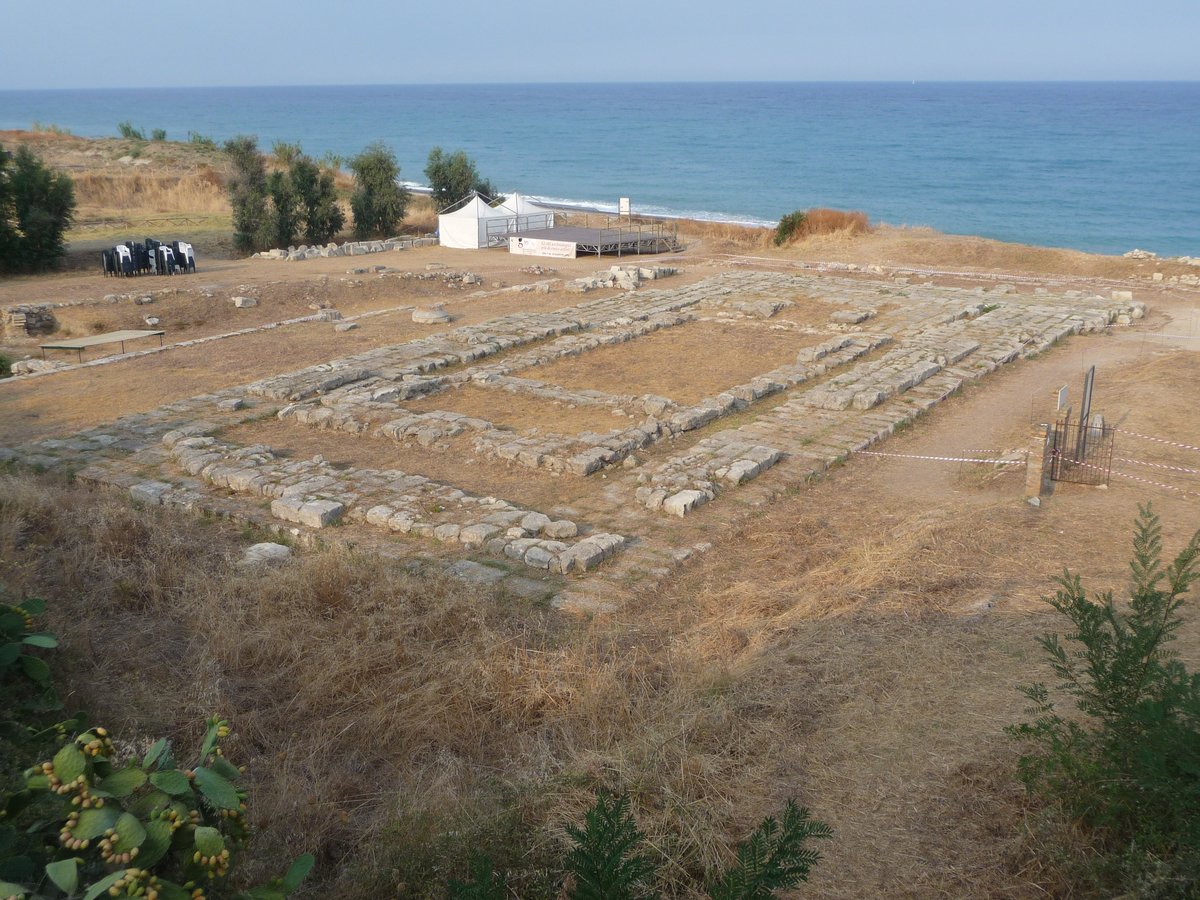 The Kaulon Archaeological Park in Monasterace Marina immerses you in the ancient Magna Graecian city founded in the 7th century BC. Here, along the State Road 106 Jonica, you can admire the remains of the Doric temple dedicated to Zeus, with its columns standing out against the sky. The site reveals aristocratic houses with mosaic floors, including the famous sea dragon, unique for its vibrant colors and complex iconography. The Roman baths and water system testify to urban evolution, while the cliffside position overlooking the sea offers breathtaking views. Artifacts such as ceramics and coins are displayed in the nearby Archaeological Museum, completing the visit with details about daily life. A place that combines history and landscape, ideal for those seeking archaeological authenticity.
- Go to the page: Kaulon Archaeological Park: Dragon Mosaic and Ionian Sea View
- Strada Statale 106 Jonica, Monasterace Marina (RC)
- Open in Google Maps
- View on Google Images
You should go if...
Day 2 - Stop no. 3
Ancient Kaulon Museum
 After exploring the Kaulon Archaeological Park, the Ancient Kaulon Museum in Monasterace Marina completes the picture with a collection that brings daily life in the ancient Magna Graecia city to life. Located along the SS106 Jonica state road, the museum houses key artifacts such as decorated ceramics, minted coins, and household tools that illustrate trade exchanges and social customs. The polychrome mosaics stand out, including the famous sea dragon, restored to reveal their intricate details. Explanatory panels and reconstructions help contextualize the findings, while thematic rooms delve into aspects like craftsmanship and religious cults. A visit here enriches the experience, transforming fragments into compelling narratives.
- Strada Statale 106 Jonica, Monasterace Marina (RC)
- Open in Google Maps
- View on Google Images
You should go if...
Day 3 - Stop no. 1
Roman Villa of Casignana
 The third day of the archaeological itinerary in Locride begins with the Roman Villa of Casignana, located along the State Road 106 Jonica. This site represents one of the **best-preserved Roman maritime villas** in all of Calabria, dating back to between the 1st and 4th centuries AD. What immediately catches the eye are the **polychrome mosaics** decorating the private baths, with intricate geometric patterns and perfectly preserved marine figures. The thermal complex includes frigidarium, tepidarium, and calidarium, showcasing the evolution of lifestyle standards among the Roman aristocracy in this region. The remains of residential and productive structures reveal how the villa functioned as both an agricultural center and a place of otium, taking advantage of its strategic seaside location. Recent excavations have also uncovered a sophisticated water supply system, testifying to Roman engineering applied to luxury residences.
- Strada Statale 106 Jonica, Casignana (RC)
- Open in Google Maps
- View on Google Images
You should go if...
Day 3 - Stop no. 2
San Fantino Temple
 The San Fantino Temple, located on Via del Vescovado in Palmi, stands as a significant testament to Calabrian Baroque architecture. Built in the 18th century, this sacred edifice is dedicated to the city's patron saint and houses remarkable artworks within, including a wooden statue of San Fantino dating back to the 1700s. The façade, characterized by simple yet elegant lines, conceals an interior rich with stuccoes and decorations that narrate the popular devotion of the Locride region. Particularly significant is the crypt, which holds the saint's relics and serves as a pilgrimage site during the patronal festivities. Recently restored, the church blends seamlessly into Palmi's urban landscape, offering visitors a moment of reflection after exploring the Magna Graecia archaeological sites on the itinerary.
- Via del Vescovado, Palmi (RC)
- Open in Google Maps
- View on Google Images
You should go if...


