
If you only have one day to discover Cremona, this itinerary through the historic center is perfect for you. Starting from the majestic Torrazzo, the symbol of the city, you'll immerse yourself in a walking route through Renaissance squares, noble palaces, and artisan workshops. You'll visit Piazza del Comune with its Cathedral and Baptistery, then head to the Violin Museum, where you can admire Stradivari instruments and discover the luthier tradition that makes Cremona unique. With this Cremona historic center itinerary, you'll experience the essence of the city in a simple and direct way, without wasting time.
🗺️ Your trip at a glance
Discover the essence of Cremona with an 8-stop walking itinerary through the historic center, from the world's tallest brick tower to the temple of violin making. Ideal for a complete and accessible cultural experience in a single day.
- Ideal for: travelers looking for a complete and walkable cultural itinerary in one day.
- Highlights: includes 8 iconic stops with a map, from the Torrazzo to the Violin Museum, passing through Renaissance squares and historic palaces.
- Who it's for: enthusiasts of art, history, and music who want to optimize their time without missing the city's symbolic landmarks.
Itinerary stops
Stop no. 1
Torrazzo
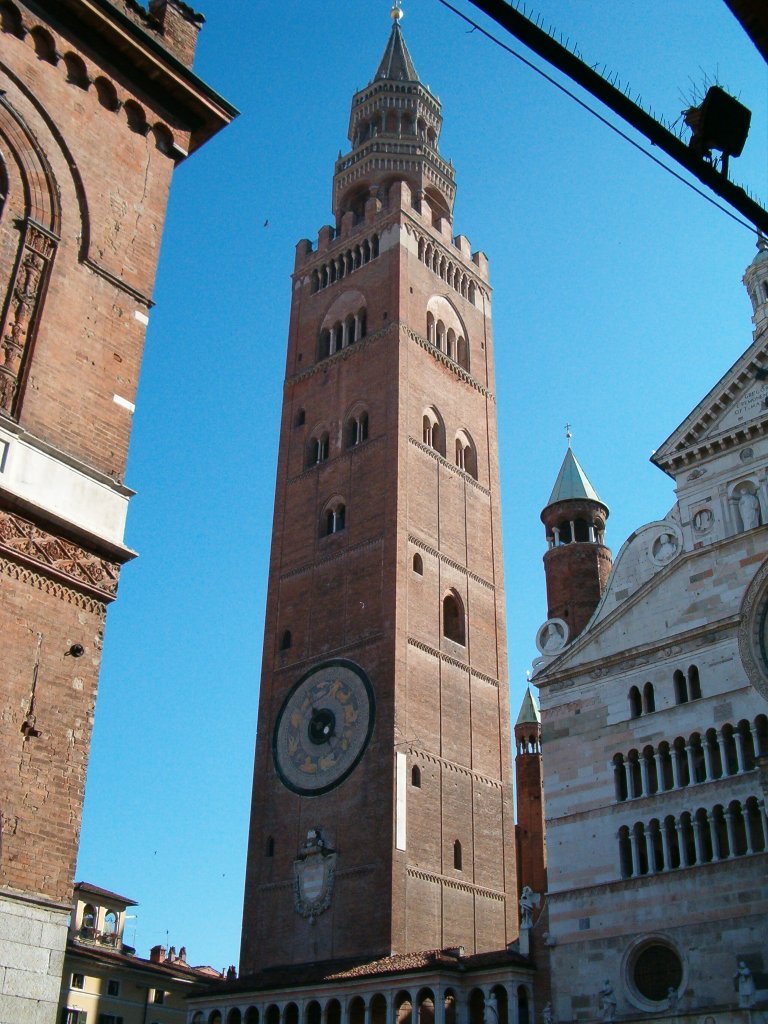 Start your day in Cremona with a climb that will reward you with unforgettable panoramas. The Torrazzo, located in Largo Boccaccino, is the city's symbol with its 112-meter height, making it the tallest brick bell tower in the world. Built between the 13th and 14th centuries, each of the 502 steps leading to the top brings you closer to a 360-degree view over the Po Valley. From here, observe the Cathedral complex and the Baptistery, appreciating the architectural harmony of the historic center. Records confirm that this tower is a masterpiece of medieval engineering, still perfectly preserved today. For a complete experience, check the opening hours on the official website of the Municipality of Cremona to avoid queues.
- Largo Boccaccino, Cremona (CR)
- Open in Google Maps
- View on Google Images

You should go if...
Stop no. 2
Cathedral of Santa Maria Assunta
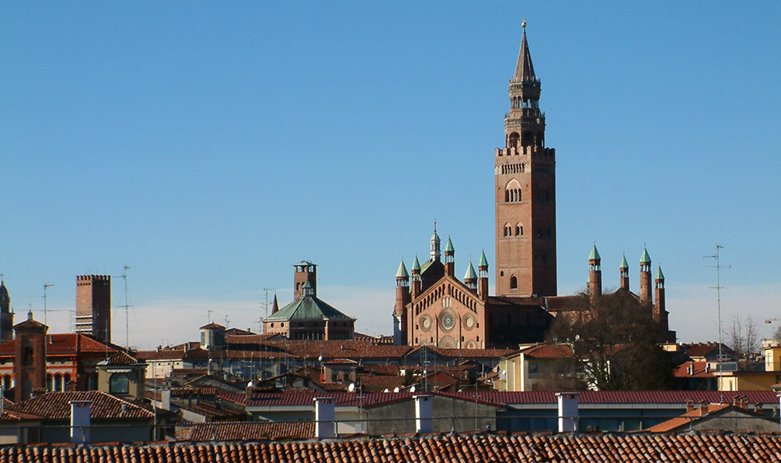 The Cathedral of Santa Maria Assunta, located in Piazza del Comune, is a masterpiece of Lombard Romanesque architecture that will leave you breathless. Built starting from the 12th century, the marble facade features a richly decorated portal with sculptures that tell biblical stories. Inside, prepare to be enveloped by the majesty of frescoes by Pordenone and other Renaissance artists, adorning the vaults and chapels. Don't miss the apse with its intricately carved wooden choir, an example of local craftsmanship reflecting Cremona's tradition. The cathedral is also famous for its bell tower, the Torrazzo, which dominates the city skyline. This place is not just a religious site, but a true art museum, perfect for those seeking immersion in Cremona's history and culture. Remember to check opening hours to avoid queues, especially on weekends.
- Go to the page: Cremona Cathedral: Renaissance Frescoes and Record-Breaking Torrazzo
- Piazza del Comune, Cremona (CR)
- Open in Google Maps
- View on Google Images
You should go if...
Stop no. 3
Baptistery
 Leaving the majesty of the Cathedral behind, you find yourself facing the Baptistery of Cremona, a Romanesque building that completes the religious complex of Piazza del Comune. Built in 1167, this octagonal monument stands out for its brick structure and simplicity of form, typical of Lombard architecture. Inside, admire the 16th-century baptismal font, a marble work that bears witness to centuries of Christian tradition. Its location, right next to the Cathedral, allows you to appreciate the contrast between the Romanesque style of the Baptistery and the more elaborate style of the cathedral. It is an ideal place for a reflective break, away from the crowds, where you can appreciate the historical details at your leisure. Check the visiting hours for access, as it is not always open to the public.
- Piazza del Comune, Cremona (CR)
- Open in Google Maps
- View on Google Images
You should go if...
Stop no. 4
Loggia dei Militi
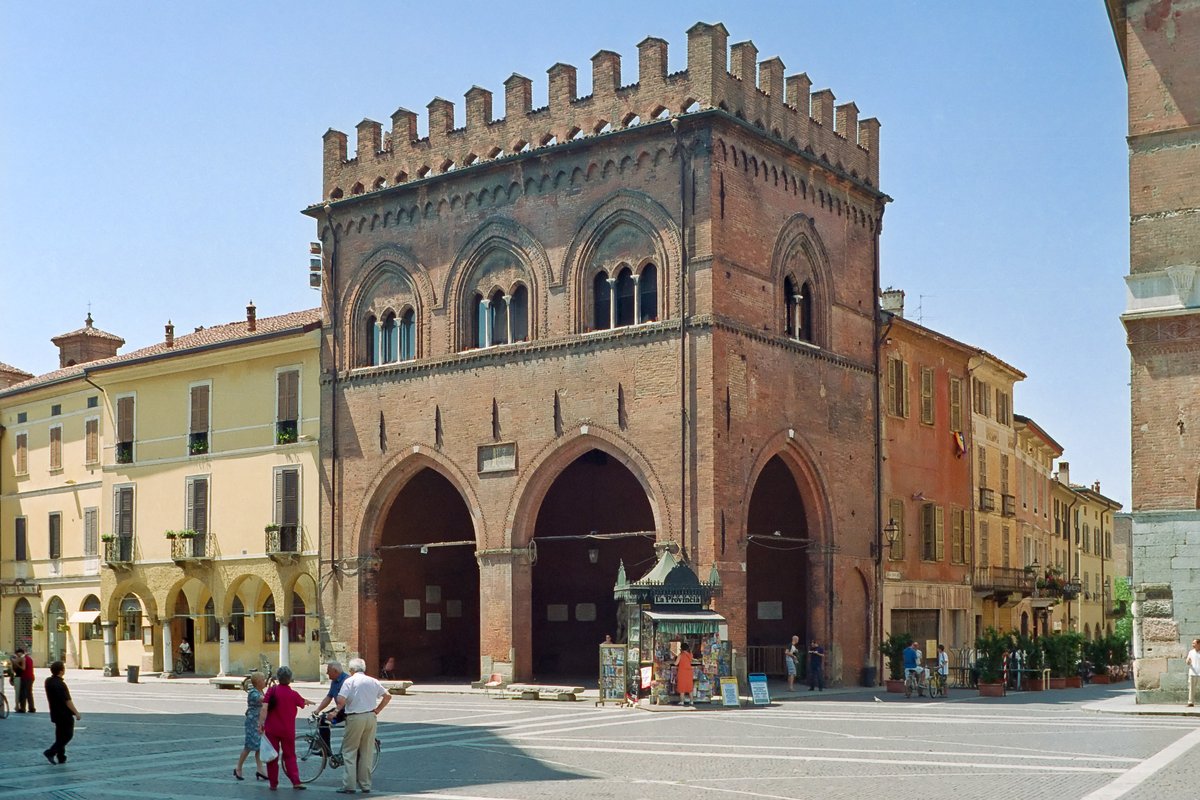 After admiring the Baptistery, you'll find yourself facing the Loggia dei Militi, one of Cremona's oldest buildings dating back to 1292. This Gothic brick structure served as the headquarters for the city's militia and represents a rare example of perfectly preserved medieval civil architecture. Take a close look at the pointed-arch portico and the biforate windows that characterize the façade, typical elements of the 13th-century Lombard style. Today, the interior houses municipal offices, but the exterior tells centuries of Cremonese history through its materials and strategic location in the heart of the city. It's a place that allows you to touch the military and civic organization of medieval Cremona firsthand, a fundamental piece for understanding the urban evolution of the square.
- Piazza del Comune, Cremona (CR)
- Open in Google Maps
- View on Google Images
You should go if...
Stop no. 5
Violin Museum
 Leaving the Loggia dei Militi behind, you'll immerse yourself in the Violin Museum, a unique experience celebrating Cremona's violin-making art. Located at Piazza Guglielmo Marconi 5, this modern museum houses a priceless collection of string instruments, including violins, violas, and cellos crafted by masters Antonio Stradivari and Giuseppe Guarneri del Gesù. Through interactive exhibits and audio guides, you'll discover traditional construction techniques and the history of local lutherie. Don't miss the auditorium, where you can hear these instruments played live during scheduled performances. It's a journey through time that helps you appreciate how Cremona has kept this centuries-old art alive, with workshops where contemporary artisans continue creating using ancient methods.
- Piazza Guglielmo Marconi 5, Cremona (CR)
- https://www.museodelviolino.org/it/
- Open in Google Maps
- View on Google Images
You should go if...
Stop no. 6
Ponchielli Theatre
 Conclude your day in Cremona by immersing yourself in the elegance of the Ponchielli Theatre, located at Corso Vittorio Emanuele II 52. This 19th-century jewel, named after the renowned composer Amilcare Ponchielli, welcomes you with a neoclassical facade that conceals a richly decorated interior. The theatre, inaugurated in 1808 and rebuilt after a fire, boasts a horseshoe-shaped hall with four tiers of boxes and a frescoed ceiling depicting musical allegories. Here you can attend opera performances, symphony concerts, and ballets in an atmosphere that combines perfect acoustics with golden details. It's the ideal place to understand how Cremona, beyond violin-making, cultivates a vibrant live music tradition, with a program ranging from classics to contemporary productions.
- Corso Vittorio Emanuele II 52, Cremona (CR)
- https://www.teatroponchielli.it/
- Open in Google Maps
- View on Google Images
You should go if...
Stop no. 7
Fodri Palace
 Leaving behind the emotions of the Ponchielli Theatre, you reach Fodri Palace on Via Gerolamo da Cremona, an architectural masterpiece that embodies the transition from Gothic to Lombard Renaissance. Built between 1490 and 1515 for the Fodri family, prominent bankers, the palace impresses with its brick façade adorned with candelabra decorations and terracotta medallions, the work of Giovanni Pietro da Rho. Inside, the porticoed courtyard with marble columns and carved capitals testifies to the wealth of its patrons. Today housing public offices, it preserves traces of original frescoes and a spiral staircase leading to the noble floors. Observe the details of the capitals, where pagan and Christian symbols merge, revealing the refined taste of the era. This building, less known but authentic, allows you to discover how Cremona embraced the artistic innovations of the Renaissance, away from the main tourist flows.
- Via Gerolamo da Cremona, Cremona (CR)
- Open in Google Maps
- View on Google Images
You should go if...
Stop no. 8
Cittanova Palace
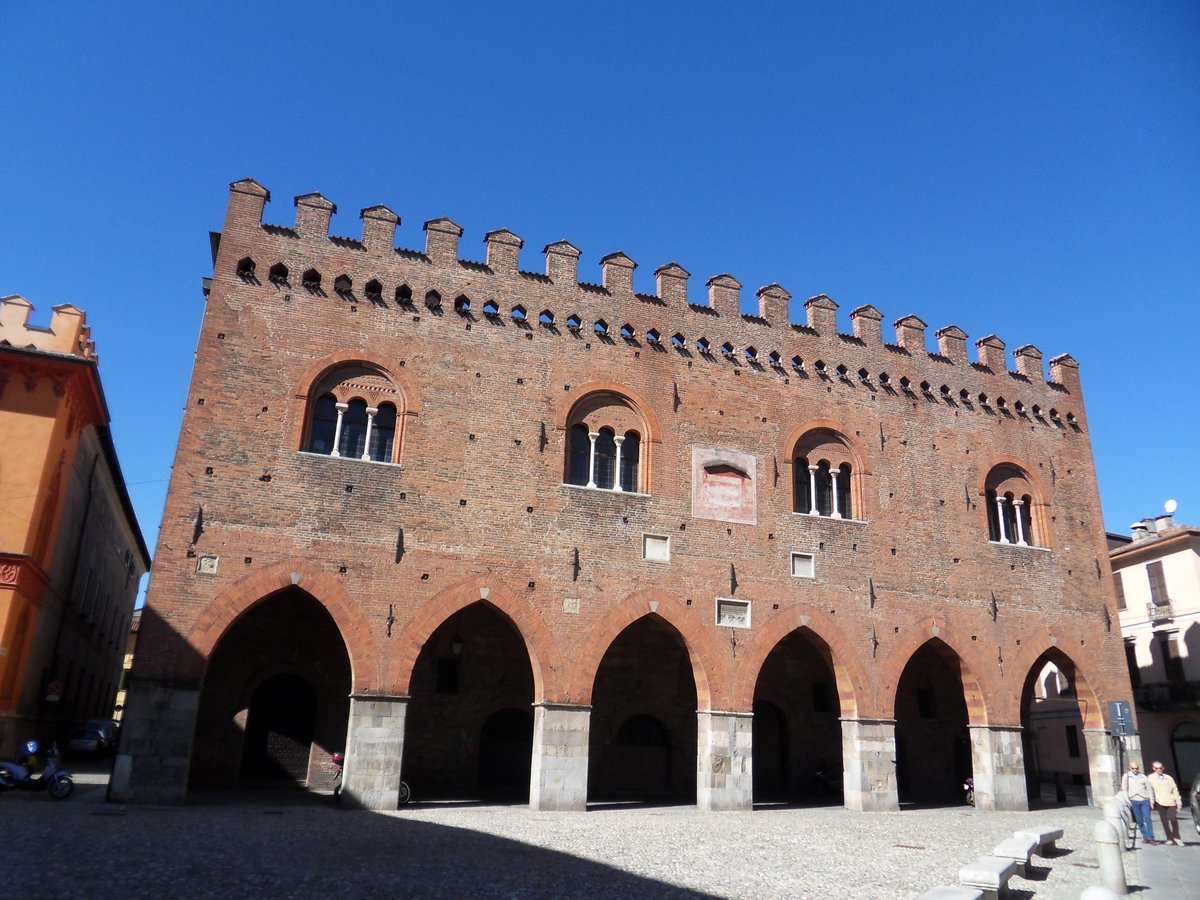 After admiring the Renaissance elegance of Palazzo Fodri, you'll encounter Cittanova Palace on Via Cappelletti, an exceptional example of 13th-century civic architecture. Built in 1256 as the headquarters of the "Città Nova" - the merchants' and artisans' quarter - this brick building represents the economic power of medieval Cremona. The austere facade with its mullioned windows and hanging arches conceals a structure that combined public and commercial functions. Observe the main portal, crowned with the city's coat of arms, and the imposing staircase that led to the reception halls. Today it hosts cultural events and temporary exhibitions, keeping alive the spirit of gathering that has characterized it since its origins. This palace allows you to experience firsthand how Cremona managed to reconcile economic development with civic identity throughout the centuries.
- Via Cappelletti, Cremona (CR)
- Open in Google Maps
- View on Google Images
You should go if...