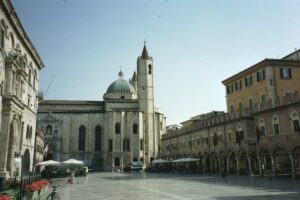
If you have only one day to spare, Pesaro offers a concentrated dose of beauty blending nature, history, and architecture. This walking itinerary starts from the Monte San Bartolo Lighthouse, overlooking the Adriatic, and continues through Renaissance villas, archaeological museums, and elegant squares. Discover Villa Imperiale, residence of the Della Rovere family, and Villa Caprile with its Italian-style gardens. In the city center, the Oliveriano Archaeological Museum tells the origins of the city, while Piazzetta Mosca and the Church of the Santissima Annunziata reveal quiet corners. The route ends with the eclectic Villino Ruggeri, a Liberty gem. A tour that combines the legacy of Rossini with historical fortifications, perfect for those who love walking between culture and views. Ideal for an off-the-beaten-path city break!
🗺️ Your trip at a glance
A one-day itinerary that condenses the best of Pesaro: from the sea to history, among villas, museums, and Liberty architecture. Discover a city that surprises.
- Ideal for: curious travelers seeking a mix of art and nature in just a few hours.
- Highlights: stress-free walking route, varied stops, breathtaking view from the lighthouse.
- Who it’s for: city-breakers and culture lovers, as well as families with children used to walking.
Itinerary stops
Stop no. 1
Monte San Bartolo Lighthouse: The Lighthouse of Memory
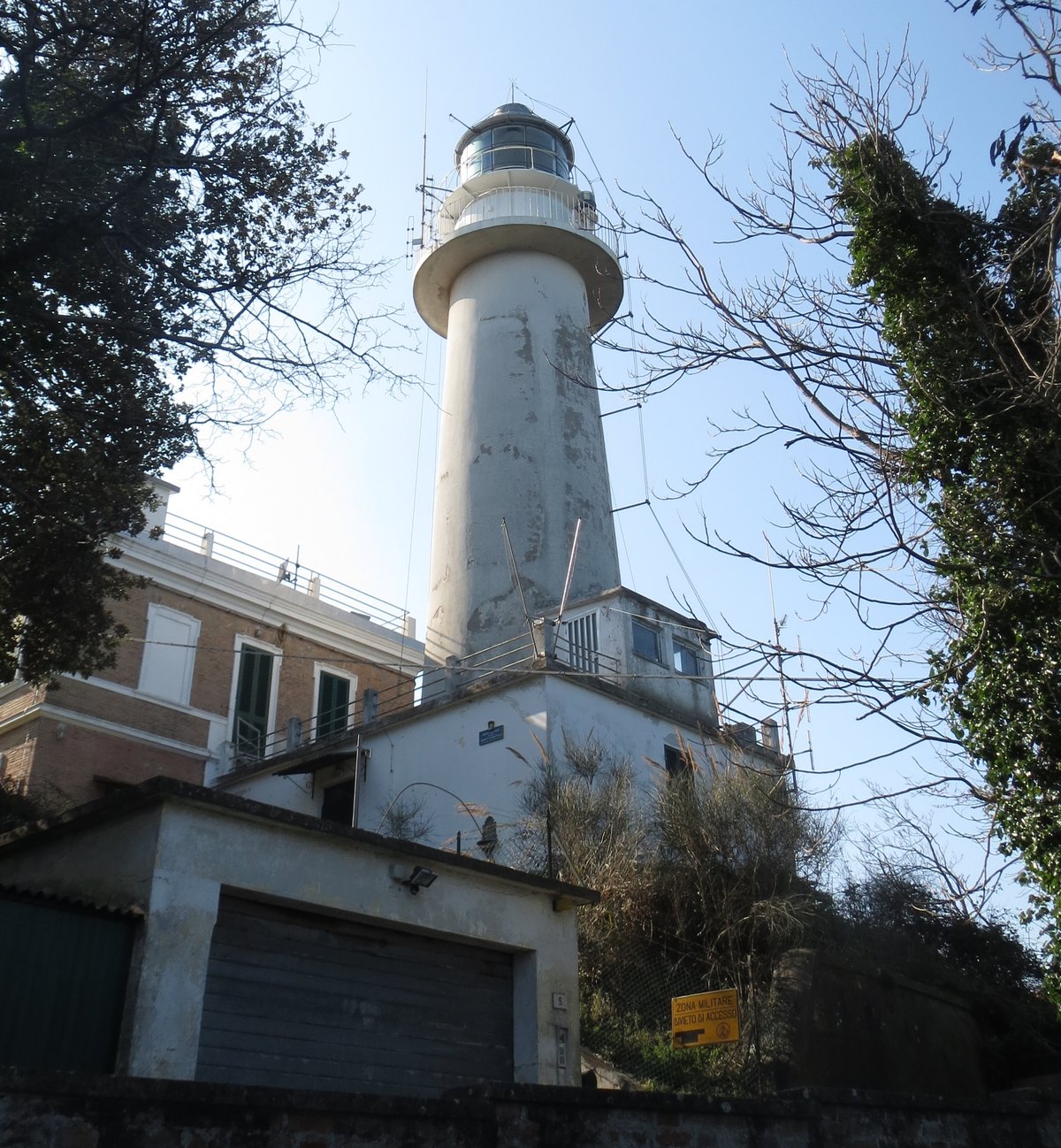 The first stop of this day in Pesaro is all uphill: you climb along the Strada dei Cipressi to the Monte San Bartolo Lighthouse, 175 meters above sea level. The white tower, 30 meters high, has dominated the coast since 1945, when it was built to replace the old ‘Fralon’ lighthouse destroyed during World War II. Today the lighthouse is still active: its rotating light emits two white flashes every 15 seconds, visible up to 25 nautical miles. Managed by the Italian Navy, the interior is not open to visitors, but the square is accessible and offers one of the most spectacular views of the Riviera. On clear days, you can see Rimini with its skyscraper, the mountains of Croatia, the Apennines with Monte San Vicino and Monte Conero. Around it, the Monte San Bartolo Natural Park offers trails immersed in the Mediterranean scrub. A perfect start to breathe in sea air and history.
- Strada dei Cipressi, Pesaro (PU)
- Open in Google Maps
- View on Google Images

You should go if…
Stop no. 2
Villa Caprile: Water Surprises and History
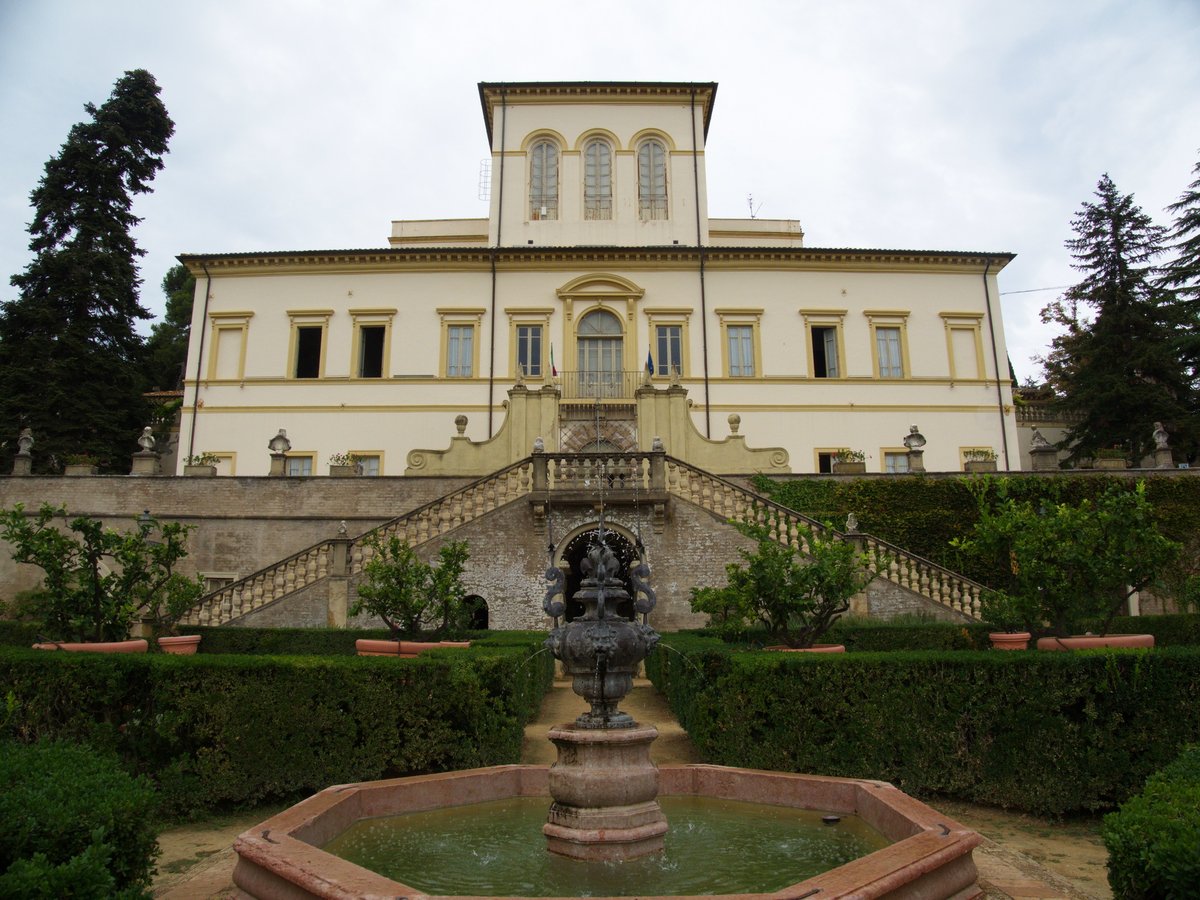 Leave the sea behind and head up to Villa Caprile, a residence that welcomed Casanova, Stendhal, and even Napoleon. Built in 1640 by Marquis Giovanni Mosca as a summer retreat, the villa now houses the ‘A. Cecchi’ Agricultural Technical Institute, but its gardens are open to the public in summer. The real spectacle is the Baroque water games: hiding places, grottos, and seats that suddenly spray jets of water—a centuries-old amusement. The park unfolds over three terraces with geometric flowerbeds, citrus trees, and a greenery theater. Cesare Begni’s frescoes on the noble floor tell myths and pastoral scenes. Don’t miss the Devil’s Cave and the Neptune Fountain. A place that blends nature, history, and a touch of magic.
- Strada di Caprile 1, Pesaro (PU)
- Open in Google Maps
- View on Google Images
You should go if…
Stop no. 3
Oliveriano Archaeological Museum
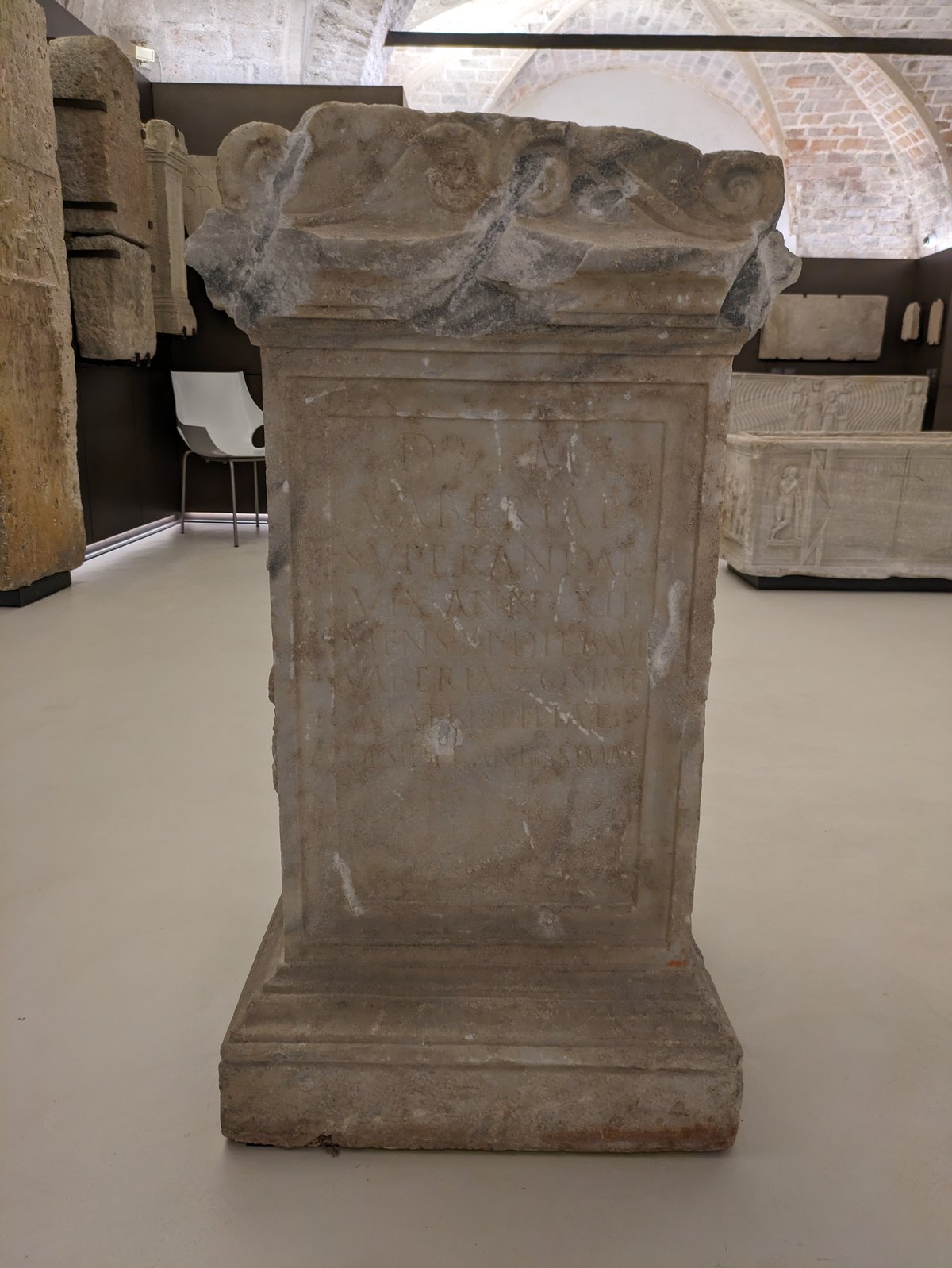 After your stop at Villa Caprile, immerse yourself in history at the Oliveriano Archaeological Museum, housed on the ground floor of Palazzo Almerici, an elegant 17th-century building. The museum originates from the bequest of the scholar Annibale degli Abbati Oliveri in the 18th century and today tells a thousand years of local history, from the Picene period to the late Roman imperial age, across four sections. The most famous is the Picene necropolis of Novilara, with over 450 tombs and the famous stele of the naval battle. Then there’s the Lucus Pisaurensis, a sacred grove with votive cippi, and the Roman section featuring bilingual inscriptions and a charming bronze cupid. The visit concludes with an 18th-century Wunderkammer displaying bronze figurines, oil lamps, and Boscovich’s ancient anemoscope. The layout is modern and poetic, inspired by the art of Jannis Kounellis. Note: the museum is currently closed for renovations (open by reservation until March 2025, then closed). Before you go, check the website to avoid disappointment!
- Via Domenico Mazza 97, Pesaro (PU)
- Open in Google Maps
- View on Google Images
You should go if…
Stop no. 4
Piazzetta Mosca: art and history in the heart of Pesaro
 Continuing towards the center, you arrive at Piazzetta Mosca, a small gem that has found new life with recent renovations. Here dominates the Sculpture of Memory by Giuliano Vangi, a six-meter-high stone arch celebrating figures like Rossini and Raphael. Around it, allegorical statues tell of love and theater. Overlooking the square is Palazzo Mosca, home to the Civic Museums: don’t miss the famous Pala di Pesaro by Giovanni Bellini and the ceramic Medusa by Ferruccio Mengaroni. If you want a break, Casetta Vaccaj, the oldest building in the city, is now a wine bar with outdoor tables. The museums have seasonal hours (check before going) and entry to the square is always free. A place that blends contemporary art and history, perfect for a cultural stop.
- Pesaro (PU)
- Open in Google Maps
- View on Google Images
You should go if…
Stop no. 5
Church of the Santissima Annunziata
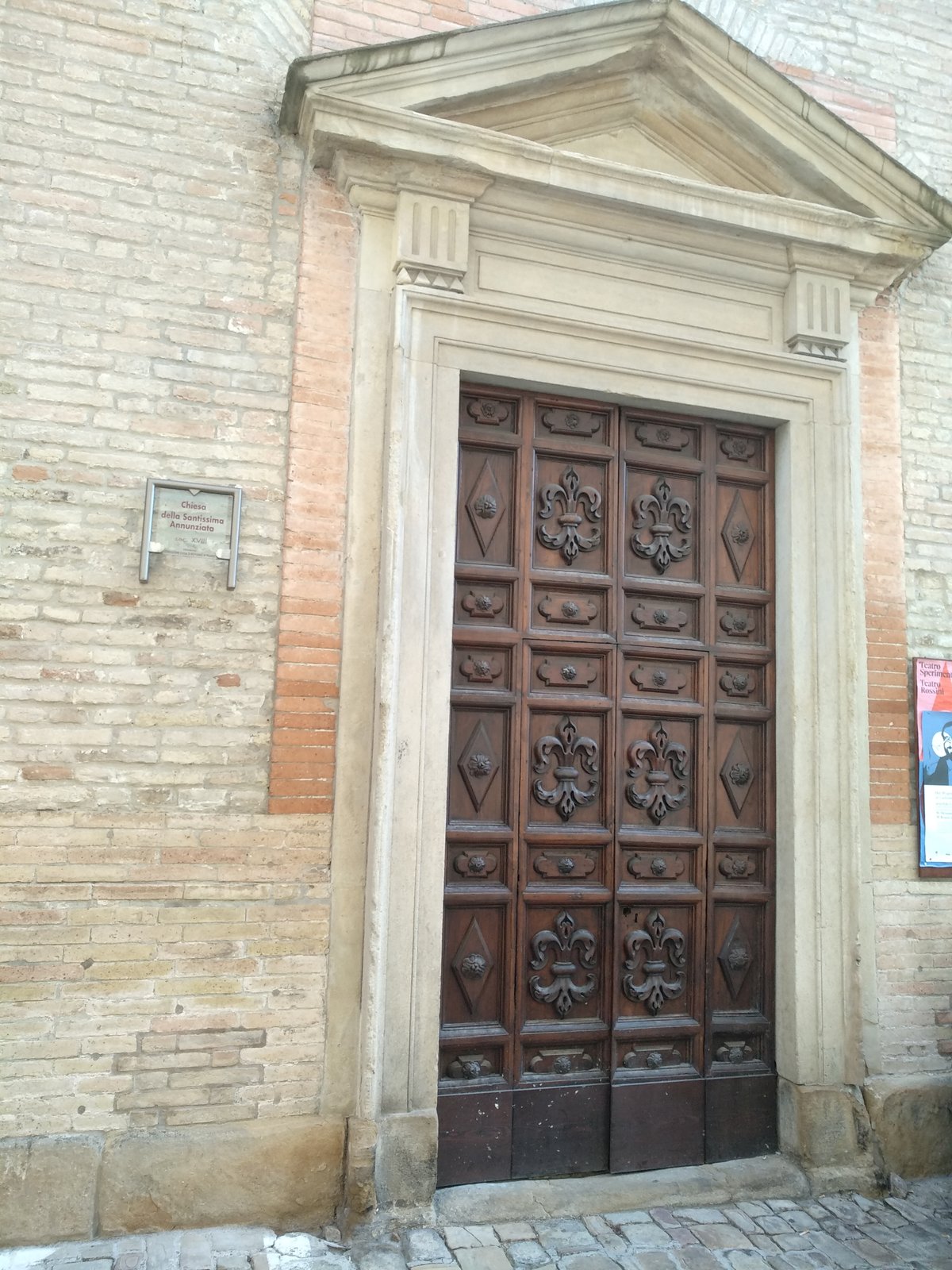 Tucked away on a side street, the Church of the Santissima Annunziata is a small Baroque gem worth a stop. Founded in the 14th century by the confraternity of the Annunziata to assist the poor and pilgrims, the building was completely renovated in the 17th century and later embellished in the 18th century with the extraordinary stucco of the Annunciation by Giuseppe Mazza in the apse. For over a century it served as the mausoleum of the Mosca family, evidenced by the two lateral funerary monuments. Today, after a careful restoration in 2000, the church has been deconsecrated and is used for theatrical performances and concerts. Access is possible only during events or on the ‘Pesaro Svelata’ tour (June to September, fee required). If you are lucky, inside you will immerse yourself in an intimate atmosphere, among pastel stuccoes and illusionistic architecture. A place that combines art, history, and new cultural life.
- Via dell’Annunziata 25, Pesaro (PU)
- https://www.comune.pesaro.pu.it/cultura/teatri-e-arene/teatri/chiesa-della-santissima-annunziata/
- Open in Google Maps
- View on Google Images
You should go if…
Stop no. 6
Villino Ruggeri: a Liberty Jewel to Admire from Outside
 The last stop on this itinerary, and what a grand finale. Villino Ruggeri, in Piazzale della Libertà, is considered one of the greatest examples of Liberty architecture in Italy. Built between 1902 and 1907 by industrialist Oreste Ruggeri based on a design by Urbino architect Giuseppe Brega, it is a riot of marine and floral decorations made of hydraulic cement. Lobsters, algae, shells, and flowers climb every facade, although today, unfortunately, the decay caused by the proximity to the sea is evident. Originally it was all colorful – not the current white and green – and had bronze doors with family faces, now lost. The villa is private and not open to visitors, but the garden with the lobster fountain is visible from the street. If you pass by at sunset, the golden light enhances its details. A tip? Try to peek through the gate: it’s worth it.
- Go to the page: Villino Ruggeri in Pesaro: A Liberty Jewel with Original 1902 Interiors
- Piazzale della Libertà 1, Pesaro (PU)
- Open in Google Maps
- View on Google Images
You should go if…