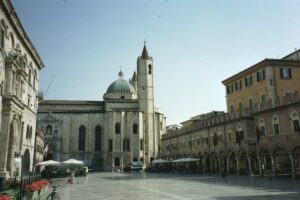
Want to discover Urbino away from the crowds? This one-day walking itinerary takes you through the UNESCO heritage Renaissance city via 8 stops that mix well-known masterpieces and secret corners. Starting from Teatro Sanzio, passing through Museo della Città and the Valbona overlook, you’ll reach the Duomo and Fortezza Albornoz. The route is designed for those who love art and history without tourist chaos, with stops in less frequented places. Perfect for a day trip, the itinerary is entirely on foot and can be completed in one day. It includes a map and practical tips so you won’t get lost. Each stop is described with info on hours, tickets and curiosities, offering an authentic perspective of the city. Urbino walking itinerary 8 stops is the essential guide to experiencing the city like a local.
🗺️ Your trip at a glance
A walking itinerary that lets you savor the Renaissance essence of Urbino in just one day, with carefully chosen stops to avoid crowds and discover authentic corners. Ideal for those who want a leisurely cultural experience enriched by unique views.
- Walking route of 8 stops off the beaten path: Teatro Sanzio, Museo della Città, Valbona, Duomo and Fortezza Albornoz. Perfect for those seeking art and history without crowds.
- Ideal for: Renaissance lovers and slow travelers who want an authentic day in Urbino.
- Highlights: original itinerary with map, secret corners and practical tips to experience the city.
Itinerary stops
Stop no. 1
Teatro Sanzio: The Heartbeat of Urbino’s Culture
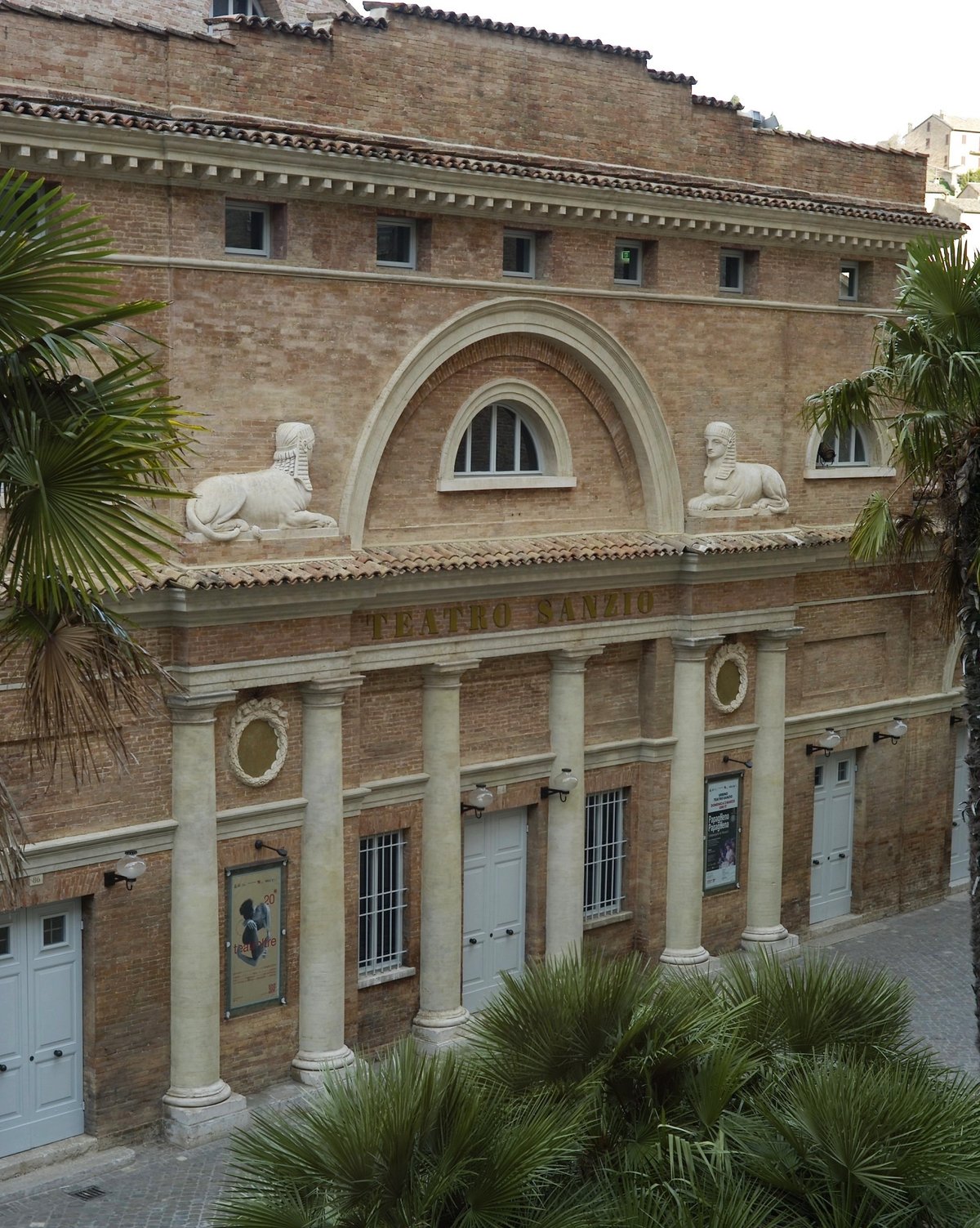 Start your day right here, in front of Teatro Sanzio, which feels more like an elegant gentleman welcoming you with discretion than a theater. Built between 1845 and 1853 from a design by Vincenzo Ghinelli, it stands atop the Helical Ramp by Francesco di Giorgio Martini, a detail that already hints at an ingenious past. The sandstone facade is simple yet refined, with a portal crowned by a tympanum and decorated windows. Inside, the horseshoe-shaped hall with three tiers of boxes can seat up to 460 people (some sources say 700, but the current capacity is 460). It was inaugurated with Verdi’s Il trovatore and still offers a varied theater season: drama, music, dance. If you’re passing by, check the schedule—there might be a show during your visit. For tickets, the box office on Corso Matteotti is open the day before and on the day of the performance. A tip? Step inside just to admire the foyer with the busts of Raphael and Bramante: it’s a little gem.
- Go to the page: Teatro Sanzio Urbino: A Neoclassical Gem with Perfect Acoustics and Vibrant Performances
- Via Giacomo Matteotti, Urbino (PU)
- Open in Google Maps
- View on Google Images

You should go if…
Stop no. 2
City Museum
 The City Museum, now replaced by the House of Poetry, was a hidden gem in the basement of Palazzo Odasi. Inaugurated in 2007, its modern layout told the story of Urbino’s identity through four themed rooms: Exchanges, Signs, Engraved Signs, and Desire. Here you could admire a cardboard reproduction of the historic center, ancient printing presses, engravings by masters such as Ceci and Bruscaglia, and models of Federico da Montefeltro’s fortresses. The tour ended in the fifteenth-century arcaded courtyard, inviting you to continue exploring the city’s streets. Today the space hosts cultural events, but it’s worth visiting to soak in the atmosphere of an innovative museum project.
- Go to the page: Urbino City Museum: Roman artifacts and daily life in the Renaissance
- Via Lorenzo Valerio, Urbino (PU)
- Open in Google Maps
- View on Google Images
You should go if…
Stop no. 3
Valbona: Monumental Gate and Ancient Borgo
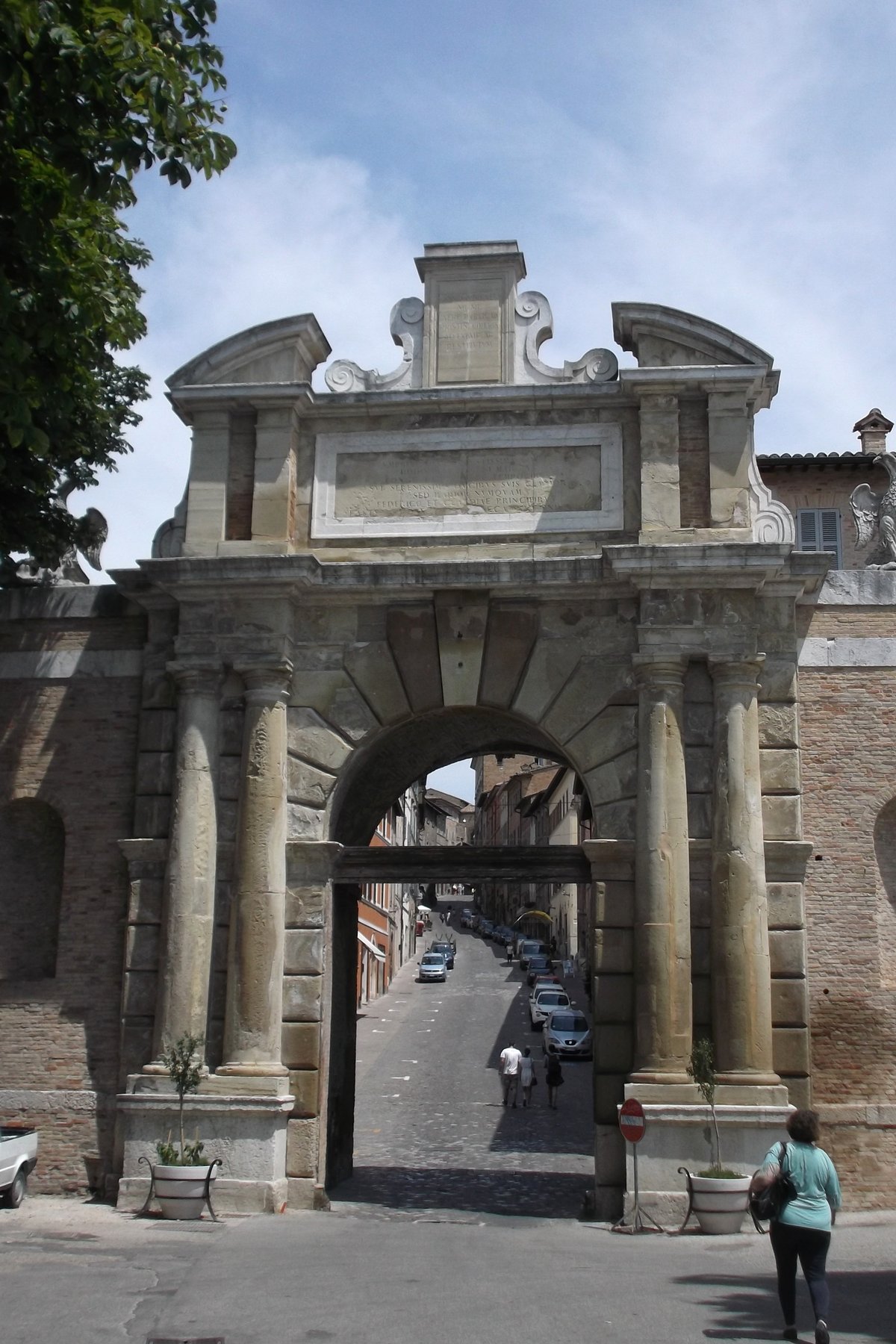 Leave the City Museum behind and take Via Mazzini. In just a few steps you will find yourself in front of Porta Valbona, the most monumental of Urbino’s ancient gates. Built in 1621 to celebrate the marriage of Federico Ubaldo della Rovere and Claudia de’ Medici, it is a true Baroque gem. Notice the two eagles on the sides, sculpted by Francesco Buonamici in the mid-18th century: symbols of power and nobility. Passing through the gate, you are greeted by Borgo Mercatale, a square born from the waste earth of the Ducal Palace construction site. Here, markets, jousts, and knightly tournaments were once held; today it is a lively parking lot, yet it retains traces of the past such as the ancient ducal stables, restored by Giancarlo De Carlo, which could house three hundred horses. Stop to observe the façade: ‘La Data,’ once horse stables, now a space for cultural events. A place that tells the daily life of the court, away from the beaten paths.
- Via Giuseppe Mazzini, Urbino (PU)
- Open in Google Maps
- View on Google Images
You should go if…
Stop no. 4
Cathedral of Santa Maria Assunta
 After the stop at Valbona, you find yourself in front of one of the most fascinating cathedrals in the Marche region. The Duomo of Urbino has ancient origins – it dates back to 1021 – but its current appearance is the result of a long history of reconstructions. Federico da Montefeltro commissioned a Renaissance version in the 15th century, entrusted to Francesco di Giorgio Martini, but two earthquakes between 1781 and 1789 severely damaged it, causing the dome to collapse. That led to the Neoclassical transformation: Giuseppe Valadier renovated the interior, Camillo Morigia designed the stone facade from Furlo, completed in 1801. Step inside and let yourself be amazed by the vastness of the three naves, dominated by the high altar with the altarpiece by Cristoforo Unterberger. But the true gem is the Chapel of the Most Holy Sacrament, which survived the earthquakes: here you will find the Last Supper by Federico Barocci, a 16th-century masterpiece. Don’t miss the crypt with the Oratory of the Grotto, where a Dead Christ by Giovanni Bandini welcomes you in an intimate atmosphere. And if you love sacred art, head up to the Diocesan Museum Albani in the ancient sacristies: it houses the cathedral’s treasure, with donations from Pope Clement XI and illuminated choir books.
- Go to the page: Duomo of Santa Maria Assunta Urbino: Neoclassical Facade and Barocci’s Works in the UNESCO Center
- Via Giro dei Torricini, Urbino (PU)
- Open in Google Maps
- View on Google Images
You should go if…
Stop no. 5
San Domenico Church
 Leave the Duomo behind and head down via San Domenico: here you are in front of a church that is a small treasure chest of history. Built in 1365 in Gothic style, the brick façade still retains medieval traces, but what steals the show is the Renaissance protiro in travertine, by Maso di Bartolomeo (c. 1450). In the lunette, a copy of the Madonna and Child with Saints by Luca della Robbia – the original is in the Palazzo Ducale, protected from football hits. The interior, rebuilt in the 18th century by Filippo Barigioni with the contribution of Cardinal Albani, welcomes you in a single white and luminous nave. Don’t miss the 13th-century frescoes in the apse and the Cappella della Madonna dell’Umiltà with frescoes by Ottaviano Nelli. Now deconsecrated, it is used for events; entry is free and the visit takes about fifteen minutes.
- Piazza Del Rinascimento, Urbino (PU)
- Open in Google Maps
- View on Google Images
You should go if…
Stop no. 6
Urbino Obelisk
 From the Church of San Domenico, your gaze immediately falls upon an unexpected monument: an Egyptian obelisk about 3 meters tall, made of red Aswan granite. It seems strange to find it here, in a Renaissance square, yet it is one of the twelve original Egyptian obelisks in Italy. It dates back to the 6th century BC, was dedicated to Pharaoh Hofra (Apries), and came from the Temple of Isis at Sais. Brought to Rome in the 1st century AD, it was later toppled under Theodosius and only rediscovered in 1737. It was Cardinal Annibale Albani who wanted it in Urbino to celebrate the pontificate of Clement XI: he had it transported and reassembled here, in front of the Ducal Palace. The obelisk is composed of five stacked blocks and features hieroglyphic inscriptions mentioning Wahibre and the goddess Isis. On the tip, the Albani coat of arms with a bronze cross. It is said that a fragment of the True Cross is preserved inside. It is considered a twin to the one in Piazza della Minerva in Rome, but here, without the elephant, it has a more sober charm. Stop to observe it from all sides: the inscriptions deserve a magnifying glass.
- Go to the page: Urbino Obelisk: Late Baroque Symbol of 1737 in Renaissance Square
- Piazza Del Rinascimento, Urbino (PU)
- Open in Google Maps
- View on Google Images
You should go if…
Stop no. 7
Lapidary Museum: A Hidden Epigraphic Treasure
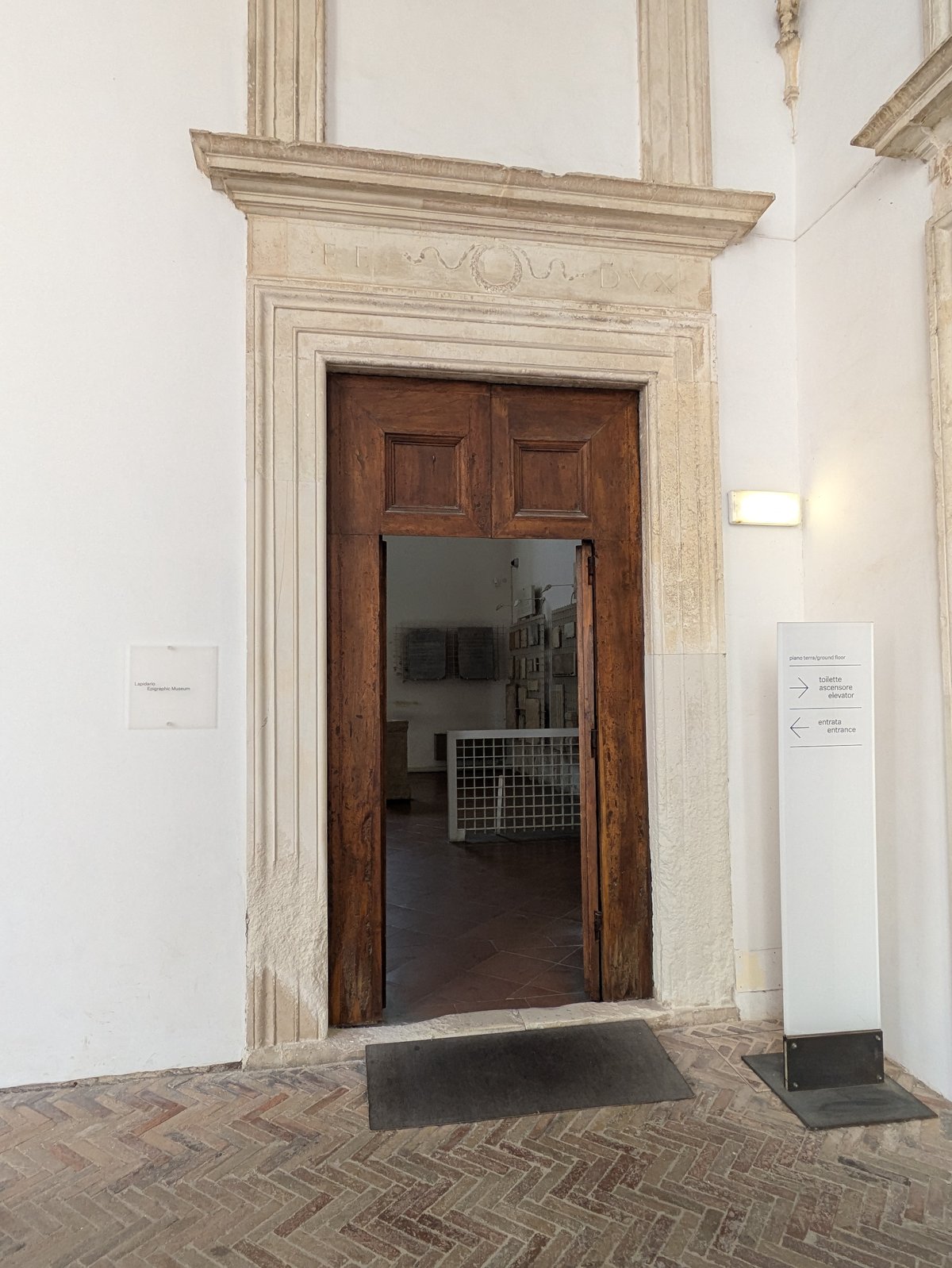 If you think you’ve seen everything at the Palazzo Ducale, think again. On the ground floor hides the Lapidary Museum, an epigraphic collection few visit. Here, 476 pieces – including inscriptions, urns, cippi, and statues – tell stories from two thousand years ago. The collection stems from the work of Raffaele Fabretti and Cardinal Stoppani, with pieces from Rome and the Urbino area. The inscriptions are set into 22 wall niches, while in the center of the five rooms small cippi and altars emerge. The highlight? The purple porphyry relief of Ulysses and the Sirens, which alone is worth the visit. There’s also the slab of the marmorarius Eutropos and a fragment with the resurrection of Lazarus. The atmosphere is almost like a study: silent, a bit dusty, authentic. Open Tuesday to Sunday 8:30 AM to 7:15 PM (Monday until 2 PM). Entrance included in the Galleria Nazionale ticket. A gem for those who love off-the-beaten-path discoveries.
You should go if…
Stop no. 8
Fortezza Albornoz: A Dive into History with Breathtaking Views
 Ending your day at Fortezza Albornoz is the perfect finale. Built between 1367 and 1371 by Cardinal Angelico Grimoard (despite the name betraying its predecessor), this brick fortress stands at 485 meters on San Sergio hill. Its rectangular layout with two semicircular towers makes it unmistakable. Today it houses the Bella Gerit Museum, with military artifacts from the 14th to 16th centuries, but the real spectacle is the view: from here you can embrace all of Urbino, with the turrets of Palazzo Ducale peeking out from the rooftops. Surrounding it, the Parco della Resistenza offers benches and children’s play areas. Admission is only 1.50 euros (free for under 14) and the fortress is open on weekends in spring and summer. A tip: arrive around sunset, when the golden light illuminates the hills. It’s the ideal place to reflect on the day, away from the chaos.
- Viale Bruno Buozzi, Urbino (PU)
- Open in Google Maps
- View on Google Images
You should go if…