
If you only have one day to discover Rovigo, this itinerary through the historic heart is perfect for you. Starting from Piazza Matteotti, the vibrant center of the city, you'll immerse yourself in a route that will lead you to discover medieval towers and Renaissance palaces. You'll traverse the streets of the historic center, admiring the architecture that tells centuries of history, until you reach the Accademia dei Concordi, home to artistic treasures. A Rovigo historic center itinerary designed for those who want to capture the essence of the city in just a few hours, without missing the most significant landmarks. Practical, essential, and full of useful tips for an unforgettable visit.
🗺️ Your trip at a glance
A walking itinerary through the historic heart of Rovigo, perfect for discovering medieval towers, Renaissance palaces, and artistic treasures in just one day without leaving the city center.
- Ideal for those seeking culture and history on a short visit, appreciating medieval and Renaissance architecture with a practical, concentrated route.
- Highlights: 7 stops on foot in the historic center, including Torre Donà (a medieval symbol), Palazzo Roverella (art exhibitions), and Accademia dei Concordi (Venetian art gallery), with integrated maps for easy navigation.
- Perfect for travelers who prefer authentic and less crowded places, ideal for a one-day cultural trip in Veneto, away from the more popular tourist destinations.
Itinerary stops
Stop no. 1
Donà Tower
 Starting your itinerary at Donà Tower means immediately immersing yourself in the medieval heart of Rovigo. This imposing brick structure, standing approximately 66 meters tall, is one of the city's symbols and one of the surviving towers from the ancient city walls. Strolling through Piazza Matteotti, the tower rises majestically against the sky, offering a striking view that speaks of centuries of Polesine history. Built in the 13th century by the Este family, it represents an exceptional example of medieval military architecture in the Veneto region. Its massive bulk and strategic position make it a visual landmark for navigating the historic center. Although currently not open to visitors inside, its exterior retains intact ancient charm, with characteristic Ghibelline battlements and arrow slits that recall its defensive function. It's the ideal starting point for understanding Rovigo's urban evolution, from medieval stronghold to Renaissance city.
- Piazza Giacomo Matteotti, Rovigo (RO)
- Open in Google Maps
- View on Google Images

You should go if...
Stop no. 2
Grimani Tower
 The Grimani Tower stands imposingly on Via Grimani, a symbol of Venetian power in Rovigo. Built in the 15th century, this structure was part of the city's defensive system, with its height allowing visual control over much of the center. Today, the tower represents one of the few remaining examples of medieval military architecture in the city, with its squared stone telling centuries of history. Climbing to the top offers a unique panoramic view of Piazza Matteotti and Rovigo's rooftops, allowing visitors to appreciate the urban layout of the historic center. Its strategic location, near Palazzo Roverella, makes it an essential stop for understanding the city's urban evolution under the Serenissima.
- Via Grimani, Rovigo (RO)
- Open in Google Maps
- View on Google Images
You should go if...
Stop no. 3
Roncale Palace
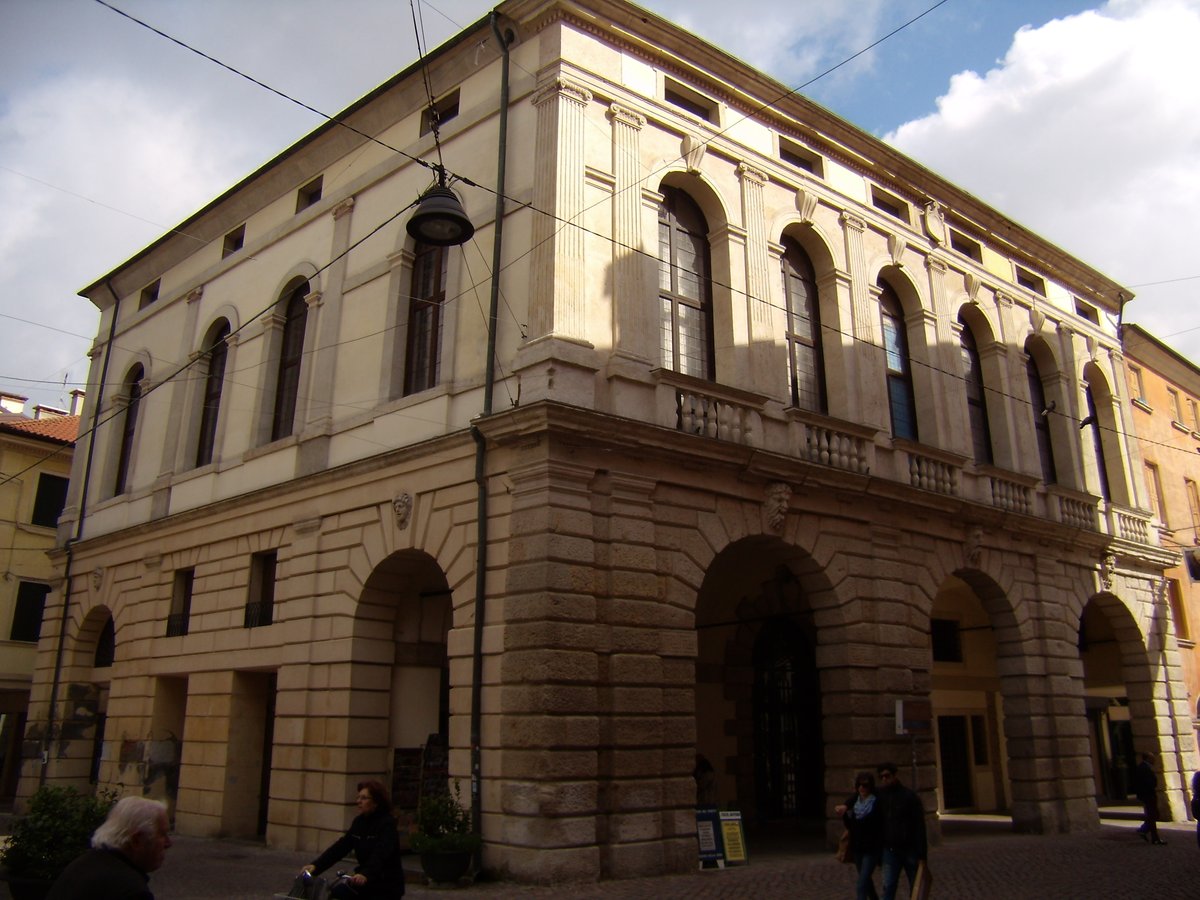 Leaving the Grimani Tower behind, you arrive at Roncale Palace on Via Alessandro Manzoni, a building that embodies the elegance of Rovigo's Renaissance. Built in the 16th century for the Roncale family, the palace stands out for its sober yet refined facade, with architraved windows and a stone portal leading to an inner courtyard. Inside, the rooms preserve frescoes and decorations that narrate the noble life of the era, with spaces like the Festival Hall, used for cultural events. Its location, near the Accademia dei Concordi, makes it an ideal stop for those wishing to delve into the city's artistic history, away from the crowds. Visiting means discovering a corner of Rovigo where civil architecture converses with the past, offering insights into how local families shaped the historic center.
- Via Alessandro Manzoni, Rovigo (RO)
- Open in Google Maps
- View on Google Images
You should go if...
Stop no. 4
Roverella Palace
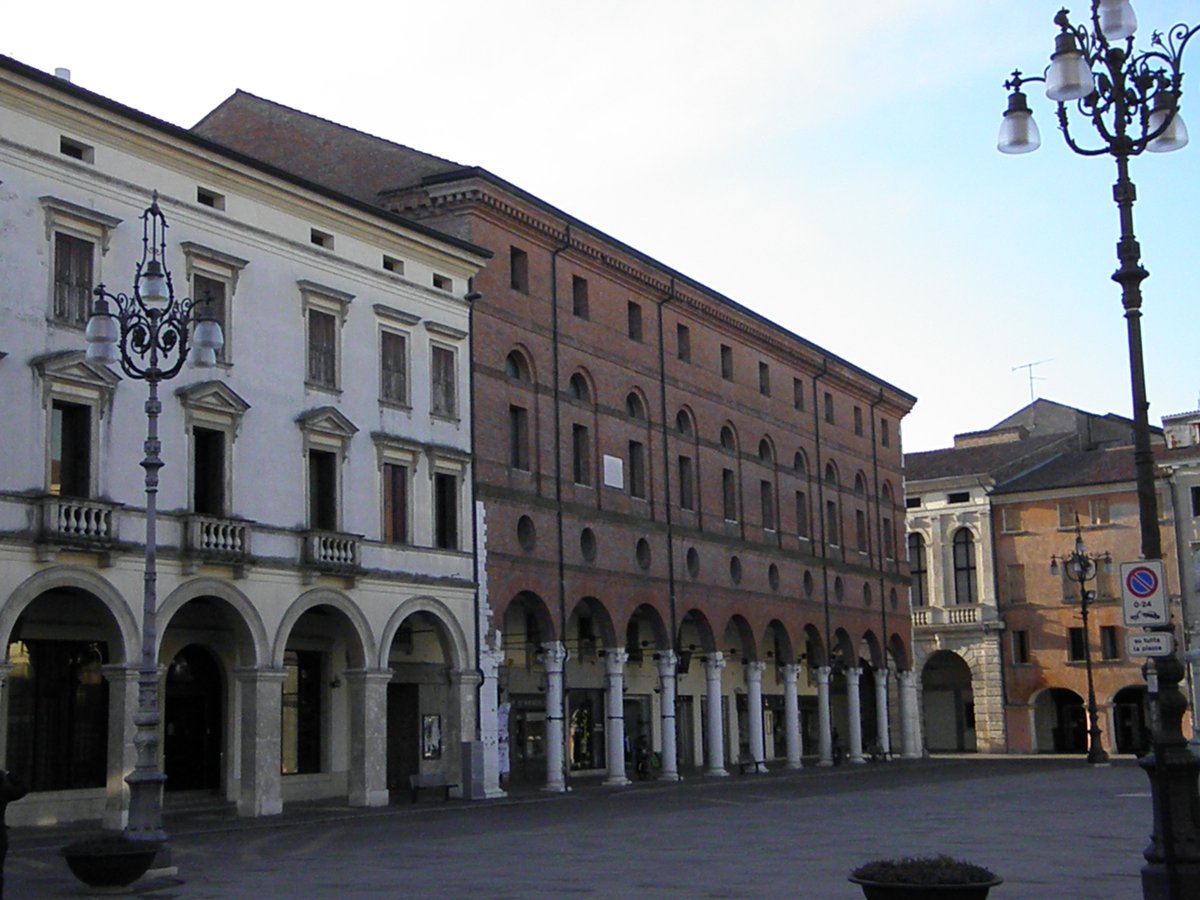 Moving from the understated elegance of Roncale Palace, you'll arrive at Roverella Palace in Galleria Bernardino da Feltre, a building that represents the cultural heart of Rovigo. Built in the 15th century for the Roverella family, the palace is characterized by its brick facade and biforate windows, typical of Venetian architecture. Today, it hosts high-level temporary exhibitions, often dedicated to masters of Italian and international art, attracting visitors from across the region. Inside, the restored rooms preserve original elements like coffered ceilings and monumental fireplaces, while the exhibition spaces are modern and functional. Its location, just steps from the Accademia dei Concordi, makes it ideal for those who want to immerse themselves in art without leaving the historic center. Visiting means discovering how Rovigo successfully blends tradition and innovation, offering cultural experiences accessible to everyone.
- Go to the page: Palazzo Roverella in Rovigo: Art Exhibitions of Chagall and De Chirico in a Renaissance Palace
- Galleria Bernardino da Feltre, Rovigo (RO)
- Open in Google Maps
- View on Google Images
You should go if...
Stop no. 5
Accademia dei Concordi
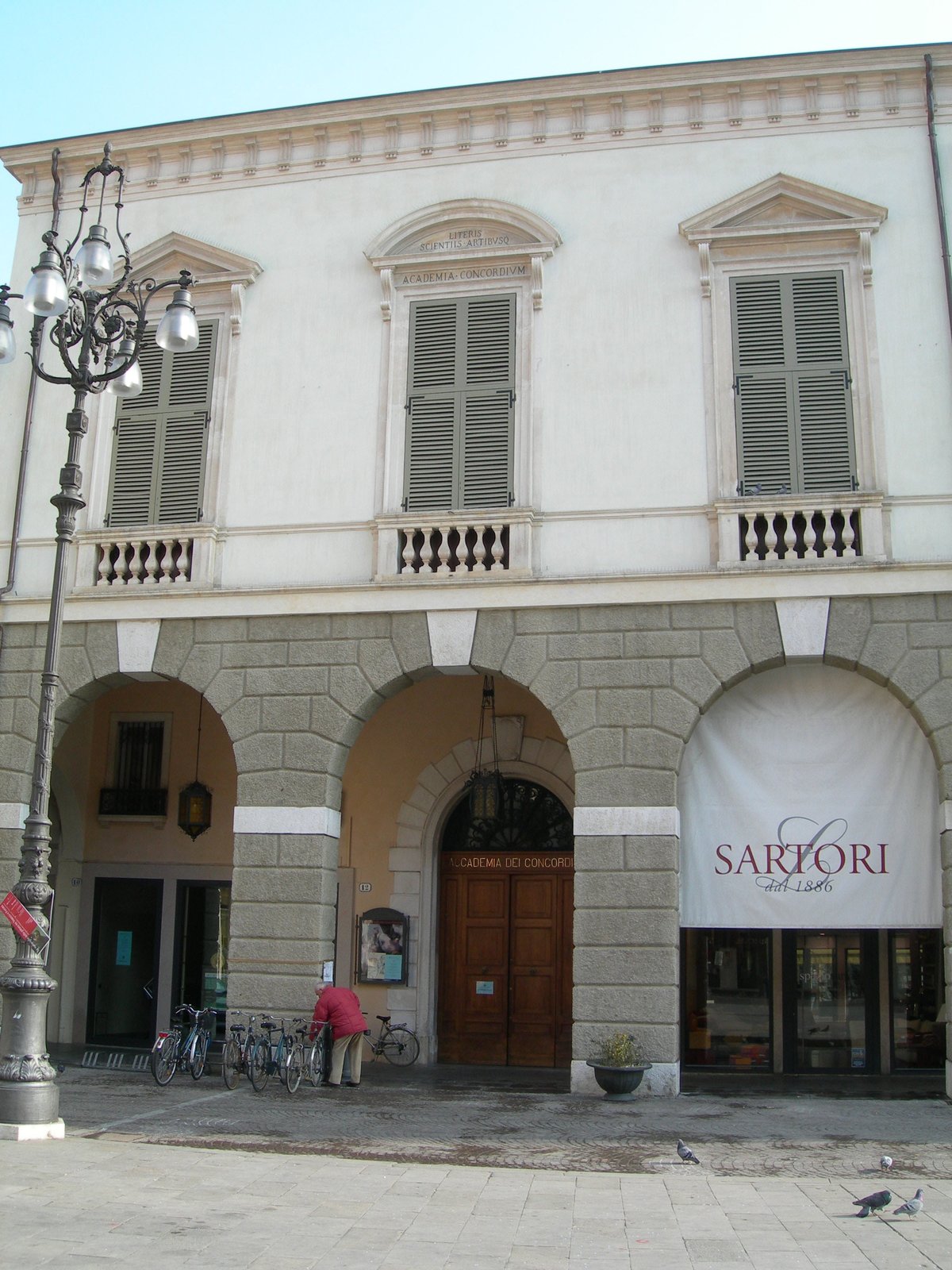 The Accademia dei Concordi, located in Piazza Vittorio Emanuele II, represents Rovigo's most important cultural hub. Founded in 1580, this institution houses a rich art gallery with works by Venetian artists such as Giovanni Bellini and Giambattista Tiepolo, as well as a historical library with rare manuscripts. The palace itself, of Renaissance origin, was expanded in the 18th century and preserves period furnishings and frescoed ceilings. Here you can admire paintings that tell the story of the territory, such as the canvases by Andrea Mantegna, and participate in cultural events and temporary exhibitions that enliven city life. Its central location, just steps from Palazzo Roverella, makes it an essential stop for those who want to explore Rovigo's art and culture in an accessible and engaging way.
- Go to the page: Accademia dei Concordi Rovigo: 400 Works from the 15th to the 19th Century and a Historic Library
- Piazza Vittorio Emanuele II 14, Rovigo (RO)
- https://www.concordi.it/
- Open in Google Maps
- View on Google Images
You should go if...
Stop no. 6
Rovigo Cathedral
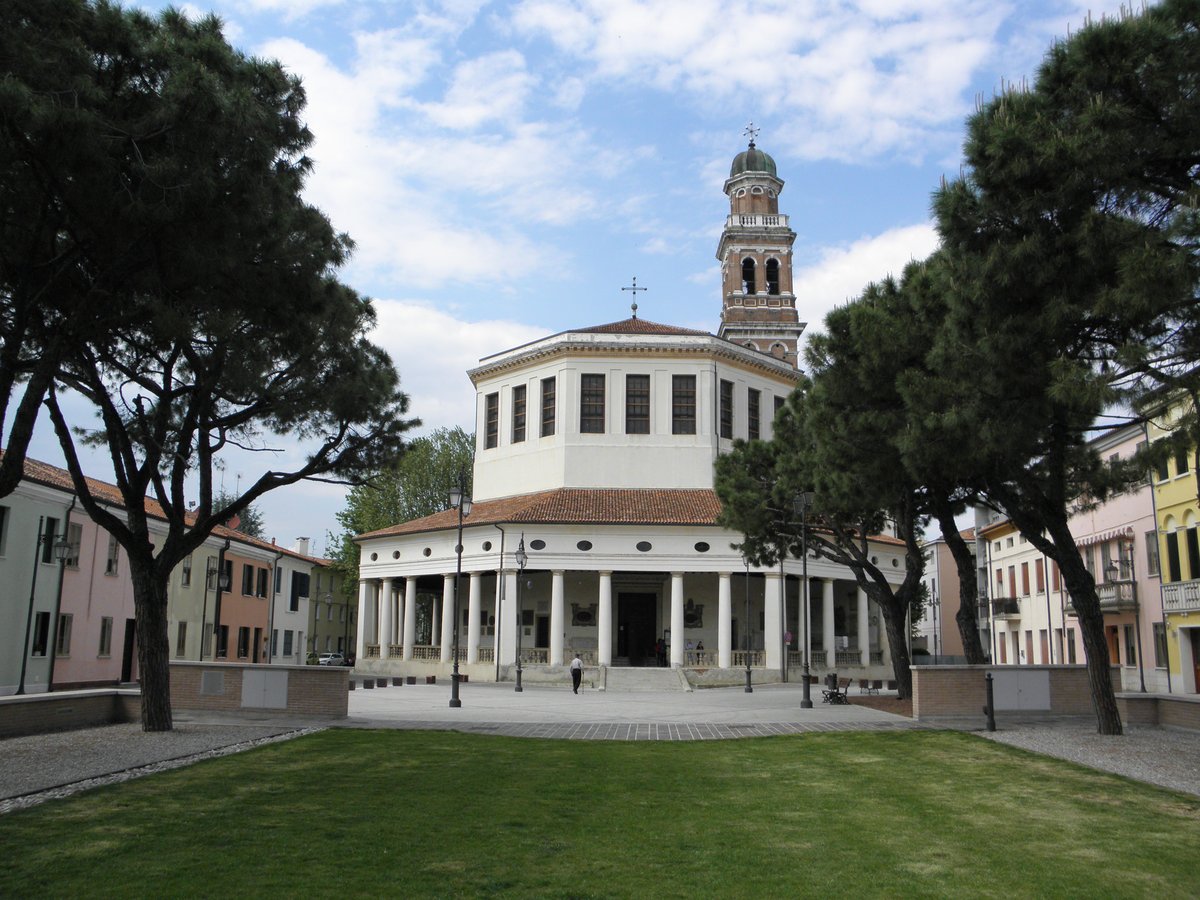 Not far from the Accademia dei Concordi, Rovigo Cathedral rises majestically in Piazza Duomo, offering a moment of spirituality after the cultural immersion. Dedicated to Pope Saint Stephen the Martyr, this religious building has medieval origins, but its current appearance dates mainly to the 18th century, with an unfinished façade that adds a touch of mystery. Inside, you can admire artworks such as the painting of the Madonna of the Rosary by Palma il Giovane and the funerary monument of Bishop Francesco Pisani, which testify to the connection with local history. The structure, with its single nave and side chapels, invites a moment of reflection, while architectural details like the Romanesque bell tower tell the story of transformations over time. It's an ideal place for those seeking an authentic experience, away from the busiest tourist flows, and wanting to discover a corner of Rovigo where faith and art intertwine discreetly.
- Piazza Duomo, Rovigo (RO)
- Open in Google Maps
- View on Google Images
You should go if...
Stop no. 7
Church of Saints Francis and Justina
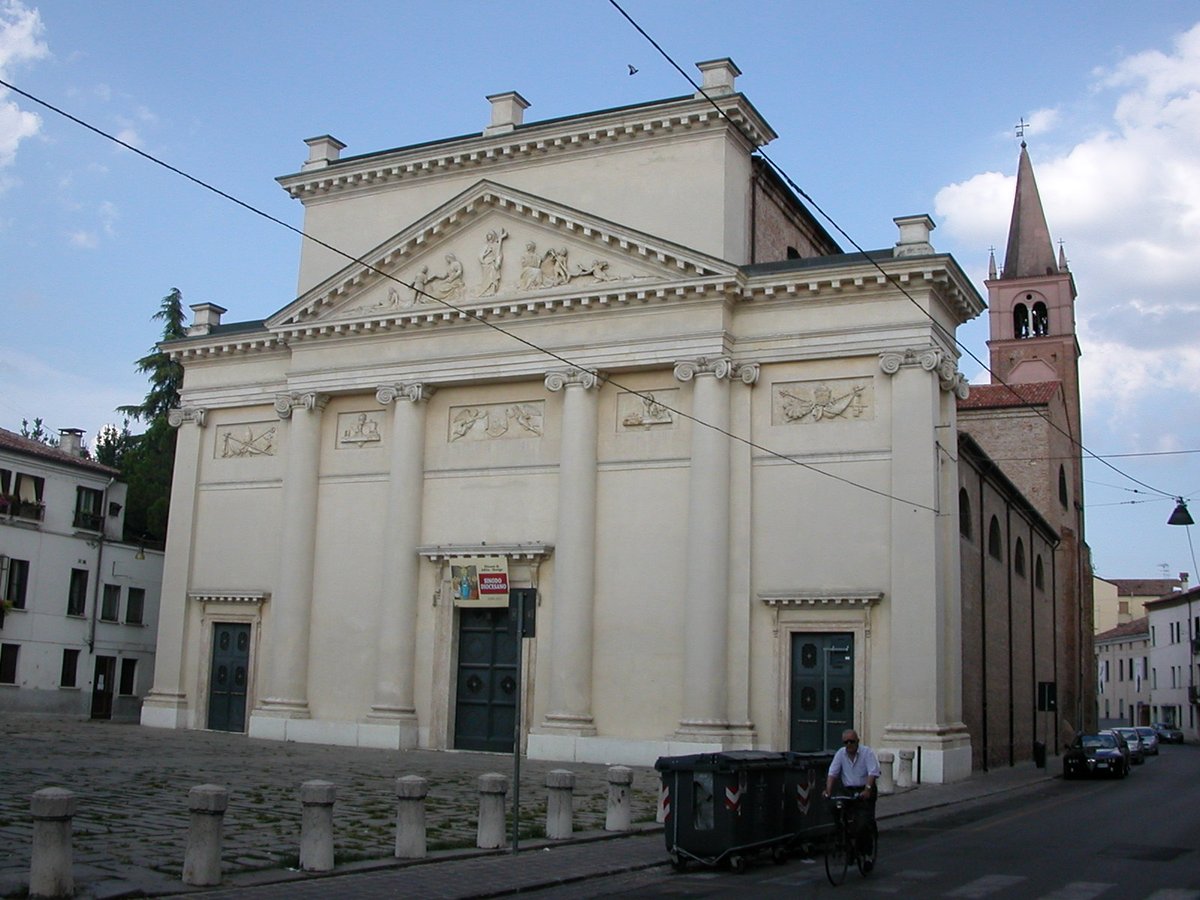 Leaving the Cathedral behind, you immerse yourself in the intimate atmosphere of the Church of Saints Francis and Justina, located on Via Silvestri. This religious building, founded in the 13th century as part of a Franciscan convent, retains a Gothic imprint despite subsequent modifications. Inside, the 14th-century frescoes decorating the walls stand out, including scenes from the life of Saint Francis, precious testimonies of the local painting school. The structure, with its single nave and trussed ceiling, invites a moment of tranquility, away from the city noise. Also noteworthy are the adjacent cloister, now part of an educational complex, and the historical tombstones that tell centuries of devotion. It's a place for those seeking an authentic corner, where art and spirituality merge in a simple yet historically rich context.
- Via Silvestri, Rovigo (RO)
- Open in Google Maps
- View on Google Images
You should go if...