
If you think Palermo is only about Baroque monuments and historic markets, get ready to discover a different city. This one-day itinerary takes you into the heart of contemporary Palermo, away from the beaten path. We'll start with modern art at the Riso Museum, then explore the innovative architecture of the Teatro Politeama Garibaldi and the new waterfront. We'll uncover hidden corners where street art transforms walls into open-air galleries, such as in the Kalsa district or the courtyards of the city center. This is a route designed for curious travelers who want to see the city with fresh eyes, capturing its most dynamic and creative side. I'll provide all the practical tips to help you move around easily and not miss the most interesting details. If you're looking for an authentic and out-of-the-ordinary experience, this one-day itinerary in Palermo is for you.
🗺️ Your trip at a glance
Discover the modern face of Palermo with a one-day itinerary that combines contemporary art, hidden corners, and vibrant culture. A streamlined route for those seeking an unusual and authentic perspective of the city.
- Ideal for curious travelers who want to see Palermo with fresh eyes, away from the most common tourist paths.
- Highlights: 8 stops including contemporary art museums, symbolic sculptures like the Genius of Palermo, and independent theaters with alternative programming.
- Perfect for those seeking an authentic and unconventional experience, with an interactive map to easily navigate between stops.
Itinerary stops
Stop no. 1
Museum of Contemporary Art of Sicily
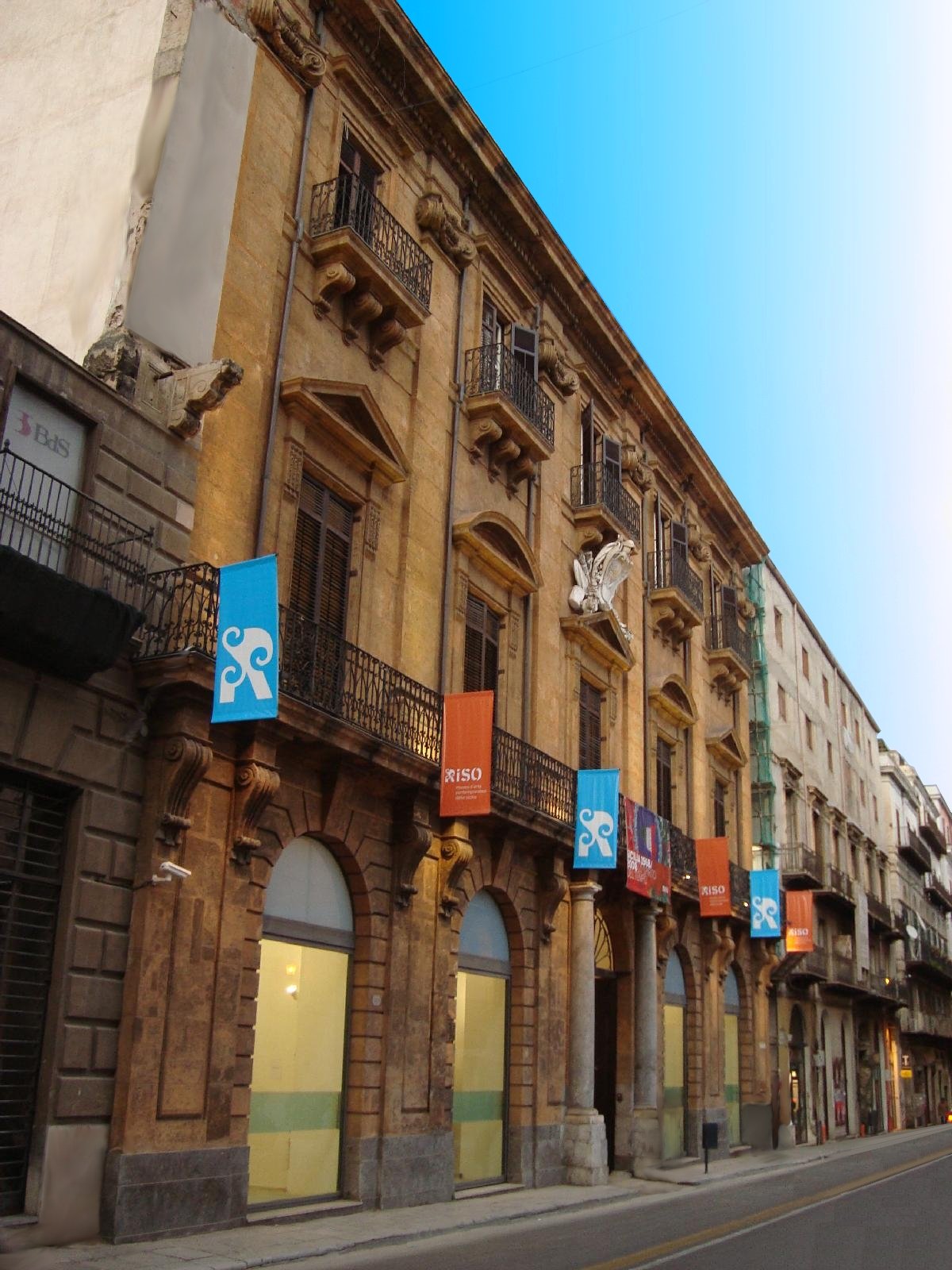 Begin your day dedicated to contemporary Palermo right here, in a place you might not expect. The Museum of Contemporary Art of Sicily, or MACS, is not a classic historic palace but is located in a modern building on Via Vittorio Emanuele, one of the main arteries. This is a deliberate choice, because here art speaks of today. The collections revolve around Sicilian artists from the 20th century and contemporary times, with names like Renato Guttuso, Carla Accardi, or Pietro Consagra telling the story of a Sicily in transformation. Don't expect just paintings: there are installations, sculptures, and photographs that interact with the light of the spacious areas. I particularly appreciated the temporary exhibitions, often dedicated to emerging young artists, which bring a fresh energy to the place. It's a museum that doesn't want to be a sacred temple but a living space, where you can understand how the island interprets the present through creativity. Perfect for starting the itinerary, because it immediately puts you in the right mindset: to look for the city beyond the postcards.
- Via Vittorio Emanuele, Palermo (PA)
- Open in Google Maps
- View on Google Images

You should go if...
Stop no. 2
Empedocle Restivo Modern Art Gallery
 After exploring the first point of the itinerary, you move to a less frequented but charming corner: the Empedocle Restivo Modern Art Gallery. It's located at Via Sant'Anna 21, a side street not far from the Quattro Canti, inside a noble palace that already deserves a glance from the outside. Don't expect a huge, crowded museum: here the atmosphere is intimate, almost like a private collection. The rooms house works by Sicilian artists of the 20th century, from Guttuso to Pippo Rizzo, including futurists and post-World War II movements. I was struck by how the canvases tell a story of a Palermo in transformation, between tradition and modern impulses. The lighting is soft, the walls are colorful, and there's always some original architectural detail of the palace peeking out between the paintings—a frescoed ceiling, a monumental fireplace. It's the perfect place to understand how local art dialogued with national avant-gardes, away from the spotlight of major museums. I recommend pausing at the sculptures by Emilio Greco, displayed in a dedicated room: they have an elegance that stops you in your tracks.
- Via Sant'Anna 21, Palermo (PA)
- Open in Google Maps
- View on Google Images
You should go if...
Stop no. 3
The Genius of Palermo
 Leaving the modern works of the gallery behind, you find yourself in Piazza Rivoluzione, where a singular character immediately catches your eye. It's the Genius of Palermo, a white marble sculpture that almost seems to speak with its enigmatic expression. It's not an imposing monument; in fact, it sits on a tall pedestal at the corner of the square, almost hidden among the traffic and historic buildings. The male figure, with a crown and a serpent coiled around it, has an ancient yet lively air. I've always been struck by how Palermitans attribute a protective role to it, as if it were a guardian of the city. The square itself is a lively crossroads, with stalls and local spots giving it an everyday atmosphere, but the Genius remains there, motionless and observant. It's interesting to note that this statue isn't the only representation of the Genius in the city—there are others, but this one in Piazza Rivoluzione is perhaps the most well-known and photographed. A detail I love: the base is often adorned with flowers or small objects left by citizens, a sign of an affectionate bond that goes beyond mere art.
- Piazza Rivoluzione, Palermo (PA)
- Open in Google Maps
- View on Google Images
You should go if...
Stop no. 4
Piazza Caracciolo
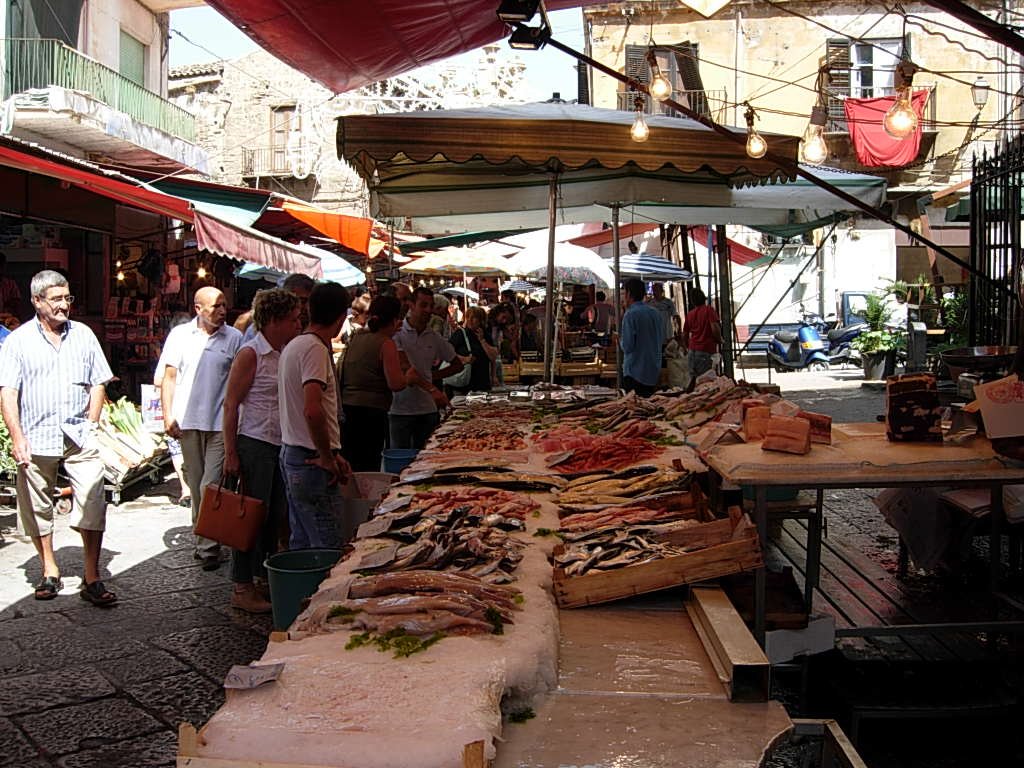 After leaving the Genius of Palermo in Piazza Rivoluzione, you almost stumble upon Piazza Caracciolo, a space that seems to defy easy classification. It's not a monumental square in the traditional sense, but rather a passageway that conceals a character all its own. What strikes you immediately is the contrast: on one side, historic buildings with facades slightly faded by time; on the other, modern installations that emerge like signals of a city in motion. I like to think of this square as an open stage, where different voices mingle each day – students from the nearby Academy of Fine Arts, neighborhood residents, curious tourists. There's a public artwork here, a metal sculpture that reflects light differently depending on the hour, and I often see it surrounded by people observing it in silence or discussing it animatedly. It's not a place where you linger for long, perhaps, but that's precisely what makes it interesting: it's a fragment of Palermo that lives in the present, without too many frills. Sometimes, passing by here in the evening, I notice how artificial lights create plays of shadow on the surfaces, transforming the space into something almost theatrical. One detail that has always intrigued me: on the side walls, there are traces of spontaneous murals, signs of a creativity that asks no permission.
- Palermo (PA)
- Open in Google Maps
- View on Google Images
You should go if...
Stop no. 5
Garraffello Fountain
 Leaving behind the contemporary atmosphere of Piazza Caracciolo, a short stroll brings you to Piazza Garraffello, a corner many pass by without noticing. The fountain here isn't one of those monumental ones dominating main squares, but rather a discreet presence, nestled among the buildings like a secret shared only with those who stop to look. What strikes me is its simplicity: a stone basin with a water jet that almost seems to whisper, far from the nearby traffic noise. Local legend links it to the name 'garraffo', which in Sicilian indicates a water container, and I sometimes wonder how many stories it has heard over the centuries, hidden in this little square. Observing it up close, you notice the marks of time on the stone, small erosions that tell of Palermo's rain and sun. It's not a place for mass selfies, and perhaps that's precisely its charm: it's a fragment of Palermo that resists trends, a water point where even today someone stops to drink or for a moment of quiet. I like to imagine what it must have been like centuries ago, when this area was livelier with commerce, and the fountain was a vital reference for daily life. A curious detail: I often see cats approaching placidly, as if they were the true guardians of this silent space.
- Piazza Garraffello, Palermo (PA)
- Open in Google Maps
- View on Google Images
You should go if...
Stop no. 6
Genius of Garraffo
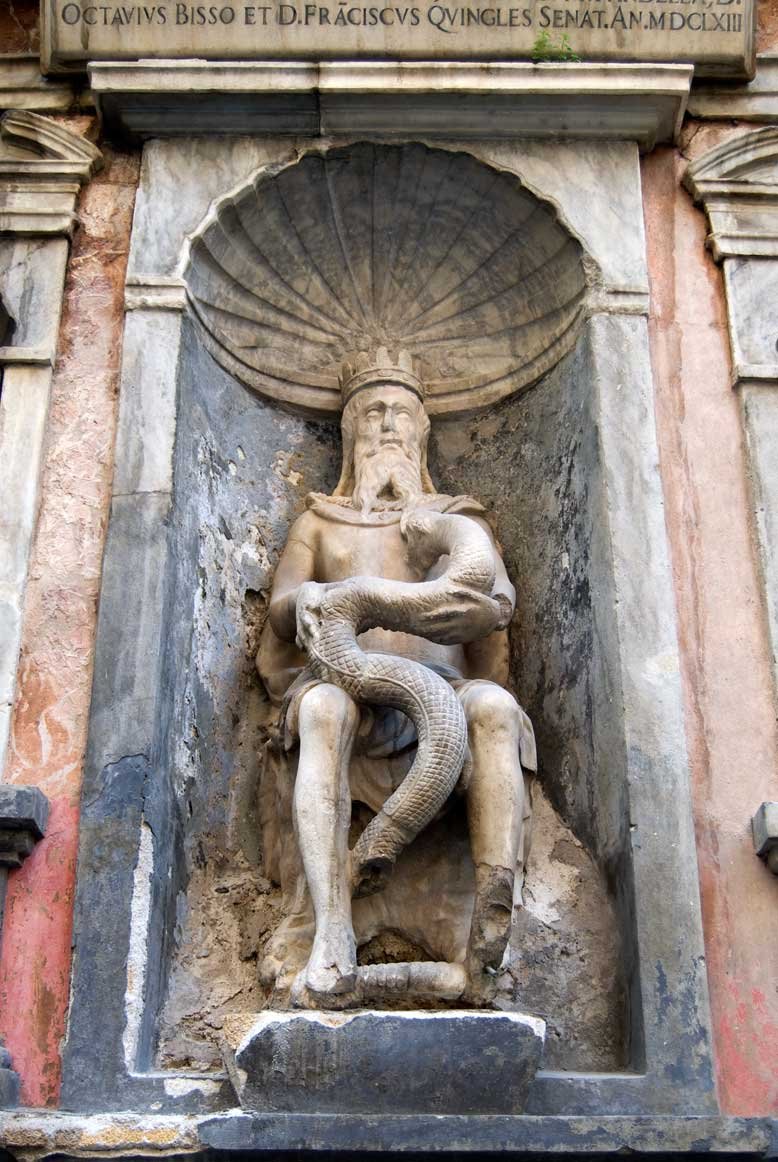 After leaving the discreet fountain of Piazza Garraffello, I move just a few steps to Piazzetta Garraffo, where I come across a figure that seems to have stepped out of a folk tale: the Genius of Garraffo. It's not a monumental sculpture that draws crowds, but rather a silent presence, almost a guardian of this small square. What fascinates me is its appearance: a bearded man with a serpent coiled around him, a symbol that blends classical and mysterious elements. Legend links it to the Genius of Palermo, a protective deity of the city, and I sometimes wonder how many passersby truly notice it, lost in their thoughts. Observing it up close, I notice the details of the stone worn by time, small cracks that tell of centuries of exposure to Palermo's climate. It's not a work of art to be admired in a museum, and perhaps that is its strength: it's an integral part of the urban fabric, a landmark for those who know the secrets of this area. I like to imagine what it must have been like in the past, when this little square was livelier, and the statue was a symbol of protection for merchants and residents. A curious detail: I often see pigeons perching placidly on its head, as if they were its messengers in this tranquil corner.
- Piazzetta Garraffo, Palermo (PA)
- Open in Google Maps
- View on Google Images
You should go if...
Stop no. 7
Teatro Libero
 After the Genius of Garraffo, I head towards Salita Partanna, a little street that almost seems to hide among the buildings of the historic centre. Here I find the Teatro Libero, a place that doesn't have the imposing appearance of the city's large theatres, but rather a cosy and intimate atmosphere. What strikes me immediately is its essence: it's an independent theatre, run by a company that for years has carried on an alternative programme, often dedicated to contemporary playwriting and theatrical research. It's not a place for those seeking traditional shows, but rather for those who want to discover new voices and experimental languages. The entrance is simple, almost unassuming, and when I enter the hall I feel as if I'm in a private space, where the relationship between actors and audience is direct, without barriers. Sometimes I wonder how such small realities manage to survive in a city like Palermo, and perhaps that's precisely their strength: they endure thanks to the passion of those who work there, offering proposals you'd rarely find elsewhere. One detail I notice is the presence of posters displayed outside, often with essential graphics and texts in Italian and Sicilian, a sign of that linguistic blend that characterises so much of the local culture. If you pass by here in the evening, you might hear voices coming from inside, like a creative hum that animates this quiet corner.
- Salita Partanna, Palermo (PA)
- Open in Google Maps
- View on Google Images
You should go if...
Stop no. 8
At Its Peak
 After the intimate atmosphere of the Teatro Libero, I find myself in front of something completely different: the Teatro Massimo, which stands majestically overlooking Piazza Giuseppe Verdi. It's impossible not to be struck by its scale: it's the largest opera house in Italy and one of the largest in Europe, with that neoclassical facade that seems to embrace the entire square. What I like about this place, even in a contemporary itinerary, is how it manages to be both a historical monument and a living venue: inside, beyond traditional opera programming, it often hosts modern events, symphony concerts, and even film screenings in the main hall. Climbing the monumental staircase, I noticed the details of the statues representing Tragedy and Lyric Poetry, as if to remind that art has always played a central role here. Sometimes I stop to look at the dome, which dominates the Palermo sky with its iron and glass structure, an innovation for its construction era. If you have time, it's worth taking a guided tour to see the foyer with its crystal chandeliers and the historic curtain, but even just sitting on the steps of the staircase, perhaps in the evening when the lights come on, gives you the feeling of being at the beating heart of the city's culture. An interesting detail: the acoustics of the main hall are considered among the best in the world, and even if you don't attend a performance, you can almost imagine the voices that have filled it over time.
- Piazza Giuseppe Verdi, Palermo (PA)
- Open in Google Maps
- View on Google Images
You should go if...


