
The Accademia dei Concordi in Rovigo offers an art gallery with over 400 works from the 15th to the 19th century and a historic library with rare manuscripts. Located in Piazza Vittorio Emanuele II, it is a cultural institution founded in 1580 that combines art and history of the Polesine region in a building with frescoed halls.
- Art gallery with works by Giovanni Bellini, Guercino, and Venetian artists from the 15th to the 19th century
- Historic library with illuminated manuscripts, incunabula, and 15th-century codices
- Building with frescoed halls in the historic center of Rovigo
- Collections that tell the story and culture of the Polesine region
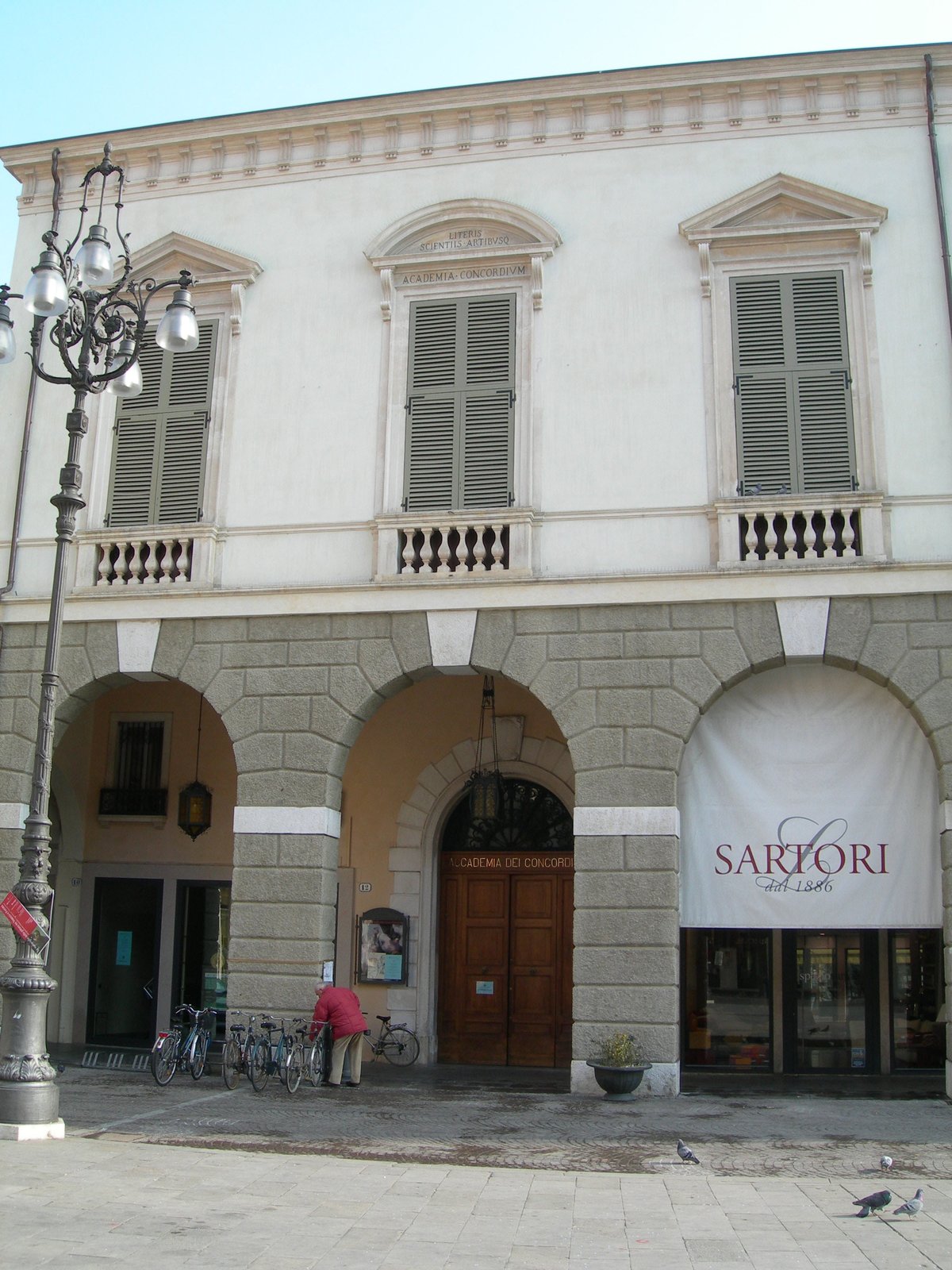
Art gallery with paintings by Giovanni Bellini and Guercino, historic library with illuminated manuscripts from the 15th century, in the heart of Rovigo. Frescoed halls and collections from the Polesine region.
- https://www.concordi.it/
- Piazza Vittorio Emanuele II 14, Rovigo (RO)
- +39 0425 27991
- Open in Google Maps
- View on Google Images Accademia dei Concordi a Rovigo
Good to know
Introduction
When you step into the Accademia dei Concordi, you’re greeted by an atmosphere steeped in history and beauty. It’s not just a museum, but a true gem in the heart of Rovigo, where art and culture blend in a unique way. The picture gallery houses works spanning from the 15th to the 19th centuries, while the historic library, with its ancient volumes, transports you to distant eras. It’s a place that impresses with its elegance and the richness of its collections, perfect for those seeking an authentic cultural experience in Polesine. Here, every room tells a story, and you don’t need to be an expert to appreciate the mastery of artists like Giovanni Bellini or the delicacy of 18th-century Venetian paintings. Come discover it: it will surprise you.
Historical Overview
The Accademia dei Concordi was established in 1580 by the nobleman Gaspare Campo, with the aim of promoting literary and scientific studies. In 1812, thanks to the Napoleonic suppressions, it acquired significant artworks from local monasteries, enriching its picture gallery. Figures such as the poet Giacomo Zanella contributed to its prestige, while in the 20th century it became a cultural landmark for Rovigo. Today, it houses masterpieces from the Venetian and Emilian schools, including canvases by Palma il Giovane and Guercino, as well as rare manuscripts in its library.
- 1580: Foundation by Gaspare Campo
- 1812: Acquisition of artworks post-suppressions
- 19th-20th centuries: Growth as a cultural institution
The Art Gallery: A Journey Through Art
The Accademia’s art gallery is a treasure to be discovered room by room. Here you’ll find works such as Giovanni Bellini’s Madonna and Child, a masterpiece of Venetian Renaissance that captivates with its intense colors and harmonious composition. Then, there are 17th-century Emilian paintings, including works by Guercino that display unique emotional realism. Don’t miss the 18th-century canvases by local artists, which depict life in Polesine with meticulous detail. It’s a collection that doesn’t limit itself to famous names: it also includes lesser-known but highly valuable artists, making the visit a continuous discovery. I recommend pausing at the still life paintings, where every fruit or object seems to have a story to reveal.
The Library: A Corner of Knowledge
The historic library of the Academy is a place that exudes charm, with shelves filled with ancient volumes and rare manuscripts. Here you can admire illuminated manuscripts from the 15th century, such as those from monasteries in the Polesine region, and 16th-century editions that testify to the spread of printing. Among the treasures, documents on the history of the Po Delta stand out, useful for understanding the evolution of the territory. It’s not just a collection of books, but a living archive where researchers and the curious find unique insights. If you love local history, here you’ll discover anecdotes about figures like the man of letters Francesco Albergati, who linked his name to this institution. It’s an experience that combines culture and mystery, in an intimate atmosphere.
Why Visit It
Visit the Accademia dei Concordi for three concrete reasons. First, the variety of collections: from Renaissance painting to ancient books, there’s something for everyone, no expertise required. Second, accessibility: admission is often low-cost or free, ideal for budget travel. Third, the connection to the local area: the works tell stories of the Polesine region, such as paintings depicting local landscapes, offering an authentic glimpse into Veneto culture. It’s a place that seamlessly blends art and history, perfect for a no-frills cultural outing.
When to Visit
The best time to visit the Academy is during spring or autumn, when the mild weather invites you to explore Rovigo on foot. During these seasons, natural light streams through the gallery windows, enhancing the colors of the artworks without the summer crowds. If you prefer a more intimate atmosphere, go early in the morning on weekdays: you’ll have more space to admire the details of the paintings and enjoy the tranquility of the library. Avoid local holiday periods, when it might be more crowded.
In the Surroundings
After your visit, explore the Museum of the Great Rivers in Rovigo, which delves into the history of the Po and Adige rivers with archaeological finds and interactive installations. It’s the perfect complement to understanding the context of the Polesine region. Alternatively, head to the Po Delta, just a few kilometers away, for a boat excursion through channels and natural oases, where you can spot migratory birds and unique landscapes. Both locations enrich your experience with nature and culture.
💡 Did You Know…?
Among the lesser-known treasures is the portrait of Isabella d’Este attributed to Titian, said to have been donated to the Academy by a local nobleman after a trip to Mantua. In the library, the 15th-century Estense Codex contains miniatures so detailed that the most attentive visitors notice symbols linked to Rovigo’s Jewish culture, evidence of the vibrant community that animated the Renaissance city.